

Epsom salt, scientifically known as magnesium sulfate, is commonly used for muscle relaxation, stress relief, and spa skincare. Therefore, many people add Epsom salt to their outdoor spa jacuzzi tubs to enhance their bathing experience.
However, many users have found that after use, the equipment surface corrodes, nozzles are damaged, pipes become clogged with crystals, and the water pump becomes rough or even ages prematurely.
So, why does Epsom salt corrode outdoor spa jacuzzi tubs?
Is it due to material incompatibility, chemical reactions, or improper use?
This blog will systematically and professionally explain the chemical relationship between Epsom salt and outdoor spa jacuzzi tubs, the causes of equipment damage, the damage risks to different structural materials, hidden misconceptions in use, and provide feasible solutions to avoid corrosion, helping you protect your expensive outdoor equipment.
What is Epsom salt? Why does it affect the structure of outdoor spa jacuzzi tubs?
Epsom salt is an inorganic salt composed of magnesium (Mg²⁺) and sulfate (SO₄²⁻). When dissolved in water, it forms a highly concentrated magnesium-containing solution. While Epsom salt is safe for bathing, it may not be safe for the metal components, nozzles, pumps, heaters, and piping systems inside an outdoor spa jacuzzi tub.
The main reasons include:
• The high hardness of magnesium ions increases the total hardness of the water.
• Sulfate ions are corrosive.
• High salinity makes water more conductive, accelerating electrochemical corrosion.
• Heating accelerates the precipitation of magnesium salts, which adhere to the heater and pump.
• Some outdoor spa jacuzzi tub materials are not designed for "saltwater systems" and have limited salt resistance.
In other words, Epsom salt is not inherently dangerous to humans, but it is potentially destructive to mechanical parts.
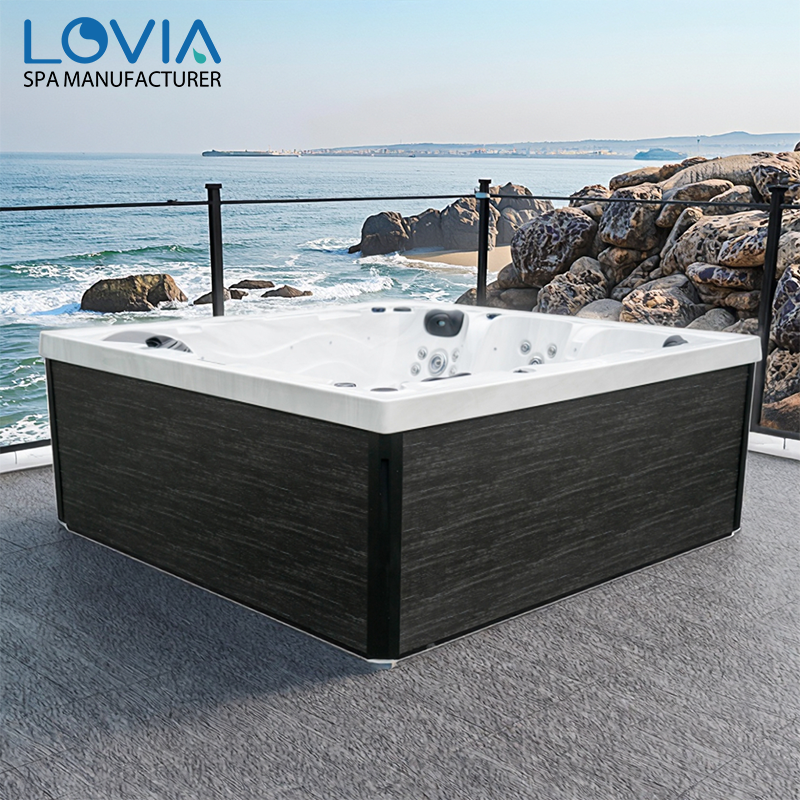
How exactly does Epsom salt corrode the internal parts of an outdoor spa jacuzzi tub?
The damage caused by Epsom salt to outdoor spa jacuzzi tubs primarily stems from the following mechanisms:
1. Electrochemical Corrosion Accelerates Metal Aging
Once Epsom salt enters the system, the mineral content in the water increases, enhancing conductivity.
When metals such as heaters, bolts, and stainless steel nozzles are exposed to a high-salt environment, a stronger electrochemical reaction occurs, leading to:
• Oxidation and peeling of metal surfaces
• Pinhole corrosion in stainless steel
• Accelerated rusting of metals
• Rapidly shortened lifespan of metal parts
Lower-grade stainless steel, such as 304, or alloy parts, are particularly susceptible to damage.
2. Magnesium Salt Scale Clogs Nozzles and Pipes
Heating Epsom salt makes it easier for it to precipitate, forming:
• White crystals
• Granular deposits
• A rough layer inside the pipes
• Nozzle clogging
These deposits reduce water flow efficiency, weakening the nozzles or even causing complete blockage.
3. Damage to Pump Body and Rubber Seals
High salinity water causes:
• Loss of elasticity in rubber seals
• Accelerated wear of the internal rotor of the pump body
• Degradation of the lubricating film by salt precipitation
This damage is more pronounced in hot water environments.
4. Corrosion or Damage to the Heating System
The heater is one of the most expensive components of an outdoor spa jacuzzi tub, and it is also the area most severely affected by Epsom salt corrosion.
The harmful effects of Epsom salt include:
• Magnesium salts adhere to the surface of the heating element, forming a hard scale
• Thermal cycling leads to the continuous accumulation of a crystalline layer
• Decreased thermal conductivity
• Increased heater load or even burnout
This is why many manufacturers explicitly state in their instructions:
Never add Epsom salt to outdoor spa jacuzzi tubs in non-saltwater systems.
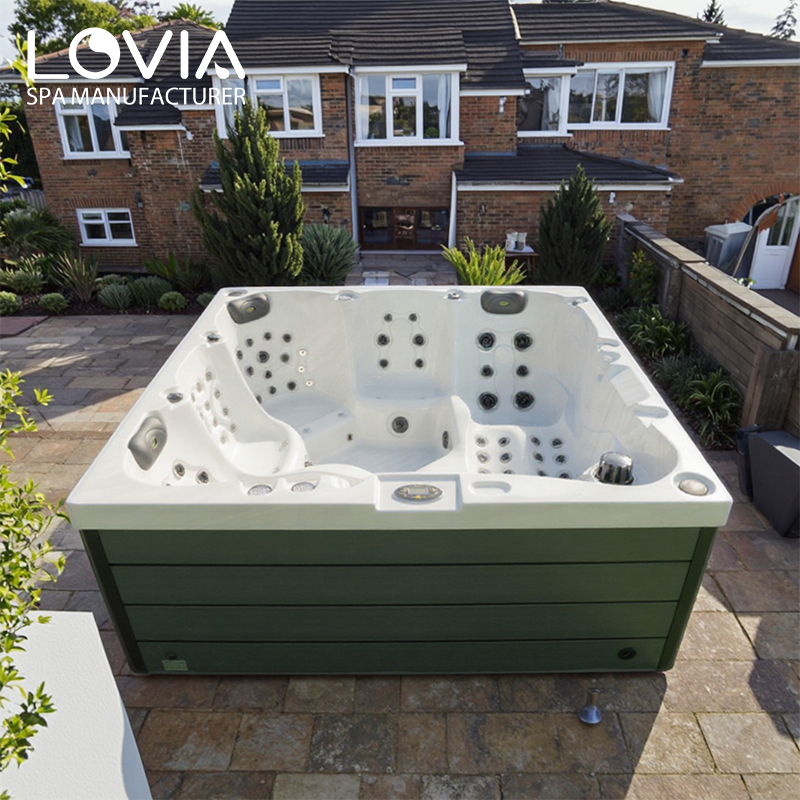
Which materials in outdoor spa jacuzzi tubs are most susceptible to Epsom salt corrosion?
Different outdoor spa jacuzzi tub materials have different tolerances to Epsom salt.
The following is a classification of damage risk from high to low:
1. Metal Components (High Risk)
Examples:
• Stainless steel nozzles
• Metal heating elements
• Metal screws
• Metal pump shaft
The reason is that Epsom salt enhances the intensity of electrochemical corrosion.
2. Rubber and Seals Inside the Pump (Medium-High Risk)
Salt will:
• Damage the rubber structure
• Accelerate aging and crack formation
• Cause leaks
3. PVC Piping (Medium Risk)
Epsom salt does not directly corrode PVC, but it will form scale, resulting in a rough inner wall and increasing the workload on the pump.
4. Acrylic Housing (Low Risk)
Epsom salt is unlikely to damage the acrylic housing, but if crystals adhere and are not cleaned for a long time, it may cause minor abrasion.
Why is Epsom salt more "dangerous" in outdoor spa jacuzzi tubs than in regular bathtubs?
1. Outdoor spa jacuzzi tubs have a circulation system
Unlike regular bathtubs, outdoor spa jacuzzi tubs use a pump to continuously circulate water.
Epsom salts therefore repeatedly pass through:
• Pump
• Piping
• Nozzles
• Heater
• Filter
Accelerating the exposure of all components to the saline environment.
2. Outdoor spa jacuzzi tubs operate at high temperatures
Most outdoor spa jacuzzi tubs are maintained at 37°C–40°C.
High temperatures accelerate the salt's:
• Crystallization
• Deposition
• Corrosion reaction
This results in damage far exceeding that caused by room temperature water.
3. Long soaking time
Many users soak for 20–45 minutes at a time, and the brine may remain in the system for days or even weeks.
This prolonged soaking accelerates corrosion.
Will Epsom salts void the warranty for outdoor spa jacuzzi tubs?
Many brands explicitly state:
Using unapproved salts or chemicals will completely void the warranty.
Reasons:
• Salt corrosion is not a manufacturing defect.
• Damage caused by Epsom salt is often irreparable.
• Scale buildup requires manual cleaning, which is extremely costly.
If your outdoor spa jacuzzi tub is not specifically labeled "for brine systems," it's almost certainly contraindicated with Epsom salt.
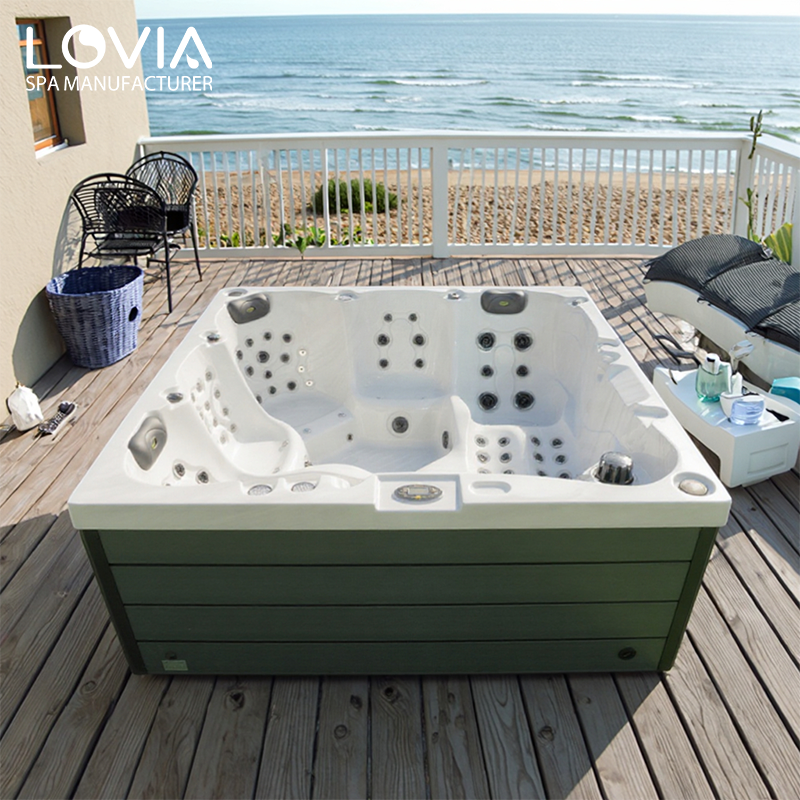
What actions exacerbate the risk of corrosion when using Epsom salt?
The following common mistakes can escalate corrosion exponentially:
❌ Pouring undissolved Epsom salt directly
This will cause crystals to adhere to the nozzles or inner walls, causing the most severe damage.
❌ Adding too much
Many people mistakenly add Epsom salt according to the bathtub dosage, but the water volume in an outdoor spa jacuzzi tub is usually much larger, and excessive concentrations exacerbate corrosion.
❌ Using Epsom salt with fragrances or additives
These products typically contain:
• Essential oils
• Artificial fragrances
• Colorants
This will further damage filters, nozzles, and pipes.
❌ Not draining for extended periods
The longer the salt remains in the system, the stronger the corrosion.
How to tell if Epsom salt has started corroding your outdoor spa jacuzzi tub?
✔ Weakened water pressure from the nozzles
The nozzles may be clogged with crystals.
✔ Unusual noise from the pump
The internal rotor or seals may be damaged.
✔ Spots or darkening on metal parts
Indicates mild electrochemical corrosion.
✔ Slower heating speed
Salt scale appears on the heater surface.
✔ Cloudy water
Caused by undissolved minerals.
If these signs appear, stop using the tub immediately and clean it thoroughly.
How to safely clean an outdoor spa jacuzzi tub affected by Epsom salt?
Here are common treatment methods:
1. Drain immediately
This prevents further corrosion of the system by the salt.
2. Circulate a system cleaner
This breaks down magnesium salt deposits.
3. Thoroughly flush the pipes with warm water
Keep the pump circulating to remove salt from the system.
4. Clean the filter or replace the filter cartridge
Epsom salt may cause filter failure.
5. Inspect metal parts for corrosion
Replace damaged parts such as nozzles and heaters if necessary.
How to prevent Epsom salt from corroding your outdoor spa jacuzzi tub?
If you still want to enjoy an "Epsom-like" relaxing experience, consider the following suggestions:
✔ Use a dedicated "Outdoor Spa Jacuzzi Tub Safe Shower Solution."
These products are magnesium sulfate-free and will not cause corrosion.
✔ Read the equipment instruction manual.
Avoid using chemicals explicitly prohibited by the manufacturer.
✔ Do not add Epsom salt while the circulation system is running.
This will allow particles to be directly sucked into the pump.
✔ Use the matching softener.
This reduces hardness and prevents scale buildup.
✔ Drain and clean after each use.
This prevents salt from remaining in the system.
The Core Reason Why Epsom Salt Corrodes Outdoor Spa Jacuzzi Tubs
While Epsom salt itself is safe, it can cause the following problems with outdoor spa jacuzzi tubs:
• Accelerated corrosion of metal parts
• Scale buildup and damage to heaters
• Aging of pump seals
• Nozzle clogging
• Pipeline deposits
• Shortened equipment lifespan
• Warranty voiding
Unless your outdoor spa jacuzzi tub specifically states "suitable for brine systems," adding Epsom salt in any form is not recommended. The correct approach is to use dedicated, safe additives to ensure long-term stable operation of the equipment.
