

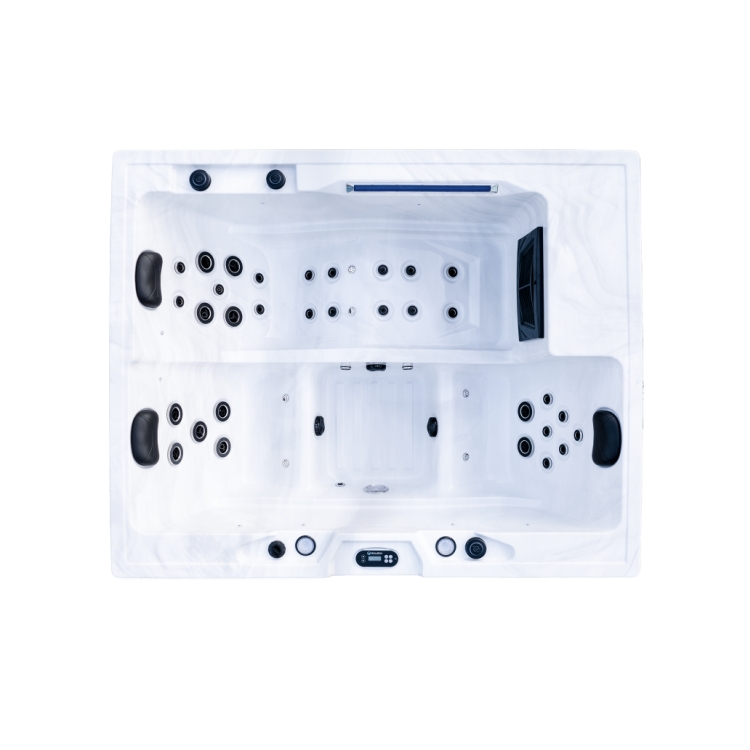
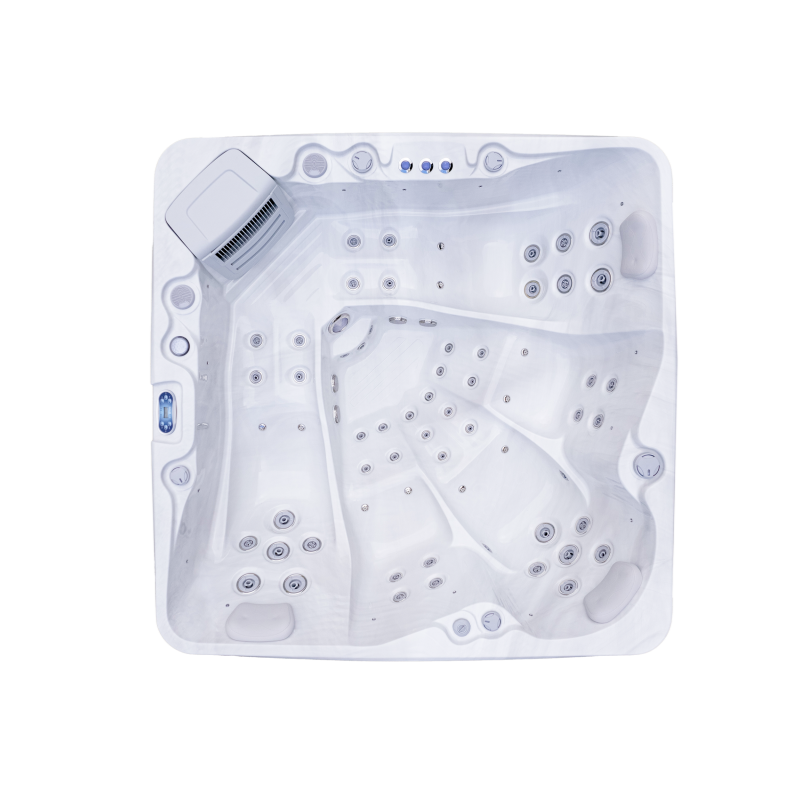
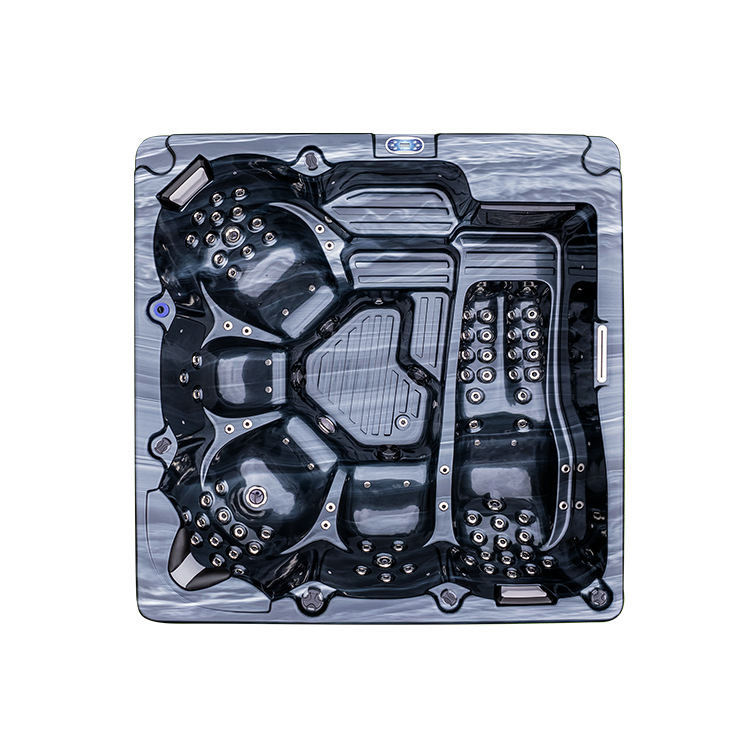
In modern homes and healthy living, people's requirements for bathing equipment have long since moved beyond mere cleaning functions. They now place greater emphasis on comfort, relaxation, and health benefits. Swim spa tubs and jacuzzi tubs, as two major representatives of high-end bathroom products, are often confused by consumers.
While they may appear somewhat similar, they differ significantly in structural design, functional positioning, water systems, and user experience. This article will systematically and deeply analyze the differences between swim spa tubs and jacuzzi tubs to help you make a more informed decision when purchasing.
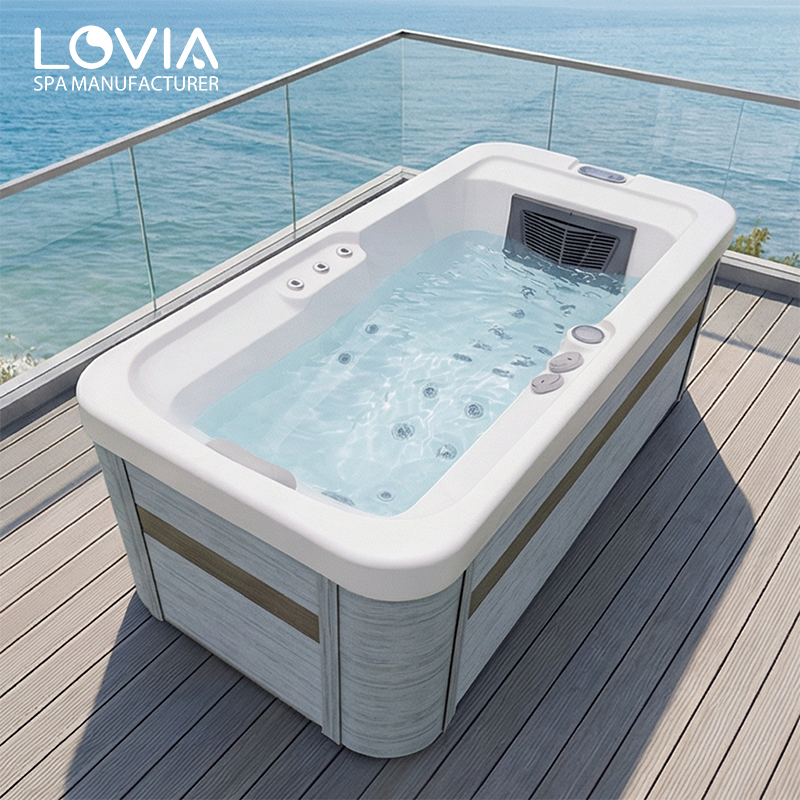
What are the differences in design philosophy between swim spa tubs and jacuzzi tubs?
From a product design perspective, although both swim spa tubs and jacuzzi tubs belong to the "spa" category, their core concepts are completely different.
Jacuzzi tubs primarily aim to "relax the body and relieve stress." Their water jet system targets specific areas such as the shoulders, waist, back, and legs, promoting blood circulation and relieving muscle fatigue through the massage effect of bubbles and water pressure. Its structure is typically compact, with a smaller capacity, suitable for single or double use.
The swim spa tub, on the other hand, has a more comprehensive design concept. It not only provides hydro-massage functions similar to a jacuzzi tub but also features "constant-temperature swimming training." Its powerful water flow system generates a stable counter-current, allowing for "swimming in place" within a limited space. This design integrates fitness training and hydrotherapy relaxation, meeting the dual needs of family users for exercise and relaxation.
Therefore, simply put:
• A jacuzzi tub focuses on passive relaxation;
• A swim spa tub combines active exercise with passive massage.
What's special about the water flow system of a swim spa tub?
The water flow system is one of the most significant differences between a swim spa tub and a jacuzzi tub.
A jacuzzi tub typically uses a multi-point nozzle system, producing a gentler, more concentrated water flow, primarily for relaxing various parts of the body. Its water pump power is generally between 1 and 3 horsepower, with moderate water pressure, creating a massage effect of alternating bubbles and water flow.
In comparison, the swim spa tub's water flow system is more complex, featuring a more powerful pump and a greater number of scientifically distributed nozzles. The core system generates a strong and stable counter-current, providing users with "constant flow resistance" for a "swimming in place" effect. High-end models even include an adjustable flow rate system, allowing users to adjust the water flow intensity according to their swimming style or exercise needs.
Additionally, the swim spa tub is equipped with a water flow guide to ensure even water distribution within the tub, preventing eddies or fluctuations and maintaining body balance while swimming.
In summary:
• Jacuzzi tub's water flow system: Primarily for localized massage, lower power, gentler water flow;
• Swim spa tub's water flow system: Primarily for full-body circulation, higher power, stronger and more controllable water flow.
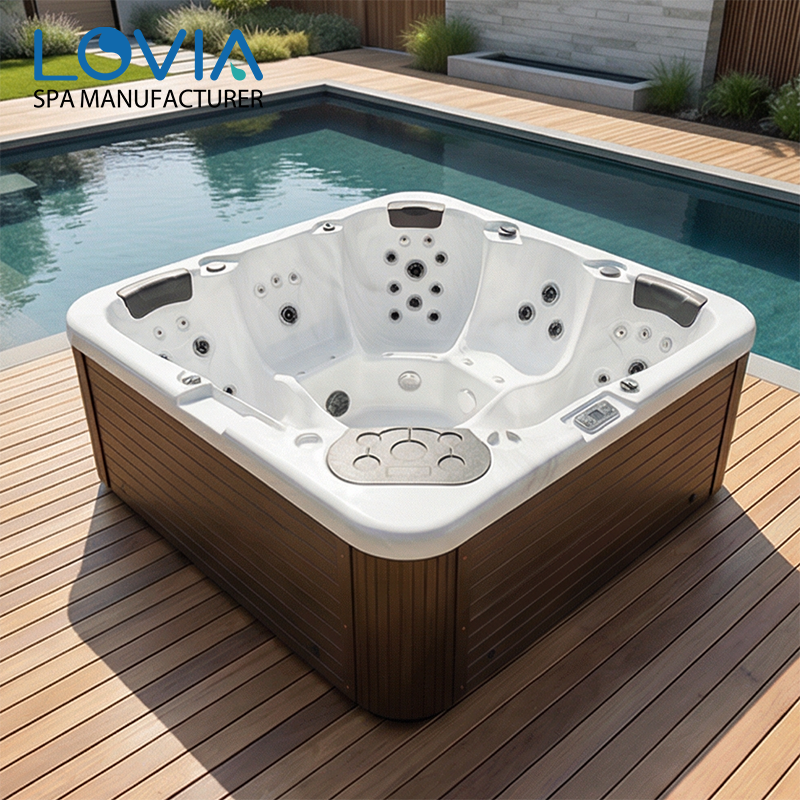
What are the differences in size and capacity?
Size and water capacity are another key differentiator between a swim spa tub and a jacuzzi tub.
Standard jacuzzi tubs are typically designed for home bathroom installations, usually 1.5 to 2 meters long with a capacity of 300 to 500 liters, suitable for single or double soaking.
Swim spa tubs, on the other hand, are significantly larger than standard jacuzzi tubs, generally 3 to 6 meters long, about 2 meters wide, and with a water depth typically reaching 1.2 to 1.5 meters. This larger space not only accommodates swimming movements but also allows for a dedicated spa area at one end. Many models feature a "dual-zone design": a front swimming area and a rear massage area, catering to both exercise and muscle relaxation.
This larger capacity design places higher demands on the installation and water usage of swim spa tubs, but it also provides a more comprehensive functional experience and comfort.
In summary:
Comparison Items | Swim spa tub | Jacuzzi tub |
| Length | 3–6 meters | 1.5–2 meters |
| Depth | 1.2–1.5 meters | 0.6–0.8 meters |
| Capacity | 2000–8000 liters | 300–500 liters |
| Number of Users | 1–4 people or more | 1–2 people |
| Features | Swimming + spa massage | Local massage and relaxation |
How do the hydrotherapy effects of swim spa tubs differ from those of jacuzzi tubs?
While both offer "hydrotherapy" functions, the physiological and psychological effects they provide are different.
The hydrotherapy effects of jacuzzi tubs primarily focus on soothing and relaxing. Bubble jets stimulate the skin's surface, promoting local blood circulation and helping to relieve fatigue, improve sleep, and reduce muscle tension.
A swim spa tub offers a more comprehensive hydrotherapy experience. Swimming against the current not only provides a full-body workout and burns calories but also activates muscle groups and improves cardiovascular function. After exercising, switching to the massage area allows for full-body relaxation through multi-jet high-pressure water jets, enabling muscles to fully recover. This dual experience of "exercise + recovery" is something a traditional jacuzzi tub cannot provide.
Furthermore, the thermostatic control system in a swim spa tub maintains the water temperature within the most comfortable range for the human body (typically 32–38°C), preventing muscle stiffness and accelerating metabolic responses, keeping the body in optimal condition in the water.
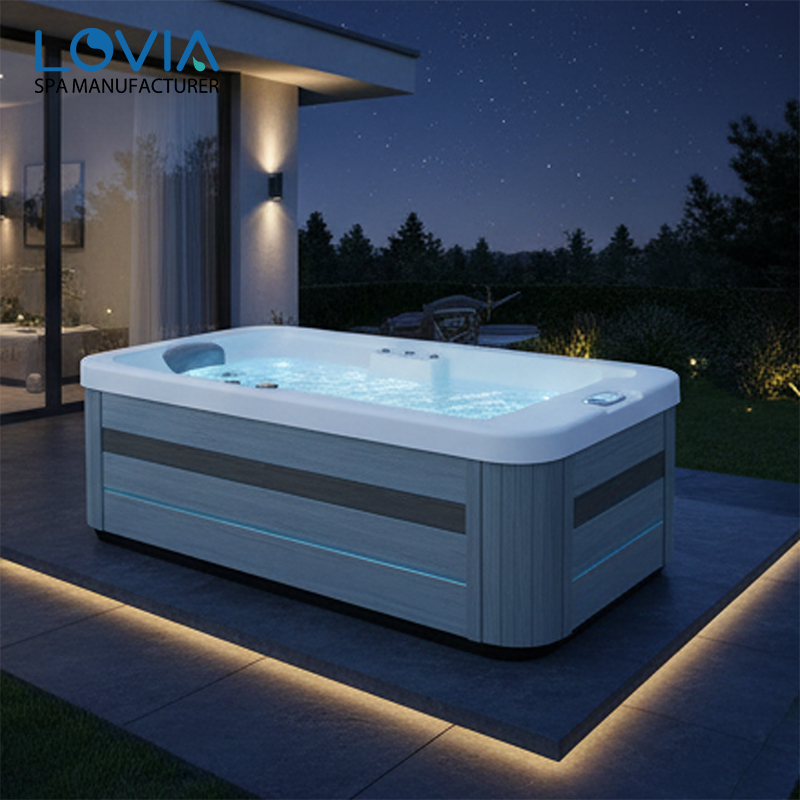
What are the differences in installation and maintenance?
Installation methods and maintenance costs are also important factors to consider when choosing between a swim spa tub and a jacuzzi tub.
Jacuzzi tubs have a relatively simple structure and can usually be installed directly in a home bathroom or balcony area, requiring only a power supply and drainage connection. Maintenance mainly includes regularly cleaning the nozzles, disinfecting the pipes, and checking the heating system. Swim spa tubs are large-scale devices with more stringent installation requirements. They require specialized foundation design, independent power lines, a stable drainage system, and sometimes even outdoor installation. Due to their large water capacity, the maintenance of the filtration and ozone disinfection systems is also more complex.
However, it's worth noting that most modern swim spa tubs employ automatic filtration and circulation purification systems, effectively reducing the frequency of manual maintenance. Users only need to periodically replace the filter cartridges and check the water pH level to ensure long-term effectiveness.
In short:
• Jacuzzi tubs are suitable for indoor home spaces and are easy to install;
• Swim spa tubs are more suitable for villas or outdoor areas, requiring professional installation and a systematic maintenance process.
Where does the price difference lie?
Due to differences in design complexity, number of functions, and size, there is a significant price difference between swim spa tubs and jacuzzi tubs.
Jacuzzi tubs generally range in price from several thousand to tens of thousands of RMB, depending on the brand, materials, and nozzle configuration.
Swim spa tubs, as high-end products, typically range in price from tens of thousands to hundreds of thousands of RMB.
Key factors influencing price include:
• Pump power and quantity;
• Water flow regulation system;
• Performance of heating and thermostat systems;
• Automatic filtration and disinfection functions;
• Shell material and insulation performance.
Therefore, if your budget allows and you want to combine exercise and relaxation, a swim spa tub is undoubtedly a more cost-effective long-term investment.
Which type of bathtub is more suitable for family use?
This depends on your family space, usage needs, and lifestyle.
If you're looking for a relaxing bathing experience and want to easily enjoy a spa-like experience at home, then a jacuzzi tub is sufficient.
However, if you love swimming, value health and fitness, and want to achieve both exercise and relaxation at home, then a swim spa tub is more suitable. It can serve not only as a personal fitness tool but also as a family relaxation center, allowing the whole family to share a comfortable aquatic experience.
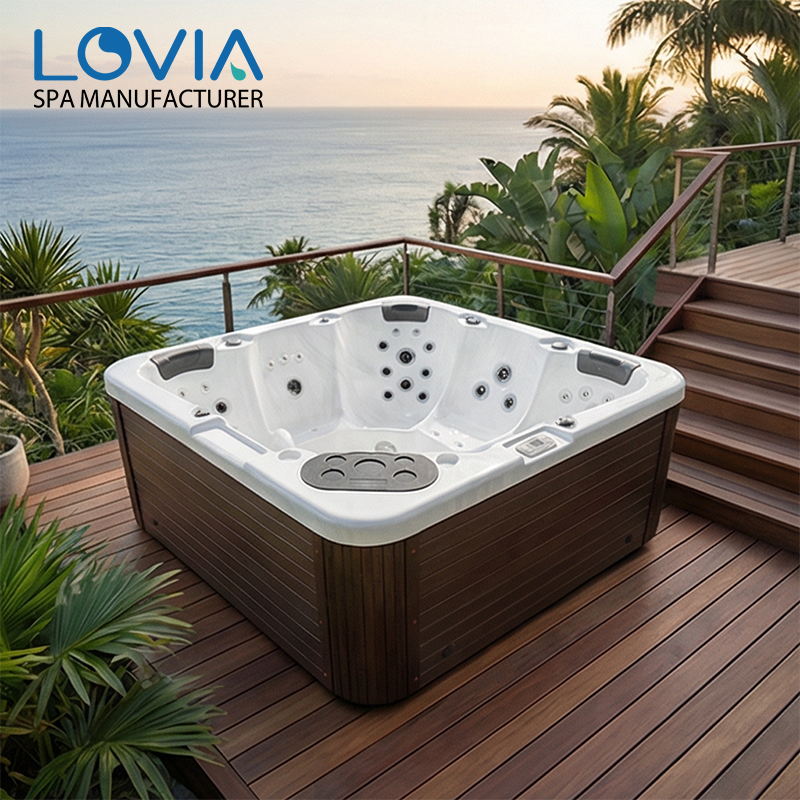
The Core Differences Between a Swim Spa Tub and a Jacuzzi Tub
In summary, the main differences are as follows:
• Different functional positioning: A swim spa tub emphasizes the combination of exercise and hydrotherapy; a jacuzzi tub emphasizes relaxation and soothing.
• Different structural designs: A swim spa tub is larger and features a powerful counter-current water system; a jacuzzi tub primarily uses jets for localized massage.
• Different user experiences: A swim spa tub allows for a combination of in-situ swimming and full-body relaxation.
• Different installation and maintenance: The former is more complex to install and requires a systematic maintenance process; the latter is simpler to install and easier to maintain.
• Different price ranges: A swim spa tub is more expensive but offers more comprehensive functions.
Is LOVIA SPA Suitable for Wholesale and Bulk Purchasing?
LOVIA SPA is well suited for wholesale purchasing and bulk orders due to its large production scale and experienced workforce. With more than 45,000 square meters of factory space and over 200 skilled workers, we can handle large-volume orders efficiently. Wholesale buyers benefit from factory-direct prices, stable production schedules, and consistent product quality.
As a long-term supplier, LOVIA SPA supports distributors, retailers, and project buyers seeking competitive pricing and reliable manufacturing capacity.
