


Disinfection is an unavoidable topic in the daily use of spa hot tubs. Chlorine has long been the most common and basic disinfection method for spa hot tubs. However, with accumulated experience, more and more users are starting to have questions:
• What if the chlorine smell is too strong?
• What if my skin and eyes are sensitive to chlorine?
• Are there gentler alternatives to chlorine?
Therefore, a very practical question arises:
What can I add to my whirlpool spa hot tub to replace chlorine?
This article will start from the essence of whirlpool spa hot tub disinfection, systematically analyze the mechanism of chlorine's action in water, and focus on explaining common alternatives to chlorine, helping you make rational judgments based on understanding the principles.
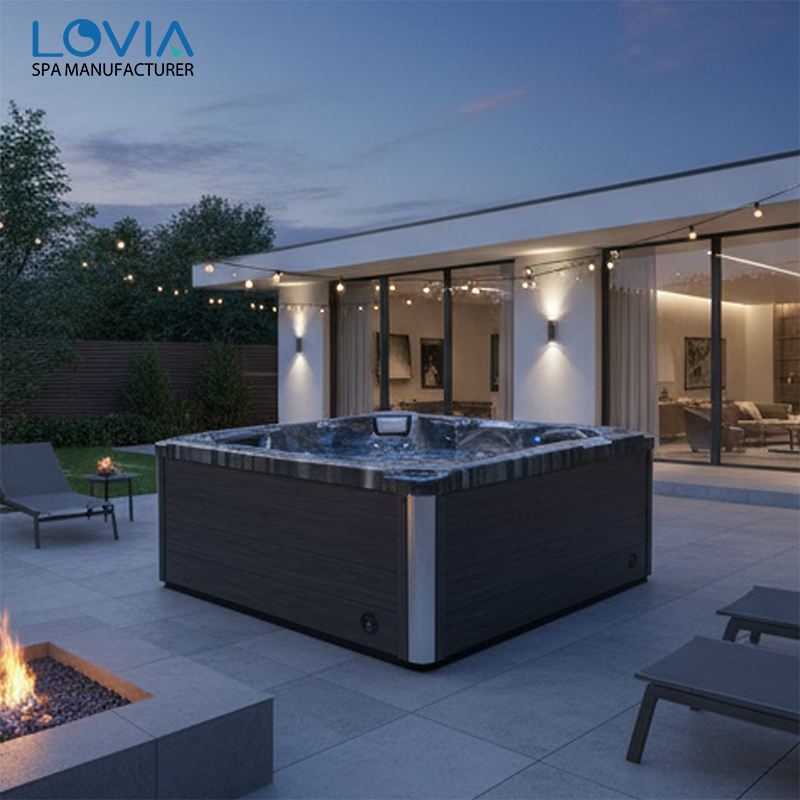
Why must a disinfectant be used in a spa hot tub?
Disinfectants are indispensable in whirlpool spa hot tubs.
This is determined by the inherent characteristics of spa hot tubs themselves.
Why do spa hot tubs have higher requirements for water quality?
Compared to regular bathtubs or swimming pools, spa hot tubs have the following characteristics:
• Maintain a consistently high water temperature
• Require a relatively small water volume
• Allow for complete immersion during use
• Have a closed-loop water circulation system
These conditions are ideal for microbial growth. Without continuous and effective disinfection, water quality can deteriorate rapidly in a short period.
Therefore, the question isn't "whether to disinfect," but rather "what to use for disinfection."
What is the working principle of chlorine in a spa hot tub?
The widespread use of chlorine is not accidental.
When chlorine is added to a whirlpool spa hot tub, it forms a highly effective oxidizing agent, primarily functioning to:
• Kill bacteria, viruses, and algae
• Oxidize organic pollutants such as sweat and oil
• Inhibit the regrowth of microorganisms
From an efficiency perspective, chlorine is a fast-acting, low-cost, and well-established disinfection method.
However, chlorine also presents some discomfort for users, which is the root cause of the demand for "chlorine alternatives."
Why do some people want to replace chlorine in a spa hot tub?
Users who want to replace chlorine usually don't deny its disinfection effectiveness, but rather have the following considerations:
• Sensitive to the chlorine odor
• Skin or eye irritation
• Insufficient user comfort
• Desire for a gentler water feel
In a whirlpool spa hot tub environment that emphasizes relaxation and comfort, the user experience is especially important.
Can bromine be used as a substitute for chlorine in a spa hot tub?
The answer is: Yes, and it is currently the most common and mature alternative.
The disinfection mechanism of bromine in a spa hot tub
Bromine and chlorine belong to the same class of disinfectants, and their disinfection mechanisms are very similar:
• Both kill bacteria through oxidation
• Both can persist in water
• Both are suitable for high-temperature environments
However, bromine exhibits some significant differences in spa hot tub performance.
Why do many people believe that bromine is gentler than chlorine?
This is one of bromine's biggest advantages.
Compared to chlorine, bromine typically has the following characteristics:
• Milder odor
• Less irritating to skin and eyes
• Better stability in high-temperature whirlpool spa hot tub water
• Gentler user experience
Therefore, bromine is an ideal choice for users with sensitive skin or who dislike the strong chlorine smell in whirlpool spa hot tubs.
Is bromine suitable for long-term use in spa hot tubs?
From a chemical perspective, bromine is very suitable for high-temperature, low-volume systems like spa hot tubs.
Reasons include:
• Less prone to rapid degradation at high temperatures
• Longer-lasting disinfection effect
• Higher tolerance for water quality fluctuations
Therefore, many whirlpool spa hot tubs are designed with bromine as the primary disinfection method in mind.
After using bromine, is it still necessary to maintain water balance in a spa hot tub?
This is a very important point to understand.
Even when using bromine, the following steps are still essential:
• Monitor disinfectant concentration
• Control pH levels
• Maintain good filtration and circulation
• Change water regularly
In other words, bromine is not a "maintenance-free" disinfection solution, but rather a "gentler experience."
Besides bromine, are there other alternatives to chlorine?
When discussing whirlpool spa hot tub disinfection, several solutions are frequently mentioned in the market, but they need to be viewed rationally.
Can mineral systems completely replace chlorine?
Mineral systems typically inhibit microbial growth by releasing metal ions, but it's important to note that:
• Their disinfection capabilities are limited
• They usually cannot perform all disinfection tasks alonez
• They still need to be used in conjunction with other disinfection methods.
Therefore, they are more suitable as supplementary methods than complete replacements for chlorine.
Can ozone or ultraviolet light replace chlorine?
In spa hot tubs, these methods are typically used to:
• Reduce disinfectant dosage
• Improve water quality stability
However, they share the following characteristics:
• Short action time
• Inability to form a persistent disinfectant residue in the water
Therefore, using ozone or ultraviolet light alone cannot completely replace chlorine or bromine.
Why is it unrealistic to "completely eliminate chemical disinfectants"?
This is a common misconception among many users.
In whirlpool spa hot tubs:
• High temperatures promote microbial growth
• Closed systems hinder contaminant removal
• Human contamination is unavoidable
Under these conditions, without a persistent disinfectant component, it is difficult to maintain a safe water quality in the long term.
Therefore, a more realistic approach is:
Choose disinfectants with lower irritation and a more user-friendly experience, rather than completely abandoning disinfection.
Can bromine truly "completely replace" chlorine?
From a functional perspective:
• Yes, bromine can be a major alternative to chlorine.
• Its disinfection effect in spa hot tubs is reliable.
However, from a usage and cost perspective:
• Bromine is generally more expensive than chlorine.
• Management methods are slightly different.
• Users need to establish new maintenance habits.
Once these differences are understood, bromine is perfectly capable of handling the daily disinfection tasks of whirlpool spa hot tubs.
How to rationally view the issue of "chlorine replacement"?
When choosing a disinfection method for spa hot tubs, the following principles should be followed:
• Reliable disinfection effect
• Suitable for high-temperature environments
• Minimal irritation to the human body
• Controllable management difficulty
Under these criteria, bromine is currently the most mature and widely accepted chlorine alternative.
How does Lovia Spa support international customers?
Lovia Spa has extensive experience in global sales and export operations. As a reliable manufacturer, our company provides professional support for international buyers, including product consultation, logistics coordination, and documentation. This ensures a smooth purchasing process for customers worldwide who are looking to import whirlpool spa hot tubs and swim spa tub products efficiently.
