

Maintaining stable water quality in your spa jacuzzi tub is crucial for a comfortable and safe soaking experience. However, many users encounter a common problem during routine maintenance: could the chlorine level in the spa jacuzzi tub be accidentally too high? Chlorine is an important disinfectant in water treatment, but excessive dosage can lead to a series of obvious and significant effects.
This article will provide a professional and in-depth explanation of the signs of excessive chlorine in spa jacuzzi tub water, helping you quickly identify abnormal water quality, understand the judgment criteria, and use your spa jacuzzi tub with greater peace of mind.
Why is it easy for chlorine levels in spa jacuzzi tub water to become too high?
When maintaining the water quality of a spa jacuzzi tub, many people disinfect by adding chlorine tablets, chlorine granules, or chlorine powder. However, due to the smaller water volume, higher water temperature, and more frequent water circulation in a spa jacuzzi tub, the evaporation rate and mode of action of chlorine differ from those in a swimming pool.
Here are some common causes of excessive chlorine levels:
• Misjudging water volume and incorrect chlorine dosage
• Adding too much shock chlorine
• Infrequent use of the spa jacuzzi tub, leading to chlorine retention
• Insufficient circulation in the filtration system, resulting in uneven chlorine distribution
• Adding chlorine based on experience without using test strips
• Choosing a high concentration of chlorine but not diluting it according to the recommended ratio
Due to these factors, chlorine levels in spa jacuzzi tub water can easily exceed safe limits in a short time, even reaching irritating levels. Therefore, recognizing the signs of excessive chlorine is crucial.
What are the signs of excessive chlorine levels in spa jacuzzi tub water?
Judging whether the chlorine in a spa jacuzzi tub is too high can be determined by a combination of factors, including the appearance of the water, odor, skin reaction, and even the operating status of the equipment. Here are the most representative signs:
1. A significantly stronger, pungent chlorine odor
A strong chemical odor is an important indication of abnormal chlorine levels.
2. Dry, stinging, or itchy skin after bathing
The higher the chlorine concentration, the more pronounced the dehydrating effect on the skin.
3. Stinging and tearing eyes during soaking
Eye irritation is the most sensitive sign of excessive chlorine.
4. Slight turbidity or floating debris in the water
While chlorine has disinfecting properties, excessive chlorine can combine with organic matter to form impurities.
5. Slight discoloration or corrosion on the spa jacuzzi tub nozzles, covers, and even metal fittings
High chlorine levels accelerate component aging, leaving visible damage.
6. Significantly increased surface foam
When chemicals in the water exceed safe levels, bubbles burst more slowly.
7. Chlorine test strip turns a deep orange or deep red
This is a "numerical indicator," more direct.
The more pronounced these signs are, the more likely your spa jacuzzi tub is experiencing excessive chlorine, requiring immediate testing and adjustments.
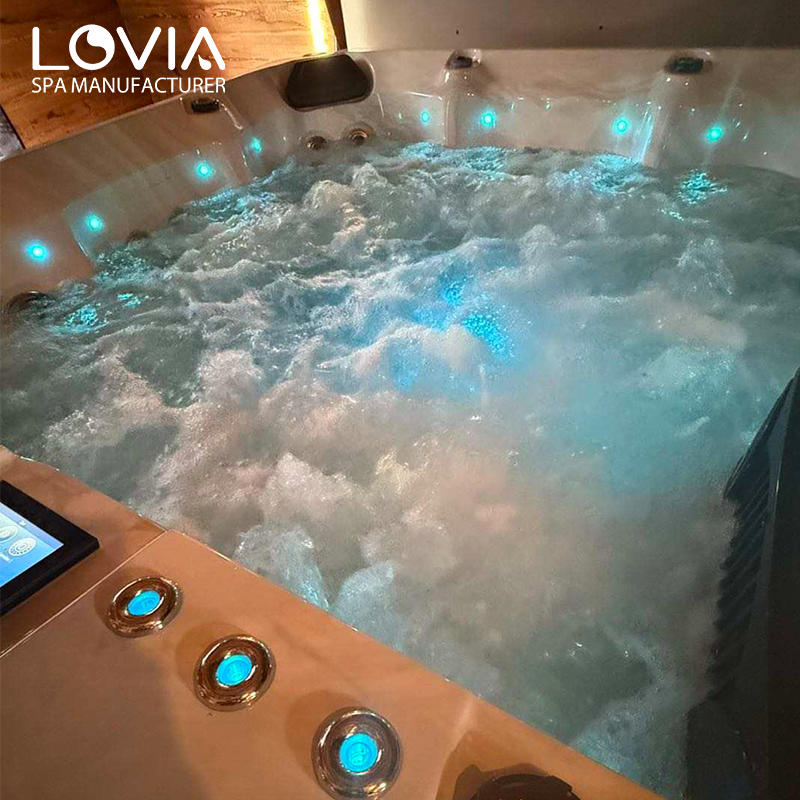
Why does my spa jacuzzi tub have a pungent odor? Does this mean excessive chlorine?
Many people mistakenly believe that a strong chlorine smell equals a high chlorine content, but the reality is more complex.
A pungent odor can be caused not only by excessive chlorine but also by the formation of chloramines from the combination of chlorine with sweat, oils, and cosmetics.
However, in spa jacuzzi tubs, the following situations are more common:
• No showering before soaking → High levels of organic matter in the water → Rapid chlorine reaction → Increased chloramines → Strong odor
• Excessive chlorine dosage → Enhanced odor production due to volatile components
• High water temperature → Accelerated chlorine evaporation → More pronounced chlorine smell
Whether the odor originates from chlorine itself or chloramines, it indicates an imbalance in the disinfection balance of the spa jacuzzi tub water, requiring chlorine content testing and adjustment.
Is skin stinging or dryness related to excessive chlorine in the spa jacuzzi tub?
The answer is: Very likely.
The normal free chlorine range for spa jacuzzi tubs is 1–3 ppm. When chlorine exceeds 5 ppm, the water's irritation to the skin significantly increases. Skin problems caused by high chlorine include:
• Dryness and tightness
• Localized redness
• Mild stinging or burning
• Peeling on sensitive skin
High chlorine levels in spa jacuzzi tub water strip away the skin's natural oils, damaging the skin barrier and making it more sensitive.
If you experience significant skin discomfort after each soak, your chlorine levels are likely too high.
Is cloudy water in a spa jacuzzi tub a sign of abnormal chlorine levels?
Usually, high chlorine is not the only cause of cloudiness, but it can indirectly affect the appearance of the water.
Turbidity may be caused by the following high-chlorine-related factors:
• Excessive chlorine leads to the oxidation of large amounts of organic matter → residues float in the water
• High chlorine disrupts the microbial balance of the water → increases chemical reactions in the water
• Chlorine reacts with minerals → forming tiny particles
If the water in your spa jacuzzi tub suddenly becomes unclear after adding chlorine, you should immediately check if the chlorine content is excessive.
Why does high chlorine damage spa jacuzzi tub components? What are the visible signs?
Excessive chlorine not only affects the human body but also your spa jacuzzi tub itself.
Here are signs of equipment damage caused by high chlorine:
1. Discoloration or yellowing of the nozzles
Plastic materials are most easily discolored by strong oxidizing agents.
2. Slight spots or corrosion on stainless steel parts
Chlorine is corrosive, and long-term excessive amounts will accelerate metal aging.
3. Hardening or brittleness of the spa jacuzzi tub lid material
Foam lids are particularly susceptible to corrosion by volatile chlorine gas.
4. Accelerated Aging of Water Pump Seals
Rubber materials are highly sensitive to high chlorine environments.
These signs not only affect the function of the spa jacuzzi tub but also shorten its lifespan. The earlier these signs are detected, the less unnecessary damage can be avoided.
How to accurately test the chlorine content in the water of a spa jacuzzi tub?
To determine if the chlorine level is too high, you will need the following testing tools:
1. Chlorine Test Strip (Most Convenient)
• Immerse in water for 1 second
• Compare colors
• Displays "Free Chlorine" and "Total Chlorine"
2. Liquid Titration Test (More Accurate)
• More sensitive to chemical quantities
• More suitable for meticulous maintenance
3. Electronic Water Quality Monitor (Suitable for frequent spa jacuzzi tub users)
• More intuitive digital readings
• More precise measurements
Regardless of the method used, ensure that the spa jacuzzi tub's water circulation is running for a few minutes before testing to obtain more uniform results.
How to Safely and Effectively Reduce Chlorine Levels If Too High?
If your spa jacuzzi tub is confirmed to have excessive chlorine, you can reduce the concentration using the following methods:
1. Stop adding chlorine
This is the most basic and easily overlooked step.
2. Open the lid to allow the chlorine to evaporate naturally
The high water temperature in the spa jacuzzi tub accelerates evaporation.
3. Increase water circulation
This accelerates chlorine dissipation and maintains uniform water quality.
4. Use a chlorine neutralizer (Sodium Thiosulfate)
This is suitable for very high chlorine concentrations and can quickly reduce the chlorine level to normal.
5. Partial water change
If the chlorine concentration exceeds 10 ppm, a water change is the most effective method.
Choose the appropriate method based on the degree of chlorine exceedance.
How to avoid excessive chlorine levels in your spa jacuzzi tub in daily life?
Prevention is always easier than treatment. Here are key habits for maintaining a balanced water quality in your spa jacuzzi tub:
• Test the water quality before each chlorine addition.
• Measure the chlorine dosage precisely according to the spa jacuzzi tub's capacity.
• Avoid sprinkling chlorine directly into one spot; add it in a distributed manner.
• Regularly check that the filtration system is functioning properly.
• Shower before soaking to reduce organic matter in the water.
• Avoid frequently adding shock chlorine.
By adhering to these methods, your spa jacuzzi tub's water quality will be more stable and safe.
The Importance of Maintaining Stable Water Quality in Your Spa Jacuzzi Tub
A spa jacuzzi tub brings relaxation and comfort, but it only provides the best experience when the water is healthy and safe. Chlorine itself is an important tool for maintaining water cleanliness, but excessive amounts can cause various problems such as skin irritation, unpleasant odors, cloudy water, and equipment damage.
By recognizing the signs of excessive chlorine in your spa jacuzzi tub and mastering the techniques for detection and adjustment, you can maintain your spa jacuzzi tub in optimal condition for the long term, ensuring a safe and enjoyable soak every time.
