

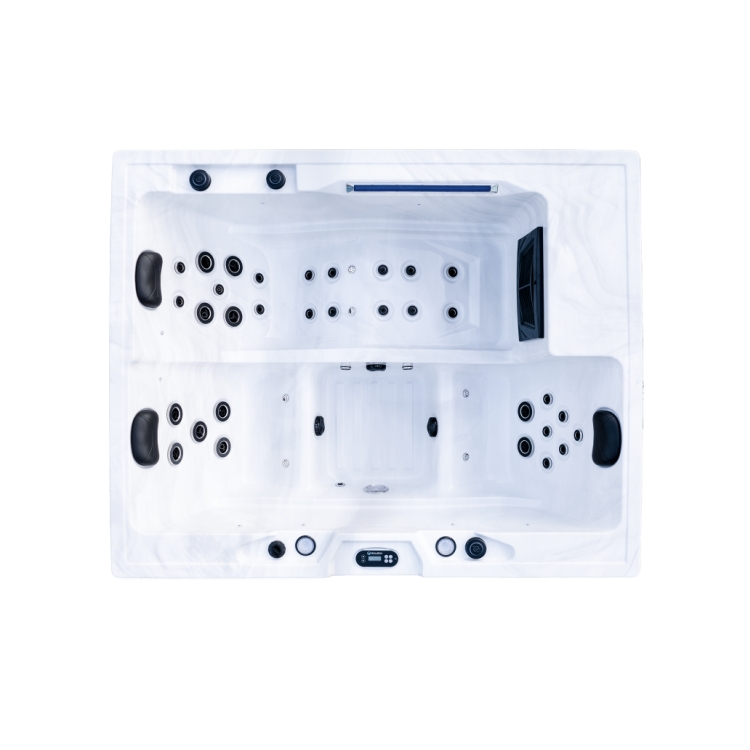
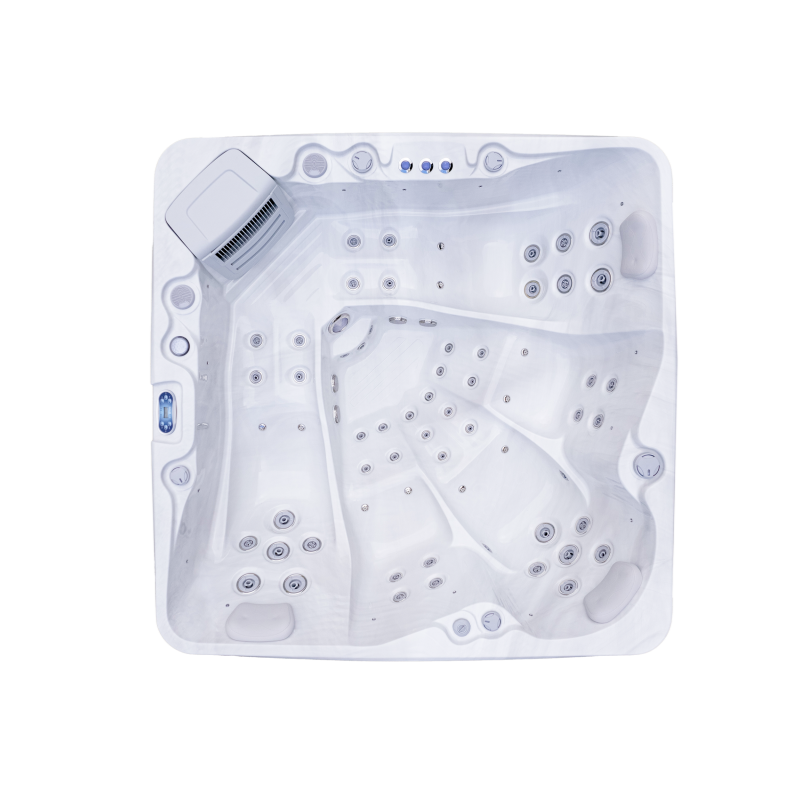
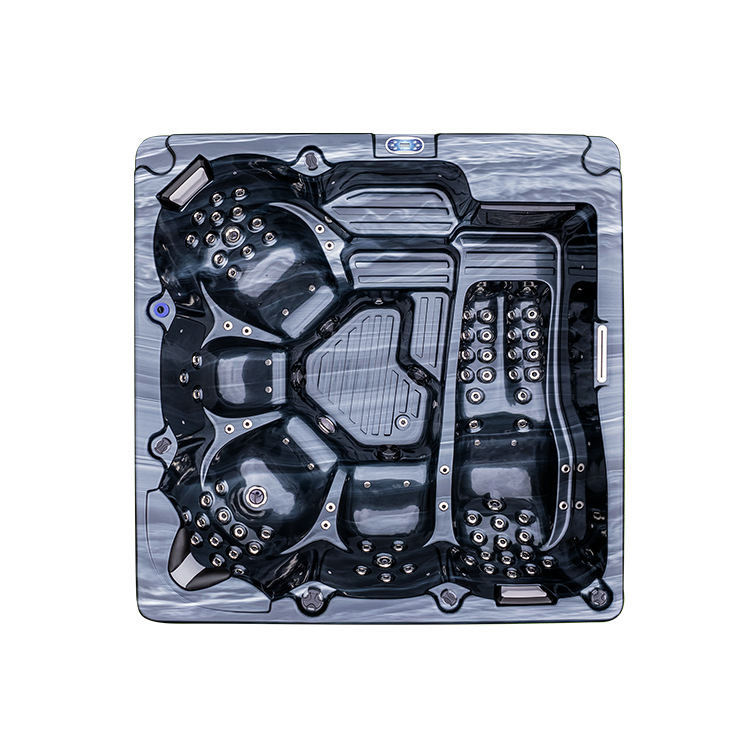
In outdoor living, home relaxation, and spa experiences, Jacuzzi tubs and jetted tubs are two of the most frequently mentioned concepts.
Many users are often confused when making a purchase: are these two the same product? Are there any fundamental differences in structure, function, or experience between a Jacuzzi tub and a jetted tub?
In fact, in everyday language, a Jacuzzi tub is sometimes referred to as a jetted tub, because both can spray rotating water jets to provide a massage effect.
However, from a professional perspective, there are still some differences in their definitions, equipment structure, hydraulic systems, nozzle technology, intended use, and suitable scenarios.
To correctly understand the differences between them, it is first necessary to understand that "Jacuzzi tub" is both a product type and, in some regions, a generalized use of a brand name; while "jetted tub" is more of a functional description.
To help you fully understand the differences between the two, this article will provide an in-depth analysis from multiple dimensions.
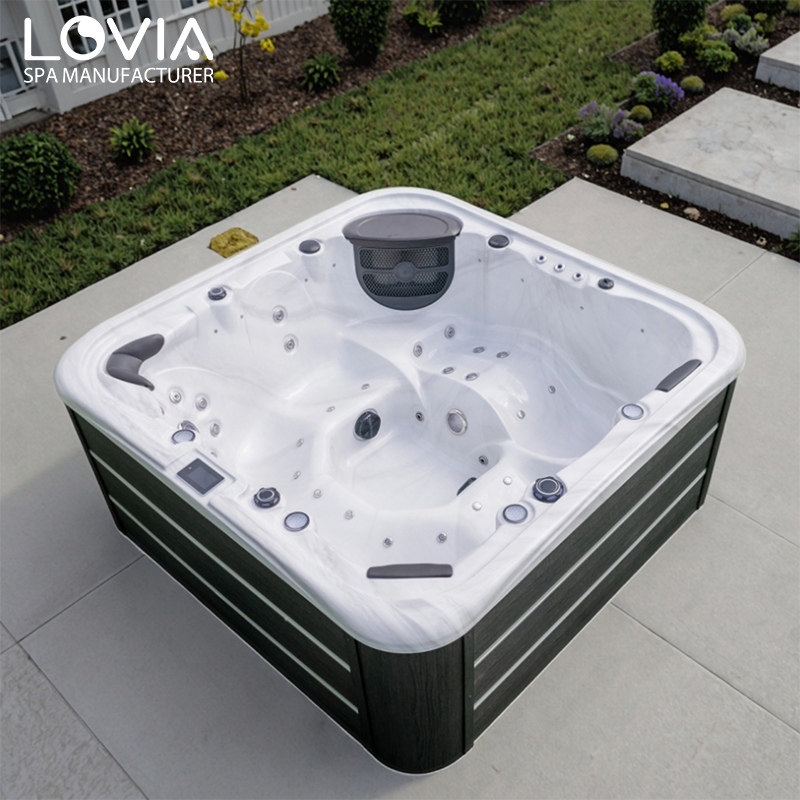
What is a Jacuzzi tub? Why is it often used as a synonym for a jetted tub?
To distinguish between "Jacuzzi tub" and "jetted tub," we must first clarify their respective definitions.
1. Jacuzzi tub
"Jacuzzi tub" originally referred to a type of high-end spa bathtub from the Jacuzzi brand. Because this brand introduced a highly innovative water jet system, giving the bathtub unique massage functions, its popularity gradually increased, leading to "Jacuzzi" becoming a general term for all similar jetted bathtubs in many regions.
In other words:
A Jacuzzi tub can be both a brand (Jacuzzi) and refer to a type of spa bathtub with massage jet functions.
However, in modern colloquial language, when consumers mention a Jacuzzi tub, they mostly refer to a bathtub with a jet system, water circulation device, and hydraulic massage structure, and are not limited to a specific brand.
2. Why do many people consider a Jacuzzi tub to be a jetted tub?
The reason is simple: the core function of a whirlpool tub is to "project powerful streams of water through nozzles."
Therefore, people often confuse whirlpool tubs with jetted tubs, which is very common in the outdoor living and home spa industry.
What is a jetted tub? Is a jetted tub the same as a Jacuzzi tub?
By definition, a jetted tub tends to describe the function rather than the brand category.
1. Jetted Tub
A jetted tub refers to a bathtub with a jet system. These jets use the power of a water pump to inject high-pressure water into the tub, creating a massage-like experience.
The most basic components of a jetted tub include:
• Jets
• Pump
• Return water pipes
• Control system
• Water circulation structure
Therefore:
Any bathtub with a jet system can be called a jetted tub.
2. Is a jetted tub the same as a Jacuzzi tub?
In most cases, these two terms can be used interchangeably.
But strictly speaking:
• Jacuzzi tub → Emphasizes comfort, brand, overall system, and specific experience
• Jetted tub → Emphasizes the technical details of the jet system itself
Therefore, the scope of a Jacuzzi tub is broader, while a jetted tub focuses more on components and functions.
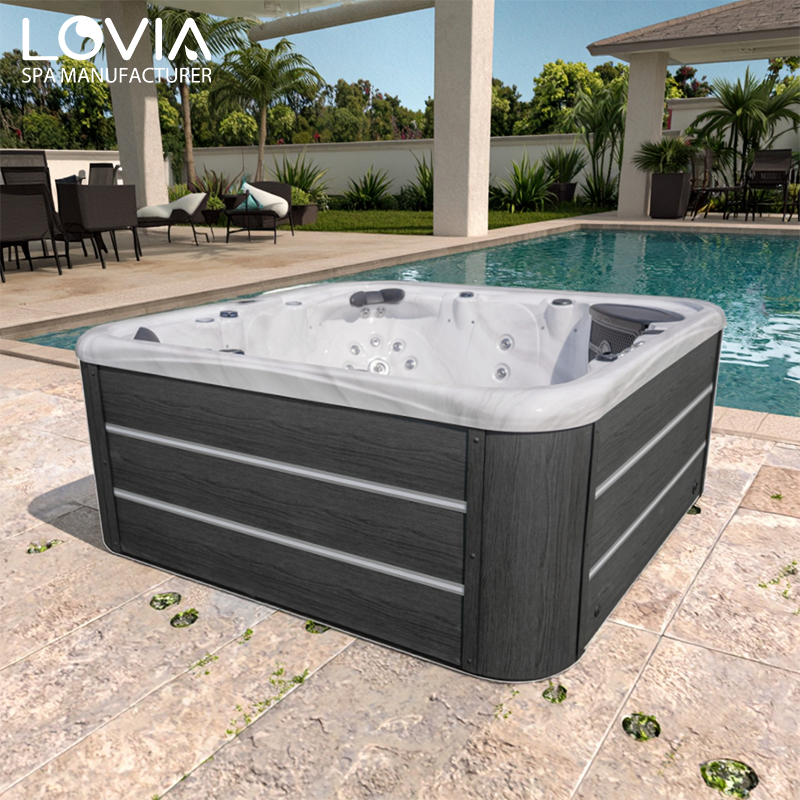
What are the structural differences between a whirlpool tub and a jetted tub?
Although both have water jets, their structures are not entirely identical, especially in professional design, where there are the following differences:
1. Different nozzle arrangement
Whirlpool tubs usually arrange the nozzles according to the body's curves, for example:
• Back jets
• Lumbar jets
• Leg jets
• Foot jets
• Shoulder jets
Jetted tubs, on the other hand, focus more on basic jet layout, with fewer nozzles and mostly standardized distribution.
2. Different Nozzle Types
Jacuzzi tubs typically use:
• Adjustable nozzles
• Rotating nozzles
• Air-water mixed nozzles
• Multi-point body massage nozzles
• Deep tissue relaxation nozzles
Jetted tubs primarily use:
• Standard direct spray nozzles
• Simplified hydraulic nozzles
3. Different System Complexity
Jacuzzi tubs are usually equipped with:
• High-power water pumps
• Multi-zone jets
• Bubble systems
• Heating devices
• Multi-mode controllers
Jetted tubs typically have a simpler system level, focusing on basic jet functions.
What are the differences in nozzle technology between Jacuzzi tubs and jetted tubs?
The nozzle system is one of the biggest differences between the two.
1. Jacuzzi Tub Nozzles
Designed with a focus on hydrotherapy effects, they may include:
• Deep tissue massage nozzles
• Rotating massage jets
• Air-water mixed jets
• Zoned massage areas
• Adjustable pressure and direction nozzles
Jacuzzi tub nozzles are generally more advanced and flexible, and can meet the needs of different body parts.
2. Jetted Tub Nozzles
Jetted tub nozzle technology is more basic:
• Single-point water jet
• Less directional adjustment
• Not necessarily equipped with air-water mixing technology
• Generally fewer nozzles
Jetted tubs are designed for basic water jet impact, rather than a highly personalized massage experience.
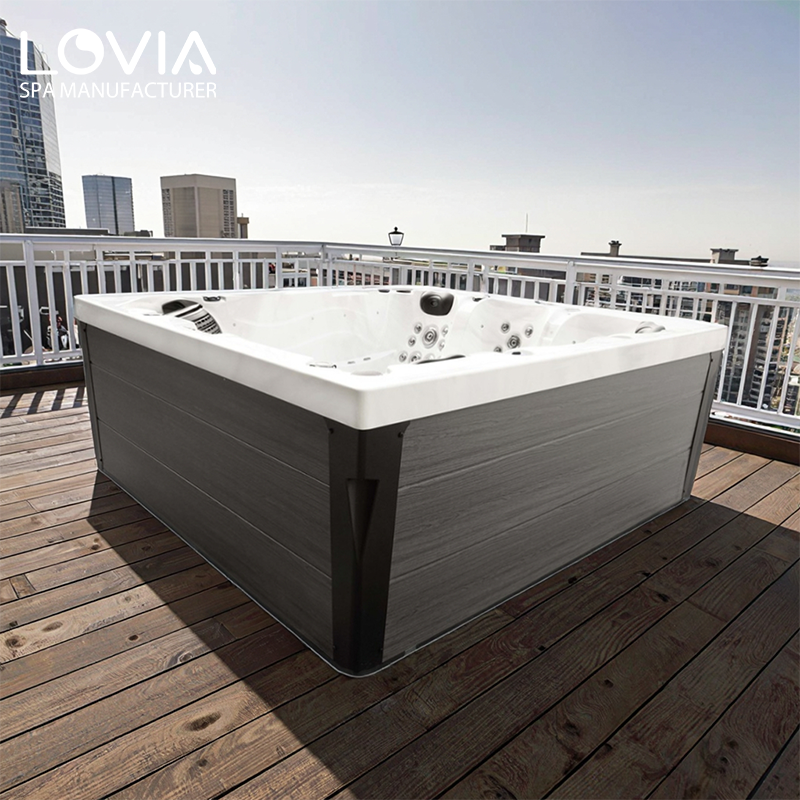
Is there a big difference in massage experience between the two?
Many people are most concerned about the difference in user experience.
1. Jacuzzi Tub Experience
The massage experience is more comprehensive, refined, and deep, focused on comfort.
Features include:
• More jets
• Zoned hydrotherapy
• Stronger and more adjustable water pressure
• Better body contouring
• More balanced water flow coverage
• Designed specifically for muscle relaxation and stress relief
Jacuzzi tubs emphasize physical and mental relaxation and muscle recovery.
2. The Jetted Tub Experience
The jetted tub experience is relatively basic, focusing on the sensation of water jets.
Features include:
• Fewer jets
• Water pressure is usually fixed
• Jets target only specific areas
• More suitable for light relaxation
• Suitable for regular bathing and simple hydrotherapy
Overall:
The Jacuzzi tub experience is more professional, while the jetted tub experience is more basic.
What are the differences in the power systems of Jacuzzi tubs and jetted tubs?
1. Jacuzzi Tub
Usually equipped with a high-power water pump, or even a multi-pump system, such as:
• Main circulation pump
• Booster pump
• Air bubble pump (if equipped with bubble massage)
These designs ensure more stable and powerful water pressure.
2. Jetted Tub
Usually only has a single water pump with lower power, whose main task is to drive the jets to produce a basic water flow.
Summary:
Jacuzzi tub = High power + Multiple jets
Jetted tub = Basic power + Standard jets
What are the differences in installation methods between the two?
Although both Jacuzzi tubs and jetted tubs require a water system and power supply, the installation methods are slightly different.
1. Jacuzzi Tub Installation
May include:
• 220V power supply
• Dedicated circuit
• Waterproof distribution box
• Space for the water pump
• Structural reinforcement support
• Wiring for the heating system
Installation is more rigorous; it is a professional-grade hydrotherapy equipment.
2. Jetted Tub Installation
Usually simpler:
• 110V or 220V is acceptable
• Shares some space with a regular bathtub
• Does not necessarily require extra system space
Therefore, jetted tubs are more suitable for general home renovation environments.
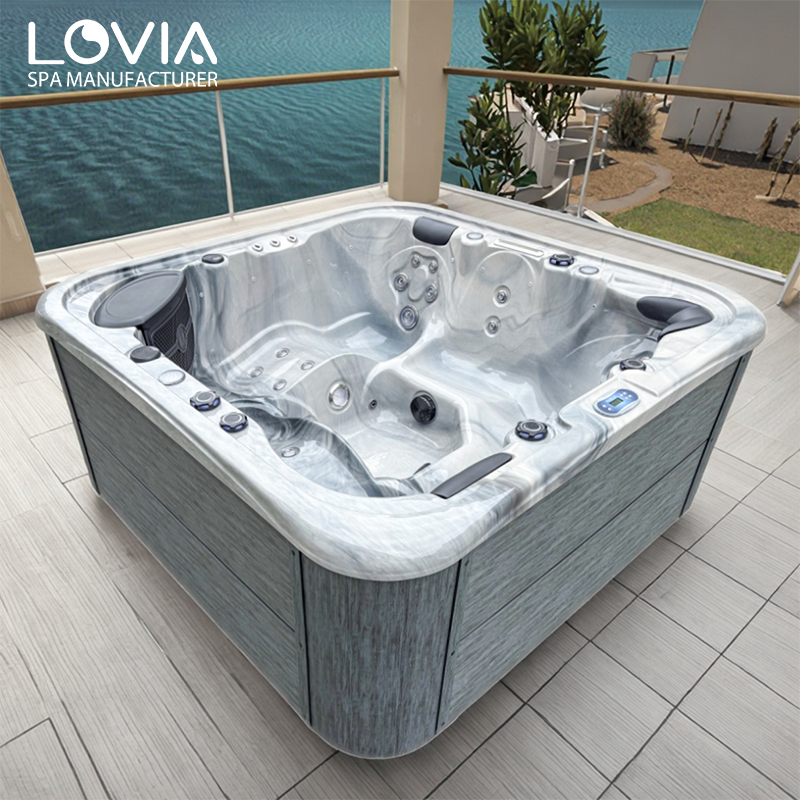
Is the maintenance of a Jacuzzi tub more difficult than that of a jetted tub?
Due to the differences in system complexity, the maintenance requirements also differ.
1. Jacuzzi Tub Maintenance
Maintenance may include:
• Cleaning the jets
• Sanitizing the pipe circulation system
• Maintaining the heating device
• Replacing water pump parts
• Regularly checking the control system
However, modern Jacuzzi tubs usually come equipped with automatic cleaning and circulation functions, so maintenance is not as difficult as it might seem.
2. Jetted Tub Maintenance
Maintenance is more basic:
• Cleaning the nozzles
• Regular pipe cleaning
• Checking the water pump
In comparison, jetted tubs have a simpler structure, making maintenance easier.
Is there a difference in durability between Jacuzzi tubs and jetted tubs?
Durability mainly depends on:
• Materials
• Brand
• Water pump quality
• Jet structure
• Piping system
Jacuzzi tubs typically use higher-specification materials and hydraulic systems, so their durability is often higher.
However, this doesn't mean that jetted tubs are easily damaged; their structure is simply more basic.
Which type of bathtub is better for everyday relaxation? Which is better for deep hydrotherapy?
1. Everyday home relaxation
Jetted tubs are more suitable because:
• Lower cost
• Simple maintenance
• Functions meet basic needs
2. Deep relaxation and hydrotherapy experience
Jacuzzi tubs are better:
• Diverse jet options
• Adjustable pressure
• Professional configuration
• More suitable for muscle relaxation and stress relief
Therefore, the choice of bathtub depends on your intended use.
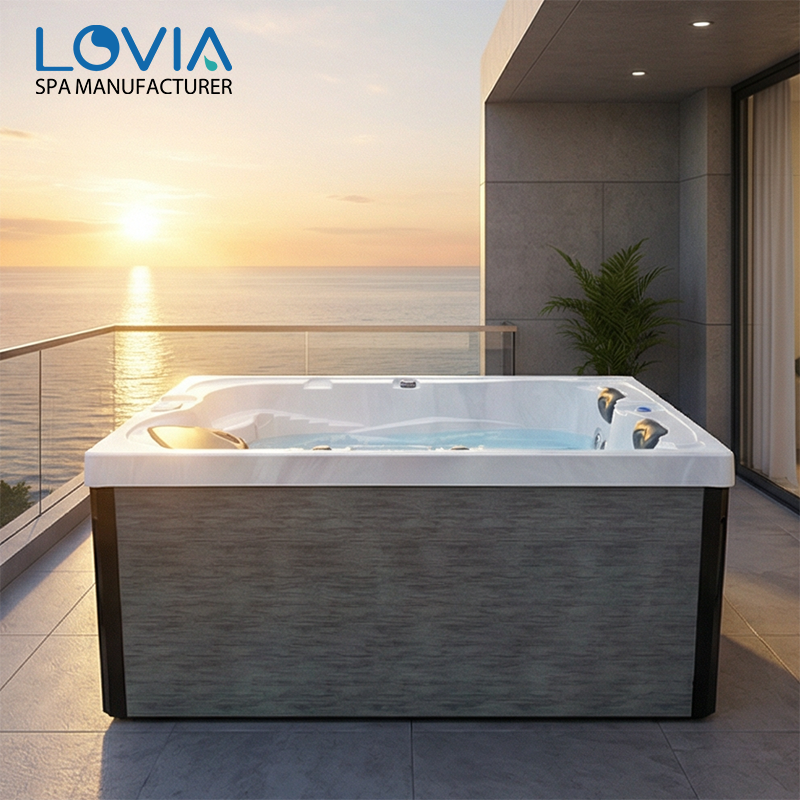
Is there a significant price difference between Jacuzzi tubs and jetted tubs?
Generally:
• Jacuzzi tubs: Higher price due to more complex systems and advanced configurations
• Jetted tubs: Lower price, more suitable for users with basic functional needs
However, the final price depends on the brand, materials, number of jets, and functional configuration.
What are the actual differences between Jacuzzi tubs and jetted tubs?
From definition, structure, nozzles, and power system to user experience, the differences between the two can be summarized as follows:
1. Jacuzzi tub features:
• More comprehensive functions
• More advanced nozzle technology
• More powerful water jets
• More professional experience
• More complex structure
• More suitable for deep hydrotherapy
• Higher price
2. Jetted tub features:
• Basic but practical functions
• Relatively simple installation
• Fewer nozzles
• Suitable for daily relaxation
• Easier maintenance
• More affordable price
Jacuzzi tubs have a more advanced system, stronger massage effects, and a more professional experience than jetted tubs; while jetted tubs have more basic functions and are more geared towards everyday use, suitable for general family relaxation.
There is no absolute good or bad between the two; the key is the level of hydrotherapy experience you require.
