

Many new users of swim spa tubs have this question: "If I don't add any disinfectant for a while, how long can the water last?"
This question seems simple, but it involves the combined effects of aquatic microbiology, physical filtration systems, temperature control, and human skin secretions.
This article will explain in detail from a scientific perspective why swim spa tub water cannot maintain a clean state for a long time without disinfectant, how long it will change, what potential problems it will cause, and how to develop a proper maintenance plan.
Why Must Swim Spa Tubs Rely on Disinfectant?
To understand "how long can it last without disinfectant," we must first clarify a core fact: the water in a swim spa tub is not stagnant natural water, but a closed-loop, man-made aquatic system.
1. The Special Nature of the Aquatic Environment
Unlike ordinary bathtubs or swimming pools, swim spa tubs have a high-temperature, circulating, jetting, and filtration system.
• High-Temperature Environment (35–38°C): The higher the temperature, the faster bacteria multiply.
• Water circulation: Continuous agitation ensures even distribution of pollutants and promotes microbial diffusion.
• Enclosed space: Without fresh water replenishment, pollutant concentrations gradually increase.
2. Pollution from the Human Body
Even a brief immersion can release the following from human skin:
• Sweat and sebum;
• Residue from cosmetics and skincare products;
• Trace amounts of urea and keratinocytes;
• Bacteria and fungi on the skin.
These substances, once inside the swim spa tub, become nutrient sources for microorganisms, rapidly disrupting the water's balance.
3. Mechanism of Action of Disinfectants
Disinfectants (such as chlorine, bromine, active oxygen, or non-chlorine oxidants) kill bacteria, algae, and other microorganisms in the water through oxidation reactions, while preventing the water from becoming smelly and turbid.
Without these chemical protections, water quality deterioration is almost inevitable.
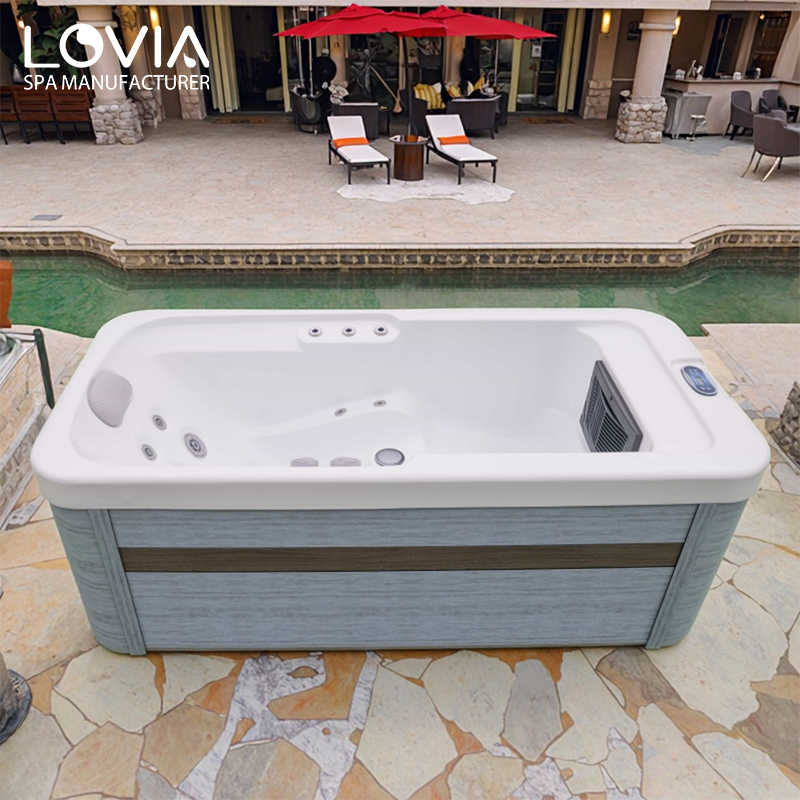
How long can a swim spa tub last without disinfectants?
Many people want a specific timeframe, such as "3 days," "7 days," or "a month."
In reality, this timeframe is not fixed but depends on several factors.
The following analysis examines the usability of a swim spa tub under different conditions without the use of disinfectants.
1. Ideal Conditions: No use, low temperature, covered
• Environment: Cover always closed, temperature maintained below 25°C, no one entering.
• Result: Under these conditions, the water may remain relatively clear for 5–7 days, but the number of microorganisms will gradually increase.
Even if it appears clear, bacteria may have already grown.
2. Typical Household Use Environment
• Environment: Daily or every other day use, water temperature maintained at 36–38°C.
• Result: Within 24–48 hours, the water begins to become slightly turbid, the number of bacteria increases rapidly, and the water quality deteriorates significantly after 3 days.
3. Open or Outdoor Environment
• Environment: Covered exposure, dust and fallen leaves entering, direct sunlight.
• Result: Algae typically appear within 1–2 days, the water becomes green and slimy.
✅ Conclusion Summary:
Under most real-world conditions, the water in a swim spa tub, without added disinfectant, typically only maintains a safe usage period of 1–3 days.
After this time, bacteria, fungi, algae, and other microorganisms will begin to multiply rapidly, leading to irreversible water quality deterioration.
What happens to the water quality in a swim spa tub without disinfectant?
When you stop using disinfectant, the process of water quality deterioration is predictable and continuous.
We can divide it into four stages:
1. Stage 1: Chemical Balance Disruption (0–24 hours)
After the disinfectant concentration drops to zero, the previously suppressed bacteria begin to regain activity.
• The pH value of the water begins to fluctuate;
• Trace amounts of organic matter are not decomposed, forming a source of turbidity;
• A sticky film begins to adhere to the surface of the filter cartridge.
2. Stage 2: Accelerated Bacterial Growth (24–48 hours)
• Rapid proliferation of E. coli, Pseudomonas, etc.
• An unpleasant odor begins to appear in the water (similar to musty or fishy smells);
• Slight foaming appears on the surface.
3. Stage 3: Algae and Fungal Invasion (48–72 hours)
• If the temperature is suitable and there is light, algae begin to grow rapidly;
• The water color may turn green or yellow;
• A biofilm forms inside the pipes, affecting circulation efficiency.
4. Stage 4: Systemic Contamination (After 3 days)
• The water becomes cloudy and slippery;
• Nozzles become clogged, and the filtration system becomes contaminated;
• Bacterial concentration exceeds safety standards by thousands of times.
At this point, even if disinfectant is added again, it is difficult to restore water quality balance in a short time, and a thorough flushing is necessary.
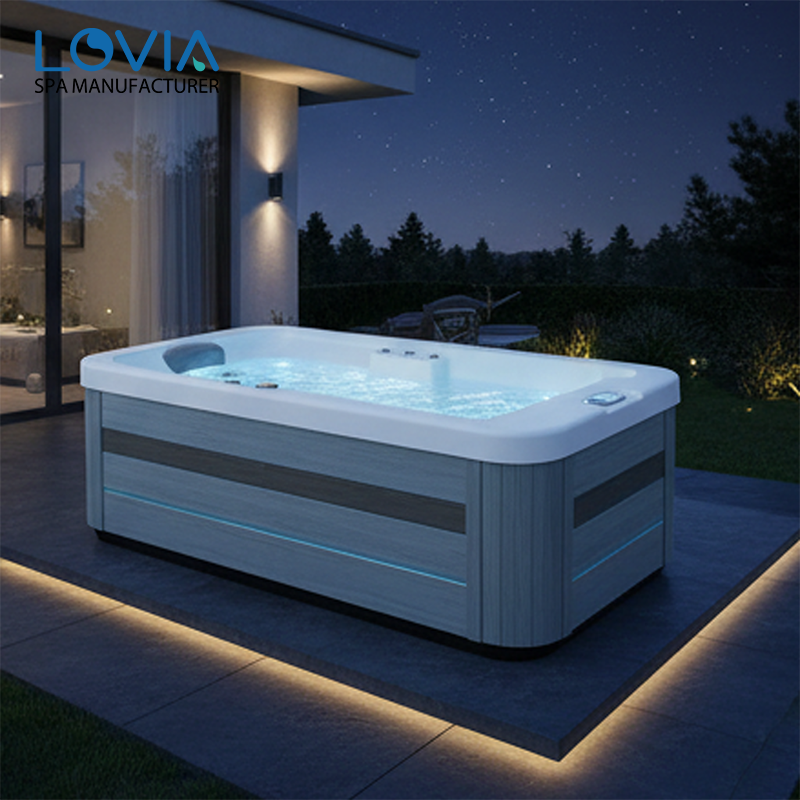
What factors affect the "disinfectant-free survival period" of a swim spa tub?
1. Water Temperature
Temperature is the most critical factor. The higher the temperature, the faster the bacteria multiply.
• At 25°C, the number of bacteria doubles every 8 hours;
• At 37°C, it may double every 2 hours.
Therefore, it is almost impossible for a high-temperature swim spa tub to last more than two days without disinfectant.
2. Frequency of Use
Each use introduces a large amount of organic matter and microorganisms.
Frequency of use will exponentially increase the rate of water quality deterioration.
3. Filtration System Efficiency
While filtration systems can physically remove some particulate matter, they cannot kill bacteria.
Even with 24-hour circulation, it cannot replace chemical disinfection.
4. Environmental Pollution Sources
Airborne dust, plant pollen, and pet hair can all become sources of water pollution.
Especially for outdoor swim spa tubs, without a cover, water quality deterioration will be significantly accelerated.
5. Initial Water Quality
If tap water with some residual chlorine is used, the initial deterioration process can be slightly delayed; if well water or softened water is used, the water quality is more prone to imbalance due to its higher mineral content and microbial base.
Can water quality be maintained solely by filtration or ozone systems?
This is another common question among many users.
1. "My swim spa tub has an ozone generator, do I still need to add disinfectant?"
While ozone does have strong oxidizing properties and can help decompose organic matter, its lifespan is extremely short (only a few minutes) and it cannot form a lasting protective layer throughout the water.
Therefore, ozone systems can only be used as an auxiliary purification method and cannot completely replace disinfectants.
2. "If I use a high-efficiency filter, do I not need chemicals?"
Filters can only remove suspended particles and some impurities, but they have almost no ability to kill bacteria, viruses, or algae.
Even with daily filter replacement, microbial growth cannot be prevented.
3. "I don't mind the water becoming cloudy, as long as it's safe?"
Cloudy appearance is merely a symptom of deteriorating water quality. The actual risk lies in the concentration of bacteria, such as Legionella, Pseudomonas, and Staphylococcus, which can multiply rapidly in an environment without disinfection and cause skin infections or respiratory problems.
Conclusion:
Filtration and ozone systems are only supplementary measures; chemical disinfectants are the core element in ensuring the safety of water quality in a swim spa tub.
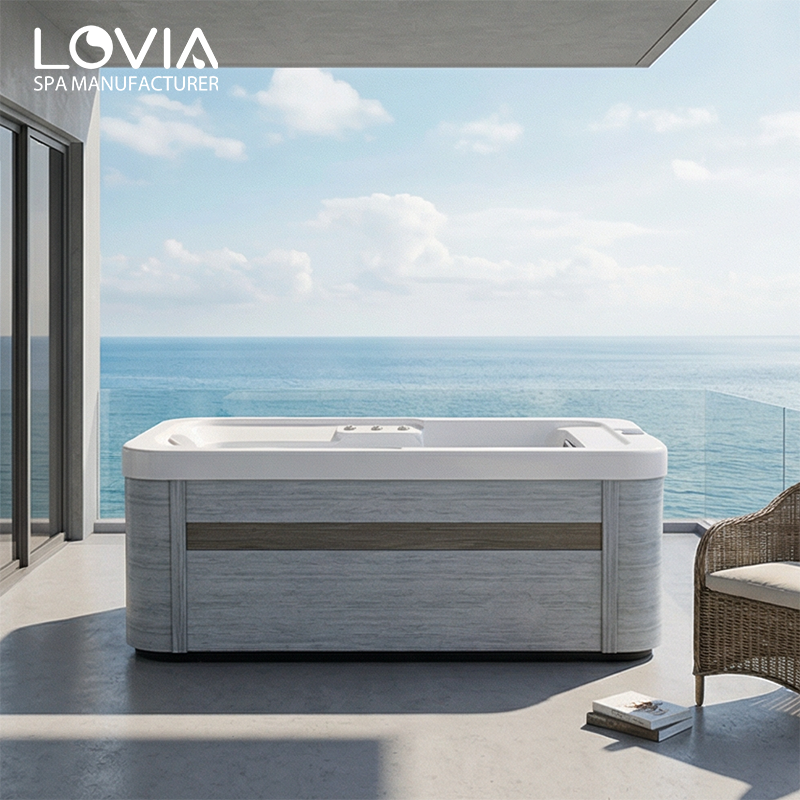
What should you do if you are not using your swim spa tub temporarily?
If you plan to not use the tub for a short period and do not want to change the water frequently, you can take the following scientific steps:
1. Lower the water temperature
Setting the temperature below 25°C can significantly slow down bacterial growth.
2. Cover the tub
The lid effectively prevents dust, insects, leaves, and sunlight from entering, thus inhibiting algae growth.
3. Maintain minimum circulation
Even when not in use, it is recommended to run the circulation system for 2–4 hours daily to avoid stagnant water areas.
4. Add a small amount of maintenance disinfectant
Even low concentrations (such as 1–2 ppm) of chlorine or active oxygen can maintain basic protection and prevent water quality from deteriorating in the short term.
5. If not used for more than two weeks, thoroughly drain and clean the tub
The safest method for prolonged periods of non-use is to completely drain the swim spa tub, wipe the inner walls and nozzles dry, and prevent mold or algae growth in a humid environment.
What are the potential risks of not using disinfectant?
1. Hygiene and Health Risks
• Bacterial Infection Risks: Dermatitis, folliculitis, respiratory infections, etc.
• Allergic Reactions: Skin itching due to bacterial metabolites or algal toxins.
• Eye Irritation: Non-chlorinated but contaminated water can cause conjunctival irritation.
2. Equipment Damage Risks
• Biofilm formation inside pipes, affecting water flow;
• Pump and nozzle clogging;
• Accelerated filter failure;
• Odor generation within the system.
3. Increased Water Quality Restoration Costs
Once the water quality has completely deteriorated, even with the addition of disinfectant, it may require:
• Multiple strong flushing treatments;
• Filter replacement;
• Thorough pipe cleaning.
This is not only time-consuming but also significantly increases chemical consumption.
From a scientific perspective: Why does a swim spa tub need "continuous disinfection"?
Unlike natural water bodies, a swim spa tub lacks an ecological balance mechanism.
In a natural environment, sunlight, algae, microorganisms, and water flow create a dynamic balance;
However, in an artificial, closed system, no natural force can self-purify contaminants.
Therefore, maintaining a safe and stable water quality environment requires:
• Continuous low-concentration disinfectant (maintaining an effective chlorine level of 0.5–3 ppm);
• Periodic flushing treatment (every two weeks);
• Regular filter replacement and drainage.
Only in this way can a swim spa tub maintain clear, odorless, and safe water quality in the long term.
How Does LOVIA SPA Control Production Quality at the Factory Level?
LOVIA SPA applies strict factory-level quality management systems under ISO9001 standards. Each production stage is monitored to ensure materials, assembly, and testing meet required specifications. This structured quality control process supports consistent product performance and reduces defect rates. Buyers sourcing from LOVIA SPA gain confidence in product reliability while benefiting from factory-direct pricing and professional manufacturing oversight.
