

As spa hot tubs become increasingly common relaxation equipment in homes and leisure venues, more and more people, while enjoying the comfort of spa treatments, are also raising a seemingly simple yet very worthwhile question:
Does soaking in a whirlpool spa hot tub actually burn calories?
Some believe that sweating profusely while soaking in hot water must have consumed a lot of energy;
Others feel that soaking in a whirlpool spa hot tub is simply relaxing and doesn't actually "burn calories."
So, from the perspective of human physiology and energy metabolism, how should this question be answered objectively?
This article will systematically and professionally analyze multiple aspects, including the nature of calorie consumption, the effects of spa hot tubs on the body, and metabolic responses in high-temperature environments.
What is the nature of calorie consumption?
To answer the question "Does soaking in a spa hot tub burn calories?", we must first understand a fundamental question:
How are calories consumed?
From a physiological perspective, calorie consumption primarily comes from:
1. Basal metabolism
Maintaining basic life functions such as breathing, heartbeat, and body temperature.
2. Physical activity
Energy required for muscle contraction.
3. Thermoregulation
Energy consumed by the body to maintain a constant body temperature.
Even when doing nothing, the body continuously burns calories. However, the level of calorie consumption varies significantly depending on the activity level.
What state is the body in when soaking in a spa hot tub?
Typical scenarios for using a spa hot tub include:
• The body is in a relatively static state.
• Muscles are relaxed rather than actively contracting.
• The water temperature is usually higher than normal body temperature.
• The water flow and jets provide passive stimulation.
From an activity intensity perspective, soaking in a whirlpool spa hot tub is clearly not "active exercise," but rather a state of relaxation under passive environmental stimulation.
However, this does not mean that calorie consumption is zero.
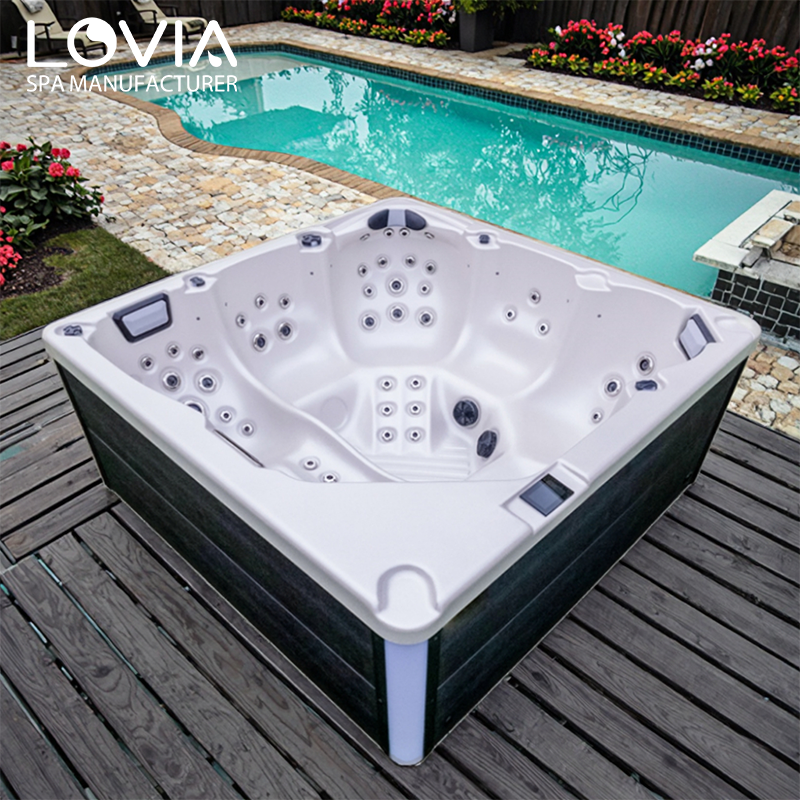
Does soaking in a spa hot tub burn more calories than sitting still?
The answer is: usually slightly more than sitting still, but the difference is limited.
The main reasons include the following:
1. Extra energy expenditure due to thermoregulation
The water temperature in a whirlpool spa hot tub is higher than body temperature, requiring the body to regulate its temperature through:
• Vasodilation
• Increased blood circulation
• Sweating
This process consumes energy.
2. Slight increase in heart rate
In a warm environment, the heart needs to work more actively to help dissipate heat, resulting in a slight extra energy expenditure.
3. Nervous system maintaining adaptation
The body needs to constantly sense and adapt to water temperature, water pressure, and jet stimulation, which also creates a certain basal metabolic burden.
Therefore, the calorie expenditure while soaking in a whirlpool spa hot tub is usually slightly higher than while relaxing on a sofa.
Does sweating profusely in a spa hot tub mean you've burned a lot of calories?
This is a very common misconception.
Sweating ≠ Burning a Lot of Calories
The essence of sweating is:
• The body dissipates heat through water evaporation
• It does not directly equate to a significant loss of fat or energy
In a spa hot tub:
• Sweat is primarily water and electrolytes
• Weight loss is mostly due to temporary water loss
This water loss is quickly replenished after rehydration and does not represent actual energy expenditure.
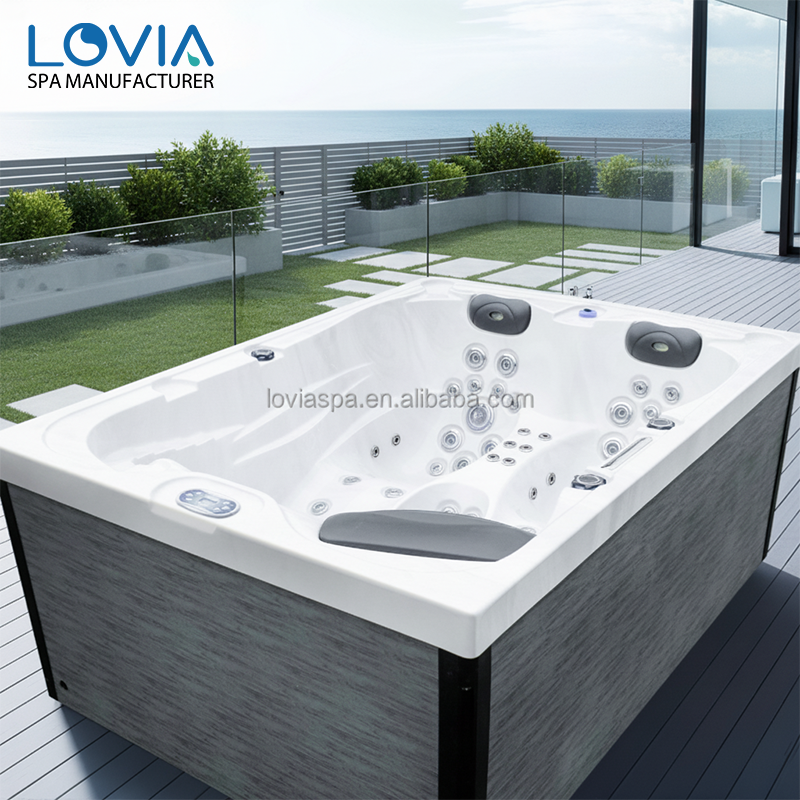
Does the passive heating environment in a spa hot tub "burn fat"?
From a strictly physiological perspective, simply soaking in a whirlpool spa hot tub does not produce a significant fat-burning effect.
The reasons are:
• Fat burning primarily depends on muscle activity
• Passive heating does not trigger significant fat breakdown
• Energy demand does not increase significantly
A spa hot tub is more like:
A relaxing environment that slightly boosts metabolism, rather than an active form of exercise that burns energy.
How many calories do you burn soaking in a spa hot tub?
Understanding this question in terms of "scale" makes it easier to form a rational understanding.
Generally speaking:
• Calorie expenditure from soaking in a spa hot tub
• Approximately the basal metabolic rate in a state of mild relaxation
• Significantly lower than walking, swimming, or other active exercise
Therefore, soaking in a whirlpool spa hot tub is not a highly efficient calorie-burning activity.
Why do some people feel "tired" after soaking in a spa hot tub?
Some people feel tired after soaking in a whirlpool spa hot tub, even mistakenly believing they have "burned a lot of energy."
This feeling mainly stems from:
• Changes in blood pressure due to vasodilation
• Relaxation of the nervous system due to the high temperature environment
• Changes in bodily perception due to buoyancy in the water
This "fatigue" is more of a reaction to relaxation than a result of high-intensity energy expenditure.
Is the main function of a spa hot tub to burn calories?
From a product design and usage perspective, the answer is clearly no.
The core functions of a spa hot tub are:
• Relaxing muscles
• Relieving tension
• Improving comfort
• Providing a spa experience
It is not a device designed for "fat burning" or "burning a lot of calories."
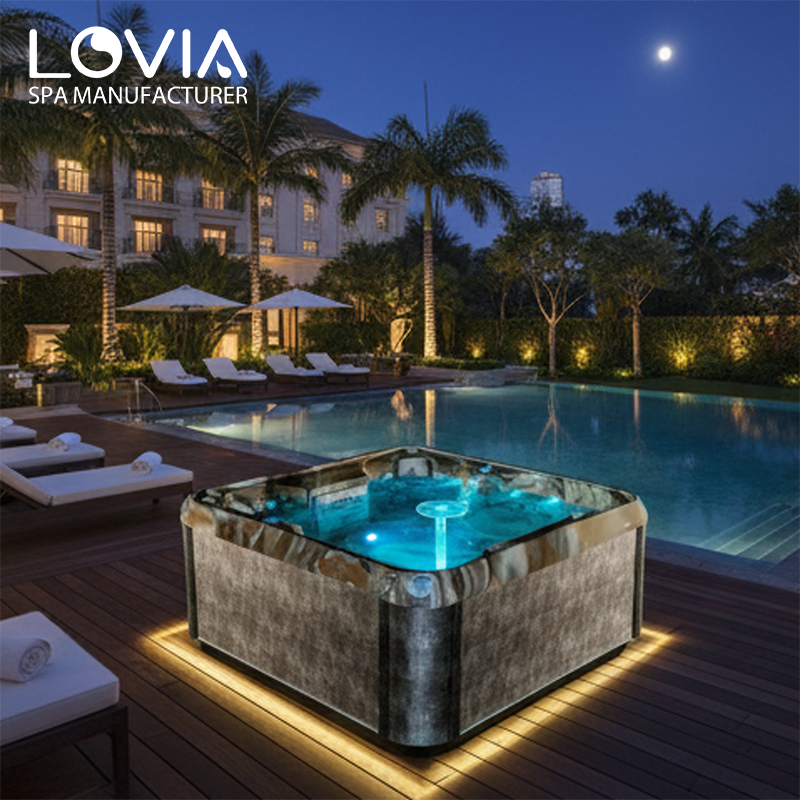
Why do some people associate spa hot tubs with weight loss?
This association often stems from several psychological and physiological factors:
1. Sweating in hot water is mistaken for fat burning.
2. The illusion of temporary weight loss.
3. The feeling of "relaxation" after relaxation.
4. The intuitive association of "heat = burning".
However, from a scientific perspective, none of these are sufficient to suggest that soaking in a spa hot tub can replace exercise for calorie burning.
What is the correct understanding of energy expenditure in a spa hot tub?
A more accurate understanding would be:
• Soaking in a whirlpool spa hot tub results in a slight additional energy expenditure.
• This expenditure is a minor adjustment at the basal metabolic rate level.
• It cannot be considered an active way of burning calories.
If we rank energy expenditure intensity as follows:
Sedentary < Spa hot tub < Light activity < Moderate to high intensity exercise
Spa hot tub is very close to the sedentary activity end.
If the goal is to burn calories, is a spa hot tub suitable?
Logically, the answer is clear:
• If the goal is relaxation and recovery, a spa hot tub is ideal.
• If the goal is to burn a lot of calories, a spa hot tub is not efficient.
A spa hot tub is better understood as:
a way to relax the body and improve physical well-being, rather than a fat-burning tool.
How to rationally view the issue of "burning calories while soaking in a spa hot tub"?
A rational understanding should include the following points:
1. Soaking in a whirlpool spa hot tub does burn a small amount of calories.
2. This burning primarily comes from body temperature regulation and basal metabolism.
3. Sweating is not the same as fat burning.
4. A whirlpool spa hot tub cannot replace exercise.
Establishing this understanding helps avoid unrealistic expectations.
How does LOVIA SPA assist Buyers with long-term inventory planning?
LOVIA SPA works with Wholesale Buyers to plan production schedules and inventory levels based on forecasted demand. Our Factory can reserve capacity and stabilize Prices for repeat orders. Buyers benefit from predictable lead times and reliable supply of hot tubs and swim spas. This planning support reduces stock shortages and improves Sales continuity. As a Manufacturer focused on partnership, LOVIA SPA helps clients manage growth efficiently.
