

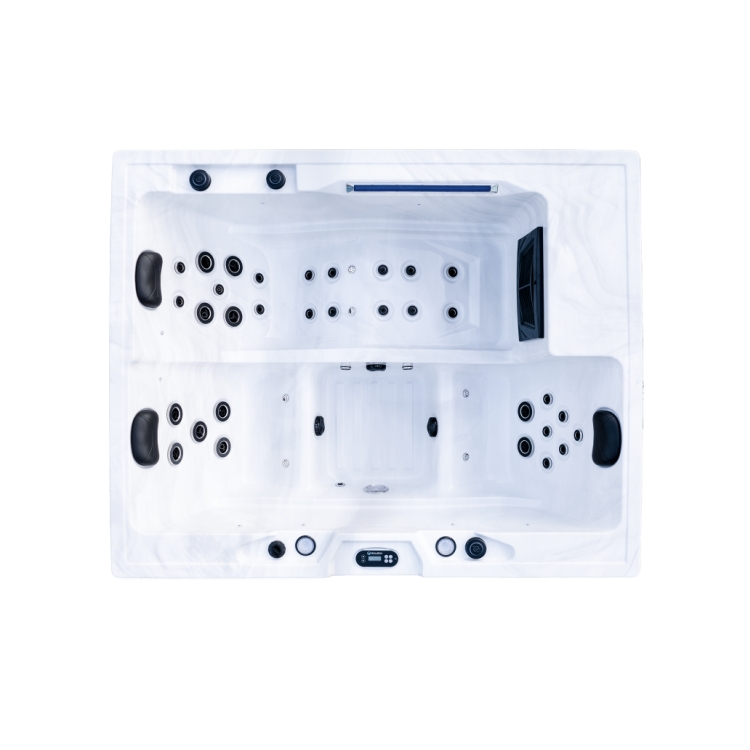
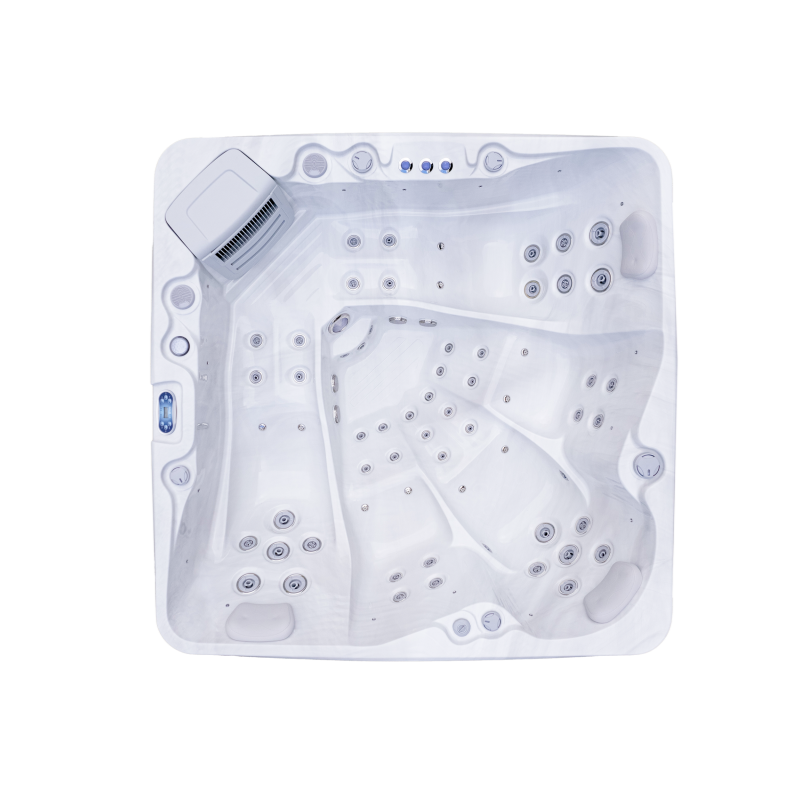

In modern homes and commercial leisure venues, swim spa tubs are increasingly becoming an important choice for relaxation and exercise. Combining swimming and hydrotherapy functions, swim spa tubs allow users to enjoy both aquatic exercise and the comfort of a water massage.
However, as more and more people use swim spa tubs, a common and crucial question arises: "Do swim spa tubs need chlorination?"
This article will answer this question in detail from multiple perspectives, including scientific principles, safety, and maintenance, and will explore best practices for swim spa tub water quality management.

Why do swim spa tubs need water disinfection?
A swim spa tub is a closed or semi-closed aquatic environment. During use, the water constantly comes into contact with organic matter such as human skin, sweat, cosmetics, and urine. These organic substances provide breeding grounds for bacteria, viruses, and algae. Without effective water disinfection measures, swim spa tubs can easily become a breeding ground for microorganisms, leading to the following problems:
• Bacterial and viral infections: Pathogenic microorganisms such as E. coli and Salmonella in the water can cause health problems through skin contact or accidental ingestion.
• Algae and Scale Deposits: Algae growth can turn the water green and increase the difficulty of maintaining pumps and pipes.
• Turbid Water and Odor: The decomposition of organic matter releases ammonia, sulfides, and other substances, giving the water a pungent odor and affecting the user experience.
Therefore, swim spa tubs must undergo some form of disinfection to ensure water safety and user comfort.
Do swim spa tubs need chlorine?
To answer this question directly: In most cases, swim spa tubs need chlorine or other effective disinfectants. Chlorine is a highly efficient, economical, and easily controlled water disinfectant that can quickly kill bacteria, viruses, and other harmful microorganisms in the water.
1. The Role of Chlorine in Swim Spa Tubs
• Sterilization and Disinfection: Chlorine can destroy the cell walls of bacteria and viruses, preventing their reproduction and thus ensuring water safety.
• Organic Matter Oxidation: Chlorine can react with organic matter such as sweat and urine, reducing the risk of water pollution.
• Maintaining Water Stability: Appropriate amounts of chlorine can prevent water from turning green and developing odors, keeping the swim spa tub clear for a long time.
2. Precautions for Chlorine Use
Although chlorine is very effective for disinfection, excessive use can have certain effects on people and equipment:
• Skin and Eye Irritation: High concentrations of chlorine may cause dry skin or eye irritation.
• Corrosion of Bathtub Materials: Some metal and plastic parts are prone to aging in high-concentration chlorine water.
• Chlorine Odor: Excessive chlorine can cause a noticeable pungent odor, affecting the user experience.
Therefore, when using chlorine in a swim spa tub, it is necessary to strictly follow the recommended concentration and regularly test the water quality.

Can a Swim Spa Tub Be Used Without Chlorine?
Some may ask, "Can a swim spa tub be used without chlorine at all?" The answer is: theoretically, yes, but it is strongly discouraged.
Currently, there are some chlorine alternatives available on the market, such as ozone, ultraviolet disinfection, and bromide disinfection. These methods can indeed kill microorganisms in water to some extent, but they have the following problems:
• High cost: Ozone generators and ultraviolet disinfection equipment are expensive and complex to maintain.
• Insufficient disinfection persistence: Ultraviolet light and ozone only work on microorganisms in the water as they pass through the equipment; any remaining microorganisms in the water may still multiply.
• Complex operation: Requires specialized equipment and technical support; it is difficult for ordinary household users to consistently maintain safe water quality.
Therefore, for most household or commercial use scenarios, swim spa tubs still need to use chlorine or chlorine-containing disinfectants to ensure water quality.
What should the chlorine concentration in a swim spa tub be?
To ensure water safety while avoiding harm to people and equipment, the chlorine concentration in the swim spa tub needs to be scientifically controlled. The general recommended ranges are as follows:
• Free chlorine concentration: 1–3 ppm (mg/L)
• Total chlorine concentration: 2–4 ppm
• pH control: 7.2–7.8
Free chlorine refers to chlorine in water that has not bound to organic matter and has a direct bactericidal effect; total chlorine includes free chlorine and chlorides formed by reactions with organic matter. Maintaining free chlorine at 1–3 ppm can effectively kill bacteria while avoiding eye irritation and material corrosion.

How to correctly add chlorine to a swim spa tub?
Correctly adding chlorine is a key step in ensuring the safety of water quality in a swim spa tub. The main methods include:
1. Chlorine tablets or chlorine granules
Place the chlorine tablets into the float or dosing device to slowly dissolve and release.
• Advantages: Even release, simple maintenance.
• Caution: Avoid adding directly to the bottom of the tub to prevent excessively high local concentrations.
2. Liquid chlorine (sodium hypochlorite)
Add directly to the water and stir well.
• Advantages: Fast dissolution, significant bactericidal effect.
• Note: Use with a pH adjuster to avoid increasing water alkalinity.
3. Automatic Dosing System
High-end swim spa tubs are often equipped with automatic dosing systems that adjust chlorine concentration in real time according to water quality.
• Advantages: Simple operation, precise monitoring.
• Note: The equipment requires regular calibration and cleaning.
What are the safety precautions for using chlorine in a swim spa tub?
When using chlorine for water disinfection, the following points should be noted to ensure human health and equipment lifespan:
1. Regularly test water quality
Test free chlorine, total chlorine, and pH value daily or before each use to ensure water quality is within safe ranges.
2. Avoid direct contact with high concentrations of chlorine
After dosing, wait for the chlorine to distribute evenly and avoid direct contact with high concentrations of chlorine water.
3. Prevent equipment corrosion
Regularly check the water pump, pipes, and nozzles to prevent damage caused by excessive chlorine concentration.
4. Maintain ventilation
When using a swim spa tub indoors, maintain good ventilation to prevent chlorine buildup and respiratory irritation.

Are chlorine alternatives feasible for swim spa tubs?
Besides chlorine, some users may consider alternatives such as bromine, ozone, ultraviolet light, or ionization. Their characteristics are as follows:
• Bromine: Similar bactericidal ability to chlorine, but more stable, suitable for high-temperature spa environments.
• Ozone: Fast bactericidal speed, but requires additional equipment and leaves no residue in the water.
• Ultraviolet light: Effectively kills microorganisms in the water, but cannot maintain water quality safety in the long term.
• Ionization (copper and silver ions): Slowly inhibits the growth of bacteria and algae, suitable as an auxiliary disinfection method.
In general, these methods can supplement or partially replace chlorine, but completely eliminating chlorine still poses water quality safety risks, especially given the difficulty of daily maintenance of home swim spa tubs.
Do swim spa tubs need chlorine?
—Yes!
Swim spa tubs are semi-closed or closed water bodies, prone to bacterial and algae growth, requiring disinfection measures.
Chlorine is the most commonly used, economical, and efficient disinfectant for swim spa tubs, killing bacteria, oxidizing organic matter, and maintaining water clarity. While alternative disinfection methods can be used for swim spa tubs, completely avoiding chlorine poses safety risks.
When using chlorine, it is crucial to scientifically control the concentration (free chlorine 1–3 ppm), monitor pH levels, and employ correct dosing methods.
Chronicity alternatives (bromine, ozone, ultraviolet light, etc.) can assist in disinfection, but most household users still require chlorine to ensure water quality safety.
