

In recent years, driven by the rapid growth of home wellness, outdoor living, and high-end leisure lifestyles, outdoor jacuzzi swim spas have become a key feature in luxury villas, boutique guesthouses, resorts, and wellness centers. Compared to traditional swimming pools, outdoor swim spa hot tub combos offer year-round temperature control and integrate multiple functions—such as counter-current swimming, hydrotherapy massage, rehabilitative exercise, and family entertainment—all while requiring less space and lower long-term maintenance costs. Consequently, they are increasingly popular among consumers worldwide.
However, a common issue users face during long-term use is a constantly dropping water level. Is this simply normal evaporation, or is the unit actually leaking?
This is a top concern for consumers and one of the most frequently asked questions in the industry's after-sales service. Many users notice the water level dropping daily and immediately question the product's quality, fearing a serious leak. Conversely, others assume any drop in water level is merely evaporation and neglect to inspect the unit, only realizing there is a problem when the leak worsens and begins to damage the circulation system, insulation, or even the equipment foundation.
In reality, both assumptions are flawed. Some degree of natural evaporation is inevitable during the normal operation of any outdoor swim spa hot tub combo, as heated water exposed to the outdoors naturally loses volume. However, as the unit ages, components such as pump seals, PVC pipe joints, jet connections, and drain valves may develop leaks due to prolonged use, environmental changes, or inadequate maintenance. Failing to distinguish between evaporation and leakage not only causes unnecessary anxiety for the user but can also delay critical repairs, ultimately leading to higher maintenance costs.
According to publicly available after-sales data from the international spa industry, a significant proportion of reported "leaks" turn out to be nothing more than normal evaporation. At the same time, there are many cases where actual minor leaks go unchecked because users mistake them for evaporation caused by hot weather, allowing small issues to escalate into major repair projects. Therefore, for every owner of an outdoor swim spa hot tub combo, knowing how to assess the situation scientifically is far more important than relying on guesswork.
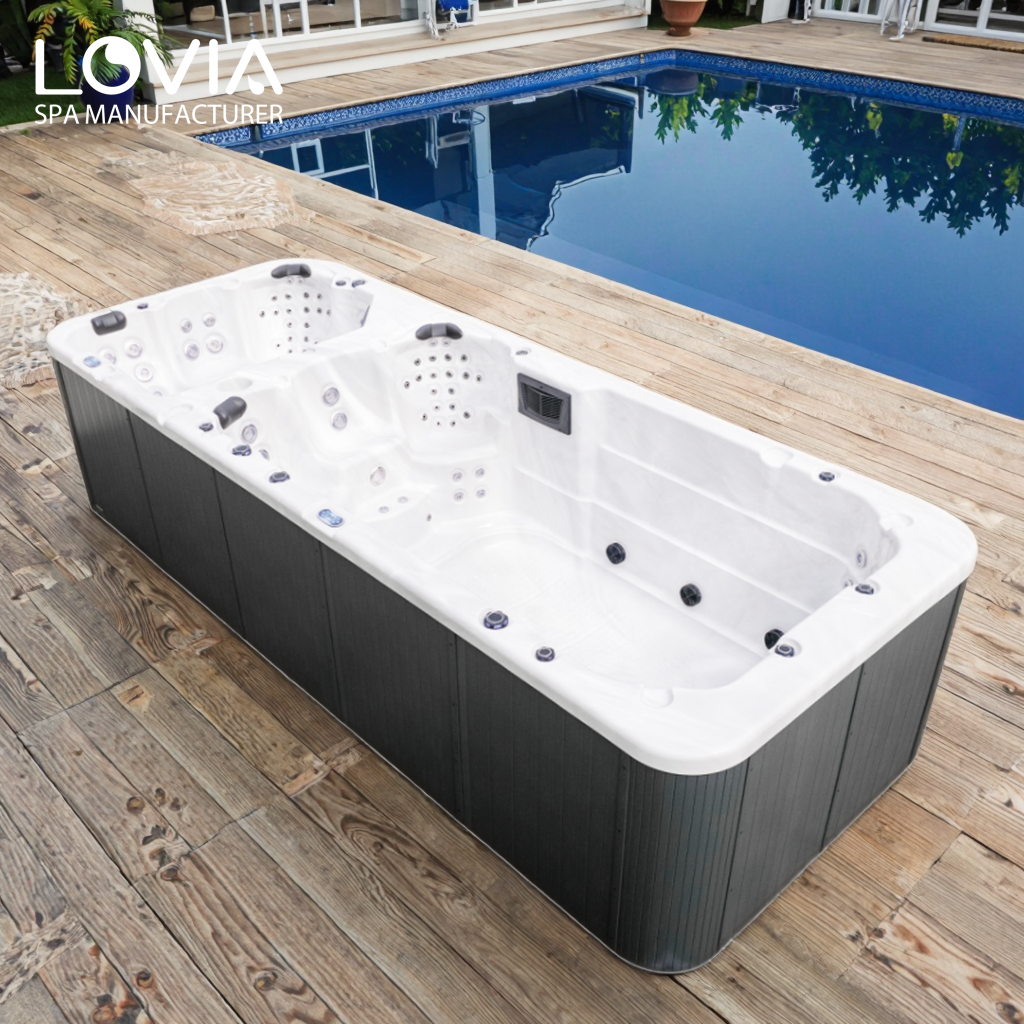
Why does the water level in an outdoor swim spa drop daily?
Many first-time buyers often wonder: "I just topped up the water yesterday; why does it look lower again today?"
In reality, a slight drop in water level is perfectly normal as long as the equipment is operating correctly. Outdoor swim spa hot tub combos are typically kept at a constant temperature of 36°C to 39°C, and warm water naturally evaporates continuously. Furthermore, because the unit is installed outdoors, it is subject to factors such as solar radiation, humidity, wind speed, and diurnal temperature fluctuations, all of which contribute to a certain amount of natural water loss each day.
Beyond evaporation, water is also carried away by the human body, swimwear, and towels after each use. If a family of four uses the swim spa hot tub combo daily, it is not uncommon for them to remove tens of liters of water over the course of a week. Additionally, routine maintenance tasks—such as cleaning filters, partially replacing water, or testing water quality—result in minor water loss; thus, a drop in water level does not necessarily indicate a leak.
What truly matters is not merely whether the water level has dropped, but whether the rate of decline is abnormal or irregular, and whether other unusual symptoms are present.
How can you distinguish between normal evaporation and an actual leak?
Many users mistakenly assume that any drop in water level indicates a leak. In fact, there are distinct differences between normal evaporation and an actual leak; by applying a few key assessment methods, you can usually distinguish between the two.
The primary characteristic of normal evaporation is that the change is slow and consistent. The water level typically drops only slightly each day, and the rate of evaporation fluctuates with the weather. For instance, evaporation accelerates during hot, windy, or low-humidity conditions, whereas it slows significantly during overcast, rainy, or high-humidity weather. If the rate of decline remains steady over several days—and there are no system error alerts, pooling water at the base, or dampness in the equipment compartment—the drop is most likely due to normal evaporation.
In contrast, an actual leak tends to be continuous and steady. Regardless of weather conditions or whether the thermal cover is in place, the water level may continue to drop rapidly. Some users might notice that after filling the tub, the level drops by several centimeters overnight; if the level falls below the filter intake after just a few days, the situation warrants a thorough inspection. Additionally, signs such as persistent dampness around the unit, accumulated water inside the equipment compartment, constant dripping near the pump, or waterlogged insulation material strongly suggest a risk of leakage.
Therefore, relying solely on a visual check of the water level over a single day is insufficient for an accurate conclusion; a comprehensive assessment considering environmental conditions and the equipment's status is recommended.
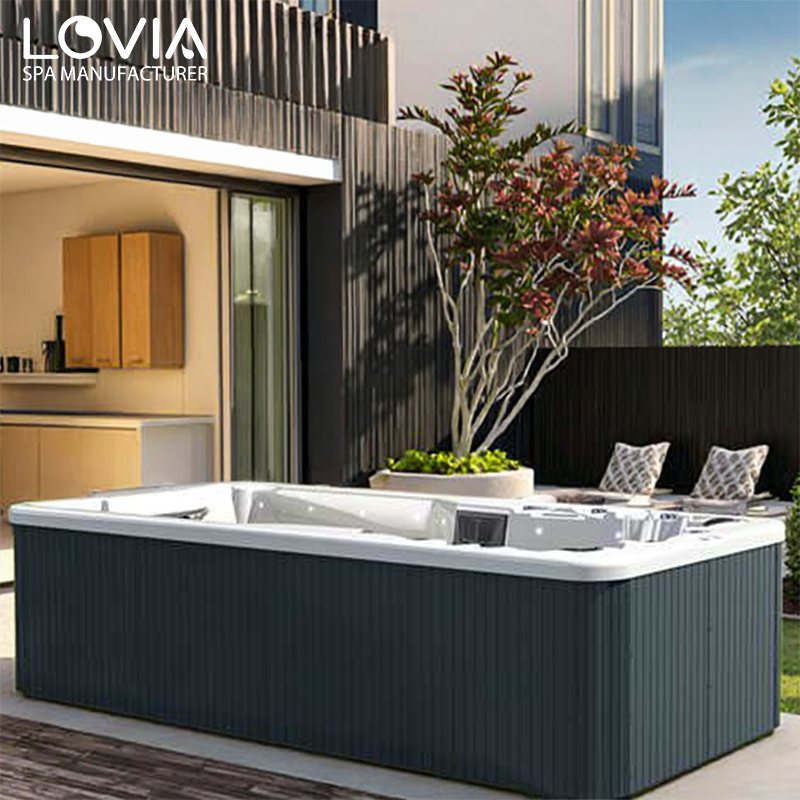
Quickly Determine if Your Outdoor Swim Spa is Leaking Using the "Bucket Test"
The "Bucket Test" is one of the most classic and practical methods used in the global spa industry. It requires no specialized tools or equipment disassembly, making it ideal for homeowners to perform themselves.
The procedure is straightforward. First, take an ordinary plastic bucket and fill it with water to the same level as the water in the swim spa hot tub combo. Place the bucket on a step or platform inside the spa, ensuring it remains stable and does not float. Next, record the water levels in both the bucket and the spa, then allow the equipment to operate normally for 24 hours.
Since both the bucket and the jacuzzi swim spa are exposed to the same temperature, humidity, and airflow, they will undergo the same rate of evaporation. If the water levels in both the bucket and the spa drop by roughly the same amount after 24 hours, the loss is likely due to natural evaporation. However, if the spa's water level drops significantly more than the bucket's, a leak is likely present, and further investigation is required.
This method effectively eliminates the influence of weather conditions and is frequently used by professional service technicians during on-site inspections.
Observing the Swim Spa with the Circulation System Turned Off
In addition to the bucket test, you can further diagnose the issue by observing the equipment's operational status.
Provided there is no risk of freezing damage, you can temporarily shut down the circulation system for approximately 24 hours and monitor the water level. If the rate of water loss slows significantly after turning off the system, the leak is likely located in the circulation piping, pump, or heating system. If the water level continues to drop at the same rate, the leak is more likely originating from the spa shell, the drainage system, or the static plumbing lines. Of course, for cold regions or winter environments, leaving the unit shut down for extended periods is not recommended, as low temperatures could cause the plumbing to freeze.
Which parts of an outdoor jacuzzi swim spa are most prone to leaks?
Many consumers assume that a leak in an outdoor swim spa hot tub combo implies a crack in the acrylic shell. In reality, industry repair data shows that leaks caused by actual shell damage are rare; most leaks occur at connection points and within sealing systems.
One of the most common leak points is the PVC pipe connection. Due to repeated thermal cycling, transport vibrations, and long-term operation, individual connections can gradually loosen, leading to minor seepage. Another common area involves the mechanical seals on circulation pumps and counter-current propulsion pumps; these are high-speed, wear-prone components, and their sealing performance may degrade over time.
Additionally, drain valves, jet gaskets, and heater connections are frequent sources of leaks. Rubber seals, in particular, can deteriorate when exposed to UV radiation and fluctuating temperatures (extreme heat and cold); therefore, users are advised to inspect these critical areas regularly as part of routine maintenance.
How can leaks in an outdoor jacuzzi swim spa be prevented?
Compared to repairing malfunctions, proper preventive maintenance is undoubtedly more cost-effective and helps extend the equipment's lifespan.
First, establish a regular inspection routine. Homeowners should check the water level weekly, open the maintenance panel monthly to inspect the control compartment for abnormal moisture, and conduct a quarterly inspection of critical components such as pipe connections, pumps, and drain valves. If any water stains or drips are detected, contact a professional technician promptly.
Second, always maintain the water level within the recommended range. Operating at consistently low water levels can cause the circulation pump to draw in air and increase system pressure fluctuations, placing extra strain on pipe connections and mechanical seals, thereby raising the risk of leaks.
Finally, winter freeze protection is crucial. In cold regions, if the unit is left idle for an extended period without thoroughly draining the plumbing, the expansion of freezing water can damage PVC pipes, pump housings, and even valves—a leading cause of leaks in northern markets. Therefore, whether the unit remains in operation or is shut down and mothballed, winter maintenance must be carried out strictly in accordance with the manufacturer's requirements.
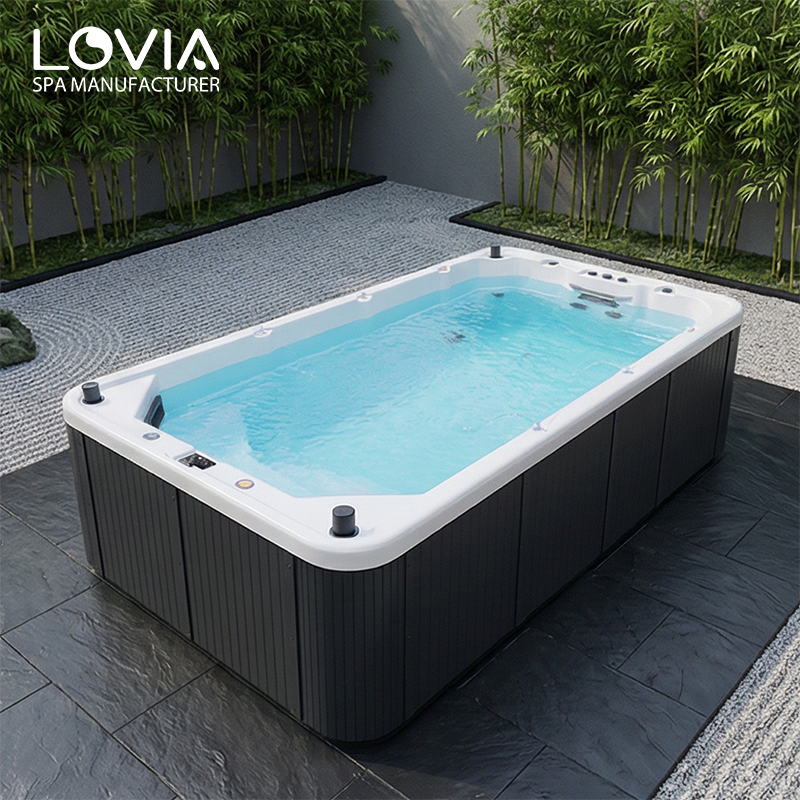
Why do professional manufacturers of outdoor swim spas place greater emphasis on the sealing design of the entire unit?
As the global market for outdoor swim spa hot tub combos matures, consumers are increasingly focused on the long-term stability of the equipment rather than just the number of jets or massage functions. Consequently, professional manufacturers invest more resources during the R&D phase to optimize the unit's overall plumbing system and sealing structure.
Take LOVIA® as an example: the company has long focused on the R&D of spa and outdoor swim spa products, prioritizing the optimization of the overall circulation system, plumbing layout, and sealing reliability. By strategically designing PVC piping routes, optimizing pump connection structures, enhancing interface sealing performance, and implementing comprehensive pressure testing, the company minimizes the risk of leaks caused by vibration or thermal expansion and contraction during long-term operation.
During production, every LOVIA® outdoor swim spa hot tub combo undergoes multiple quality control stages—including full-unit water filling, pressure testing, and operational testing—to ensure excellent sealing performance and operational stability prior to delivery. Of course, even the most refined manufacturing process requires proper installation and standardized maintenance; only by combining these factors can the equipment's service life truly be extended.
Establishing a habit of long-term maintenance for your outdoor swim spa is more important than simply detecting a leak
Many users misidentify leaks because they fail to keep records of water levels or establish a routine inspection habit. In reality, simply maintaining a basic maintenance log can significantly improve the accuracy of your assessments.
For instance, you can record the water level, weather conditions, number of users, and times when water is topped up on a weekly basis. After several months of consistent recording, you will gain an understanding of your swim spa hot tub combo's normal evaporation patterns across different seasons and usage frequencies. If the water level drops significantly faster than usual one day, you will immediately recognize a potential issue rather than waiting until a leak worsens before investigating.
For commercial projects such as hotels, guesthouses, and wellness centers, such maintenance records are even more valuable. A standardized inspection system helps minimize the risk of downtime, reduces long-term operating costs, and improves equipment utilization efficiency.
FAQ
Q1: Is it normal for the water level in an outdoor swim spa to drop slightly every day?
Yes, it is normal. During normal operation, the water level in an outdoor swim spa hot tub combo may drop slightly due to factors such as natural evaporation, water loss carried away by bathers, and routine maintenance; as long as the drop is slow and steady, there is generally no cause for concern.
Q2: What is the quickest way to determine if an outdoor swim spa hot tub combo is leaking?
The "bucket test" is recommended. Place a bucket filled with water (at the same level as the spa water) inside the spa and monitor both for 24 hours; if the spa's water level drops significantly faster than the water level in the bucket, it indicates a potential leak.
Q3: Where are leaks most likely to occur in an outdoor swim spa hot tub combo?
Common leak points include PVC pipe connections, circulation pump mechanical seals, counter-current jet pump connections, drain valves, jet gaskets, and heater connections; regular inspection of these components is recommended.
Q4: Are outdoor swim spa hot tub combos more prone to leaks in winter?
Without proper freeze protection, freezing temperatures can damage pipes, valves, and pump housings. Therefore, in cold regions, it is essential to follow the manufacturer's guidelines for winter operation or winterization procedures.
