

What Are the Effects of Excessive Chlorine in Outdoor Spa Hot Tubs? — A Guide to Water Quality Maintenance for Outdoor Spa Equipment
For many outdoor whirlpool spa hot tub owners, water quality maintenance is a challenge that only truly begins after the purchase. When shopping for a hot tub, people often focus on features like jet count, massage intensity, insulation performance, aesthetics, or even audio and lighting systems, while overlooking a core issue that affects the long-term user experience: water chemistry management. There is a particularly common misconception in the industry regarding chlorine disinfection: many believe that "more chlorine equals more safety"—thinking that if chlorine levels are high enough, bacteria and contaminants have nowhere to hide, and the water will naturally remain clear.
In reality, the opposite is true. While insufficient chlorine can indeed lead to bacterial proliferation, algae growth, and contamination, excessive chlorine causes equally serious problems. It can inflict more insidious and long-lasting damage on the human body, the equipment itself, and the overall water environment. When faced with cloudy water, foaming, or unpleasant odors, many users' first instinct is to add more chlorine. This not only fails to solve the problem but often leads to itchy skin, stinging eyes, accelerated aging of jets, and escalating maintenance costs.
From an industry perspective, some low-end brands or unprofessional suppliers prioritize closing the sale over the user's long-term maintenance experience. They rarely provide a systematic explanation of the dynamic balance between chlorine, pH, total alkalinity, and calcium hardness, nor do they offer comprehensive education on water quality management. Users may appear to have purchased a bargain hot tub, but in reality, they often end up spending significantly more time and money rectifying maintenance issues later on.
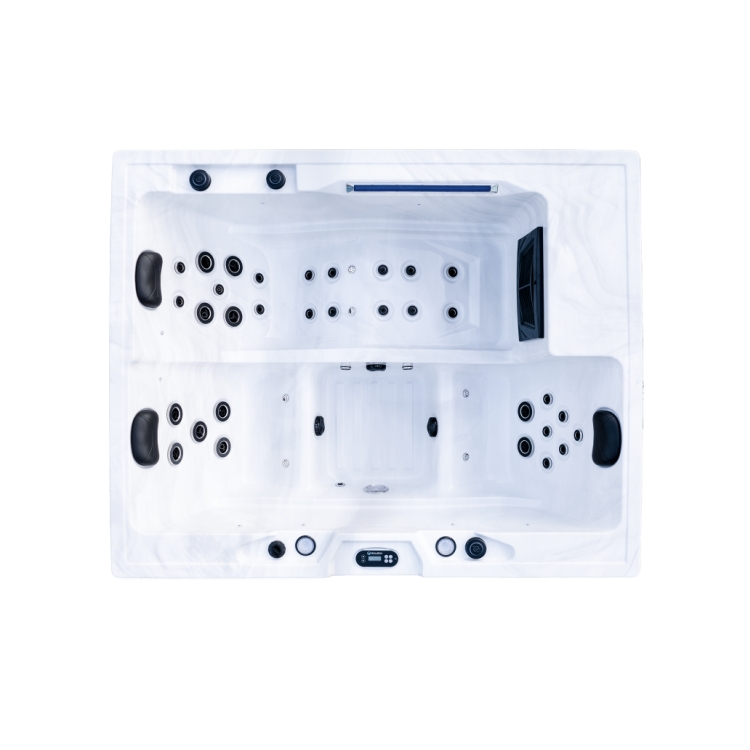
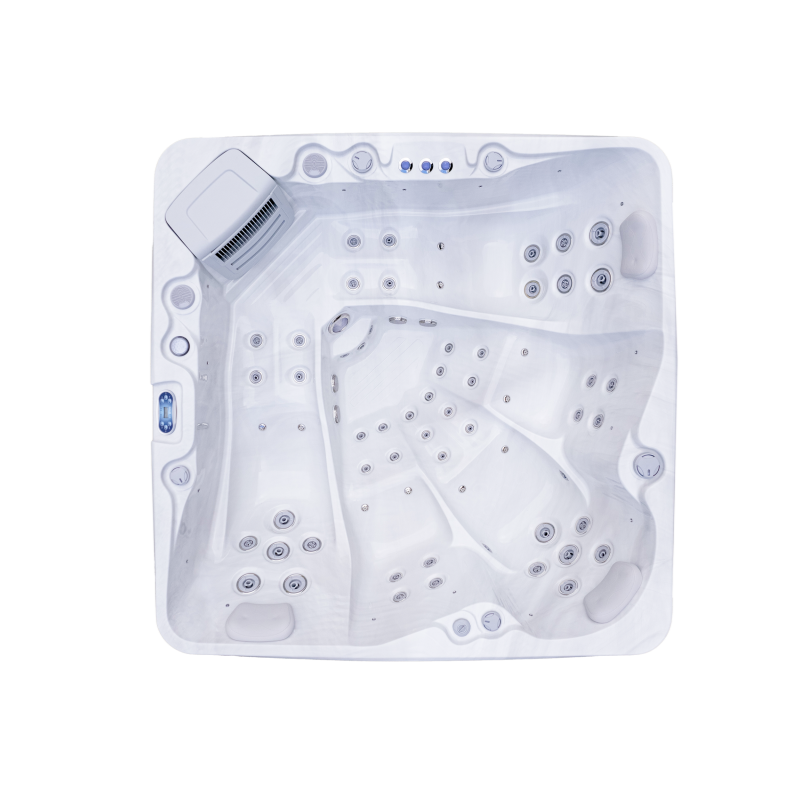
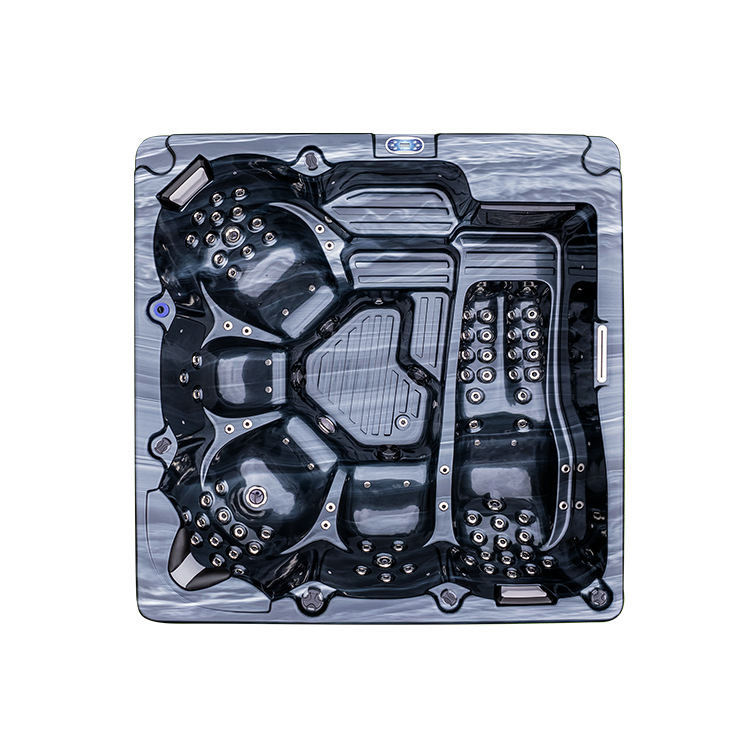
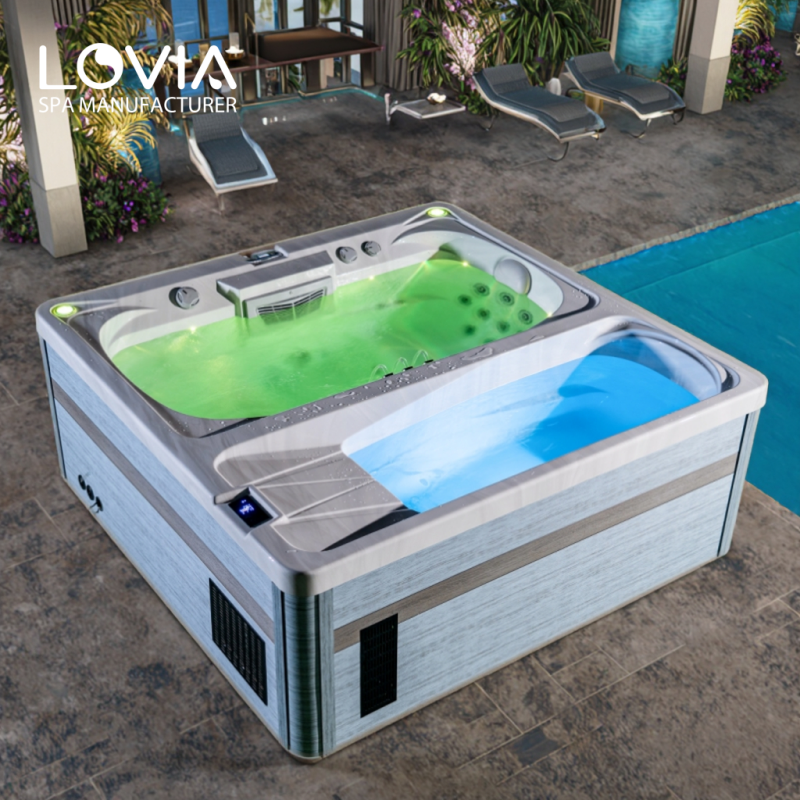
In contrast, truly mature manufacturers increasingly prioritize the synergy between equipment design and water quality management. LOVIA®, for instance, focuses not only on the spa experience and structural durability during product development but also on minimizing the risk of water chemistry imbalances through factors such as circulation systems, filtration surface area, and plumbing layout. LOVIA® outdoor whirlpool spa hot tubs utilize high-flow circulation pumps, multi-layer filtration systems, and optimized water flow paths. These design choices serve a dual purpose: providing stronger water flow and ensuring the even distribution of sanitizers, thereby preventing chemical damage caused by localized high concentrations of chlorine. For frequently used jacuzzi outdoor spa hot tubs, the design of the underlying system often determines the difficulty of future maintenance.
So, what exactly does it mean when chlorine levels in an outdoor hot tub are too high? How do excessive chlorine concentrations affect the human body, and how do they damage the equipment? This article provides a comprehensive analysis covering water chemistry principles, health risks, and equipment maintenance.
What constitutes "too high" a chlorine level for an outdoor hot tub?
For outdoor hot tubs sanitized with chlorine, the industry generally recommends maintaining a free chlorine concentration of 1–3 ppm. During periods of heavy use—such as after multiple people have used the tub in succession—free chlorine levels may briefly rise to 3–5 ppm. During "shock treatment," chlorine concentrations might temporarily reach 8–10 ppm or higher; however, this is a short-term procedure and is not suitable for human immersion.
It is important to note that jacuzzi outdoor spa hot tubs differ significantly from standard swimming pools. Because hot tub water is typically maintained at 37–40°C, the high-temperature environment accelerates chemical reactions and significantly increases the sensitivity of human skin and the respiratory system to chemical irritation. This means that while a chlorine concentration of 5 ppm might be manageable in a standard-temperature pool, the same level in a hot outdoor tub often causes noticeably stronger irritation for users.
Generally speaking, free chlorine levels consistently above 5 ppm are considered high; levels consistently above 8 ppm can noticeably impact user comfort and equipment longevity; and levels consistently exceeding 10 ppm require immediate action to lower the chlorine concentration. It is also worth clarifying a common point of confusion: the pungent odor often associated with chlorine is not caused by free chlorine itself, but rather by chloramines—compounds formed when chlorine reacts with organic contaminants.
How does excessive chlorine in an outdoor hot tub affect the human body?
For users, the most immediate effects typically manifest in the skin, eyes, and respiratory tract.
Human skin has a natural lipid barrier (sebum film) that locks in moisture and protects against external irritants. However, chlorine is a strong oxidizing agent; when chlorine concentrations in a jacuzzi outdoor spa hot tub are excessive, it accelerates the breakdown of this lipid barrier. Consequently, the skin becomes dry, itchy, and tight; in severe cases, flaking and localized redness (erythema) may occur. This irritation is particularly pronounced for children, the elderly, and individuals with eczema or sensitive skin. Some studies indicate that soaking for more than 30 minutes in water with high chlorine levels can increase the rate of moisture loss from the skin's surface by 20% to 40% compared to normal conditions.
Eye discomfort is also common. Many users experience redness, stinging, or even tearing after soaking in jacuzzi outdoor spa hot tubs with excessive chlorine. This occurs because high chlorine levels irritate the mucous membranes of the eyes, and hot steam intensifies this sensation. Respiratory issues primarily stem from volatile compounds; specifically, after the cover has been closed for an extended period, chloramine gases can accumulate in the enclosed space. When the cover is opened, these gases are suddenly released, causing nasal irritation, throat dryness, mild coughing, or even respiratory discomfort.
Furthermore, high chlorine levels can affect the health of hair. Frequent users of high-chlorine jacuzzi outdoor spa hot tubs often notice their hair becoming dry and frizzy, with dyed hair fading more rapidly. This happens because chlorine oxidizes the hair's keratin structure, compromising the protective capabilities of the hair's outer layer.
Why do high chlorine levels damage outdoor hot tub equipment?
Many users view the issue of chlorine solely in terms of water quality, overlooking its long-term impact on the equipment itself. In reality, excessive chlorine not only affects user comfort but also accelerates the aging of the whirlpool spa hot tub's internal materials.
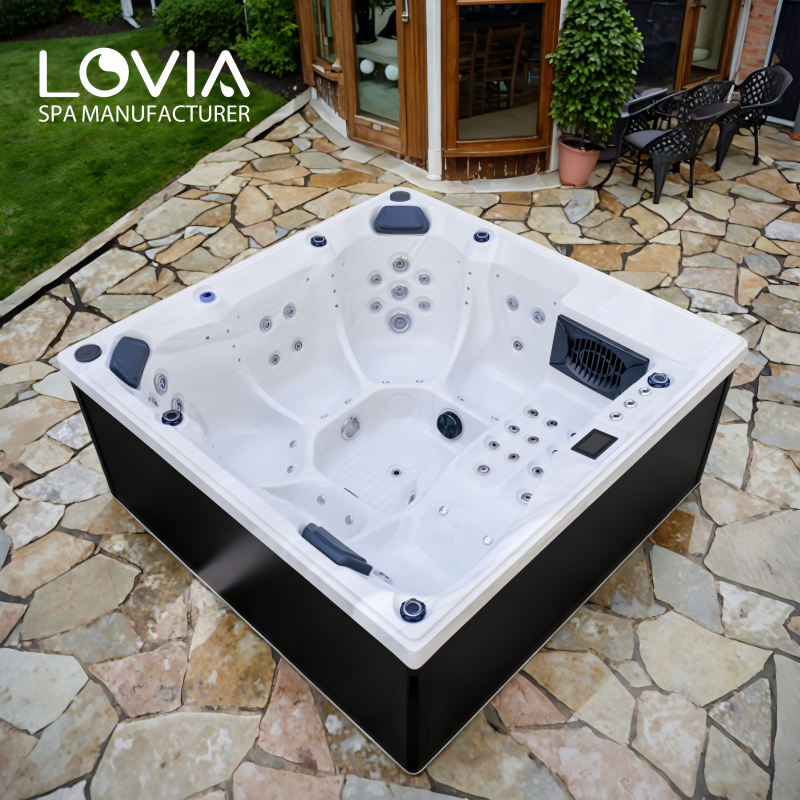
Most high-quality jacuzzi outdoor spa hot tubs feature acrylic shells. While acrylic offers advantages such as a glossy finish, stain resistance, and ease of cleaning, prolonged exposure to a highly oxidizing environment can still cause the surface to gradually deteriorate. Common signs of this include a loss of surface luster, the appearance of whitish areas, an increase in micro-cracks, and accelerated aging of the protective layer. Although these issues do not appear immediately, the rate of surface aging typically accelerates significantly if free chlorine levels consistently exceed 8 ppm.
Seals are another vulnerable point in high-chlorine environments. Outdoor hot tubs contain numerous rubber and elastic sealing components—such as O-rings, jet gaskets, and pipe fitting seals—that can harden, become brittle, and crack after prolonged exposure to water with high chlorine levels. Industry experience indicates that prolonged exposure to high chlorine levels can shorten the lifespan of rubber seals by more than 30%, thereby increasing the risk of water leaks and the need for repairs.
Metal components are not immune either. Although many jacuzzi outdoor spa hot tubs utilize stainless steel screws, heater housings, and metal trim, pitting corrosion can still occur in high-chlorine environments; the corrosion rate accelerates significantly when low pH levels are also present. This is why established brands are increasingly prioritizing holistic water circulation design. For instance, select LOVIA® outdoor whirlpool spa hot tubs feature optimized plumbing and high-efficiency circulation systems; a key benefit of this design is the reduction of localized high-chlorine zones, which minimizes the uneven chemical stress placed on the equipment.
Why can excessively high chlorine levels actually degrade the water quality of an outdoor hot tub?
This may seem counterintuitive, yet it is a common issue in hot tub maintenance. Many users mistakenly believe that more chlorine equates to cleaner water. In reality, excessive chlorine concentration does not necessarily ensure superior water quality and can actually exacerbate chemical imbalances.
First, excessive chlorine accelerates reactions with organic contaminants in the water. Substances introduced by the human body—such as sweat, sebum, sunscreen, skincare products, and urea—rapidly combine with chlorine to form chloramines. Chloramines not only produce a pungent odor but also reduce the water's effective sanitizing capacity. In other words, if the organic load is high, adding more chlorine may simply result in the creation of more irritating by-products.
Second, frequent chlorination causes Total Dissolved Solids (TDS) to rise. TDS is a key metric for the total amount of dissolved substances in the water, including minerals, salts, and chemical residues. When TDS levels become excessively high, the water loses its clarity, becoming cloudy and prone to foaming and a "sticky" feel. Maintenance experts often recommend a complete water change when TDS levels exceed the initial reading by more than 1,500 ppm.
Finally, there is a strong interdependency between chlorine levels and pH. Many users focus solely on chlorine readings while overlooking pH fluctuations. In fact, even with sufficient chlorine, a high pH level significantly reduces the sanitizer's germ-killing efficiency; conversely, a low pH level significantly increases the potential for irritation caused by the chlorine. Therefore, focusing solely on chlorine levels while ignoring the overall water chemistry balance is one of the most common pitfalls in jacuzzi outdoor spa hot tub maintenance.
What usually causes excessively high chlorine levels in outdoor whirlpool spa hot tubs?
Excessive chlorine is rarely accidental; it is usually linked to usage habits.
The most common issue is dosing based on guesswork. Many users judge based on experience rather than testing the water—thinking, for instance, "We had a lot of friends over today, so I should add more chlorine." While this seems logical, it often leads to significant overdosing. Since jacuzzi outdoor spa hot tubs have a relatively limited water volume, even a small error can cause noticeable fluctuations in concentration.
A second reason is infrequent testing. Many users test their water only once a week or less; however, for frequently used jacuzzi outdoor spa hot tubs, it is recommended to test at least two to four times a week—or even daily during periods of heavy use.
A third reason is inadequate circulation efficiency. If the equipment's circulation system is weak, chlorine may not disperse evenly, resulting in localized areas of high concentration while overall test results appear normal. This is a key difference between high-quality equipment and lower-end models.
What should you do if chlorine levels are too high?
If testing reveals excessive chlorine, stop using the whirlpool spa hot tub immediately and cease adding any more chlorine.
The simplest method is to open the cover and run the circulation system, allowing the chlorine to dissipate naturally. UV rays accelerate chlorine decomposition, so the process is usually faster during the day. If the concentration exceeds 10 ppm, or if you want to restore normal levels more quickly, you can perform a partial water change; replacing 20% to 30% of the water is usually sufficient to significantly lower the concentration.
If necessary, you can also use a chlorine neutralizer, such as sodium thiosulfate. These products can rapidly reduce free chlorine levels, but dosage must be strictly controlled; otherwise, chlorine levels could drop too low, leaving the whirlpool spa hot tub without necessary sanitizing protection.
How can you prevent excessively high chlorine levels in the long run?
In the long term, prevention is always better than a cure. Consistent water maintenance should be based on scientific procedures rather than guesswork or intuition.
Users are encouraged to establish a habit of regular testing, monitoring at least three core parameters: free chlorine, pH, and total alkalinity. Additionally, before adding any chemicals, calculate the precise dosage based on the actual water volume rather than relying on estimation. Filter cartridges should be cleaned regularly, the circulation system must be maintained for efficient operation, and a complete water change is recommended every 3 to 4 months.
A high-quality circulation design is also crucial for the equipment itself. Certain LOVIA® outdoor whirlpool spa hot tubs feature high-flow circulation pumps, multi-layer filtration, and optimized plumbing layouts. These elements improve overall water turnover efficiency and ensure more uniform sanitizer distribution, thereby reducing the risk of localized spikes in chlorine concentration. While this advantage may not be immediately apparent at the time of purchase, the difference becomes increasingly evident during long-term maintenance.
FAQ
At what chlorine level is it unsafe to use a jacuzzi outdoor spa hot tub?
Generally, soaking is not recommended when free chlorine exceeds 5 ppm; you should avoid entering the tub if levels exceed 8–10 ppm.
Does a strong chlorine smell in the hot tub water indicate excessive chlorine?
Not necessarily. A strong, pungent odor usually stems from chloramines rather than free chlorine itself.
How long does it take for high chlorine levels in a jacuzzi outdoor spa hot tub to return to normal?
It depends on factors such as temperature, sunlight, ventilation, and circulation conditions; it typically takes anywhere from a few hours to several days.
Can prolonged exposure to high chlorine levels damage the outdoor whirlpool spa hot tub?
Yes. Prolonged exposure to high chlorine levels accelerates the aging of the shell, seals, and metal components.
What are the advantages of LOVIA® regarding water quality maintenance?
Selected LOVIA® outdoor whirlpool spa hot tubs utilize high-efficiency circulation systems, multi-layer filtration, and optimized plumbing designs to help minimize localized chemical imbalances and enhance long-term water quality stability.
