

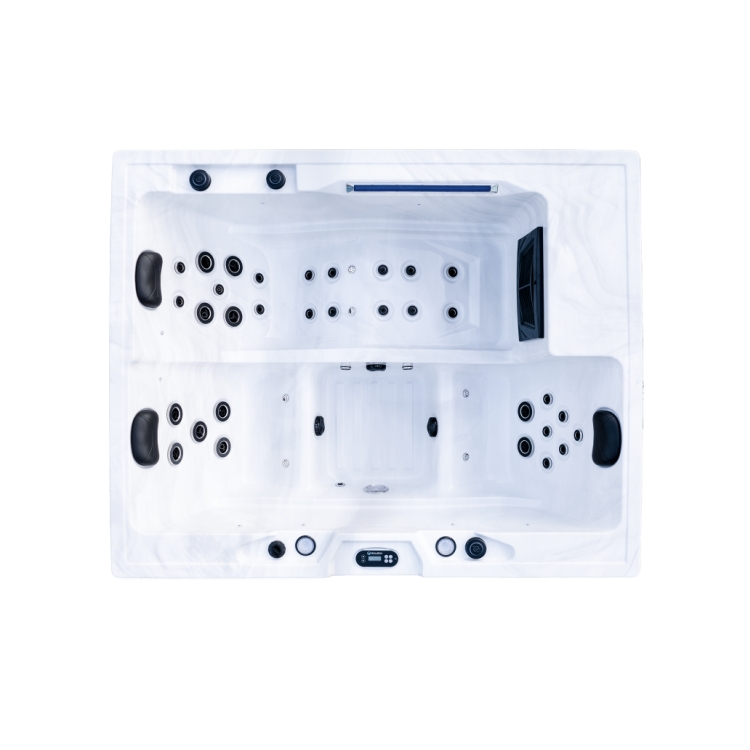
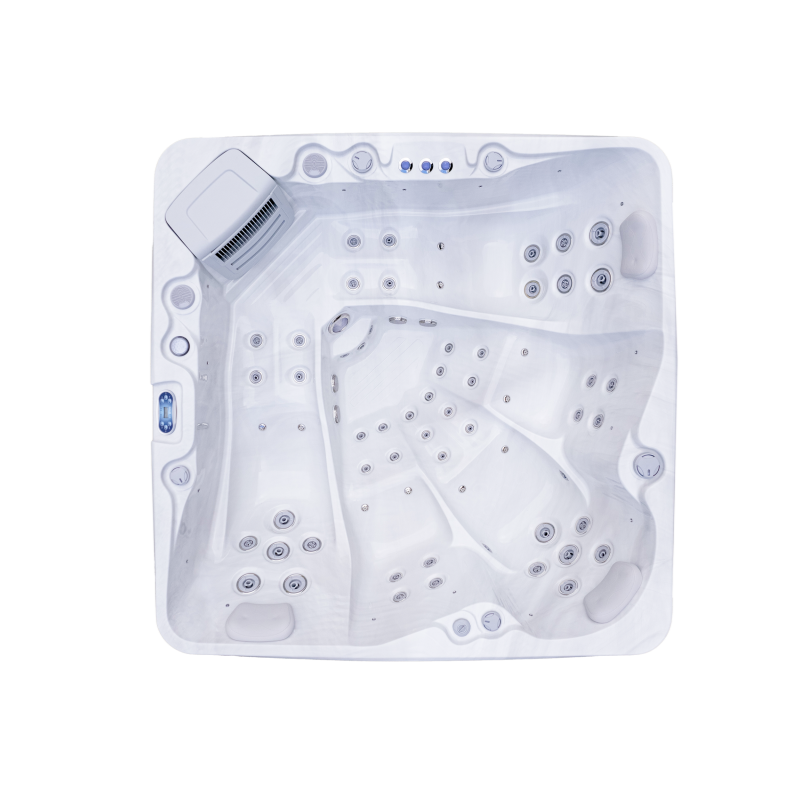
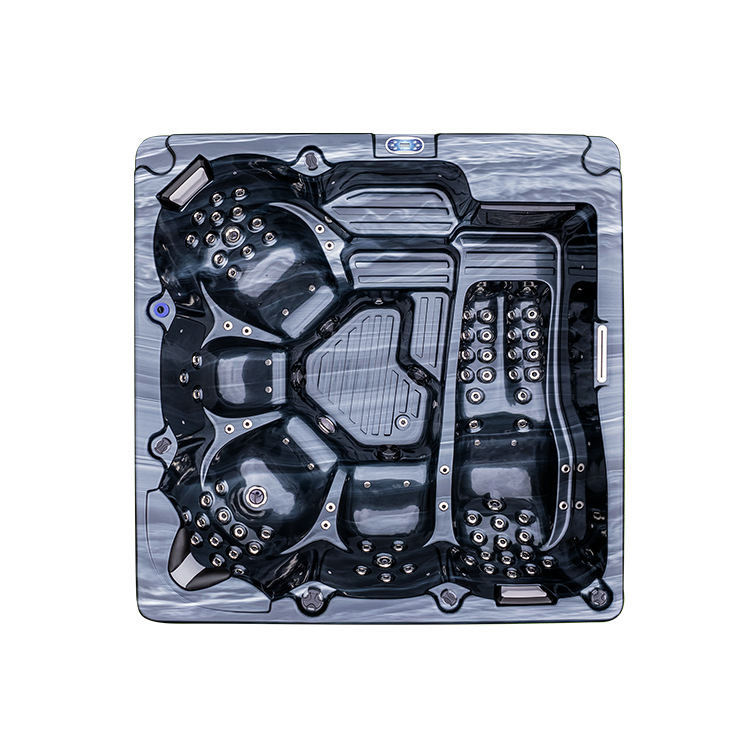
In recent years, swim spas have rapidly gained popularity in households, hotels and resorts, high-end vacation rentals, and commercial spa centers worldwide. Compared to traditional swimming pools, swim spa tubs occupy a smaller footprint, offer a longer usage season, and entail more controllable maintenance costs. Furthermore, they seamlessly integrate multiple functions—including swim training, hydrotherapy massage, family entertainment, and physical rehabilitation—making them increasingly favored by a growing number of users.
However, during actual use, one issue that almost every user eventually encounters is cloudy water. Water that was once crystal clear and transparent gradually turns milky-white, gray, or green, or even begins to show floating debris. This not only detracts from the visual appeal and user experience but may also signal underlying issues with the filtration system, water chemistry balance, or sanitization regimen. If left unaddressed, a cloudy hot tub swim spa combo can become a breeding ground for bacteria, foster the formation of biofilms, clog plumbing lines, and even shorten the lifespan of the equipment.
Upon discovering that their hot tub swim spa water has turned cloudy, many users' first instinct is to continuously add chemical treatments; others opt to drain and replace a large volume of the water; while commercial operators—eager to resume business operations quickly—may resort to excessive sanitization. In reality, these approaches often fail to resolve the issue and, in many cases, actually exacerbate the problem further.
So, what is the fastest way to clarify a cloudy swim spa tub? And what are the most common mistakes to avoid during this process? This article provides a comprehensive analysis from a professional perspective.
Why Do Swim Spas Become Cloudy?
According to industry statistics, in the vast majority of cases, cloudy water in swim spas stems primarily from the following factors:
1. Reduced Filtration System Efficiency
Industry data indicates that approximately 40% to 50% of all cloudy water issues in hot tub swim spas are directly linked to the filtration system.
Every day, swim spa tubs accumulate a variety of contaminants:
•Dust
•Hair
•Dead skin cells
•Cosmetic residues
•Sunscreen
•Body oils and grease
•Organic pollutants
If the filter cartridges have not been cleaned for an extended period—or have reached the end of their useful life—these microscopic particles will remain suspended in the water, causing the water body to gradually lose its clarity. Particularly in high-usage environments, filter cartridges tend to clog much faster than users anticipate.
2. Insufficient Water Disinfection Capacity
Swim jacuzzi spa tubs operate in a warm-water environment. Most units maintain an operating temperature between 26°C and 40°C. This specific temperature range creates an ideal environment for the rapid proliferation of bacteria and microorganisms.
When residual chlorine or bromine concentrations are insufficient:
•Bacteria begin to multiply.
•Organic matter decomposes slowly.
•Biofilms gradually form.
Ultimately, this results in the water becoming milky or cloudy.
3. pH Imbalance
Many users overlook the importance of pH levels. In reality, pH is one of the core parameters governing water quality management in swim jacuzzi spa tubs.
The ideal range is typically: 7.2–7.6.
When pH levels are too high:
•Disinfectant efficiency decreases.
•Calcium precipitates out of solution.
•The water becomes milky.
When pH levels are too low:
•The water becomes more corrosive.
•Plumbing and piping sustain damage.
•The equipment's lifespan is shortened.
4. Abnormal Total Alkalinity and Hardness
Total Alkalinity (TA) and Calcium Hardness (CH) collectively determine water stability. When hardness levels are excessively high, calcium and magnesium ions form tiny precipitate particles. Once these particles become suspended in the water, the swim spa hot tub will exhibit a distinct milky-white turbidity.
5. Excessive Bather Load
This issue is particularly evident in commercial settings and during home gatherings.
Every time a person enters a swim spa hot tub, they introduce:
•Sweat
•Urea
•Cosmetics
•Skincare products
•Bacteria
Studies indicate that a single adult entering a spa pool can release approximately 0.14 grams of organic contaminants into the water. If multiple people use the spa consecutively—and the filtration and disinfection systems are inadequate—water turbidity issues will often manifest rapidly, typically within 24 hours.
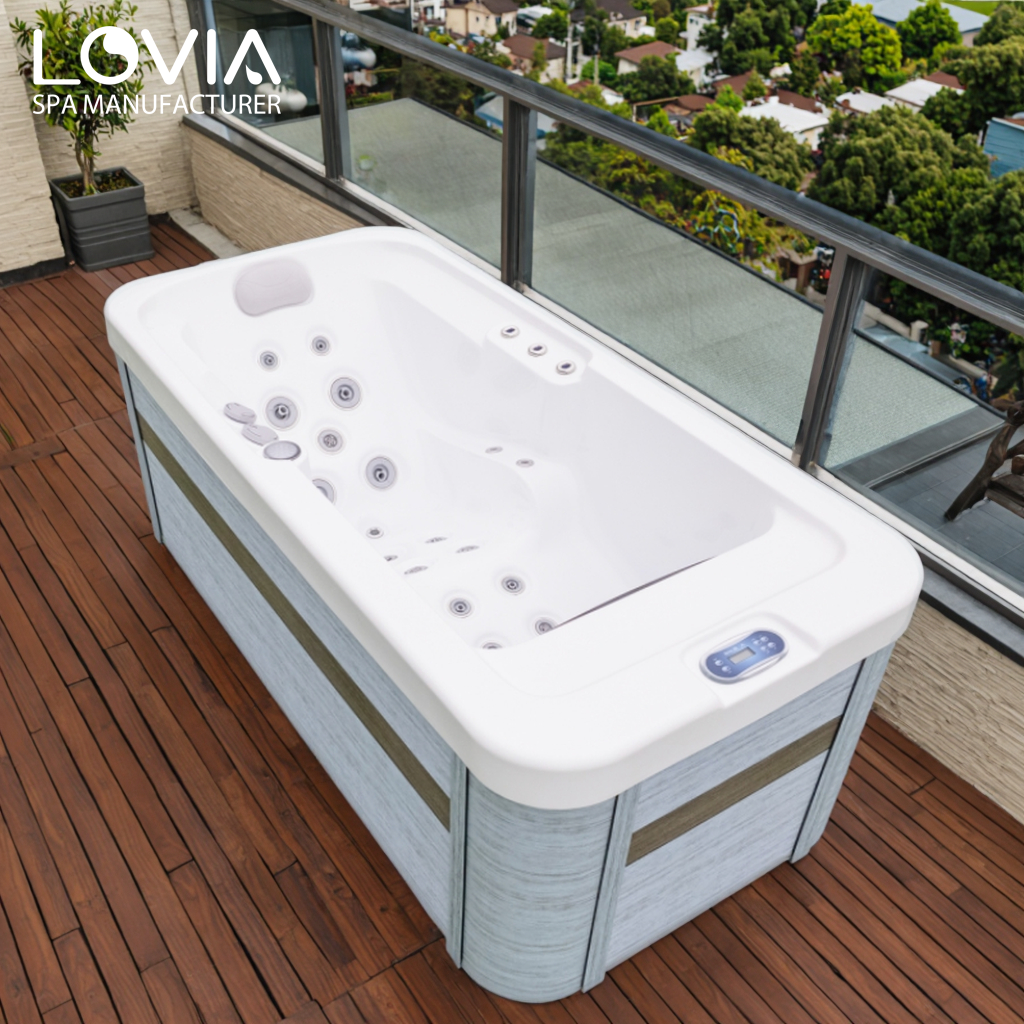
How can you most quickly clarify a cloudy swim spa hot tub?
If you discover that your swim jacuzzi spa tub water has become cloudy, you can address the issue by following the steps below.
Steps for Rapidly Clarifying a Cloudy Swim Spa Hot Tub:
Step One: Test the Water Quality Parameters
Do not rush to add chemical treatments immediately. First, use professional test strips or an electronic tester to perform an analysis:
Parameter | Ideal Range
pH | 7.2–7.6
Total Alkalinity | 80–120 ppm
Free Chlorine | 2–5 ppm
Bromine | 3–6 ppm
Calcium Hardness | 150–250 ppm
This serves as the foundation for all subsequent treatment steps. Many users blindly add chemicals, often because they have failed to first identify the actual source of the problem.
Step Two: Thoroughly Clean the Filter Cartridge
If the water in your swim spa hot tub has become cloudy, it is recommended that you immediately inspect the filter cartridge.
The standard procedure includes:
1.Shutting off the system power.
2.Removing the filter cartridge.
3.Rinsing it with a high-pressure water hose.
4.Soaking it in a professional filter cleaner solution.
5.Rinsing it thoroughly and then reinstalling it.
If the filter cartridge has been in use for more than 12 months, it is recommended that you replace it entirely. Experience shows that simply replacing an aging filter cartridge can resolve approximately 30% of all cases involving cloudy water.
Step Three: Perform a Shock Treatment
Shock treatment is a crucial method for rapidly restoring water clarity.
Its underlying principle involves using a high concentration of oxidizing agents to quickly break down:
•Ammonia nitrogen
•Urea
•Organic waste
•Chloramines
This typically requires the use of:
•A non-chlorine shock agent
•Or a granular chlorine shock agent
Once the shock treatment is complete, the circulation system should be kept running for at least 8 hours.
Step Four: Filter Continuously for 24 Hours
Many users mistakenly believe that adding chemicals is sufficient to restore water clarity. In reality, the chemicals merely cause contaminants to clump together; it is the filtration system that actually removes them.
Therefore, it is recommended that you:
•Activate the circulation system.
•Run it continuously for 24 hours.
•Maintain a constant flow of circulating water.
For swim spa hot tubs with severe cloudiness, this filtration period may be extended to 48 hours.
Step Five: Use a Clarifier
When the water contains a large quantity of microscopic particles, a professional water clarifier can be added. Clarifiers work by causing these extremely fine particles to aggregate into larger clumps, which can then be captured by the filtration system. Noticeable improvements are typically visible within 24 hours.
Step Six: Drain and Refill the Water (If Necessary)
If the water in your swim spa hot tub has not been changed for several months—or even six months or more—you may encounter issues related to excessively high Total Dissolved Solids (TDS) levels.
General Recommendations:
•Residential users: Change the water once every 3–4 months.
•Commercial users: Change the water once every 1–3 months.
When the Total Dissolved Solids (TDS) level exceeds 1500 ppm, relying solely on chemical treatments is often insufficient to fully restore water quality.
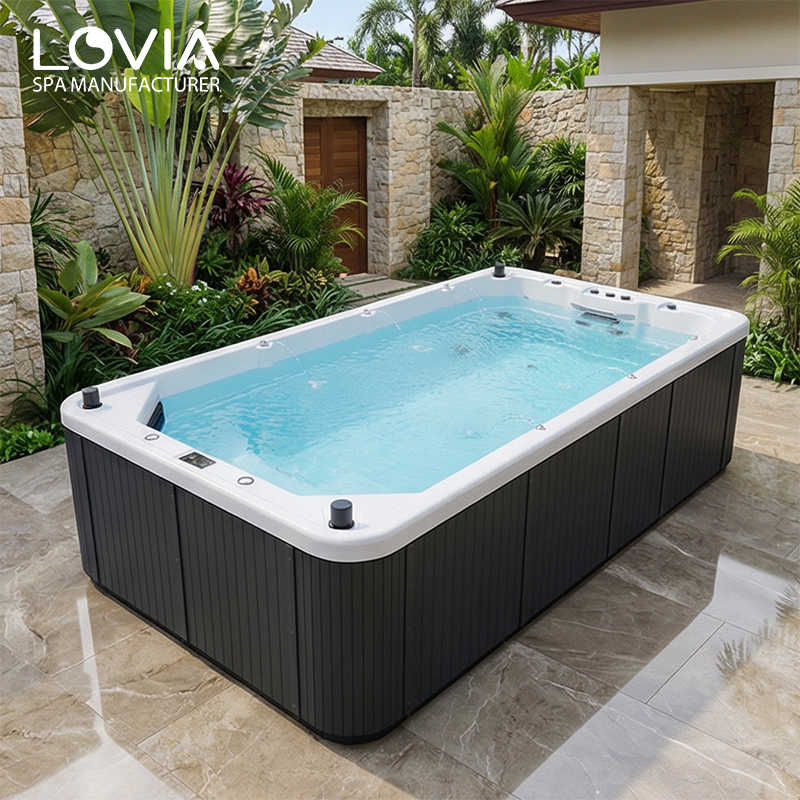
What are the most common mistakes made when trying to clarify a swim spa hot tub?
The 8 Most Common Mistakes When Clarifying a Swim Spa Hot Tub:
Mistake #1: Panicking and dumping in chlorine at the first sign of cloudiness.
This is the most common error. Many users assume that cloudy water = insufficient sanitization = the need to add more chlorine.
In reality, excessive chlorine can actually cause the water to become chemically unbalanced. Not only does this fail to clarify the water quickly, but it can also cause skin and eye irritation.
Mistake #2: Neglecting the condition of the filter cartridges.
Even the best chemical treatments cannot compensate for a poor filtration system. Clogged filter cartridges will render all your water treatment efforts significantly less effective.
Mistake #3: Adding chemicals blindly without testing the water first.
This is a common pitfall for many first-time users. Different causes of cloudiness require different solutions. Without supporting data from water testing, your treatment efforts are likely to be misdirected.
Mistake #4: Frequently switching between different brands of chemicals.
The market offers a wide variety of products, including:
•Clarifiers
•Flocculants
•Algaecides
•Oxidizers
Different products may react chemically with one another. Frequently mixing and matching different brands can easily lead to new water clarity issues.
Mistake #5: Ignoring the necessary circulation time.
Chemicals require time to take effect.
Many users, seeing no immediate results a few hours after adding chemicals, decide to add another dose. This often results in an overdose of chemicals.
Mistake #6: Failing to replace the pool water for extended periods.
As the water ages with continued use:
•Minerals
•Organic matter
•Salts
will continuously accumulate.
Once these substances reach a certain concentration, it becomes extremely difficult to maintain consistently clear water in the hot tub swim spa combo over the long term.
Mistake #7: Users failing to rinse off before entering the pool.
Studies show that contaminants carried on the human body are a major source of pollution in spa equipment. A simple shower before entering the water can reduce the influx of organic contaminants by approximately 60% to 70%.
Mistake #8: Neglecting equipment maintenance.
In addition to the filter cartridges, the following components require regular inspection:
•Circulation pumps
•Ozone systems
•UV systems
•Plumbing and piping
Declining equipment performance can directly compromise the stability and quality of the water in your swim jacuzzi spa tub.
How can you maintain crystal-clear water in your swim spa tub over the long term?
Truly professional management does not wait for the water to become cloudy before taking action; rather, it involves establishing a preventive maintenance system.
We recommend implementing the following maintenance schedule:
Daily Checks
•Water temperature
•Water level
•Disinfectant concentration
Weekly Checks
•pH level
•Total alkalinity
•Filter cartridge condition
Monthly Checks
•Plumbing system
•Heating system
•Circulation system
Quarterly Maintenance
•Deep cleaning of plumbing lines
•Replacement of select consumables
•Water replacement
Through preventive maintenance, the likelihood of water becoming cloudy can be reduced by over 80%.
The Critical Role of High-Quality Outdoor Spa Equipment in Water Quality Management
Beyond routine maintenance, the inherent design and manufacturing quality of the hot tub swim spa itself play a decisive role in determining the complexity of water quality management.
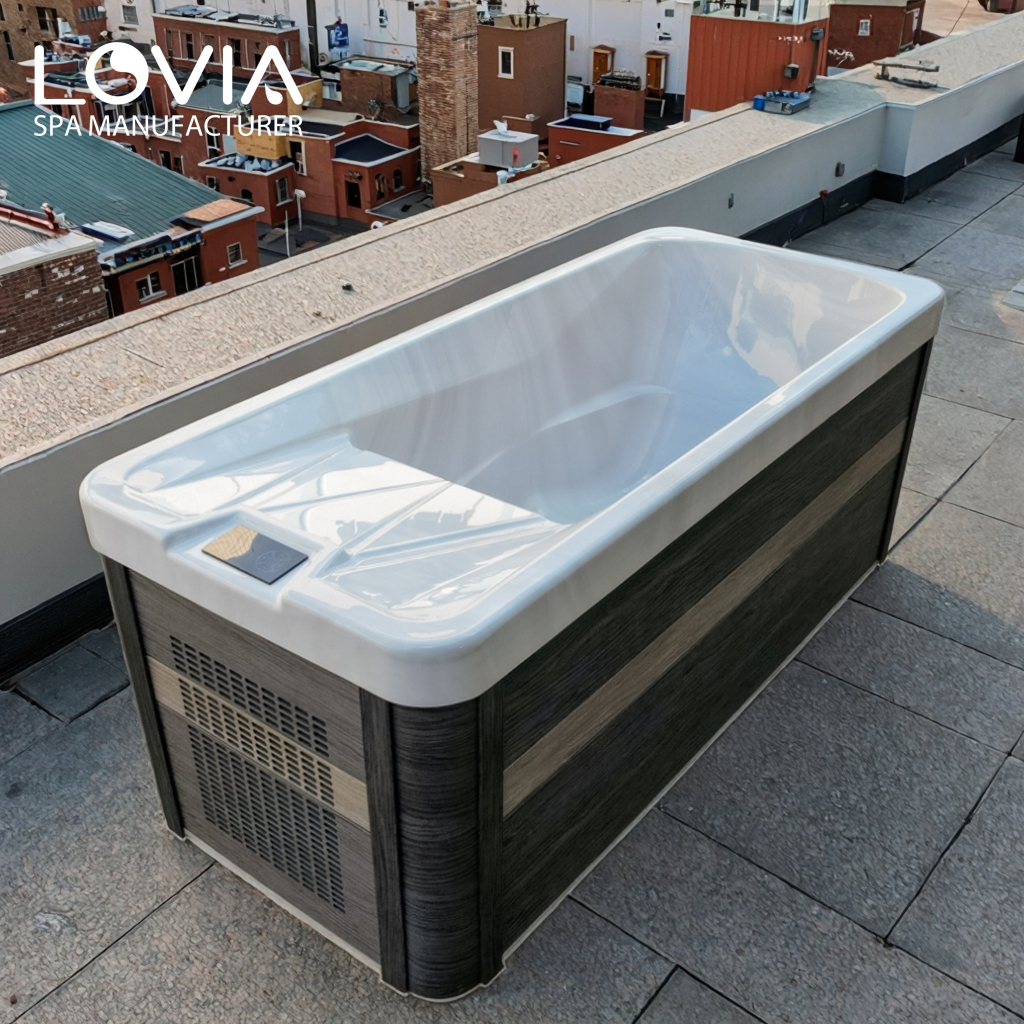
Take LOVIA®, for instance: a brand with years of deep-rooted experience in the international market, specializing in the R&D and manufacturing of Hot Tubs, Swim Spas, and Cold Plunge pools. Since its inception in 1989, LOVIA® has established a comprehensive ecosystem of spa solutions for both residential and commercial applications. Boasting a production facility spanning over 45,000 square meters and featuring 12 production lines, the company achieves a monthly production capacity of 1,200 units and serves a global clientele of over 500 customers.
From the perspective of swim spa water quality management, the equipment's built-in filtration capabilities, plumbing layout, insulation structure, and control systems all directly impact the efficiency of subsequent maintenance. The filtration systems, 3–6 kW heating units, and digital control platforms integrated into LOVIA® products empower users to maintain consistent circulation efficiency with greater stability. Furthermore, the company's rigorous quality management system—encompassing Incoming Quality Control (IQC), In-Process Quality Control (IPQC), and Outgoing Quality Control (OQC)—subjects every unit to strict testing for leaks, heating precision, and functional performance. This meticulous approach is instrumental in ensuring the long-term, stable operation of the swim spas.
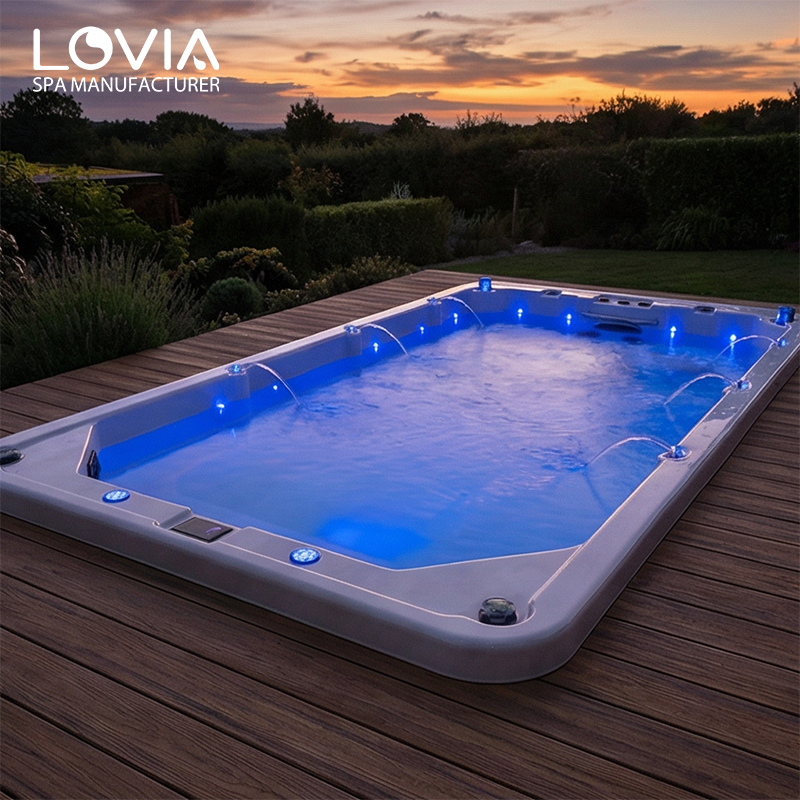
FAQ
FAQ 1: How often should the water in a swim spa be changed?
For residential use, it is generally recommended to change the water every 3 to 4 months. For high-traffic commercial settings, a water change every 1 to 3 months is advised. The specific frequency should ultimately be determined based on a comprehensive assessment of usage frequency, filtration capacity, and local water quality conditions.
FAQ 2: How long does it take for the water in a swim spa to return to clarity after becoming cloudy?
Mild turbidity typically clears up within 24 hours; moderate turbidity takes approximately 24 to 48 hours; in cases of severe turbidity or excessively high TDS levels, it may be necessary to drain and refill the water to re-establish water quality balance.
FAQ 3: Do swim spas require daily chemical dosing?
Not necessarily. Modern hot tub swim spa combos can be managed with the aid of ozone, UV sterilization, or automatic dosing systems; however, regular testing and the maintenance of appropriate sanitizer levels remain essential.
FAQ 4: How can I tell if the filter cartridge needs to be replaced?
Replacement is recommended if any of the following conditions occur:
•Water flow remains significantly reduced even after cleaning;
•The filter pleats are deformed or damaged;
•The cartridge has been in use for more than 12 months;
•The water quality fails to return to clarity over an extended period.
FAQ 5: Which parameters should I prioritize when choosing a swim spa?
We recommend focusing on the following key factors:
•Type of filtration system;
•Circulation pump performance;
•Number and layout of jets;
•Heating power;
•Insulation structure;
•Control system;
•After-sales service capabilities;
•Manufacturer's quality control system.
These factors directly impact the future maintenance costs and the long-term user experience of the hot tub swim spa combo.
