

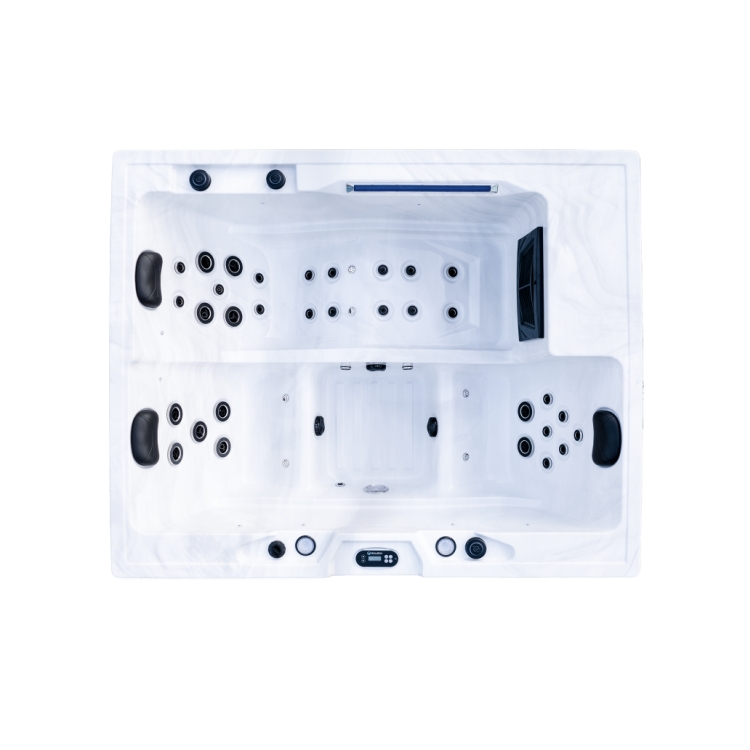
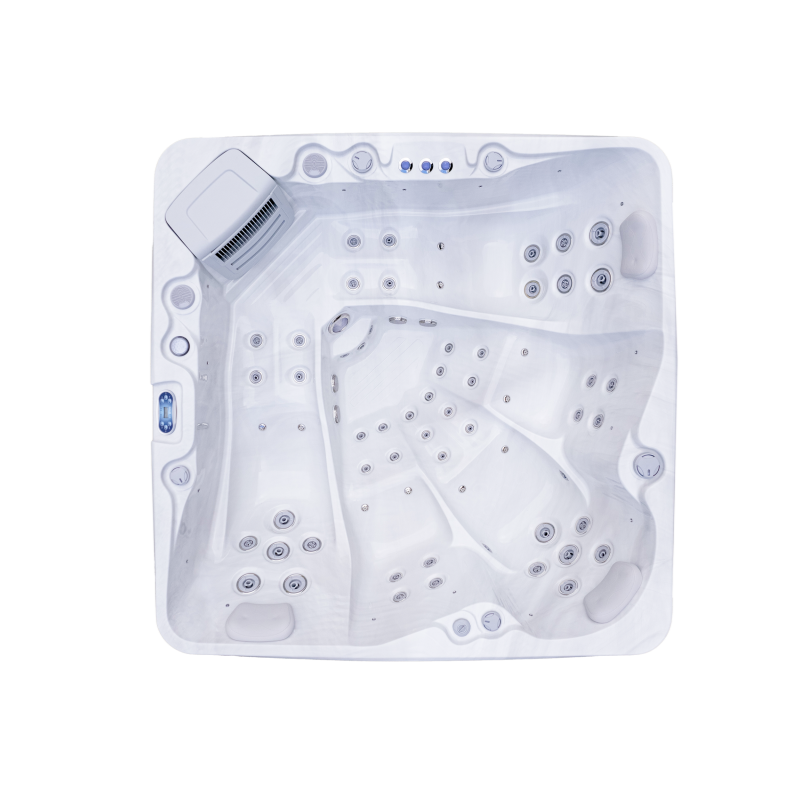

For many swim spa tub users, the ideal scenario is to open the lid and see a pool of crystal-clear water. Whether it's a swim spa tub in a home backyard or a commercial-grade one in a hotel, guesthouse, or wellness center, clear, transparent water not only signifies a pleasant visual experience but also represents a relatively healthy and stable water quality environment.
However, in actual use, many users encounter the same problem: despite adding disinfectant regularly and cleaning the filter periodically, the water gradually becomes cloudy, even turning slightly white, gray, or losing its original transparency.
When this happens, many people start searching for solutions online. "Can baking soda make water clearer?" is one of the most frequently searched questions. Especially in some pool forums and home maintenance communities, people often recommend using baking soda to improve water quality, with some even calling it a "secret weapon for making pools clearer."
But the problem is that swim spa tubs are not exactly the same as traditional swimming pools. Due to the smaller water volume, higher water temperature, and more frequent human use, the water quality in a swim spa tub changes much faster than in a regular swimming pool. Many experiences applicable to large swimming pools do not necessarily apply to swim spa tubs.
In fact, baking soda is neither a clarifying agent nor a disinfectant, nor is it a magical product that can directly "purify" water. However, it does play an important role in the water quality management system of a swim spa tub. Understanding its true function can not only help users solve turbidity problems but also prevent new water quality imbalances caused by improper use.
This article will analyze the chemical properties of baking soda, the root causes of turbidity in swim spa tub water, the functions of baking soda, and the correct usage methods from multiple perspectives to help users develop a more scientific approach to water treatment.

Why does the water in a swim spa tub become turbid?
Turbidity is not an independent problem but a result. Many users, upon seeing that the water in their swim spa tub is no longer clear, immediately look for a product that can "clear the water." However, in reality, if the root cause of the turbidity is not found, even if the water temporarily becomes clear, the problem often recurs.
Based on industry experience, the main reasons for turbidity in swim spa tubs are concentrated in the following aspects:
First, the accumulation of organic pollutants. When people enter a swim spa tub, they continuously release sweat, sebum, cosmetics, sunscreen, and various skin care product residues into the water. Even if users rinse briefly before entering, it's impossible to completely prevent these substances from entering the water. Over time, these organic matter gradually increases, affecting water transparency.
Second, decreased disinfection system efficiency. When free chlorine is insufficient or disinfectant activity decreases, the number of bacteria and microorganisms may begin to increase. Although these microorganisms are difficult to observe directly with the naked eye, they cause the water to gradually lose its transparency.
Third, decreased filtration system efficiency. If the filter cartridge is not cleaned for a long time, or the circulation system operates for insufficient time, a large number of suspended particles will not be removed in time, causing the water to appear white or gray.
In addition, an imbalance in the water's chemical balance is also an important reason. For example, when total alkalinity, pH value, and calcium hardness are unbalanced, minerals may begin to precipitate, forming visible turbidity.
This is why many professionals say, "Turbidity isn't the problem itself, but rather a signal that the water quality system is malfunctioning."
What exactly is baking soda?
The chemical name for baking soda is sodium bicarbonate, with the chemical formula NaHCO₃.
In everyday life, baking soda is widely used in:
• Baking
• Cleaning and stain removal
• Deodorization
• Medical applications
However, in the swimming pool and swim spa tub industry, the most important function of baking soda is adjusting total alkalinity. Many users confuse baking soda with products that raise pH levels, but they are not entirely the same. While baking soda can indeed slightly raise the pH level, its primary function is to increase the water's buffering capacity, that is, to increase total alkalinity.
Total alkalinity can be understood as the water's ability to resist changes in acidity and alkalinity. The industry generally recommends maintaining the total alkalinity of swim spa tubs between 80 and 120 ppm. If it falls below this range, the water becomes extremely unstable, and the pH level may fluctuate frequently, thus affecting the entire water treatment system.
Therefore, in essence, baking soda is not a product that directly makes water clear, but rather an important tool for helping to establish a stable water quality environment.
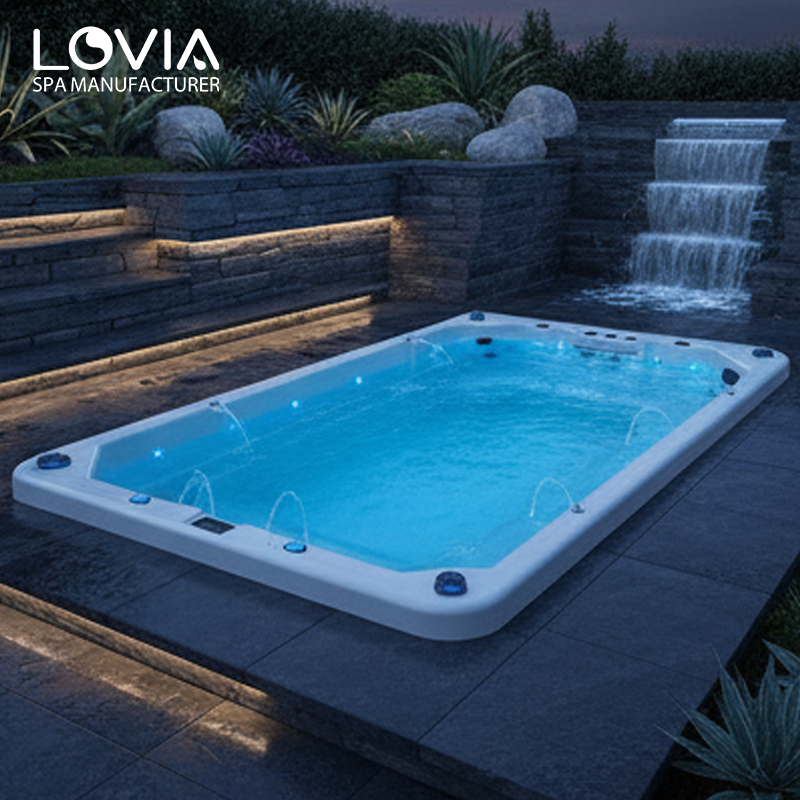
Why do many people feel that baking soda makes water clearer?
This phenomenon is actually quite interesting. Many users find that the water seems clearer after adding baking soda to their swim spa tub, and thus conclude that "baking soda can purify water."
In reality, this is an indirect effect. When the total alkalinity of the swim spa tub is too low, the water's buffering capacity decreases, and the pH value fluctuates frequently. Once the pH value deviates from the normal range, the efficiency of chlorine disinfectants is also affected. For example, within the recommended range, chlorine can maintain high activity and continuously kill bacteria; however, when the pH value is out of control, the disinfection efficiency may decrease significantly. At this time, even if users continue to add chlorine, they will not achieve the desired effect.
When baking soda increases the total alkalinity, the water begins to stabilize, the disinfectant can function again, and the filtration system efficiency is improved. After a period of circulation, the pollutants that originally caused the turbidity are gradually oxidized and filtered out, and the water becomes clear again.
In other words, baking soda doesn't directly remove turbidity, but rather creates an environment more conducive to water quality restoration.
In which situations does baking soda actually help improve swim spa tub water quality?
In actual maintenance, the following situations are often suitable for using baking soda:
First, when total alkalinity is significantly low. When the test result is below 80 ppm, the stability of the water in the swim spa tub is usually affected. Adding an appropriate amount of baking soda can restore buffering capacity.
Second, when pH fluctuates frequently. Some users find that the pH value, adjusted just yesterday, changes significantly the next day. This often indicates insufficient total alkalinity, and baking soda can help stabilize the entire system.
Third, when chlorine is consumed abnormally quickly. Although there are many reasons for rapid chlorine consumption, excessively low total alkalinity can indirectly affect disinfection efficiency. After ruling out other factors, appropriately increasing the total alkalinity may help improve the problem.
Fourth, when testing confirms there is no bacterial contamination or filtration problems, but the water still lacks clarity. In this case, restoring chemical balance may help the water gradually regain clarity.
In what situations will baking soda not solve turbidity problems?
If the root cause of turbidity is not insufficient total alkalinity, simply adding baking soda will not only be ineffective but may even worsen the problem.
For example, when the filter cartridge in the swim spa tub is severely clogged, contaminants cannot be removed by the filtration system. Adding baking soda in this case will not improve filtration capacity. Another example is when the free chlorine concentration is already too low, bacteria and organic contaminants continue to increase. In this case, what is needed most is to restore disinfection capacity, not to increase total alkalinity. Yet another example is when calcium hardness is too high; mineral precipitation itself will cause turbidity. If chemical parameters are incorrectly adjusted in this situation, it may exacerbate the problem.
Therefore, professional maintenance personnel usually do not add baking soda immediately upon seeing turbidity, but instead conduct a complete test first.
Generally recommended tests:
• pH value
• Total alkalinity
• Free chlorine
• Total chlorine
• Calcium hardness
Only after identifying the cause can targeted measures be taken.
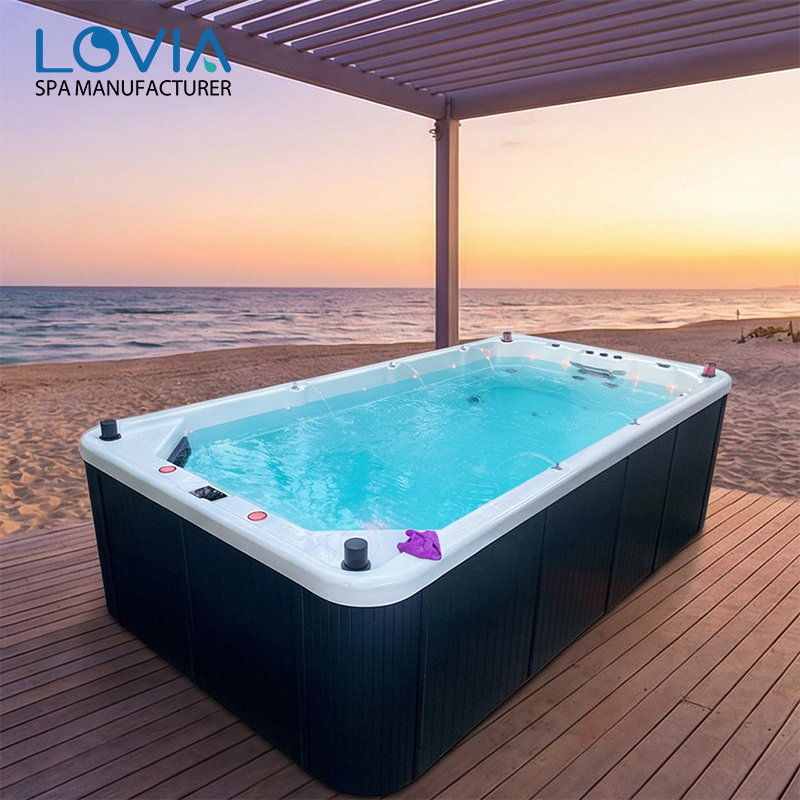
How to correctly use baking soda to maintain a swim spa tub?
If testing confirms low total alkalinity, baking soda is indeed an economical and effective adjustment method.
First, the dosage should be calculated based on the water volume. Different models of swim spa tubs have significantly different capacities, so online recommendations should not be blindly followed. Second, a principle of small, frequent additions should be adopted. Adding a large amount of baking soda at once may lead to over-adjustment of parameters, causing new balance problems. After adding, the circulation system should be turned on to allow the water to mix thoroughly. It is generally recommended to run for several hours and then test again.
If the total alkalinity is already close to the target range, no further addition is necessary. For swim spa tubs, stability is far more important than rapid adjustments.
Many users easily overlook the fact that chemicals alone cannot maintain water clarity in the long term. Whether it's baking soda, chlorine, shock agents, or clarifiers, they are only components of the overall water treatment system.
The factors that truly determine the long-term clarity of a swim spa tub include:
• A good circulation system
• High-efficiency filtration
• A proper disinfection system
• Stable chemical balance
• Regular maintenance plan
If any of these components malfunctions, simply adding chemicals often cannot fundamentally solve the problem. Therefore, more and more professional manufacturers are optimizing water quality management capabilities from the equipment design stage.
How does a high-quality swim spa tub help maintain clear water?
As the industry develops, users' requirements for swim spa tubs have gone beyond just massage experience and swimming performance; they are now more concerned with long-term maintenance costs and water quality stability.
As a brand that has long focused on the research and development and manufacturing of Swim Spa, Hot Tub Spa, and Cold Plunge products, LOVIA® has always emphasized the synergistic optimization of the circulation and filtration systems during product design. For swim spa tubs, efficient circulation allows disinfectants to be distributed more evenly throughout the water body, while also helping suspended particles enter the filtration system more quickly, thereby improving overall water treatment efficiency.
At the same time, a reasonable water circuit design and filtration configuration also help reduce the rate of contaminant accumulation and lower the risk of water imbalance. For users, this means not only more stable water quality but also reduced maintenance pressure caused by frequent adjustments to chemical parameters.
FAQ
Can baking soda directly clear cloudy water in a swim spa tub?
No, it cannot directly remove turbidity. Baking soda is primarily used to increase total alkalinity, helping to stabilize the water quality. If turbidity is related to low total alkalinity, it may indirectly promote water clarity.
What is the ideal total alkalinity level for a swim spa tub?
The industry generally recommends maintaining it between 80 and 120 ppm. This range helps stabilize pH levels and improves the overall efficiency of the water treatment system.
Are baking soda and pH boosters the same?
Not entirely. Baking soda primarily increases total alkalinity while slightly raising the pH; dedicated pH boosters, on the other hand, are typically based on sodium carbonate and focus on rapidly increasing pH.
What if the water becomes cloudy after adding baking soda?
This may indicate a change in mineral balance or pre-existing filtration and chemical imbalances. It is recommended to immediately test complete water quality parameters instead of blindly adding more chemicals.
How often should the total alkalinity of a swim spa tub be tested?
For home users, it is generally recommended to test 1 to 2 times per week. For high-frequency use environments, the testing frequency can be increased appropriately to detect changes in water quality promptly.
