

For many users new to water maintenance, managing the chemical balance of an outdoor swim spa tub is often far more complex than anticipated. Many encounter similar issues during their first water test: test strips indicate low pH, the water begins to cause slight irritation, metal components appear to be corroding faster, and sanitizer performance becomes inconsistent. At this point, one of the most common pieces of advice found online is simply to "add a little baking soda." Because baking soda is inexpensive, easily accessible, and has a reputation as a "universal regulator" in household cleaning, many swim spa owners naturally assume it offers a simple solution for water quality adjustment.
However, the reality is far more complex. A persistent issue in the industry is that many low-end brands or non-specialized retailers focus almost exclusively on dimensions, jet counts, and massage features during the sales process, rarely explaining the importance of water chemistry management to the user. Consequently, consumers who invest heavily in an outdoor swim spa often find themselves confused during ongoing maintenance: Why is the water cloudy despite adding chlorine? Why is the pH level unstable? Why does the balance drift again just days after being adjusted? The root cause of these problems is rarely a lack of diligence on the user's part; rather, it stems from a lack of understanding regarding the interplay between pH, Total Alkalinity (TA), and sanitization efficiency.
Managing water quality in an outdoor swim spa hot tub combo is particularly challenging—often more so than with a standard hot tub. The reasons are straightforward: outdoor swim spas typically feature larger water capacities, more powerful circulation systems, and more complex usage scenarios. While a standard residential hot tub might hold between 800 and 1,800 liters of water, a medium-to-large outdoor swim spa often holds between 5,000 and 12,000 liters—with some high-end, dual-zone models holding even more. This increased volume means that chemical adjustments take longer to show results, and the water is more significantly affected by external environmental factors such as sunlight, falling leaves, dust, rainfall, and contaminants introduced by bathers.
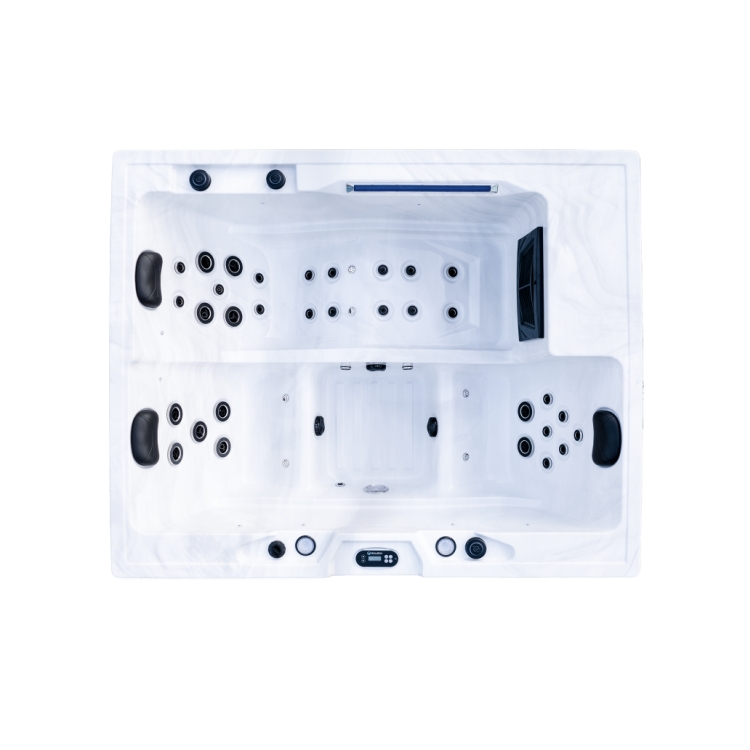
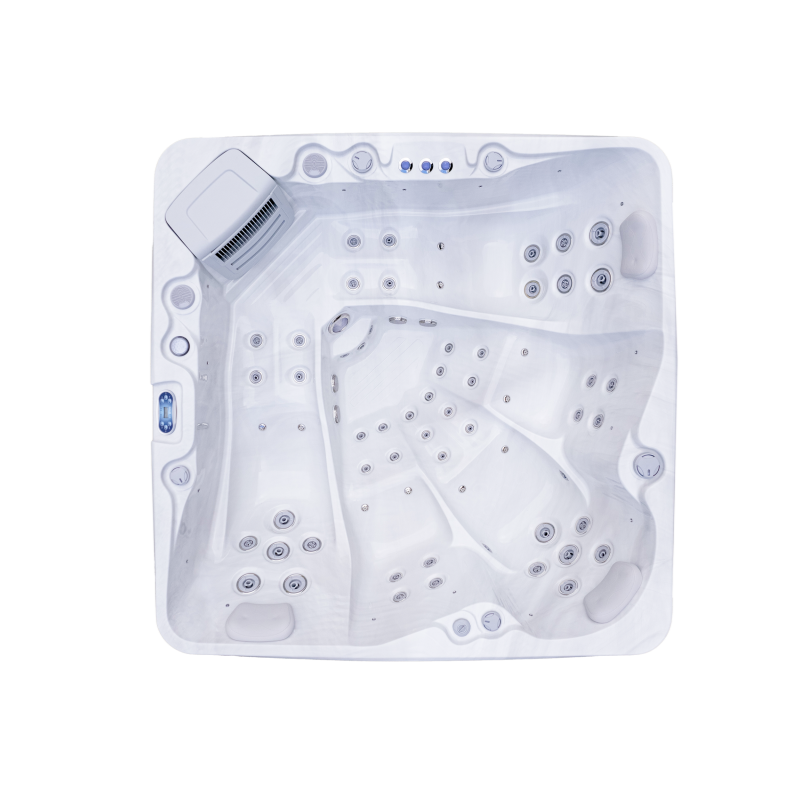
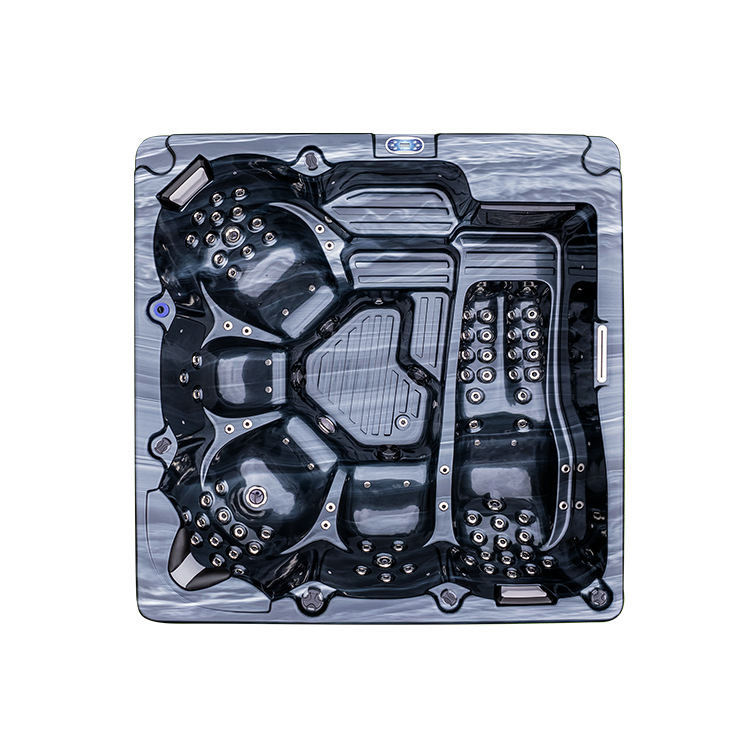
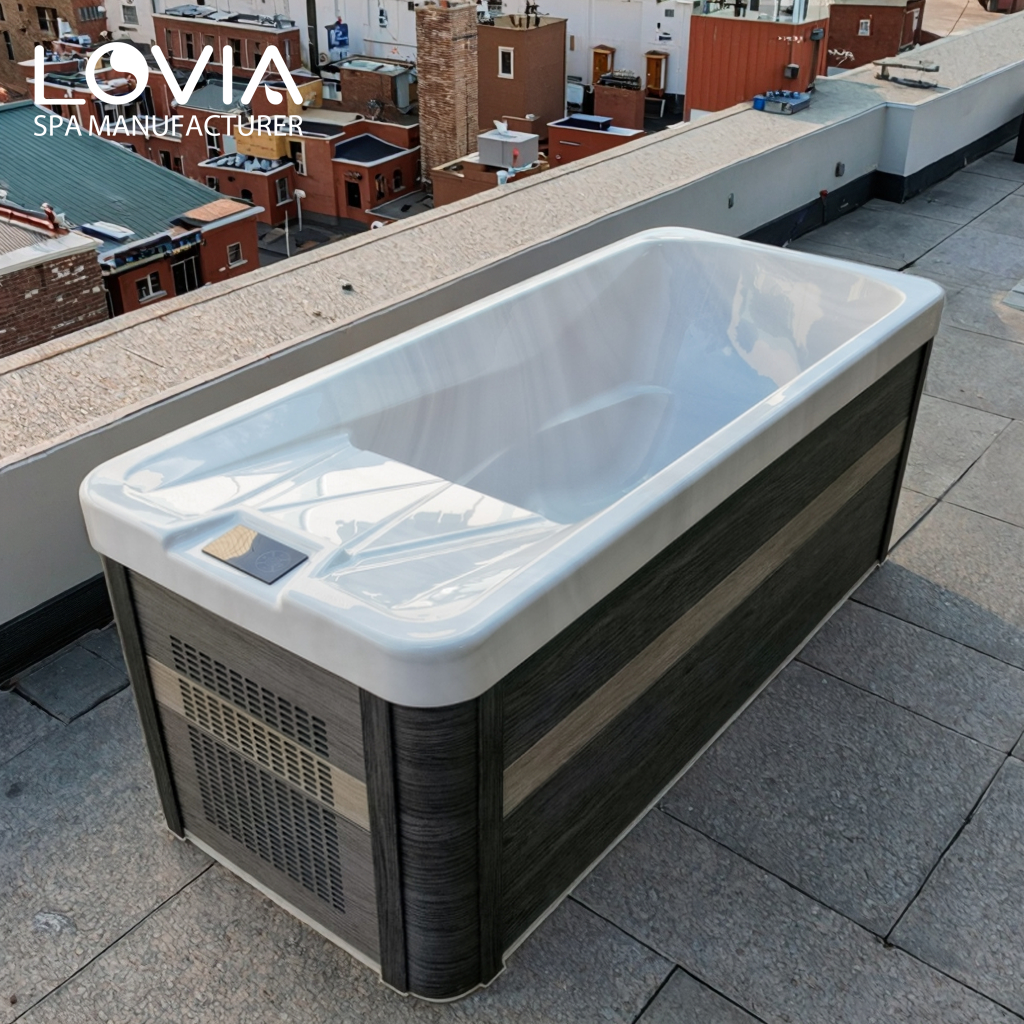
This is precisely why established manufacturers are increasingly prioritizing an integrated design philosophy that combines equipment performance with effective water quality management. Take LOVIA® as an example: as a manufacturer long dedicated to the R&D of outdoor spa equipment, the company often equips its outdoor swim spa tubs with multi-stage filtration systems, high-flow circulation pumps, and smart control modules to help users maintain stable water balance. The high-flow circulation systems and efficient filtration structures in LOVIA® swim spas enhance overall water turnover efficiency; this is practically significant for minimizing localized pH fluctuations and ensuring the uniform distribution of chemicals—since, in large outdoor swim spa tubs, consistent circulation is often more critical than simply adding treatment agents.
So, can baking soda actually raise the pH level of the water in an outdoor swim spa hot tub combo? The answer is yes, but the effect is not as direct as many users imagine; primarily, it affects total alkalinity rather than pH itself. To truly understand this issue, one must first grasp the fundamental nature of pH.
Why is the pH level in an outdoor swim spa so important?
pH is a measure of water acidity or alkalinity, typically ranging from 0 to 14. A pH of 7 is neutral; values below 7 indicate acidity, while values above 7 indicate alkalinity. For outdoor swim spas, the ideal pH range is generally 7.2–7.8. Many spa experts consider 7.4–7.6 to be the optimal range, as it most closely matches the natural pH of human eyes and skin.
Why does pH matter so much? Because it affects almost every critical aspect of an outdoor swim spa tub's operation. First is user comfort. When the pH drops below 7.0, the water becomes more acidic, potentially causing stinging eyes, nasal discomfort, and dry skin. Prolonged exposure to low-pH water can also accelerate the corrosion of certain metal components, such as heater housings, pump connections, and metal jet trims.
Secondly, pH directly impacts the efficiency of sanitizers. Take chlorine, for instance; its activity varies significantly depending on pH levels. Research shows that when the pH is close to 7.2, the proportion of hypochlorous acid (HOCl)—the active sanitizing agent—is high, resulting in ideal disinfection efficiency. Conversely, when the pH rises above 8.0, the proportion of active chlorine drops significantly, which can drastically reduce the speed at which bacteria are eliminated. Therefore, even if the chlorine level in your outdoor swim spa tub appears normal, disinfection effectiveness may still be suboptimal if the pH is unbalanced.
Furthermore, pH imbalance affects the water's visual appearance. Excessively high pH often leads to calcium deposits, scale buildup, and cloudy water; conversely, while water with a very low pH might "look normal," the risk of internal corrosion increases significantly.
Why do people use baking soda to adjust swim spa tub water?
The chemical name for baking soda is sodium bicarbonate (NaHCO₃). It is a mildly alkaline substance. In water treatment, its most common use is not simply to raise the pH directly, but to boost the water's buffering capacity—specifically, to increase Total Alkalinity (TA).
Many users confuse pH with Total Alkalinity. Simply put, pH represents the water's current acidity or alkalinity, whereas Total Alkalinity acts more like the water's resistance to pH fluctuations. You can think of Total Alkalinity as a "stabilizer." If a swim spa tub's Total Alkalinity is too low, the pH might drop rapidly due to the introduction of even small amounts of acidic contaminants, even if it was adjusted to the normal range just the day before.
Ideally, the Total Alkalinity of a swim spa tub should be maintained between 80 and 120 ppm. When TA falls below 60 ppm, the water often becomes "unstable," leading to frequent pH fluctuations. This is why professional maintenance routines often prioritize adjusting Total Alkalinity before adjusting pH.
Baking soda is popular because it effectively raises TA and costs far less than specialized alkalinity increasers. In fact, the core ingredient in many commercial alkalinity-boosting products is simply sodium bicarbonate—baking soda.
Can baking soda raise the pH of a swim spa tub?
Yes, but the effect is limited.
This is a crucial point to understand. When baking soda is added to a swim spa hot tub combo, it does shift the water toward alkalinity, causing the pH to rise somewhat. However, compared to dedicated pH increasers, baking soda raises the pH much more gently. For instance, adding approximately 680 grams of baking soda to about 1,000 gallons (approx. 3,785 liters) of water in an outdoor swim spa typically raises total alkalinity by around 10 ppm. However, the pH might only rise by 0.1 to 0.2, depending on the initial water quality, circulation rate, and the level of dissolved substances in the water.
This means that if your swim spa tub's pH is only slightly low—say, needing to go from 7.1 to 7.3—baking soda can be an effective choice. But if the pH has dropped to 6.8 or lower, relying solely on baking soda is often inefficient.
In other words, baking soda is better suited for this scenario:
"My total alkalinity is low, and my pH is also on the low side."
It is not suitable for this scenario:
"My total alkalinity is normal, but my pH is very low."
For the latter case, a pH increaser based on soda ash (sodium carbonate) is usually more appropriate.
Why do many swim spa users feel that adding baking soda has no effect?
This is one of the most common misconceptions in the industry.
The first reason is insufficient dosage. Many users add "a scoop" or "half a cup" based on guesswork, without calculating the amount relative to the water volume. For outdoor swim spa tubs that hold thousands of liters of water, a small amount of baking soda is unlikely to produce a noticeable change.
The second reason is inadequate circulation. If the circulation pump isn't run long enough after adding the chemical, the concentration may be high locally but poorly mixed overall, leading to skewed test results. It is generally recommended to run the circulation system for at least 30 to 60 minutes after adding the chemical before testing.
The third reason is that the root cause lies elsewhere. Factors such as heavy acid rain, frequent use of acidic cleaners, or continuous heavy usage leading to organic acid accumulation can persistently drive down the pH, effectively counteracting the impact of the baking soda.
The fourth reason is weak equipment circulation design. Large outdoor swim spa hot tub combos rely heavily on efficient circulation systems to ensure the even distribution of chemicals. This is why high-quality products often demonstrate clear advantages in long-term maintenance. Certain LOVIA® swim spa hot tub combos feature high-flow pumps, multi-point water return designs, and multi-layer filtration systems; these enhance overall water mixing efficiency, allowing chemical adjustments to take effect more quickly.
How do you properly use baking soda to adjust swim spa water quality?
If you decide to use baking soda, it is recommended to follow a standard procedure rather than relying on guesswork.
First, use a reliable water testing kit to check three key parameters:
•pH
•Total Alkalinity (TA)
•Sanitizer level
Second, calculate the actual water volume of the swim spa hot tub combo. Many users underestimate the volume, leading to incorrect dosage calculations.
Third, add the baking soda in small, incremental doses. Do not add an excessive amount all at once. It is advisable to wait 30 to 60 minutes after each adjustment before re-testing. Incremental adjustments are safer than making large, sudden changes.
Fourth, keep the circulation system running. Achieving chemical balance relies on water mixing; insufficient circulation can lead to localized reading inaccuracies.
Finally, re-test and record the data. Keeping long-term records helps determine if the swim spa hot tub combo has a persistent pH drift issue.
Baking soda vs. professional pH increaser: which is better for a swim spa?
There is no single answer; it depends on the specific situation.
If your swim spa hot tub combo has the following issues:
•Low TA
•Slightly low pH
•A need for gentle adjustment
...then baking soda is an excellent choice.
If the issues are:
•Normal TA
•Significantly low pH
•A need for a rapid increase
...then a professional pH increaser is usually more efficient.
In essence, baking soda is not a cure-all solution, but rather one tool in your water chemistry toolkit.
FAQ
Can baking soda completely replace all other swim spa water treatment chemicals?
No. Baking soda is primarily used to raise total alkalinity; it cannot replace sanitizers, descalers, or specialized pH adjusters.
How often should I test the pH of my swim spa hot tub combo?
For home use, testing 2–3 times a week is recommended; for high-frequency use, daily testing is advised.
Why does the pH level in my swim spa hot tub combo keep dropping?
This may be related to acid rain, contaminants introduced by bathers, improper use of chemicals, or excessively low total alkalinity.
What are the key specifications and advantages of LOVIA® outdoor swim spas?
Selected LOVIA® outdoor swim spas feature high-capacity designs, high-flow circulation pumps, multi-layer filtration systems, and smart controls, all of which help enhance water circulation efficiency and improve water chemistry stability.
Is baking soda safe for outdoor swim spa hot tub combos?
When used in appropriate dosages, baking soda is generally safe for water treatment in outdoor swim spa hot tub combos, provided the quantity added is calculated correctly.
