

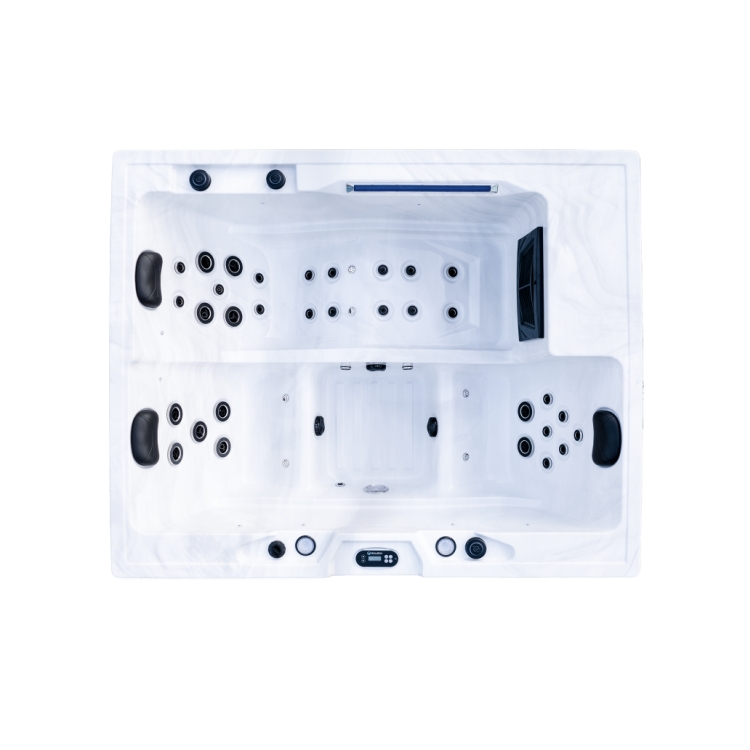
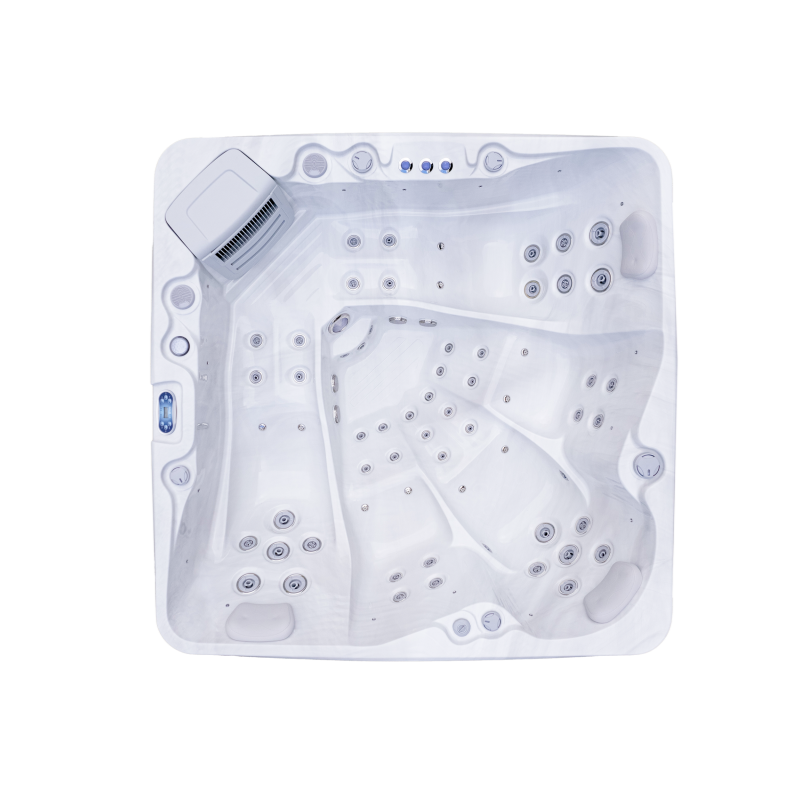
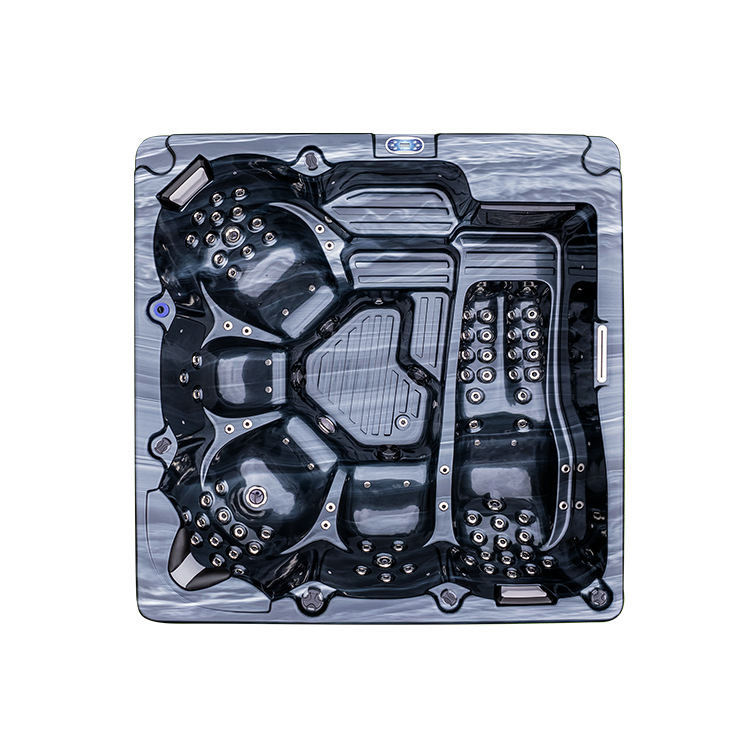
In modern family health lifestyles, both swim spa tubs and hot tubs are popular spa devices. They both offer relaxation, soothing, and aquatic exercise experiences, but many users find that swim spa tubs consume significantly more water and electricity than regular hot tubs. Why is this?
This article will delve into why swim spa tubs consume more water and electricity from multiple perspectives, including structural design, functional configuration, water capacity, heating system, and operating modes, and help you understand how to use and maintain them scientifically and energy-efficiently.

What are the Structural Differences Between Swim Spa Tubs and Hot Tubs?
To understand "why swim spa tubs consume more water and electricity than hot tubs," it's essential to first understand the fundamental differences in their design structure and functional positioning.
1. Hot Tub
Primarily designed for static relaxation and hydrotherapy massage. It is relatively small, accommodating 2 to 6 people, with a water volume typically between 800 and 2000 liters. The heating temperature is stable at 36°C to 40°C, with a simple internal circulation system and a limited number of jets.
2. Swim Spa Tub
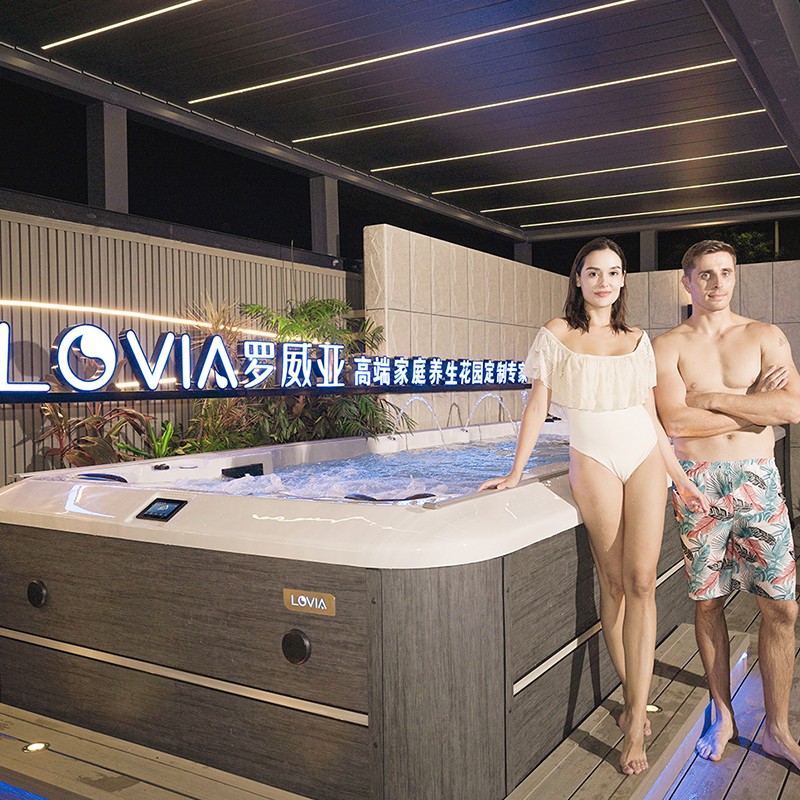
Combines the functions of a "heated swimming pool" and a "hydrotherapy system." It features an adjustable water flow swimming area and a hydrotherapy area with jet massage. It is larger, typically accommodating 1 to 3 people for swimming training. The water volume can reach 7000 to 12000 liters, far exceeding that of a hot tub.
However, it requires a more powerful circulation pump, a larger heating system, and more complex filtration equipment to maintain water flow and temperature.
Therefore, structurally speaking, a swim spa tub far surpasses a regular hot tub in terms of volume, power, and system complexity, which inevitably leads to higher water and electricity consumption.
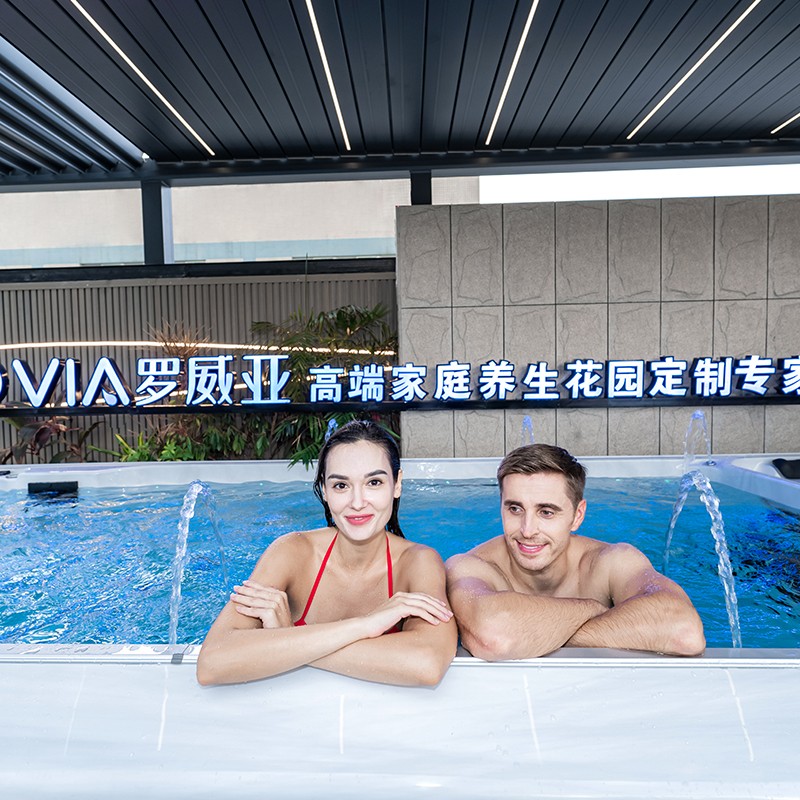
Why does a swim spa tub hold so much more water than a hot tub?
Water volume is the primary factor determining water and energy consumption.
Hot tubs only need to be filled with a shallow layer of water to cover the body, while swim spa tubs are designed to allow users to swim or exercise in the water, which places strict requirements on water depth and volume.
• Hot tub water depth: Approximately 60-80 cm.
• Swim spa tub water depth: Typically 120-150 cm, or even deeper.
Furthermore, swim spa tubs must maintain sufficient water volume to create a continuous and stable reverse water flow, allowing users to swim in place.
To achieve this, the water pump needs to circulate a larger volume of water per unit time, and the heating, filtration, and circulation of this water require higher energy consumption.
In other words, the high water level and large capacity of swim spa tubs are the primary reasons for their high water and electricity consumption.
Why is the energy consumption of the water flow system even higher?
In hot tubs, the jet system is mainly used for massage functions, with a gentle and intermittent water flow.
In a swim spa tub, the water flow system is designed entirely differently—its core is to generate a strong and controllable reverse water flow, allowing users to exercise while swimming.
To achieve this continuous and powerful water flow, a swim spa tub typically features:
• Multiple high-power water pumps (each ranging from 2 to 5 horsepower);
• A multi-stage jet nozzle system with adjustable flow rate and direction;
• A fluid control system that operates for extended periods.
These components consume a significant amount of electricity during operation.
In contrast, the massage jets in a hot tub have lower power and operate for a much shorter time.
Therefore, the water flow system alone can consume 3 to 5 times more electricity than a hot tub.
Why is there such a significant difference in energy consumption for the heating system?
Heating is one of the primary sources of energy consumption in a swim spa tub.
While both require maintaining a constant water temperature, the difference in water volume and heating efficiency means that the swim spa tub consumes significantly more energy for heating.
1. Larger water volume, longer heating time
The water volume in a swim spa tub is often 4 to 6 times that of a hot tub. Heating such a large volume of water from room temperature to 38°C naturally requires significantly more energy.
2. Larger heat loss area
Swim spa tubs are typically installed outdoors or semi-outdoors, with a large water surface area, making heat easily lost through evaporation and air convection.
Without high-quality insulation covers or windproof measures, the heating system must repeatedly start and stop to maintain the temperature, resulting in additional energy consumption.
3. Multi-zone heating design
Some high-end swim spa tubs use independent heating systems for the swimming and massage zones, allowing for separate temperature control.
While this improves comfort, it also means maintaining the thermal balance of two different water zones simultaneously, further increasing energy consumption.
Therefore, in terms of heating efficiency and heat retention, swim spa tubs are inherently more energy-intensive than hot tubs.
Why does the filtration and circulation system also increase energy consumption?
The larger volume of water in a swim spa tub means more impurities, skin flakes, makeup residue, and even airborne dust can enter the water.
To maintain water quality, the system must run the filtration system frequently.
• Hot tub: The filtration pump only needs to run for a few hours a day to purify the water.
• Swim spa tub: To maintain water flow and clarity, the circulation pump operates almost 24/7, keeping the water flowing even when not in use.
Furthermore, the high-flow pump, ozone sterilization device, and ultraviolet purification system in the filtration system also continuously consume electricity.
While these devices ensure hygiene, they also make the energy consumption of a swim spa tub significantly higher than that of a hot tub.
Why is a swim spa tub more prone to water waste?
Besides electricity consumption, swim spa tubs are also more wasteful in terms of water usage.
1. Larger water volume, higher water change frequency
Although the lifespan can be extended through the filtration system, due to the larger water volume and more frequent use, a complete water change is still required every 2-3 months.
Each water change involves tons of water, far exceeding that of a hot tub.
2. Larger Evaporation Area
A wider water surface results in higher evaporation. This is especially true when used outdoors, where wind and sun exacerbate evaporation.
Users must regularly add water to maintain the water level.
3. Increased Water Consumption During Drainage and Cleaning
Due to the more complex internal piping of the swim spa tub, repeated flushing is required for cleaning and drainage, resulting in additional water consumption.
In summary, the swim spa tub not only requires more water due to its larger size but also consumes more water due to increased evaporation and maintenance frequency.
Do Operating Methods and Usage Frequency Affect Energy Consumption?
Yes, user habits significantly impact the water and electricity consumption of the swim spa tub.
• Frequent Heating and Cooling: Repeatedly switching the heating system on and off consumes more electricity;
• Prolonged Pump Operation: Continuous water flow consumes extremely high power;
• Forgetting to Cover the Heat Protector: This leads to heat loss, requiring the system to reheat;
• Infrequent Filter Cleaning: Clogged filters increase the pump load and reduce motor efficiency.
In contrast, hot tubs are generally used for short periods, requiring less heating and circulation, resulting in lower overall energy consumption.
Proper use and maintenance can effectively reduce energy consumption, making swim spa tubs more economical and efficient.
How does the external environment affect energy consumption?
Installation location and environmental conditions are also important factors determining energy consumption.
1. Outdoor-installed swim spa tubs
face greater heat loss and temperature fluctuations. Heating becomes more difficult in winter, and additional energy is needed in summer to maintain a suitable water temperature.
2. Indoor-installed swim spa tubs
although less affected by air temperature, poor ventilation and increased humidity force the dehumidification system to operate frequently, indirectly increasing energy consumption.
In contrast, hot tubs are smaller, have concentrated heat, and shorter operating times, making temperature control easier and thus resulting in lower energy consumption.
To reduce energy consumption, swim spa tubs should be equipped with insulation, windproof covers, and sturdy covers, and a well-ventilated installation location should be chosen.

Why does the swimming function itself increase energy consumption?
The most distinctive feature of a swim spa tub is its ability to allow swimming in place.
However, this feature is also a significant source of energy consumption.
To generate enough water flow for an adult to swim in place, the system needs to continuously output a high-powered water pump and maintain a stable flow rate.
Typically, in swimming mode, each pump can reach 3-5 horsepower, and the total power when multiple pumps are running simultaneously can even exceed 10 horsepower.
Hot tubs, on the other hand, do not have this feature, and their pumps typically consume less than one-third of the total power.
Therefore, whenever the swimming function is activated, the instantaneous power consumption of a swim spa tub increases exponentially.
How can you reduce water and electricity consumption when using a swim spa tub?
Although swim spa tubs are inherently energy-intensive, water and electricity consumption can be effectively reduced through proper use and maintenance:
• Install high-efficiency insulation covers and windproof structures to reduce heat loss;
• Maintain a constant water temperature and avoid frequent temperature fluctuations;
• Regularly clean the filter and piping to keep the water flow system efficient;
• Turn off the water pump and heating system when not in use;
• Use energy-saving circulation modes to maintain water quality rather than continuous high-intensity operation;
• Choose energy-efficient LED lights and low-power electronic control systems;
• Control the frequency of water changes appropriately to reduce discharge while ensuring water quality.
Through scientific management, even energy-intensive swim spa tubs can achieve a balance between performance and energy efficiency.
What Quality Tests Are Done Before Shipment?
Before shipment, each LOVIA SPA undergoes water testing, insulation inspection, and electrical safety verification. Our QC team follows ISO9001 procedures to ensure every spa meets export standards. Buyers receive detailed inspection reports and optional third-party testing. As a high-quality manufacturer, we take pride in zero-defect delivery and long-lasting performance.
