

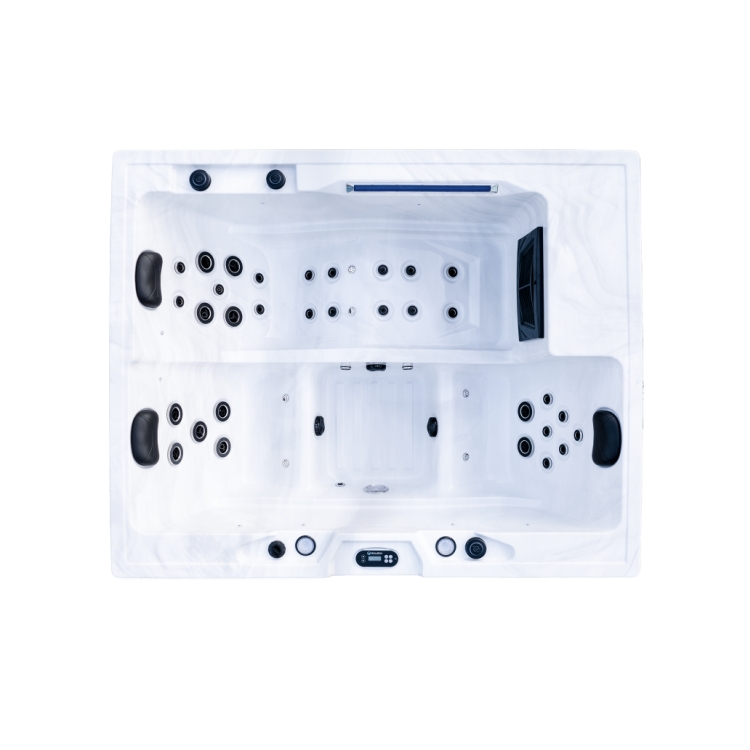
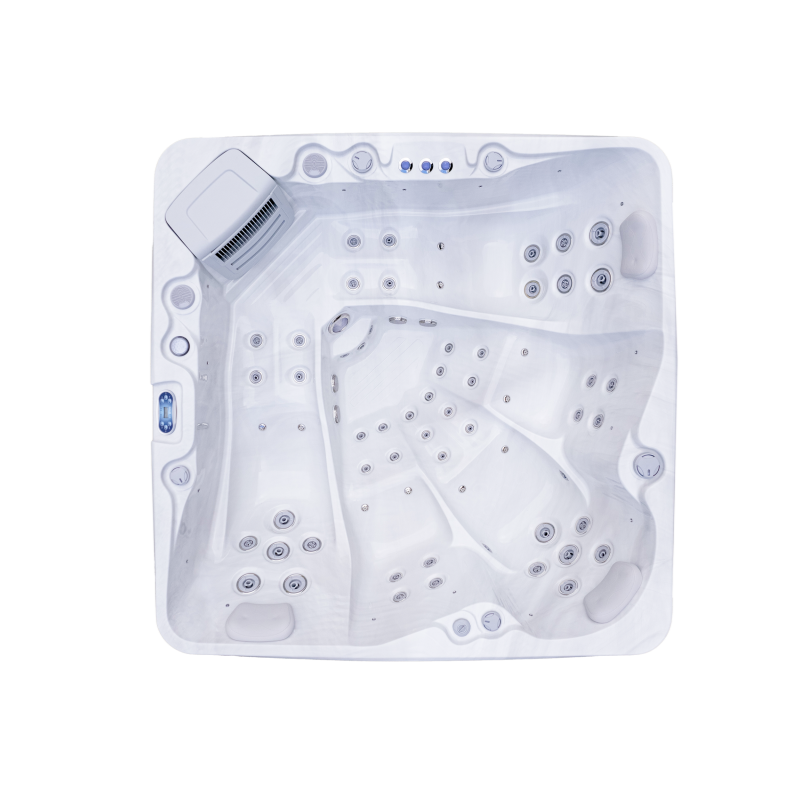
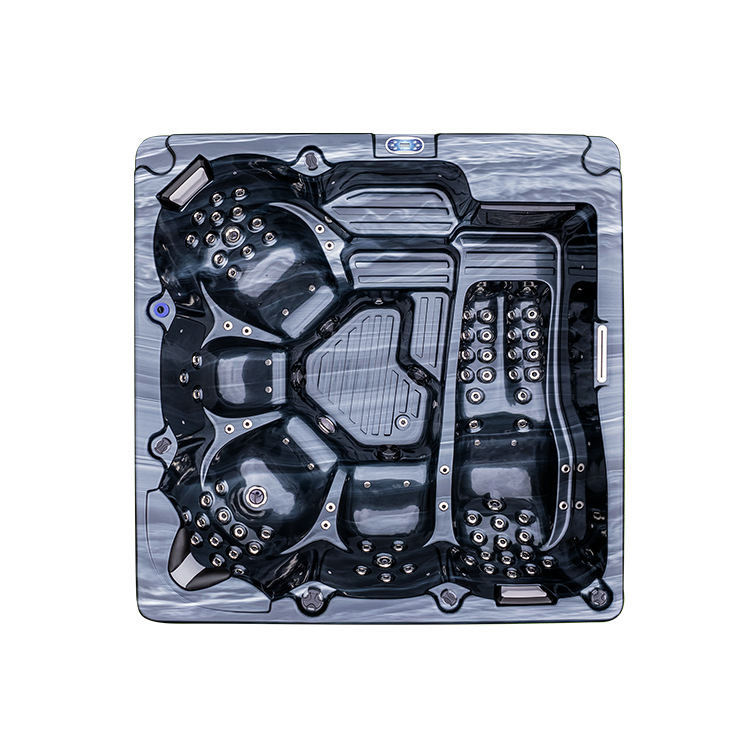
Driven by rising consumer standards and the growing popularity of outdoor living, two-person outdoor hot tubs are becoming a key feature for many households, boutique guesthouses, vacation villas, and high-end hotels. Compared to traditional large-capacity models, these compact tubs are seeing rapid global growth due to their smaller footprint, lower energy consumption, enhanced privacy, and suitability for couples or small families. Market research on the North American spa industry shows that small and two-person models have achieved a compound annual growth rate (CAGR) of over 12% in the last five years—outpacing the growth of large outdoor spa units.
This shift reflects a change in consumer priorities: buyers are moving away from the blind pursuit of maximum size and are instead focusing on spatial fit, operational efficiency, and long-term maintenance costs.
However, the industry often overlooks a critical issue that directly impacts user satisfaction: exactly where a two person outdoor jacuzzi tub should be placed. While it may seem like a simple matter of patio layout, anyone with experience in installation and long-term use knows that the placement environment determines roughly 80% of the subsequent user experience.
Unfortunately, many in the industry focus their sales pitches on aesthetics, jet counts, and control systems, rarely educating customers on how improper placement can lead to increased energy consumption, difficult maintenance, a shortened structural lifespan, and even safety risks.
In reality, many consumers only discover these issues after purchase. For instance, placing a tub directly on a lawn can lead to foundation subsidence and uneven stress on the shell after a few months; installation in a high-wind area can cause winter energy costs to spike by over 30%; and positioning a tub beneath trees often results in constant water contamination from falling leaves and pollen, placing an excessive burden on the filtration system.
Even more common is the tendency for low-end manufacturers to downplay the importance of the installation environment to close a sale, often giving customers the misleading impression that the tub can simply be placed "wherever there is open space."
A truly professional outdoor hot tub manufacturer would never offer such advice. High-quality spa brands—such as LOVIA®—prioritize the assessment of the installation environment as a crucial step in the purchasing process when consulting with customers. When it comes to two person outdoor jacuzzi tubs, the product itself is certainly important, but the installation environment plays a crucial role in determining thermal efficiency, comfort, and equipment longevity. In other words, even the finest product cannot perform at its best if placed in an unsuitable environment.
So, the question arises: where is the ideal location for a 2 person outdoor spa tub?
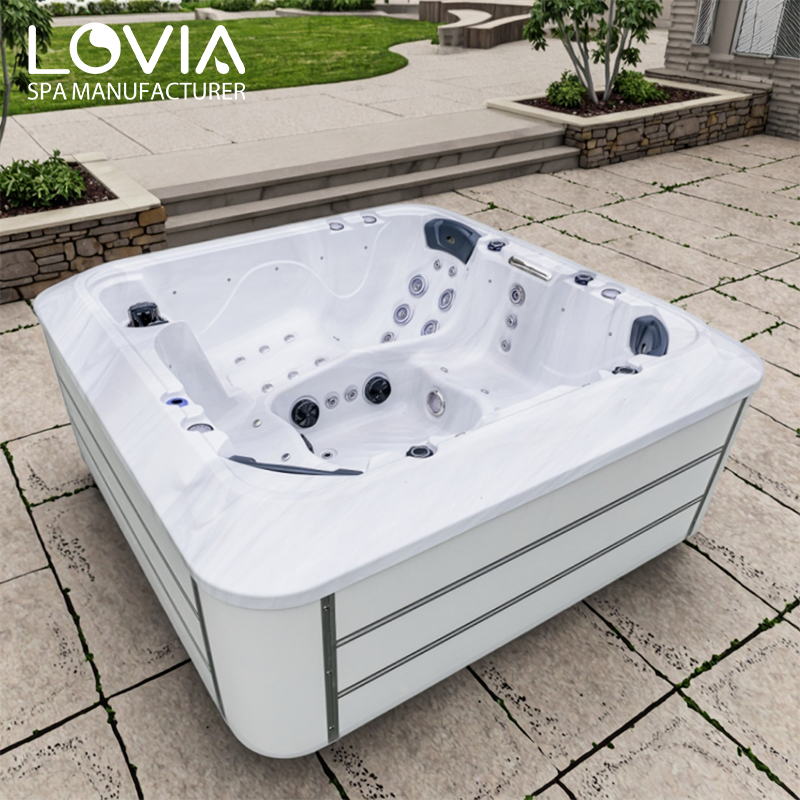
What should be considered first when choosing a location for a two-person outdoor hot tub?
Many people instinctively prioritize aesthetics—such as which corner of the yard looks best in photos or which spot on the deck offers the best view. However, from an engineering perspective, the priorities for placement should be: structural load-bearing capacity, climate impact, ease of use, privacy, and aesthetic design.
Load-bearing capacity is prioritized because many users underestimate the actual weight of a 2 person outdoor spa tub. An empty standard unit typically weighs between 250 and 450 kilograms; filling it with water adds another 700 to 1,200 kilograms; and with two adults inside, the total load often reaches 1,000 to 1,800 kilograms. This means the ground must support not only the static weight but also dynamic loads.
This is why professional installation teams assess the foundation's load-bearing capacity before moving the unit into place. If the underlying structure is unstable, uneven weight distribution over time can cause slight deformation of the shell, stress on plumbing connections, or even failure of the jet seals.
Therefore, before considering aesthetics, one must ensure the installation area provides stable support.
The Ground Foundation: The Most Critical Prerequisite for Installation
If one had to identify the single most influential environmental factor, the answer is clear: the ground foundation.
Suitable surfaces for installing a 2 person outdoor spa tub include:
•Reinforced concrete platforms
•Reinforced wooden decks
•Stone-paved foundations
•Specialized composite foundations
Among these, a concrete platform is the most common and stable option. It is generally recommended that the foundation be 10 to 15 centimeters thick and perfectly level. If the levelness deviates by more than 5 millimeters, long-term operation could place undue stress on the structure.
Many consumers ask: "Can I place it on the lawn?" Theoretically, this is feasible in the short term, but it is strongly discouraged for the long term. Soil expands and contracts with the seasons; softening during the rainy season and frost heave in winter can alter the distribution of forces acting on the base of the two person outdoor jacuzzi tub.
Is it feasible to install an outdoor 2 person jacuzzi tub on a terrace?
Terraces are popular installation sites because they often offer better views and a more upscale atmosphere. However, the biggest risk associated with installing a two-person outdoor hot tub on a terrace is the load-bearing capacity.
Many residential terraces are designed to support only standard furniture loads—typically 250 to 400 kg per square meter—whereas the concentrated load of an outdoor 2 person jacuzzi tub can far exceed this figure.
Therefore, a structural assessment is essential before installation to verify:
•The load-bearing capacity of the floor slab
•The structural strength of beams and columns
•The integrity of the waterproofing layer
Proceeding with installation without an assessment by a professional engineer is not recommended.
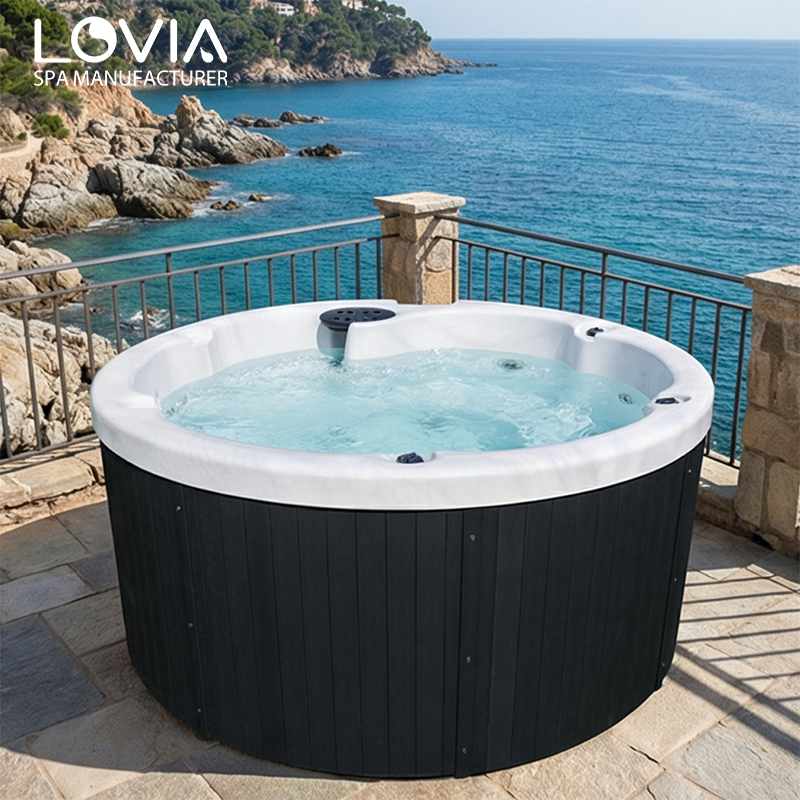
Why is a wind-sheltered environment so important for a two-person outdoor hot tub?
When purchasing a 2 person outdoor spa tub for the first time, many people focus solely on water temperature while overlooking the impact of wind on heat loss.
In fact, wind is a primary factor contributing to heat loss in outdoor settings. Studies show that when the ambient temperature is 5°C and wind speed reaches 20 km/h, heat loss from the water's surface can be 25% to 40% higher than in calm conditions. This means that for the same hot tub, placement in an open, windy area forces the heating system to activate more frequently, significantly increasing electricity costs.
Beyond energy consumption, strong winds affect user comfort. While the body is submerged in hot water, the shoulders, neck, and head remain exposed to the air. Constant exposure to cold wind can noticeably reduce comfort levels, even if the water temperature is a pleasant 39°C.
Therefore, the ideal setting features natural or artificial windbreaks, such as:
•Fences
•Landscape walls
•Vegetation screens
•Semi-enclosed gazebos
These features not only reduce heat loss but also enhance the privacy of the hot tub area.
Should the ideal setting be completely exposed to the outdoors?
Theoretically, a two person outdoor jacuzzi tub can certainly be placed in a completely open outdoor area; however, in terms of long-term usability, a semi-open setting is usually superior to a fully exposed one.
A fully open setting offers excellent views, making it ideal for stargazing or enjoying mountain or lake scenery. Yet, the downsides are obvious: exposure to intense sun, rain, snow, falling leaves, dust, and pollen increases maintenance requirements.
In contrast, a semi-open setting balances the outdoor experience with necessary protection. Examples include:
•Covered terraces
•Patios with pergola structures
•Semi-enclosed courtyard corners
•Partially sheltered landscape areas
Such environments effectively minimize the entry of external contaminants into the hot tub water.
Is placing a two-person outdoor hot tub under a tree an ideal choice?
Many people prefer placing their hot tub under a tree, believing it creates a more natural, vacation-like atmosphere.
In reality, however, placing it under a tree is rarely the best option.
There are three main reasons for this: first, falling leaves constantly contaminate the water and strain the filtration system; second, pollen and tree sap easily adhere to the tub shell and cover; and third, long-term root growth can compromise the stability of the foundation.
If proximity to greenery is desired, it is advisable to maintain some distance and select plant species that do not shed leaves heavily.
Why does privacy directly impact how often an outdoor 2 person jacuzzi tub is used?
Many consumers underestimate the importance of privacy before making a purchase.
In practice, however, privacy is often the deciding factor in whether the hot tub gets frequent use. This is especially true for two-person models, which are typically intended for couples, partners, or private relaxation. If the unit is placed in an overly exposed location—such as within view of a neighbor's window or in an area visible to the public—the desire to use it often drops significantly.
Industry research indicates that users with high-privacy settings use their 2 person outdoor spa tubs about 35% more frequently per week than those with low-privacy settings.
This demonstrates that environmental design directly influences the value derived from the product.
Ideal solutions often include:
•Fencing
•Decorative privacy screens
•Bamboo partitions
•Semi-enclosed structures
These elements ensure privacy without making the space feel cramped or oppressive.
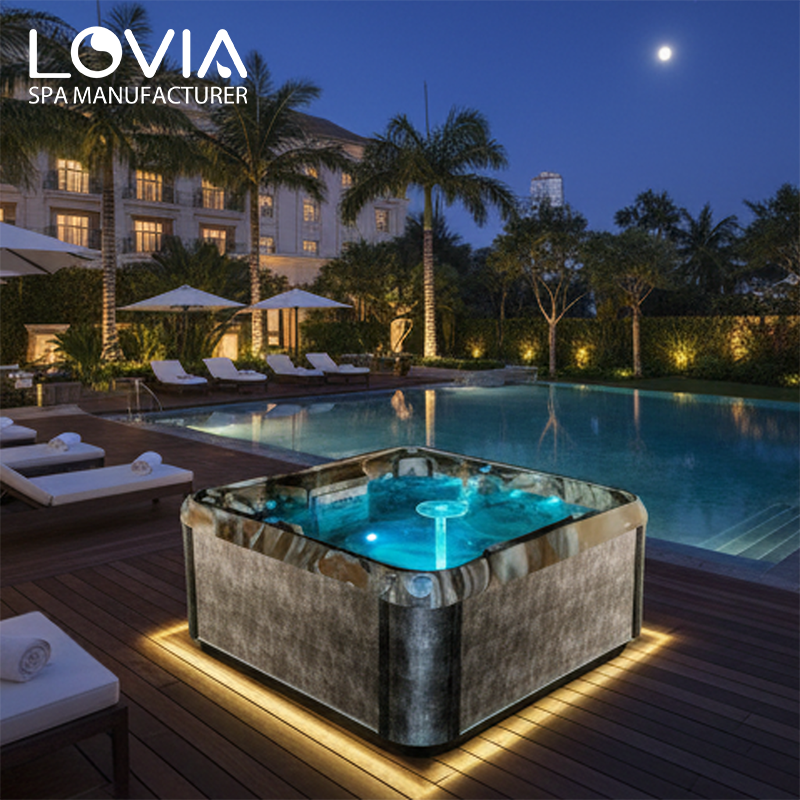
What is the ideal distance between the house and a 2 person outdoor spa tub?
There is no single absolute answer, but there is an optimal range based on experience. If the hot tub is too far from the house—for example, more than 30 meters—convenience drops significantly. In winter, the mere act of walking from indoors to the tub can discourage use.
Conversely, if it is too close, it may disturb the quiet of the home; pumps and jets can generate noise, especially during night-time operation.
Overall, most professional installation teams recommend a distance of:
3 to 12 meters
This range typically balances:
•Convenience of use
•Electrical wiring costs
•Ease of maintenance
•Noise impact
When providing installation advice, LOVIA® prioritizes this distance, as it directly affects the long-term user experience.
The Best Setting for a Two-Person Outdoor Hot Tub is an "Overall Optimal" Solution
Many people search for a single "best" location, but in reality, there is no one-size-fits-all answer for every household.
The truly ideal setting is the optimal solution achieved by balancing multiple factors.
An excellent installation site typically features:
•A stable foundation
•Good wind protection
•A semi-open, sheltered area
•Adequate privacy
•An appropriate distance from the house
•Ease of maintenance
Since it is rare for all six conditions to be perfectly met, professional brands emphasize customized assessments.
This is why the difference between high-quality hot tub manufacturers and ordinary suppliers lies not just in the product, but in the depth of service. LOVIA®, for instance, prefers to help customers plan the placement based on the overall setting, rather than simply focusing on the sale.
FAQ
Can a 2 person outdoor spa tub be placed directly on the lawn?
It is not recommended. Lawns lack foundation stability, which can lead to sinking and uneven structural stress over time.
Is it suitable to install an outdoor 2 person jacuzzi tub in a completely open area?
It is possible, but maintenance costs and heat loss are generally higher compared to semi-open settings.
Is it safe to install a 2 person outdoor spa tub on a deck or terrace?
A professional load-bearing assessment is required to confirm that the structure can support the total weight of the unit.
Does LOVIA® provide installation advice?
Yes, LOVIA® typically takes the client's site conditions into account to provide recommendations for environmental planning that are better suited to 2 person outdoor spa tubs.
