

Outdoor spa hot tubs offer a relaxing and soothing experience, whether it's a cold winter day or a cool summer night. Soaking in warm water can be both relaxing and pleasurable.
But if you're about to enjoy your outdoor spa hot tub and find the water is only 80°F, compared to your ideal temperature of 100°F, a question arises: How long does it actually take to heat from 80°F to 100°F?
To answer this question, we need to consider several factors. How quickly a spa hot tub heats up depends on a variety of factors, including the tub's wattage, heater performance, water volume, ambient temperature, and the spa hot tub's insulation.
This article will explore these factors in detail and provide a reasonable estimate of heating time.
How does a spa hot tub heat up?
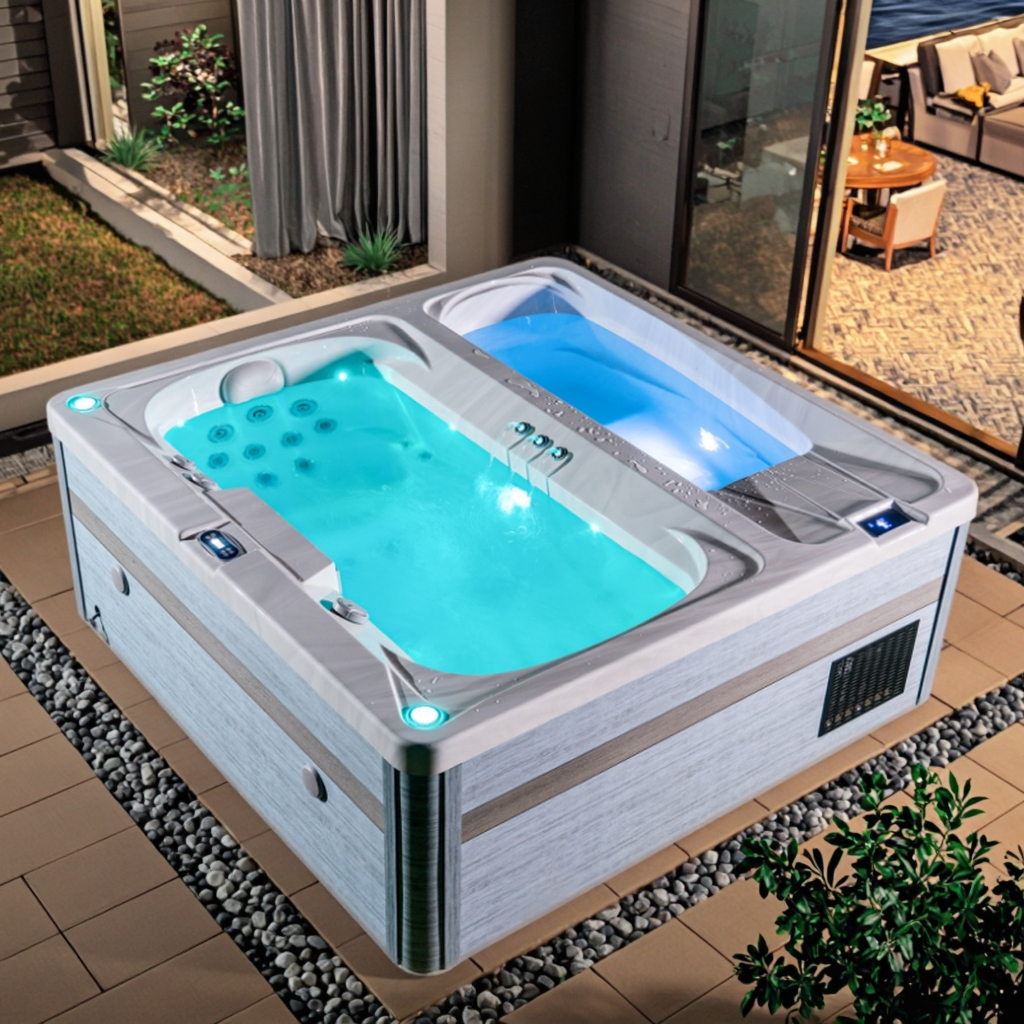
Outdoor spa hot tubs typically have an electric or gas heater that raises the water to the desired set temperature. Generally speaking, electric heaters are more common, with power ratings between 3 kW and 6 kW. Heaters convert electrical energy into heat, gradually raising the temperature of the water in the tub.
1. Electric Heater Power
The power of the heater determines how quickly an outdoor spa hot tub heats up. Generally, common spa hot tub heaters have power ratings between 3 kW and 6 kW. The higher the power, the faster the heating process. Considering that heating the water from 80°F (26.7°C) to 100°F (37.8°C) requires a 20°F increase in temperature, the heater's power directly impacts the heating time.
• 3 kW heaters: Commonly used in small and medium-sized spa hot tubs, they are more suitable for smaller tubs. They have lower power ratings and, therefore, heat more slowly.
• 6 kW heaters: Commonly used in larger spa hot tubs, they offer higher power ratings and faster heating times.
2. Choosing a Gas Heater
In addition to electric heaters, gas heaters are also an option for some high-end outdoor spa hot tubs. Gas heaters heat water more quickly than electric heaters because gas generally has a higher thermal efficiency than electricity. Gas heaters have a higher power output, making them suitable for larger tubs and providing a more consistent heating rate, especially in cooler outdoor temperatures.
3. Basic Heating Rate Formula
Once we know the heater's power, we can use a simple thermodynamic formula to estimate the heating time. The heating time can be calculated using the following formula: Heating time (hours) = Total water volume (gallons) × Temperature difference (Fahrenheit) ÷ Heater power (kilowatts) ÷ 3412.
Here, 3412 is the constant needed to convert kilowatts to BTUs (British Thermal Units). Note that this is only a rough estimate, as heat losses and other variables will affect the actual heating process.
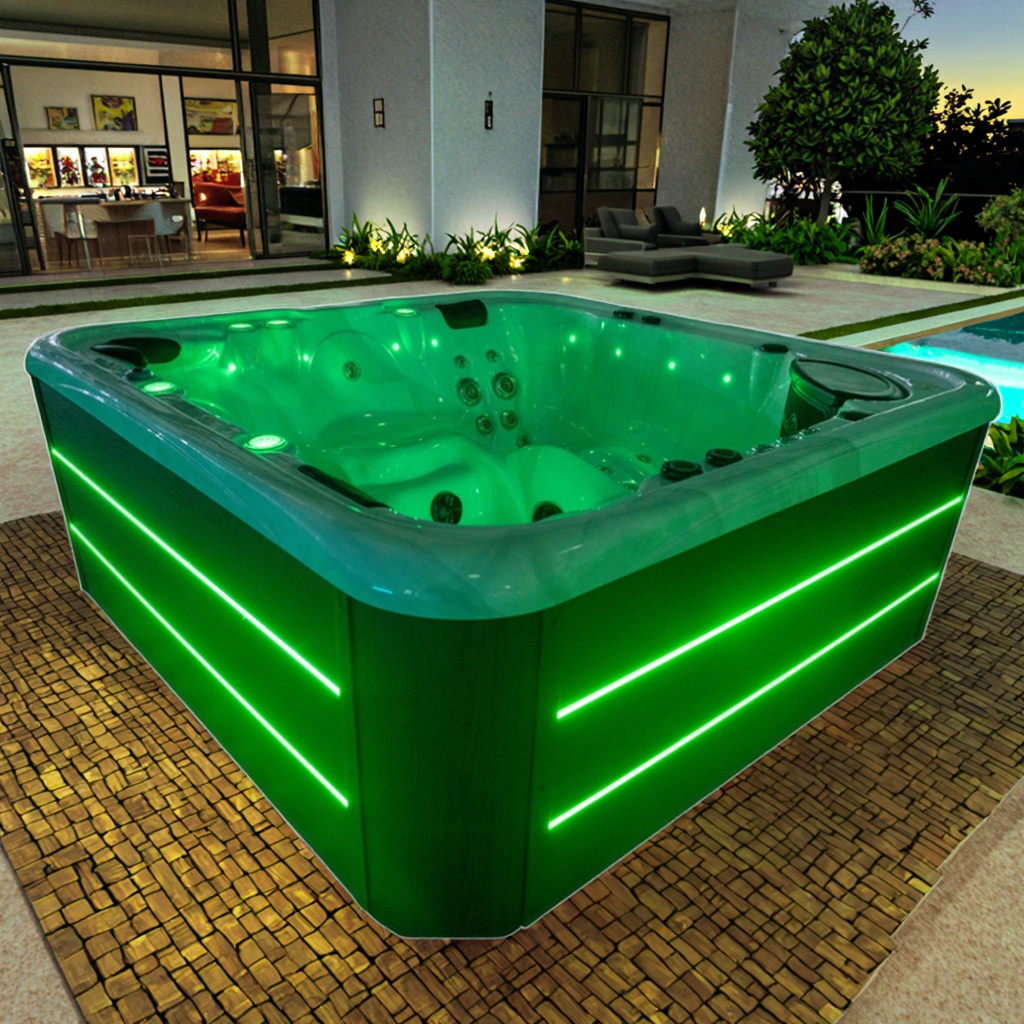
What factors affect the heating rate of a spa hot tub?
While heater power is the primary factor in determining heating rate, other external factors can also affect heating time. To more accurately predict the time it will take to heat a spa hot tub from 80°F to 100°F, we need to consider the following factors.
1. Total Water Volume
The amount of water in an outdoor spa hot tub directly affects heating time. The larger the water volume, the longer it takes to reach the same temperature. A typical outdoor spa hot tub has a capacity ranging from 200 to 600 gallons. Larger spa hot tubs take longer to heat up, while smaller tubs heat up faster.
2. Ambient Temperature
The ambient outdoor temperature is another key factor affecting how quickly a spa hot tub heats up. If the outside temperature is low, such as in winter, the heater not only has to raise the water temperature but also has to overcome heat loss from the tub to the outside. Conversely, if the outside temperature is warmer, heating time is significantly reduced.
• Winter Heating: If the outside temperature is below 50 degrees Fahrenheit (about 10 degrees Celsius), the heater will need more time to overcome heat loss from the environment. Heating speed can be significantly slowed in extremely cold weather, especially in extreme cold weather.
• Summer Heating: In warmer weather (outside temperatures over 70 degrees Fahrenheit, approximately 21 degrees Celsius), a spa hot tub heats faster because the outside temperature helps maintain a stable water temperature.
3. Spa Hot Tub Insulation
The insulation of an outdoor spa hot tub and whether it is covered during use also significantly impacts heating speed. High-efficiency insulation reduces heat loss to the outside, thereby improving heating efficiency and shortening heating time.
• Use of an Insulated Cover: Using an insulated cover effectively reduces heat loss. Especially during heating, keeping the cover on can help the spa hot tub reach the set temperature faster. Without an insulation cover, heat will dissipate significantly through the water surface, prolonging heating time.
• Insulation Quality: High-quality spa hot tubs typically use thicker insulation to ensure the water temperature is maintained for a longer period of time, reducing the energy required for heating.
4. Power Supply Voltage and Power Limitations
Most outdoor spa hot tubs require a 220V power supply because this voltage provides higher power output and faster heating. If the power supply is lower, such as 110V, the heater's power output will be reduced, significantly increasing the heating time.
Furthermore, if the power supply is unstable or there are other power limitations, the heater's efficiency may be affected, causing the actual heating time to be longer than expected.
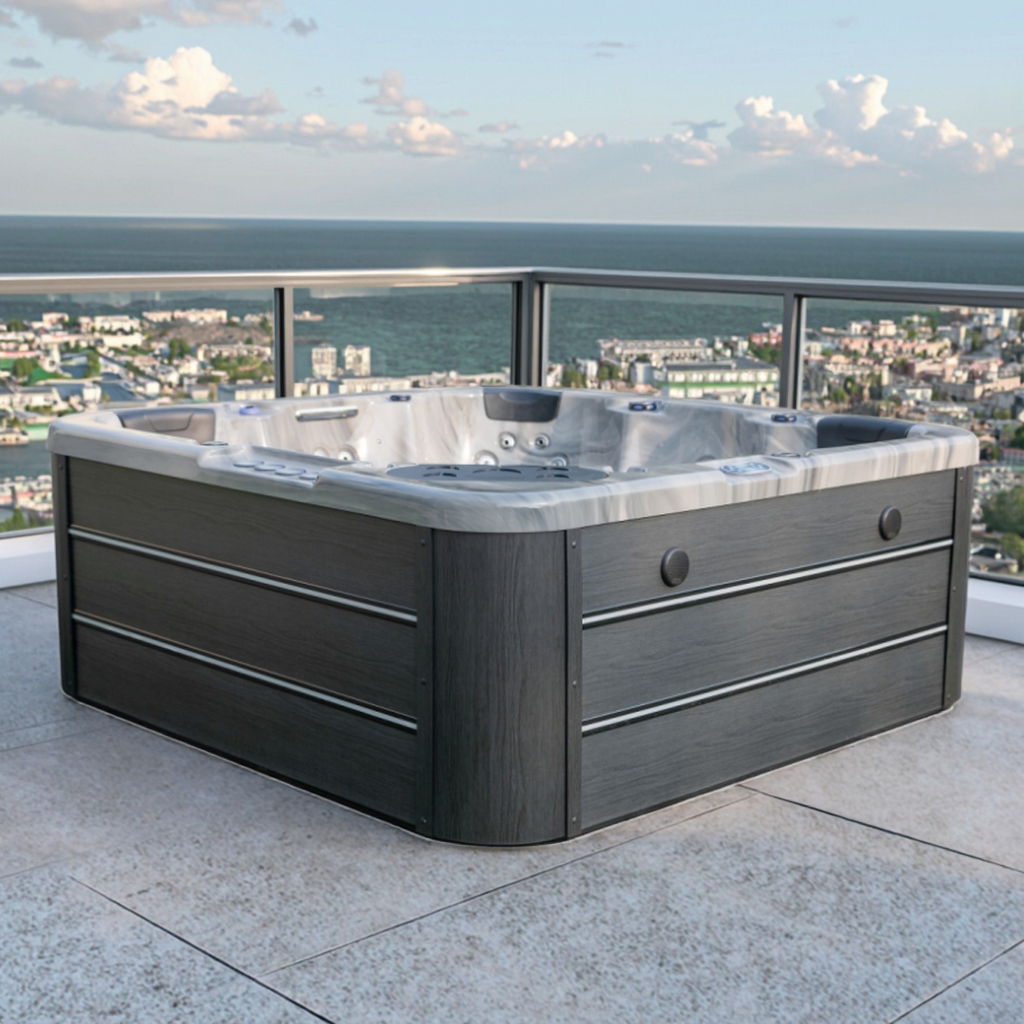
What is the actual heating time for an outdoor spa hot tub? - Estimation
Let's use a specific example to estimate the time it takes to heat an outdoor spa hot tub from 80°F to 100°F.
Assume a standard 400-gallon outdoor spa hot tub equipped with a 5.5-kW electric heater, an outside temperature of 60°F (15.6°C), and an insulated cover.
Using the formula mentioned above, we can calculate: Heating time (hours) = 400 gallons × 20°F ÷ 5.5 kW ÷ 3412. The result is: Heating time ≈ 1.05 hours.
This means that under ideal conditions, heating from 80°F to 100°F takes approximately 1 hour. Of course, this is only a theoretical estimate; actual heating time may be affected by factors such as the external environment and the condition of the equipment.
How to optimize the heating time of an outdoor spa hot tub?
To shorten the heating time of an outdoor spa hot tub, users can take several measures to improve heating efficiency:
1. Use an insulating cover: As mentioned above, using an insulating cover during heating can effectively reduce heat loss and speed up heating.
2. Increase heater power: If heating is slow, consider upgrading the heater power, for example, from 3 kW to 5.5 kW or 6 kW. This can significantly shorten heating time.
3. Improve tub insulation: If you find that your spa hot tub is heating slowly, inspect the tub insulation to ensure that there is no excessive heat loss. Consider adding additional insulation, especially if using it in cold regions.
4. Choose the right power source: Make sure your outdoor spa hot tub is connected to a 220V power source to maximize the heater's power output. If the power voltage is too low, heating speed will be significantly reduced.
Do you offer seasonal promotions or discount sales?
Yes, Lovia Spa provides seasonal discount campaigns, factory promotions, and wholesale sales offers to help distributors increase profit margins. Buyers can purchase spas at low prices during our promotional periods while still enjoying high-quality manufacturing. Our company regularly updates clients with special quotes, low-price packages, and bulk purchasing discounts. This makes it easier for distributors to sell under their local brands while benefiting from factory-direct deals. Lovia Spa is a supplier that helps buyers grow through affordable promotions and brand-level products.
