

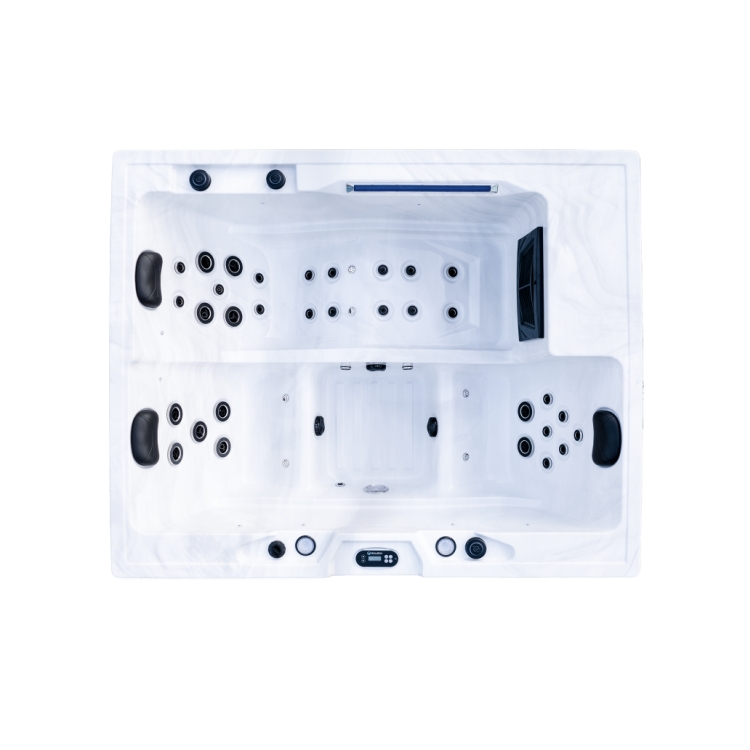
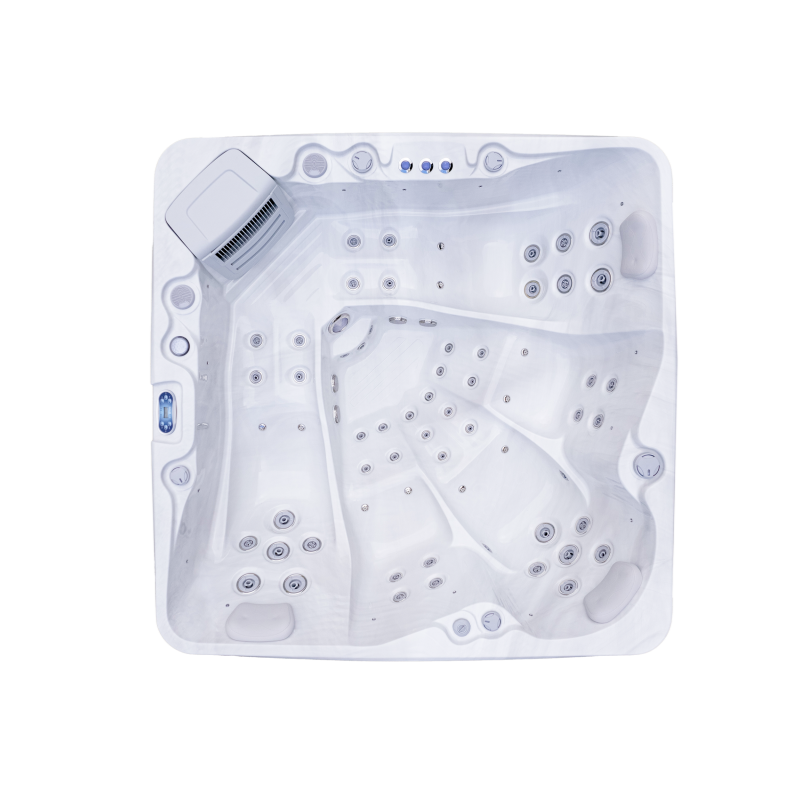
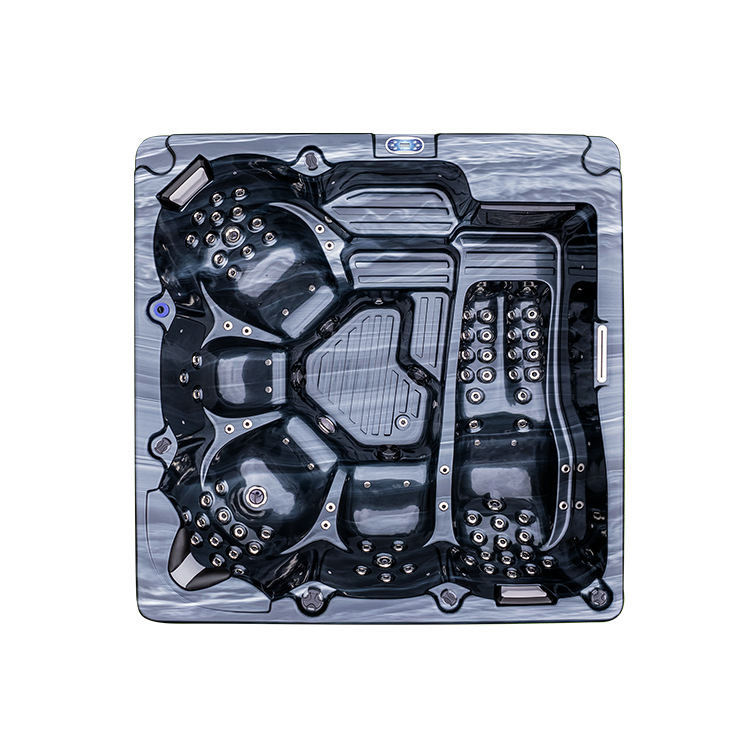
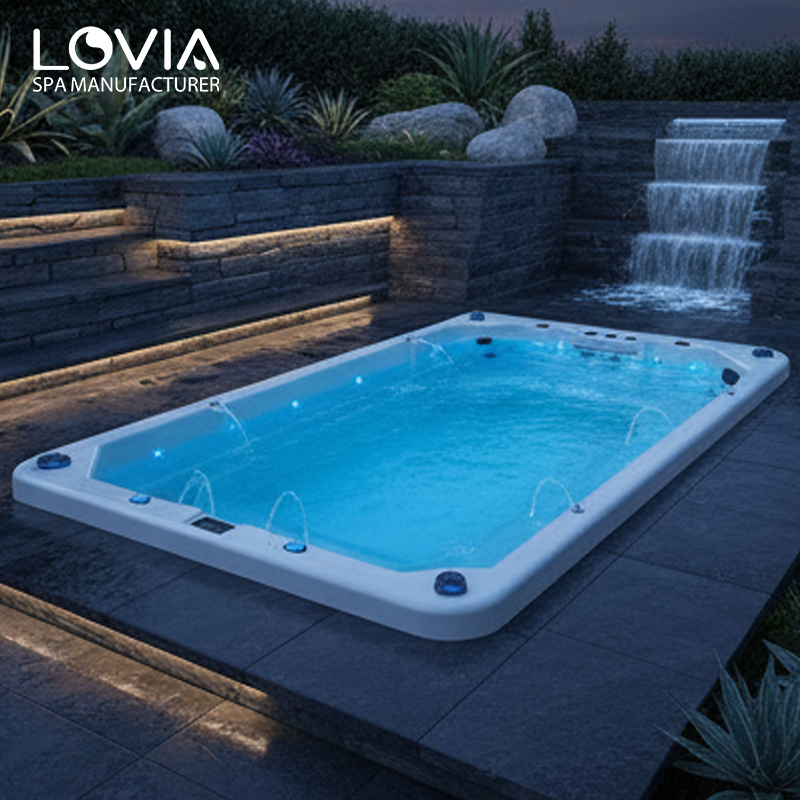
A swim spa hot tub combines swimming, massage, and hydrotherapy, making it a popular relaxation and exercise device in modern homes and fitness clubs. Through a constant-temperature water flow system and massage jets, it achieves benefits such as full-body muscle relaxation, improved blood circulation, stress relief, and enhanced sleep quality.
However, many people encounter this problem during use: the water in the swim spa hot tub becomes cloudy. Is it still safe to use it?
This seemingly simple question actually relates to health and safety. This article will delve into the question of "Is it okay to enter a cloudy swim spa hot tub?" from multiple perspectives, including water quality hygiene, bacterial growth, water chemical balance, health risks, and maintenance methods, and provide scientific and practical solutions.
Why does the water in a swim spa hot tub become cloudy?
Clear water indicates stable water quality, while cloudiness often means that the chemical balance has been disrupted or a source of pollution has appeared.
Common causes of cloudy water in a swim spa hot tub include:
• Excessive suspended matter: Particles such as dust, hair, dander, skincare product residue, or swimsuit fibers suspended in the water cause visible turbidity.
• Clogged or aging filtration system: Filters that haven't been cleaned for a long time cannot effectively remove impurities, naturally leading to cloudy water.
• Insufficient disinfectant concentration: Low chlorine or bromine levels fail to inhibit bacterial and algal growth, causing the water to turn green or white.
• pH imbalance: When the pH is above 7.8 or below 7.2, minerals in the water tend to precipitate, causing turbidity.
• High temperature and frequent use: The water temperature in a swim spa hot tub is generally maintained between 35℃ and 39℃. High temperatures and frequent use lead to a faster accumulation of organic matter in the water, making turbidity more likely.
Therefore, cloudy water often indicates water pollution or chemical abnormalities, not just a visual problem.
Is it safe to enter a cloudy swim spa hot tub?
Short answer: No.
1. Bacterial and Fungal Growth
When the water in a swim spa hot tub becomes cloudy, it often indicates a malfunctioning or overloaded disinfection system. At this time, bacteria, mold, and algae will rapidly multiply. Common pathogens include:
• Pseudomonas aeruginosa: Can cause "hot tub dermatitis," resulting in erythema, itching, and blisters;
• Legionella: Proliferates easily in warm water and can lead to severe respiratory infections;
• Candida albicans and mold: Can cause fungal infections of the skin and nails.
Entering such a swim spa hot tub is like entering a warm petri dish of bacteria, greatly increasing the risk of infection.
2. Skin and Eye Irritation
Cloudy water often contains chemical residues or metal ion precipitates (such as calcium, magnesium, and iron). These substances can irritate the skin, causing allergies, redness, swelling, dryness, and itching; they can also irritate the conjunctiva of the eyes, causing stinging and redness.
3. Effects on the Respiratory System
If too much organic matter accumulates in the water, it reacts with chlorine to produce chloramine gas, which has an irritating odor and can cause throat irritation, coughing, and difficulty breathing. This is especially noticeable in enclosed indoor spa environments.
4. Damage to Equipment
Turbid water not only harms health but also accelerates equipment aging. Sediment and microorganisms can clog nozzles, pumps, and heating elements, causing a decline in spa functionality and even equipment damage.
✅ Conclusion:
Entering a turbid swim spa hot tub is not advisable, as it can not only harm health but also damage the equipment system.
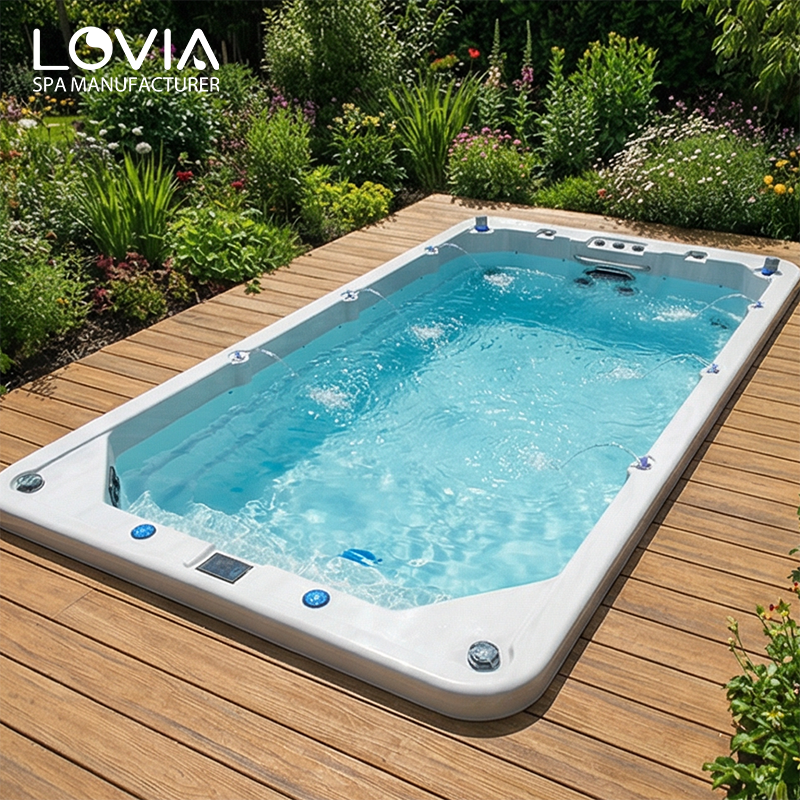
Does a turbid swim spa hot tub mean improper use of chemicals?
Many people believe that "turbid water" is "dirty," but in reality, chemical imbalance is also a major cause.
1. Insufficient Chlorine or Bromine
The standard chlorine concentration for a swim spa hot tub is 1–3 ppm. If the disinfectant is insufficient, bacteria and algae cannot be effectively inhibited, and the water will gradually turn white or green.
2. pH Imbalance
The ideal pH level is 7.2–7.6. A pH that is too high will cause calcium and magnesium ions to crystallize, turning the water white; a pH that is too low will corrode metal parts and irritate the skin.
3. Abnormal Total Alkalinity
The ideal alkalinity is maintained between 80–120 ppm. Too low an alkalinity will cause drastic pH fluctuations, while too high an alkalinity will result in cloudy water.
4. Disinfectant to Stabilizer Ratio Issues
When using products containing chlorine stabilizers (such as cyanuric acid), if the stabilizer concentration is too high, it will "lock in" the chlorine, rendering it ineffective and leading to a false sense of cleanliness—the water volume may appear sufficient, but there is actually no disinfection effect.
✅ Tip:
Cloudy water often indicates a chemical imbalance. Chlorine levels, pH, alkalinity, and hardness should be tested first, rather than blindly changing the entire tank of water.
What should you do if the water in your swim spa hot tub becomes cloudy?
1. Immediately stop using the bathtub
First, immediately stop entering the tub and turn off the heating and massage functions to prevent further spread of contaminants.
2. Test water quality
Use water quality test strips or an electronic water quality analyzer to test chlorine concentration, pH value, alkalinity, and hardness. If the chlorine value is below 1 ppm or the pH is not between 7.2 and 7.6, it indicates an imbalance in the chemical system.
3. Shock Treatment
Add a high concentration of chlorine (or a non-chlorine oxidant) for a shock treatment to quickly kill microorganisms in the water. It is generally recommended to use 20–30 grams of chlorine shock powder per cubic meter of water.
4. Clean the filtration system
Remove the filter cartridge and rinse it with clean water or soak it in a specialized cleaning agent to remove grease, algae, and sediment. Replace the filter cartridge if necessary.
5. Vacuuming and water change
If the water is still cloudy, partially or completely change the water and clean the bathtub walls and nozzle system to prevent residual contaminants.
6. Rebalance Water Chemistry
After refilling, adjust the pH to around 7.4, then add an appropriate amount of chlorine or bromine to ensure the system returns to normal circulation.

Why does the water quality in a swim spa hot tub deteriorate easily?
Compared to a regular bathtub, the water in a swim spa hot tub becomes cloudy more easily due to its larger circulation volume, more frequent use, and higher temperature.
1. Temperature Promotes Bacterial Growth
The constant temperature environment of 35℃~39℃ is the optimal temperature range for bacteria. If disinfectant is insufficient, water quality deteriorates rapidly.
2. Contaminants Introduced by Humans
Each time you enter a swim spa hot tub, you introduce organic matter such as skin flakes, sweat, skincare products, cosmetics, and perfumes. These are all sources of nutrients for bacteria.
3. Closed Environment Circulation
The water volume in a swim spa hot tub is limited, unlike a swimming pool which can dilute contaminants. Once contaminants accumulate, chemical imbalances can easily occur.
4. High Workload on the Filtration System
Some users do not replace or clean the filter cartridges for extended periods, leading to decreased filtration efficiency and difficulty in maintaining clear water.
How to prevent your swim spa hot tub from becoming cloudy?
Prevention is always better than cure. Here are professional maintenance tips:
• Shower before each use: Remove sweat and cosmetics, reducing organic contaminants.
• Test water quality weekly: Use a water quality test strip to check pH and chlorine levels.
• Change a portion of the water regularly: It is recommended to change 1/3 of the water every 2–3 weeks to maintain chemical balance.
• Clean the filter regularly: Flush the filter cartridge weekly and replace it every 3 months.
• Keep the lid clean: Prevent dust and leaves from entering.
• Use a professional water balancer: Maintain pH and alkalinity within the ideal range.
• Deep clean quarterly: Thoroughly drain the tub, clean the showerhead, circulation system, and tub walls.
If the water looks clean but has an odor, is it still safe to use the swim spa hot tub?
Many users find that even if the water looks clear, it may have a pungent or metallic smell. This is actually a warning sign.
1. Chloramine Odor
If you smell a strong "bleach" odor, it means the chlorine in the water has reacted with organic matter to form chloramine. This indicates reduced disinfection effectiveness and requires immediate shock disinfection.
2. Rusty or Metallic Odor
Excessive iron or copper ions in the water may be caused by corrosion of the heater or pipes. Metal ions not only discolor the water but can also irritate the skin.
✅ Tip:
Water clarity alone is not enough to determine safety. Odorless, clear water with a stable pH is safe to enter a swim spa hot tub.
What health problems might entering a murky swim spa hot tub cause?
1. Skin Diseases
Prolonged exposure to contaminated water can lead to:
• Dermatitis, eczema, fungal infections;
• Skin rashes, itching;
• Folliculitis (commonly known as "hot tub dermatitis").
2. Eye and Respiratory Irritation
Turbid water contains chloramines, bacteria, and floating particles, which can irritate the eyes and respiratory tract, causing red eyes, sore throat, and cough.
3. Urinary and Reproductive Tract Infections
High bacterial concentrations may cause urethritis and candidiasis in women, and prostate discomfort in men.
4. Systemic Fever or Infection
Contact with Legionella-containing water vapor can induce Legionnaires' pneumonia, with symptoms including high fever, cough, and muscle pain.
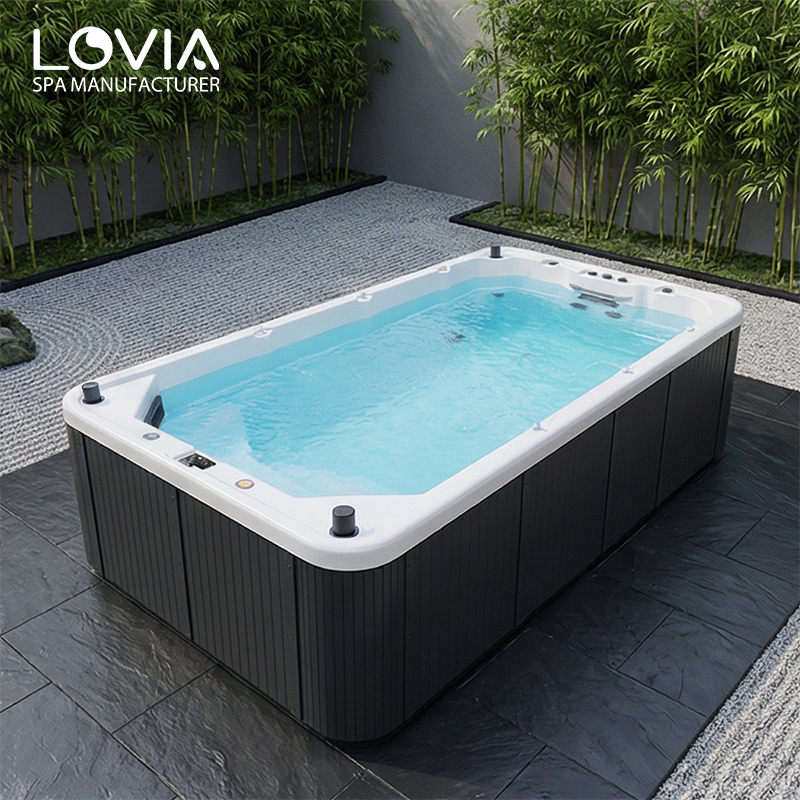
Entering a Turbid Swim Spa Hot Tub is Absolutely Unacceptable
From both a hygiene and safety perspective and for equipment maintenance, entering a turbid swim spa hot tub is a mistake.
Turbidity indicates:
• Bacterial growth
• Chemical imbalance
• Filter clogging
• Water imbalance
The correct approach is:
• Stop using it;
• Test the water quality;
• Perform shock disinfection;
• Clean the filter;
• Adjust the pH and alkalinity;
• Perform long-term maintenance.
Clean, transparent, odorless water is the minimum safety standard for use in a swim spa hot tub.
How Does LOVIA SPA Keep up with Market Trends?
Our R&D and sales teams analyze international spa trends, customer feedback, and new technologies. We regularly update designs, improve energy efficiency, and enhance user experience. Buyers benefit from fresh product lines and modern aesthetics that appeal to global markets. As a top manufacturer and supplier, LOVIA SPA ensures that its wholesale partners always have competitive products to promote. We also introduce periodic promotions to support market expansion.
