

Many people encounter a common problem when using a swim spa tub: even if the water looks clean and clear, it's not necessarily "smooth." If your skin feels rough, dry, or even slightly stinging when it comes into contact with the water, it indicates a problem with water hardness or chemical balance.
Making the water in your swim spa tub smooth not only improves bathing comfort but also extends the lifespan of the device and reduces the consumption of chemical agents. This article will systematically explain how to scientifically adjust the water quality to achieve a "silky smooth" feel in your swim spa tub.
Why Does Swim Spa Tub Water Become "Hard"?
Before understanding how to make the water smooth, it's essential to understand why water becomes "hard." "Hard water" refers to water containing a high concentration of calcium (Ca²⁺) and magnesium (Mg²⁺) ions. These ions combine with fatty acids in soaps or skincare products to form precipitates, making the water feel rough.
For swim spa tubs, hard water not only affects the experience but also causes the following problems:
• Reduced heating efficiency: Calcium and magnesium deposits form scale on the heating element, reducing heat transfer efficiency.
• Nozzle clogging: Mineral crystals adhere to the nozzles or circulation system, affecting water flow.
• Skin irritation: Hard water can easily cause dry, itchy skin, reducing the relaxing effect of a spa treatment.
Therefore, to make the water in a swim spa tub smoother, the key is to reduce water hardness, balance the pH level, and optimize the structure of dissolved substances.
How to test the water hardness in a swim spa tub?
To improve water smoothness, the first step is testing. Whether for a home use or a commercial establishment, the following indicators should be tested regularly:
• Total Hardness: Reflects the total amount of calcium and magnesium ions in the water. The ideal range is typically between 100–250 ppm.
• pH level: Determines the acid-base balance of the water. Excessive acidity or alkalinity will make the water feel astringent; the optimal range is 7.2–7.6.
• Alkalinity: Alkalinity buffers pH fluctuations; it is recommended to maintain it between 80–120 ppm.
• Total Dissolved Solids (TDS): This represents the concentration of impurities in the water. Excessive TDS can cause the water to become cloudy and mushy. Ideally, TDS should be below 1500 ppm.
These parameters can be easily measured at home using water quality test strips or electronic meters. Addressing the specific issues based on the results is key to truly achieving smooth and comfortable water in your swim spa tub.
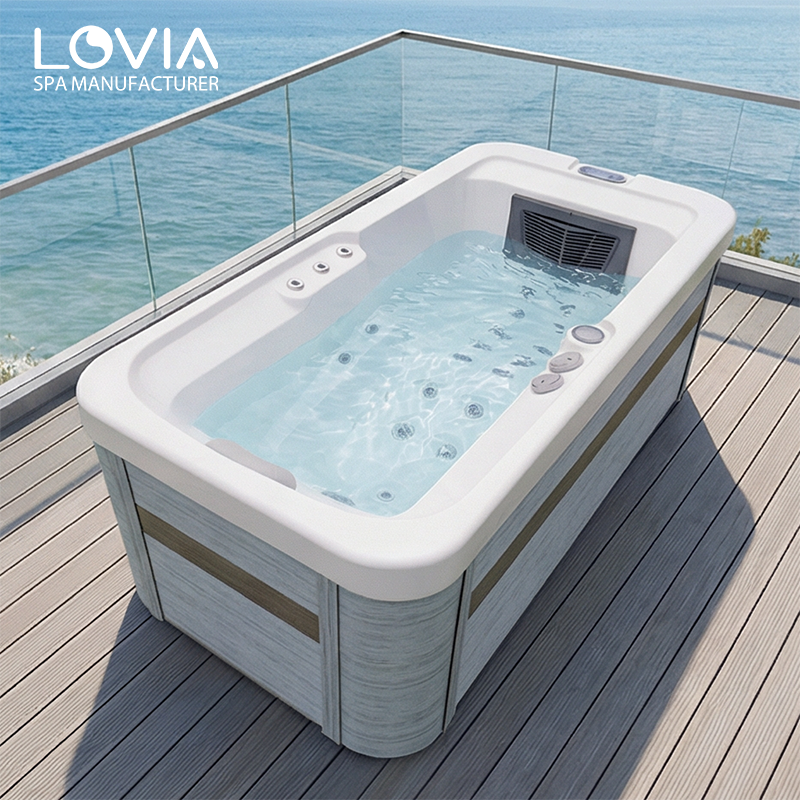
How to make water silky smooth through softening?
1. Use a water softener or ion exchange system
The most effective way to soften water is by installing a water softener. Water softeners use ion exchange resins to replace calcium and magnesium ions in the water with sodium ions, thus reducing water hardness.
For households that frequently use a swim spa tub, it is recommended to install a water softener on the inlet pipe to ensure that every fill is softened. This not only improves the feel of the water but also prevents scale buildup on the heating element.
2. Add a professional water softener
There are various water softeners on the market specifically designed for swim spa tubs. These products can quickly neutralize calcium and magnesium ions.
Precautions when using:
• Add according to the instructions; do not overdose.
• Retest the hardness and adjust after each water change.
• Avoid direct mixing with chlorine or bromine disinfectants.
3. Regularly change part of the bathwater
Even with a water softener system, prolonged circulation will cause minerals to gradually accumulate in the water. It is recommended to change 30%-50% of the water every 1-2 months to maintain the smoothness and clarity of the swim spa tub.
Does pH imbalance affect smoothness?
Yes. The pH value of the water directly determines the feel on the skin.
• pH too high (>8.0): The water will be alkaline, causing dry skin.
• pH too low (<7.0): The water will be acidic, easily irritating the eyes and skin.
Maintaining the pH of your swim spa tub between 7.2 and 7.6 is key to achieving a smooth feel.
Adjustment methods include:
• Fine-tuning with pH minus or pH plus;
• Checking weekly, especially after frequent use or adding water;
• Avoiding the simultaneous use of multiple chemical regulators to prevent reactions.
A balanced pH environment not only makes the water smoother but also improves the effectiveness of disinfectants and reduces skin irritation.
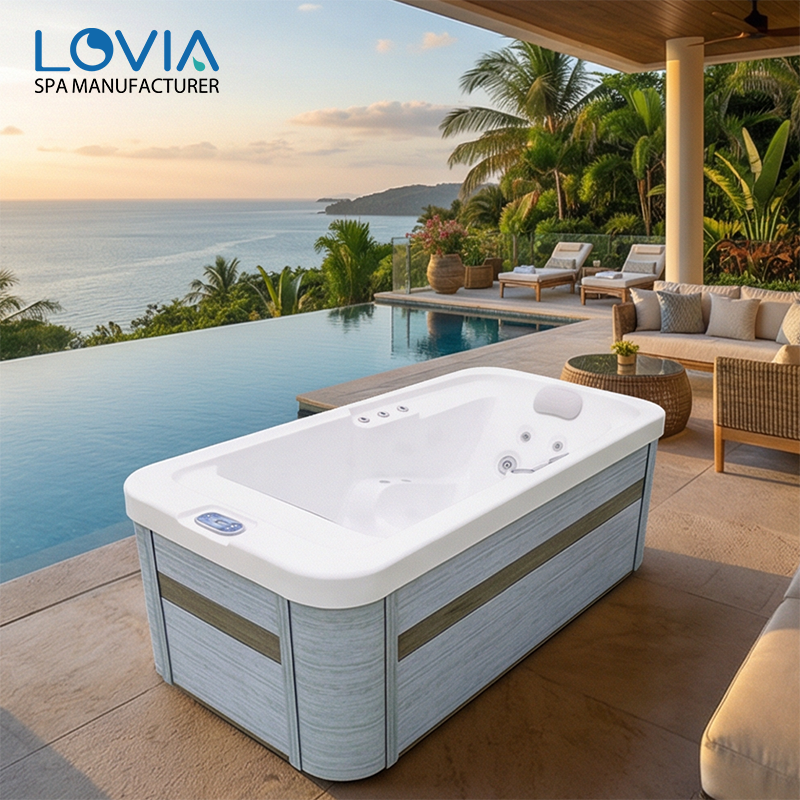
Which minerals make the water smoother?
Interestingly, the water in a swim spa tub isn't necessarily better the "purer" it is. Completely deionized water can feel "slippery but unnatural" and may even be slightly corrosive to metal parts.
Appropriate amounts of mineral ions can enhance the "slipperyness" and "thickness" of the water. Common examples include:
• Sodium ions (Na⁺): Soften the water, reduce surface tension, and make it feel silkier on the skin.
• Potassium ions (K⁺): Help moisturize the skin and have a positive effect on nerve relaxation.
• Trace magnesium ions (Mg²⁺): Although a source of hardness, their presence in trace amounts can help relax muscles.
Modern high-end swim spa tub systems even have built-in "mineral salt filtration modules" that simulate the feel of natural hot spring water by controlling the mineral ratio.
Why is a filtration system so important for smooth water quality?
A filtration system is the foundation for maintaining smooth water quality in a swim spa tub. If microparticles, oil, keratin, and chemical residues in the water are not filtered in time, it will cause the following problems:
• Turbid and viscous water;
• Clogged filter cartridges, resulting in poor circulation;
• Chemical agents become ineffective, making it difficult to stabilize the pH.
Key points for optimizing a filtration system include:
• Cleaning the filter cartridges regularly (recommended every 2 weeks);
• Replacing the filter cartridges every 3–6 months;
• Keeping the circulation pump running smoothly, operating it for at least 2–3 hours daily.
A clean, circulating water flow continuously removes particles, keeping the water in the swim spa tub silky smooth.
Can the smoothness be improved by adjusting the water temperature?
Water temperature does indeed affect how the water feels to the skin.
Generally, the optimal temperature range for a swim spa tub is 35°C–38°C.
When the temperature is too low, the surface tension of the water increases, making it feel rough; when the temperature is too high, more water evaporates, causing dryness.
Maintaining a stable temperature in a thermostatically controlled spa tub maximizes smoothness and also helps promote blood circulation and relieve muscle tension.
Does adding bath salts or mineral crystals make the water smoother?
Adding a suitable amount of high-quality spa-grade mineral salts can indeed make the water smoother, but it's important to distinguish between "regular bath salts" and "swim spa tub-specific salts."
The latter are usually treated to prevent scaling and will not damage the filtration system. Usage recommendations are as follows:
• Add approximately 200–400 grams per ton of water;
• Dissolve completely before turning on the spray function;
• Avoid using products containing excessive oil or fragrance.
These mineral salts can fine-tune the ion balance, reduce the hard water effect, and give the swim spa tub a smoother feel and a spa-like experience.

How to maintain water smoothness through daily maintenance?
• Test water quality parameters (hardness, pH, TDS) weekly;
• Clean the filter and nozzles regularly;
• Control usage frequency: Partial water changes are necessary after continuous use;
• Keep the lid closed to prevent dust and pollen from entering;
• Avoid excessive chemicals: Chemical residues can make the water feel astringent.
By establishing a stable maintenance cycle, you can maintain the smooth water quality of your swim spa tub for a long time.
How to make the water in your swim spa tub smooth?
To achieve smooth water in a swim spa tub, three key aspects are crucial:
1. Scientifically adjust hardness and pH levels;
2. Enhance the filtration and circulation system;
3. Utilize softening technology and mineral conditioning appropriately.
Smooth water not only provides comfort and relaxation for the skin but also reflects a scientific understanding of equipment maintenance and use. Whether for home use or commercial operation, with the right methods, a swim spa tub can become a truly "smooth spring."
How can LOVIA SPA support a new business entering the spa market?
LOVIA SPA offers startup-friendly MOQ, flexible Wholesale Prices, and step-by-step guidance for new businesses. We assist with model selection, pricing strategies, market analysis, and branding options. Our factory provides brochures, manuals, and promotional materials to help new sellers launch their sales quickly.
With high-quality products, reasonable prices, and reliable supply, new buyers can purchase with confidence and build a stable business foundation.
