

During the long-term use of a whirlpool spa hot tub, the question of whether the water has "aged" is an issue that simply cannot be avoided.
Many users harbor the following doubts:
•The water looks reasonably clear; does that mean there is no problem?
•Disinfectant levels appear normal; is the water truly still "fresh"?
•What exactly constitutes "aged water" in a spa hot tub?
In reality, the aging of whirlpool spa hot tub water is not a single, immediately obvious phenomenon, but rather the result of the interplay of multiple factors.
To accurately determine whether the water has aged, one must move beyond the misconception of "judging solely by appearance" and conduct an analysis from a more systematic and professional perspective.
What Constitutes "Aging" in Spa Hot Tub Water?
"Water aging" in a spa hot tub does not simply refer to the water becoming visibly dirty or foul-smelling; rather, it signifies that the water's chemical structure is no longer suitable for safe, stable, and long-term use.
From a professional standpoint, water aging typically implies:
•A long-term accumulation of dissolved solids within the water.
•Difficulty in maintaining chemical equilibrium.
•A significant decline in the effectiveness of routine maintenance procedures.
Even if the water temporarily appears free of obvious odors or discoloration, it may already be in an "aged state."
Why Does Spa Hot Tub Water Age More Rapidly Than Ordinary Water?
The specific operational environment of a spa hot tub dictates that its water ages at a significantly faster rate than ordinary household water. The primary reasons for this include:
•The water temperature is consistently maintained at elevated levels.
•The body of water undergoes continuous recirculation and is not frequently drained and completely replaced.
•The water is frequently entered by bathers.
•Disinfectants and chemical balancing agents are continuously being added.
These conditions constantly alter the water's internal structure, causing it to gradually lose its "adjustability"—which is, in essence, the core characteristic of water aging.
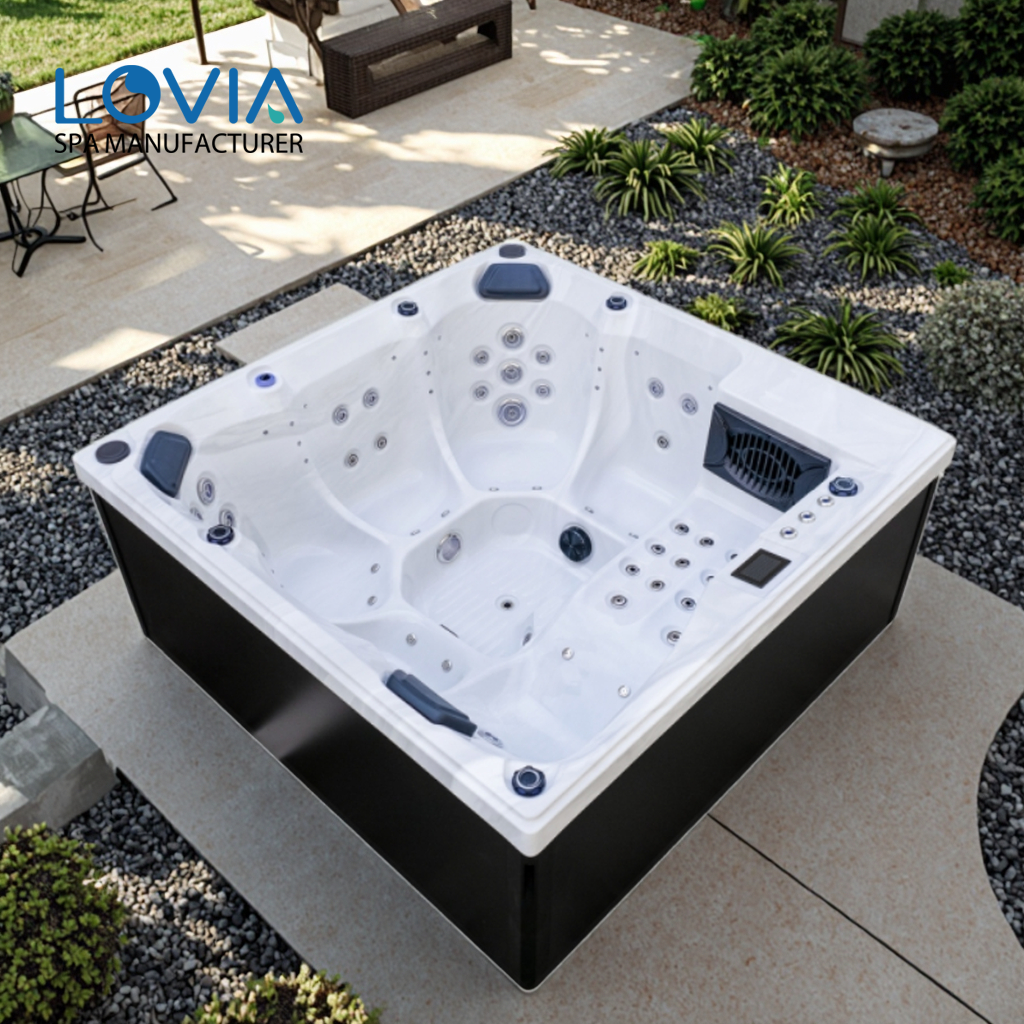
Can One Determine if Spa Hot Tub Water Has Aged Based Solely on Whether It Is "Clear"?
The answer is no.
Many people operate under the misconception that:
As long as the water looks clear, it must be in good condition.
However, in the context of a whirlpool spa hot tub, clarity does not equate to freshness. The reasons are as follows:
•Substances dissolved in the water are invisible to the naked eye.
•Chemical byproducts often do not affect water clarity.
•"Aged" water may still retain a pristine appearance in its early stages.
Therefore, judging whether whirlpool spa hot tub water has aged based solely on its visual appearance is highly unreliable.
What "signals" typically indicate that spa hot tub water has aged?
Although water aging does not always manifest immediately as an obvious problem, it typically reveals itself gradually through a combination of signals.
These signals rarely appear in isolation; rather, they tend to occur in combination with one another.
1. Water quality becomes "difficult to adjust."
A very typical sign of aging water is this:
It becomes increasingly difficult to restore the water to its ideal state using standard maintenance methods.
Specifically, this includes:
•The positive effects of adjustments last for shorter periods.
•More frequent interventions are required to manage water quality.
•Standard maintenance procedures are no longer as effective as they used to be.
This indicates that the water in the whirlpool spa hot tub has lost its effective buffering capacity.
2. Persistent anomalies appear in the spa hot tub water
When water has aged, certain "recurring" issues often arise, such as:
•The water frequently takes on a milky-white appearance.
•The water appears slightly cloudy but does not smell foul.
•Fine foam tends to form easily on the water's surface.
These phenomena may not be serious in themselves; however, if they persist over time and prove difficult to eliminate, they often serve as significant indicators of water aging.
3. Disinfectant consumption rates become noticeably abnormal
In a whirlpool spa hot tub, if you observe the following:
•The rate at which disinfectant is consumed accelerates significantly.
•It becomes difficult to maintain effective disinfectant levels.
•The residual effect of added disinfectant diminishes more quickly.
This typically indicates that a large quantity of "disinfectant-consuming substances" has accumulated in the water—substances that constitute a key component of water aging.
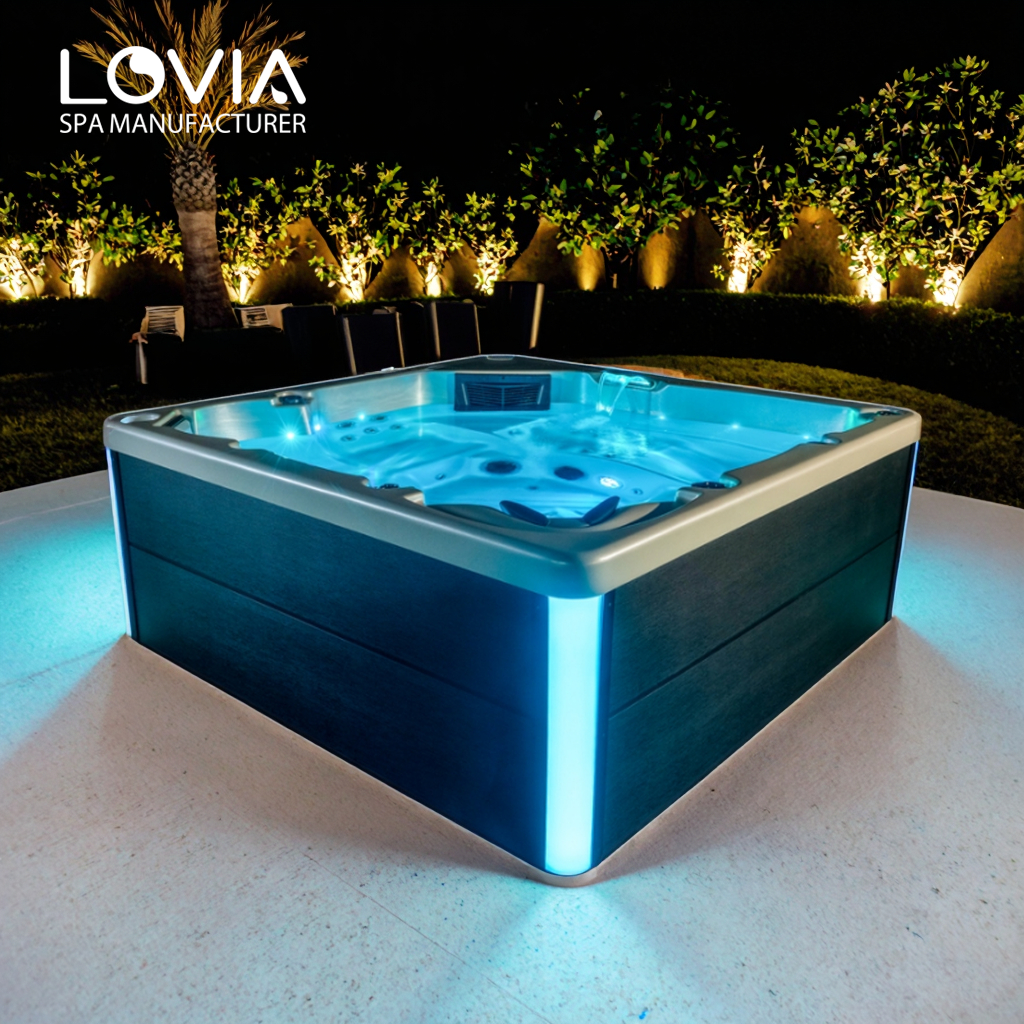
Why does spa hot tub water become more prone to instability once it has aged?
The fundamental nature of water aging lies in the increasing complexity of the water's internal chemical structure.
As time passes:
•The concentration of dissolved solids steadily increases.
•Chemical reaction byproducts continue to accumulate.
•The water's buffering system gradually loses its efficacy.
Consequently, the water in the whirlpool spa hot tub becomes more "sensitive" to any external changes, thereby manifesting as instability.
What is the relationship between water aging in a spa hot tub and "usage frequency"?
Usage frequency is one of the key factors that influence the rate at which spa hot tub water ages. Generally speaking:
•The more frequently the spa is used, the greater the human input into the water.
•The greater the accumulation of residues such as body oils and sweat.
•The faster the organic load in the water increases.
Even with proper maintenance, frequent use will inevitably accelerate the aging process of the water in a whirlpool spa hot tub.
Does the aging of spa hot tub water always manifest as an unpleasant odor?
Not necessarily.
In fact, in many cases:
•The water has already aged,
•Yet no distinct odor has emerged,
•Leading users to easily overlook the underlying problem.
An unpleasant odor is typically a late-stage symptom of water aging, rather than the sole criterion for determining whether the water has aged.
Is there a direct link between the aging of spa hot tub water and the "filtration system"?
The primary function of the filtration system is to remove:
•Suspended particles,
•And visible impurities.
However, water aging is driven primarily by:
•Dissolved substances,
•And the byproducts of chemical reactions.
Therefore, even if the filtration system is operating perfectly, it cannot prevent the water in a whirlpool spa hot tub from aging over time.
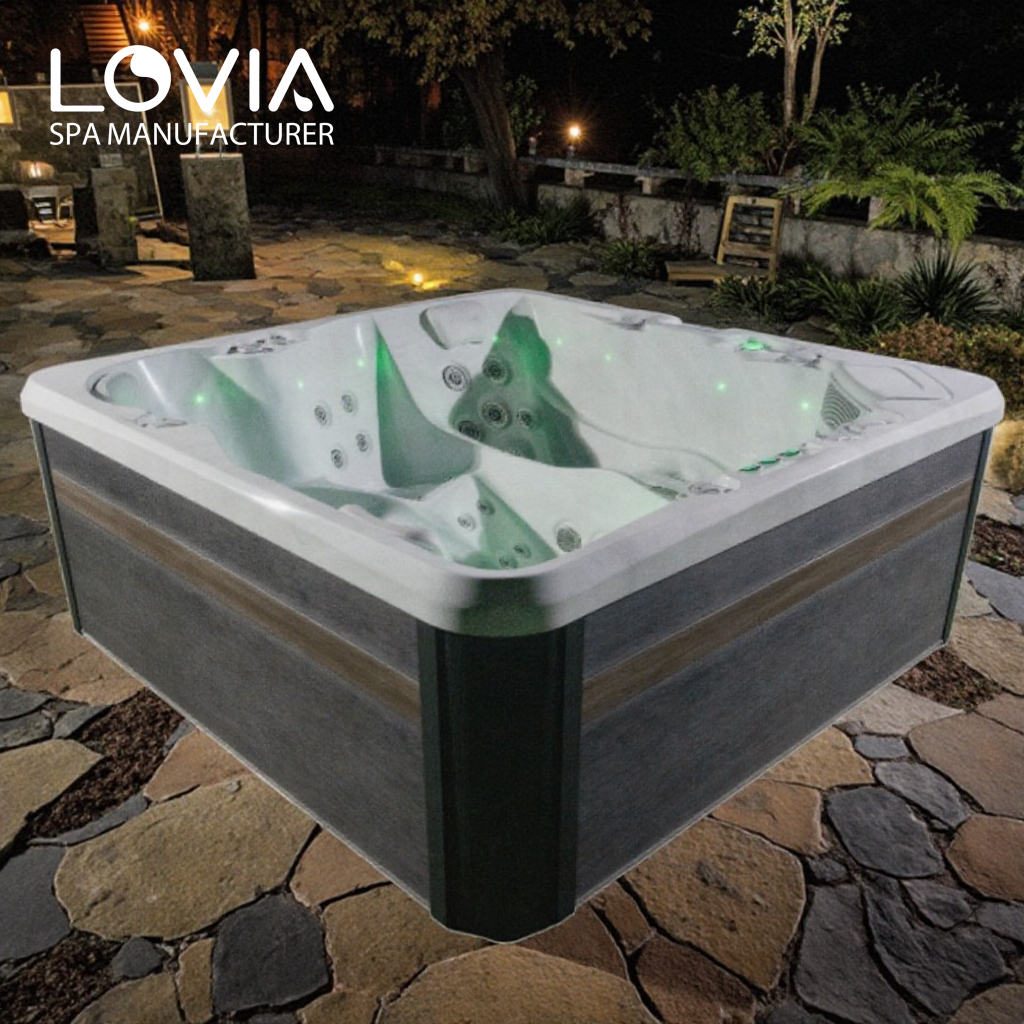
How can one use the water's "feel" and "visual appearance" as supplementary indicators?
Beyond objective physicochemical parameters, subjective assessment based on experience is also crucial.
As the water in a spa hot tub begins to age, users will often notice:
•The water no longer feels as crisp or refreshing to the touch,
•The water body feels slightly "heavy" or viscous,
•The water's clarity and transparency—particularly under lighting—have diminished.
Although these observations are subjective, they serve as valuable reference points during the long-term operation of a spa hot tub.
Why does spa hot tub water tend to foam more easily once it has aged?
Foam formation is directly linked to the presence of surface-active substances within the water.
As water ages:
•The accumulation of organic residues increases,
•The water's surface tension undergoes changes,
•And microscopic air bubbles become more stable and persistent.
Consequently, foaming often serves as a "concurrent phenomenon" associated with water aging.
Is the aging of spa hot tub water influenced by water temperature?
Water temperature exerts a significant influence on the aging process.
Elevated temperatures tend to:
•Accelerate the rate of chemical reactions,
•Reduce the stability of certain dissolved substances,
•And heighten the reactivity of sanitizing agents.
This explains why the water in a spa hot tub tends to age more rapidly compared to that in standard cold-water systems.
How should one comprehensively assess whether the water in a spa hot tub has aged?
A professional assessment is never based on a single isolated criterion, but rather on a comprehensive analysis of multiple converging signals. A comprehensive assessment can be conducted based on the following aspects:
•Is water quality becoming increasingly difficult to maintain?
•Are anomalies occurring with increasing frequency?
•Has the effectiveness of adjustments declined noticeably?
•Has the user experience changed?
When multiple such signals are present simultaneously, it is necessary to seriously consider whether the water has aged.
Why is "timely identification of water aging" more important than "waiting for problems to arise"?
If you wait until:
•The water emits a distinct foul odor;
•The water becomes severely cloudy;
•The user experience has noticeably deteriorated;
it often signifies that the water in the spa hot tub has already reached a critical stage of aging.
Conversely, identifying water aging in advance allows for a more systematic approach to whirlpool spa hot tub maintenance—one that aligns better with the logic of ensuring stable, long-term usage.
For spa hot tub users, what is the significance of correctly understanding "water aging"?
A correct understanding of water aging helps to:
•Avoid excessive or incorrect maintenance practices;
•Establish realistic expectations regarding water quality;
•Manage the water's usage lifecycle in a more scientific manner.
Water aging is not a random occurrence; rather, it is an inevitable, cyclical phase that one will encounter during the long-term operation of a spa hot tub.
How can one determine if the water in a spa hot tub has aged?
Determining whether spa hot tub water has aged requires looking beyond mere clarity or odor; instead, one must make a comprehensive assessment across multiple dimensions—including water quality stability, maintenance difficulty, and the frequency of anomalies.
The diagnostic criteria for determining if spa hot tub water has aged include:
•Is the water becoming increasingly difficult to adjust?
•Are anomalies recurring repeatedly?
•Are sanitization and chemical balance becoming difficult to maintain?
•Has the user experience undergone a change?
When these signals gradually accumulate, it often indicates that the water in the whirlpool spa hot tub has entered the aging phase.
