

Spa hot tubs are increasingly used in modern homes, hotels, and outdoor recreational spaces, and maintaining safe water quality is crucial. Many users want to reduce their use of chemicals, leading to the question:
"How long can whirlpool spa hot tub water be left unchlorinated?"
This question seems simple, but it actually involves many factors, including microbial growth rates, water temperature, filtration system efficiency, environmental factors, and water chemical stability. To ensure health and equipment safety, it's essential to fully understand what happens to unchlorinated water in the hot tub's operating environment.
This article will provide a systematic analysis from the perspectives of water quality principles, risk assessment, timeframes, and maintenance recommendations, helping you accurately determine how long the water in your spa hot tub can remain safe without chlorine.
Why Can't Spa Hot Tub Water Be Left Unchlorinated for Long Periods?
While many users want to reduce their use of chemicals, it's important to recognize that spa hot tubs are completely different from ordinary bathtubs and pools. Their structure and operating environment dictate that they must rely on disinfectants (especially chlorine or bromine) to maintain water quality.
Here are the scientific reasons why whirlpool spa hot tubs cannot be left chlorinated for extended periods:
1. Hot water environments promote rapid bacterial growth
Most hot tubs operate at temperatures between 37°C and 40°C. This temperature range is suitable for humans and also highly conducive to the growth of:
• Bacteria
• Fungi
• Biofilm-forming bacteria
• Pathogenic microorganisms
Without chlorine, these can multiply rapidly within hours.
2. Jet systems and circulation pipes easily accumulate contaminants
Spa hot tubs contain:
• Multiple hidden circulation pipes
• Jet nozzles
• Filter chambers
• Heat exchangers
These areas are warm, humid, and poorly lit. Without disinfectants, a sticky biofilm quickly forms, doubling the rate of water quality deterioration.
3. Filters cannot replace the bactericidal effect of chlorine
Filters can only:
✔ Filter physical particles
✘ Cannot inhibit microorganisms
✘ Do not kill bacteria
Therefore, unchlorinated water inevitably becomes increasingly difficult to control.
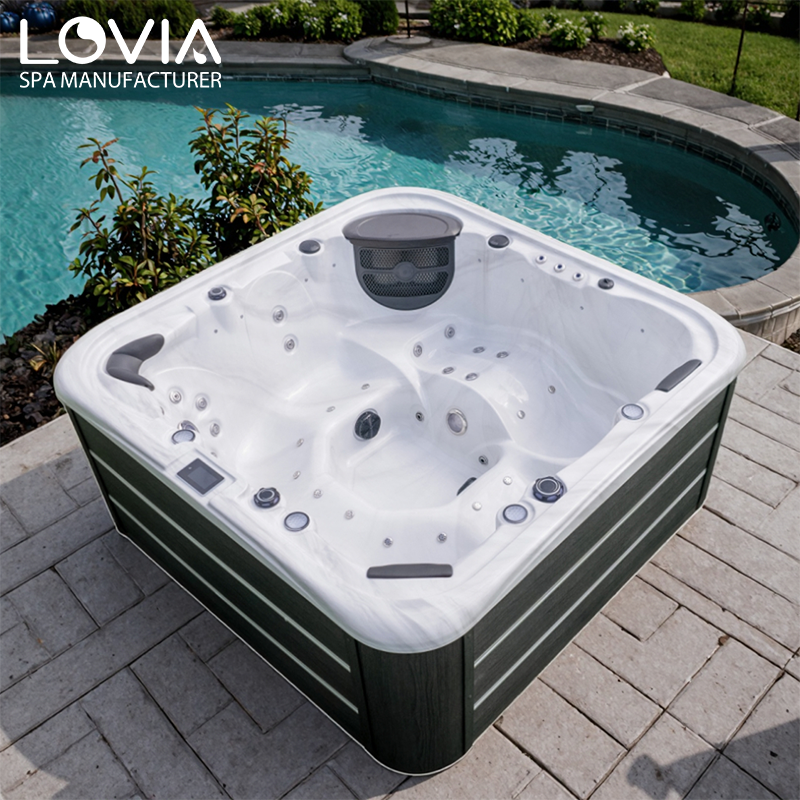
How long can unchlorinated water be left in a spa hot tub?
This is the core question of this article, and we will provide a clear answer from a scientific perspective.
General Answer: Unchlorinated water in a whirlpool spa hot tub
can only be left for a maximum of 24–72 hours.
This safe time range is based on a comprehensive assessment of water temperature, microbial growth rate, and system structure.
Below are explanations for different scenarios:
•Scenario 1: Water temperature maintained at 37–40°C (most typical)
➡ Safe time: 24–48 hours
High temperatures cause bacteria to grow exponentially in a chlorine-free environment.
In this case, it is generally no longer safe to leave the water unchlorinated for more than 48 hours.
•Scenario 2: Water temperature drops below 25°C (unheated or not in use)
➡ Safe time: 48–72 hours
Lower temperatures will slow bacterial growth, but will not stop it.
After 72 hours, odors, turbidity, or biofilm will still begin to appear.
•Scenario 3: Water completely still, circulation system not running
➡ Safe time: <24 hours
Still water = faster bacterial growth.
When the jet system is not circulating, microorganisms accumulate particularly quickly in stagnant water areas.
•Scenario 4: Hot tub water recently changed, fittings clean, environment good
➡ Safe time can be slightly longer, but "no more than 3 days".
Even extremely clean new water will deteriorate rapidly in the warm environment of a hot tub.
•Conclusion Summary (Core Answer)
Water in a whirlpool spa hot tub without chlorination should generally not be left for more than 1–3 days.
In any case, the water quality after the third day is difficult to guarantee as safe and is not suitable for continued soaking.
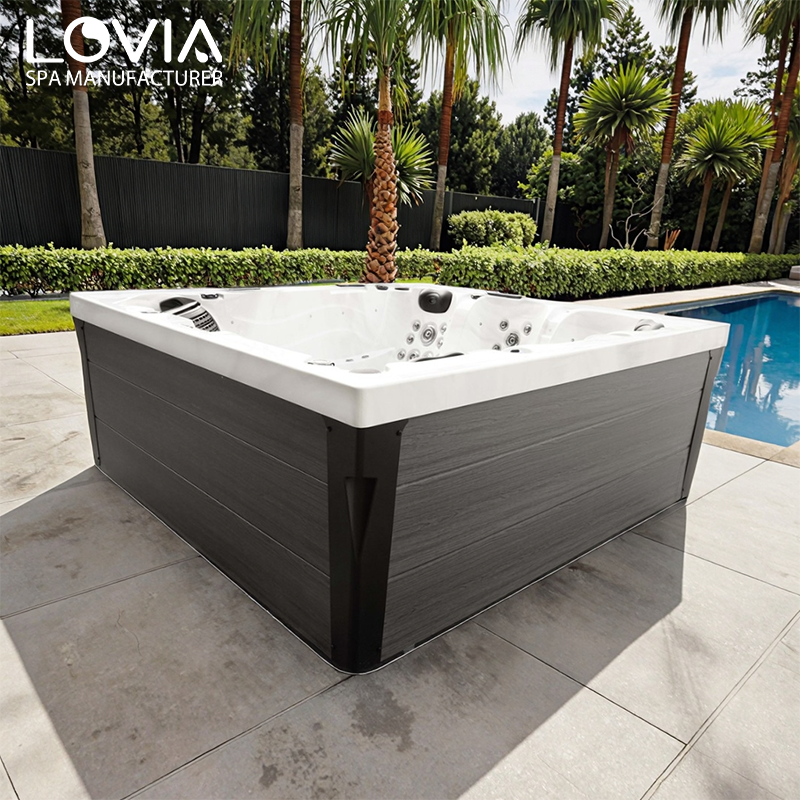
What factors affect the shelf life of unchlorinated water?
While the basic safe range is 24–72 hours, the following factors can extend or shorten this time:
1. Water temperature (most critical factor)
The higher the temperature, the faster bacteria multiply.
• 40°C: Extremely rapid reproduction within hours
• 30°C: Slightly slower but still noticeable
• 20°C: Reproduction rate halved
• Below 10°C: Reproduction slows significantly
Therefore, a whirlpool spa hot tub with "high temperature + no chlorine" = the most dangerous combination.
2. Whether the circulation and jet systems are activated
Jet systems will:
• Agitate the water flow, bringing in oxygen
• Increase chlorine consumption
• Promote the spread of microorganisms
Still water will:
• Form biofilm more easily
• Microorganisms concentrate in stagnant areas and reproduce rapidly
Both accelerate spoilage, just in different ways.
3. Frequency of use and contaminants introduced by the body
Each soak introduces the following substances into the water:
• Sweat
• Oil
• Dead skin cells
• Makeup and sunscreen residue
• Microorganisms on the skin
In a chlorine-free environment, these "organic substances" become a nutrient source for bacteria, leading to faster deterioration.
4. Cleanliness of the Spa Hot Tub
If there is even slight dirt or biofilm in the internal pipes or nozzles, the unchlorinated water will deteriorate much faster.
5. Filter Condition
Old filters can breed microorganisms, causing water quality to deteriorate even faster.
What changes occur in unchlorinated water in a hot tub? (From hours to days)
Unchlorinated water undergoes predictable changes:
1. 0–12 Hour Changes
The water appears clear, but microorganisms have begun to multiply rapidly.
2. 12–24 Hour Changes
Possible changes include:
• Slight odor
• Unstable pH
• Significant increase in bacteria
3. 24–48 Hour Changes
Common signs include:
• Slight cloudiness
• Increased chloramine odor
• Biofilm formation inside the pipes
• Fine foam threads appear on the surface
At this point, soaking is no longer advisable.
4. Changes in 48–72 Hours
Significant Deterioration:
• Obvious Odor
• Significantly Cloudy Water
• Possible Yellow-Green Tone
• Severe pH and Alkalinity Imbalance
• Excessive Bacterial Growth Inside the Sprayer
At this stage, a water change is necessary.
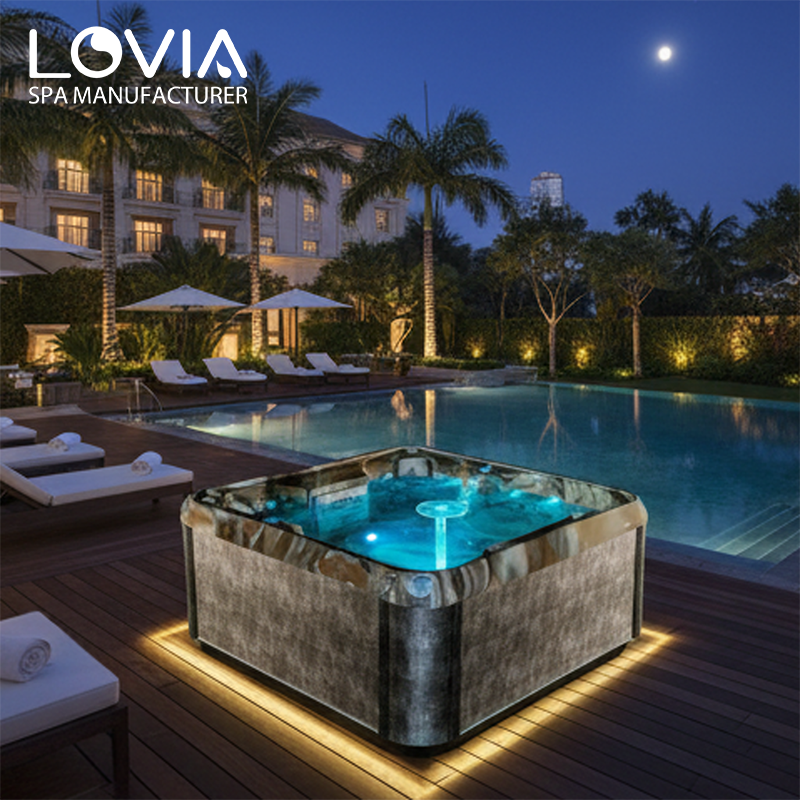
Under what circumstances should chlorine be added to the spa hot tub immediately?
The time without chlorination can vary, but the following are signals that chlorination must be added immediately:
✔ Chlorine level = 0 ppm
✔ Water temperature exceeds 38°C
✔ Intensive use of the hot tub
✔ Recent multiple soaks
✔ Slight Odor in the Water
✔ Cloudiness or Color Change
✔ Abnormal Foaming After Turning on the Spray System
If any of these occur, chlorination should be added immediately and the circulation system should be run.
What criteria can be used to assess whether the water is still usable?
To make maintenance more intuitive, here are the most scientific assessment methods:
1. Use test strips to check if chlorine is ≥ 1 ppm.
Below 1 ppm is unsafe.
2. Is the pH maintained between 7.2 and 7.8?
If it deviates, it indicates that the water chemistry is unbalanced.
3. Does the water exhibit the following signs?
• Turbidity
• Odor
• Abnormal foaming
• Yellowish or greenish color
• Fine filaments floating on the surface
Any of these signs indicates that the water is no longer usable.
4. Has more than 48 hours passed since chlorination was added?
Even if the water looks good, it may be contaminated.
How can you safely reduce chlorine use?
If you wish to reduce chlorine usage, rather than eliminating it entirely, you can use the following more scientific methods:
1. Use the "low chlorine + ozone" or "low chlorine + UV disinfection" mode.
This can reduce chlorine usage by 40–60%.
2. Rinse your body before entering the water.
This significantly reduces: oil, sweat, and organic matter.
3. Use a non-chlorine oxidant (Monopersulfate) for regular flushing.
This reduces chloramines and lowers chlorine requirements.
4. Use a high-efficiency filter and clean it regularly.
Maintaining filter efficiency significantly maintains water clarity.
5. Cover the tub to maintain water stability.
This prevents dust, organic impurities, and UV rays from breaking down chlorine.
How long can unchlorinated water be left in a spa hot tub?
The conclusions are as follows:
✔ Unchlorinated water can typically only be left in a whirlpool spa hot tub for 24–72 hours.
✔ In high-temperature environments, it should not exceed 48 hours.
✔ Water that appears clear after 2–3 days may contain a large number of bacteria.
✔ To safely reduce chlorine usage, adopt "low-chlorine management," rather than completely eliminating chlorine.
Are LOVIA SPA swim spas suitable for both fitness and relaxation markets?
Yes. LOVIA SPA swim spas are designed to serve dual purposes: fitness training and hydrotherapy relaxation. Strong adjustable currents support swimming and exercise, while integrated seating allows users to relax afterward. This versatility makes swim spas attractive for gyms, rehabilitation centers, and home users. Buyers can Buy swim spas Wholesale at competitive Prices and target multiple customer segments.
