

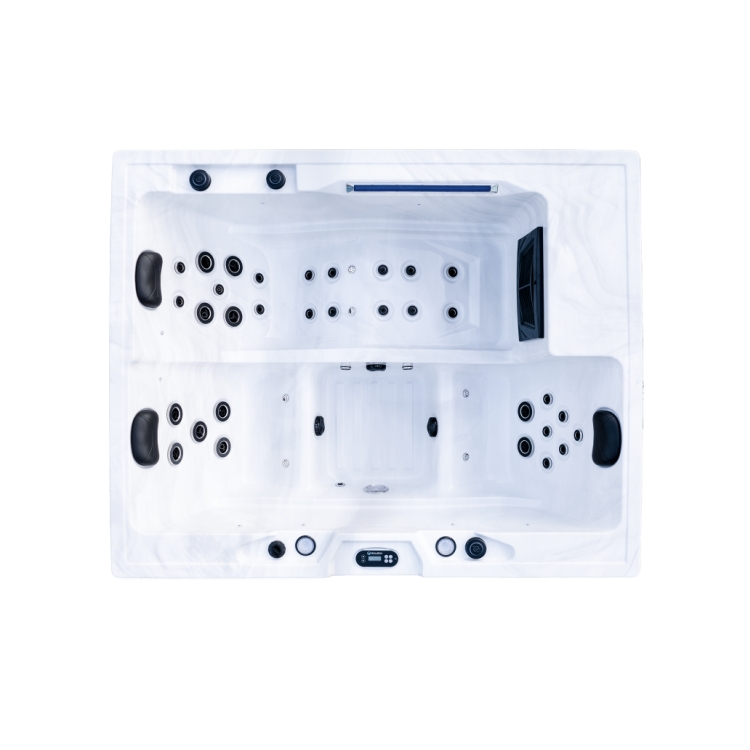
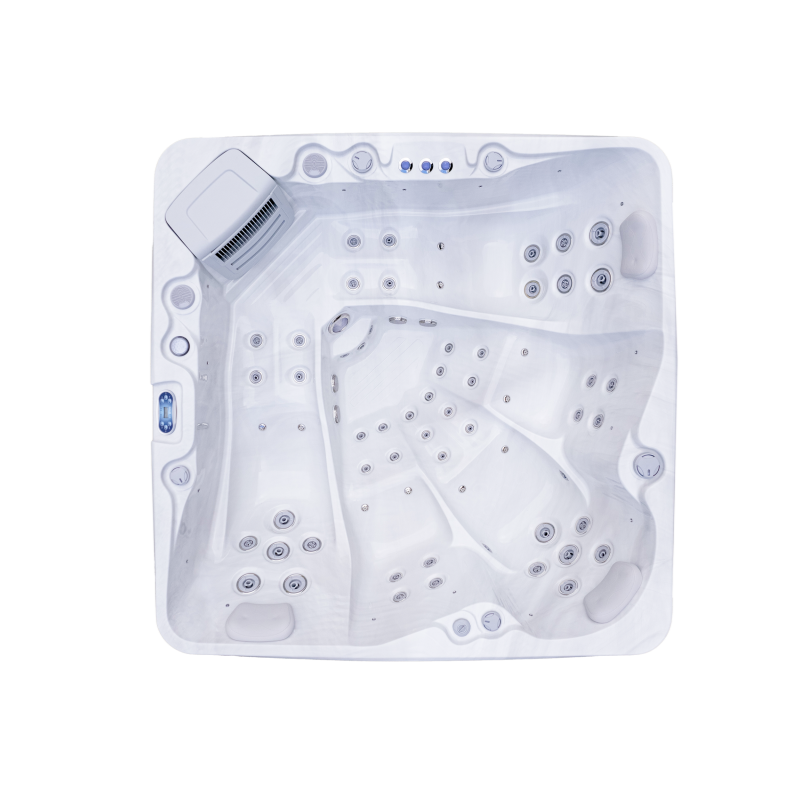
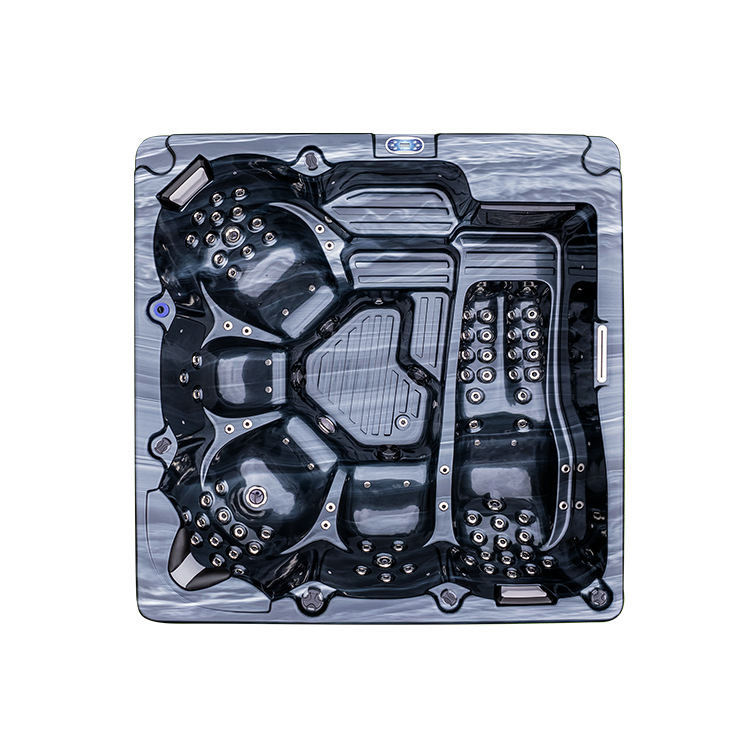
In recent years, with the growing popularity of high-end outdoor living, outdoor spa hot tubs have become a standard feature for many households, vacation villas, guesthouses, and luxury hotels. Consumer perceptions are shifting significantly: while outdoor whirlpool jacuzzi tubs were once purchased primarily for socializing, entertainment, and relaxation, users now increasingly view them as wellness tools for improving sleep, aiding muscle recovery, providing hydrotherapy, and even managing chronic stress. However, beneath the industry's rapid growth, a critical issue—often underestimated yet directly impacting user health—has emerged: the safety of the water quality.
When purchasing a whirlpool outdoor hot tub, consumers often focus on aesthetics, seating capacity, the number of massage jets, and price, while overlooking the core factor that determines the long-term user experience: the water quality management system. Even more concerning is that some manufacturers cut corners on filtration systems, ozone sterilization, piping materials, circulation pump efficiency, and water treatment modules to reduce costs. Consequently, products may appear fully functional upon delivery but reveal numerous issues during long-term use. Common problems include cloudy water, noticeable odors, excessive foaming, biofilm buildup in the plumbing, and bacterial levels exceeding safety limits—leading to issues such as skin irritation, folliculitis, and eye discomfort.
To a certain extent, the problem with many low-priced outdoor whirlpool jacuzzi tubs is not whether they can heat the water, but whether they can maintain safe water quality over the long term. Consumers often mistakenly assume that clear water is safe water, but the reality is far more complex. Clear water is not necessarily clean, and water without an odor is not necessarily free from microbial contamination. A truly safe outdoor hot tub must meet requirements across multiple dimensions, including chemical balance, microbial control, circulation and filtration efficiency, and hygienic equipment design.
This is precisely why there is such a vast gap between professional brands and ordinary suppliers. Manufacturers specializing in high-end hydrotherapy equipment—such as LOVIA®—prioritize water quality management as a core engineering element from the very beginning of product development, rather than treating it as an afterthought or a post-sales issue. They understand that for an outdoor whirlpool jacuzzi tub, a comfortable experience relies on safe water quality; without it, even the most luxurious features lose their value. So, the question arises: how exactly can we determine whether the water quality of an outdoor hot tub meets safety standards?
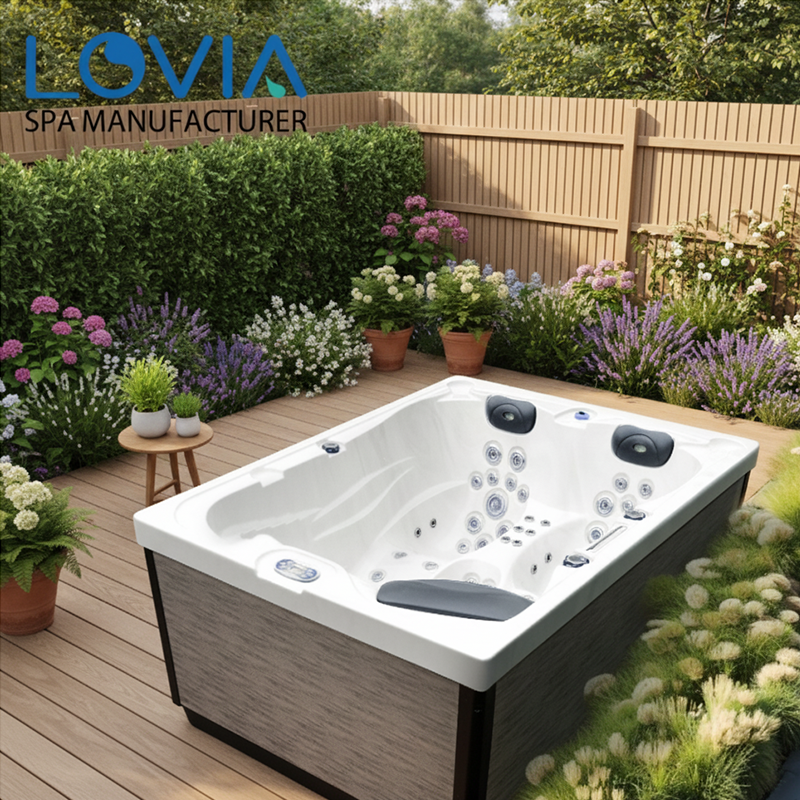
Why are outdoor whirlpool jacuzzi tubs more prone to water quality issues?
The root cause lies in three high-risk characteristics inherent to whirlpool outdoor hot tubs: high temperatures, low water volume, and a high bather-to-water ratio.
First is the high-temperature environment. Most whirlpool outdoor hot tubs operate between 37°C and 40°C; while this range is highly comfortable for humans, it also closely approximates the ideal breeding conditions for certain bacteria. Research indicates that the reproduction rates of various common microorganisms—including potentially pathogenic bacteria like *Legionella* and *Pseudomonas aeruginosa*—increase significantly within the 30°C to 42°C range.
Second is the low water volume. While a standard swimming pool typically holds tens of thousands of liters of water, a residential whirlpool outdoor hot tub generally contains only about 800 to 2,000 liters. A smaller volume means that contaminant concentrations can rise rapidly. When an adult enters an outdoor whirlpool jacuzzi tub, they introduce sweat, sebum, skincare residues, cosmetic particles, and even microorganisms. Data from the Water Quality Association (WQA) shows that, during a 30-minute soak, an adult releases an average of approximately 0.14 liters of sweat and significant amounts of organic matter into the water.
Finally, there is the high bather-to-water ratio. In a swimming pool, the volume of water per person might be several thousand liters, whereas in a whirlpool outdoor hot tub, it may be as low as 200 to 300 liters per person. Under these conditions, if filtration and disinfection efficiency are inadequate, contaminants accumulate very quickly.
For these reasons, the requirements for water quality management systems in whirlpool outdoor hot tubs are far more stringent than those for standard bathtubs.
Five Key Indicators for Assessing Outdoor Spa Hot Tub Water Safety
A truly professional assessment of water quality cannot rely solely on visual inspection; instead, it requires a comprehensive evaluation based on five key indicators.
1. Does the water clarity meet the standard?
This is the most fundamental indicator, yet it is also the one most easily misjudged.
The water in a properly maintained outdoor spa hot tub should be highly transparent, allowing underwater jets, seat contours, and the structure of the tub floor to be clearly visible. If you notice any of the following, the water quality may be compromised:
•Slightly cloudy water
•Suspended particles visible in the light
•An oily film on the water surface
•An abnormal increase in foam after the jets are activated
Many whirlpool outdoor hot tub owners assume slight cloudiness is harmless, but it often indicates reduced filtration efficiency or excessively high Total Dissolved Solids (TDS) levels.
Generally, TDS levels in outdoor whirlpool jacuzzi tubs should be kept below 1,500 ppm. When levels exceed 2,000 ppm, water treatment efficiency drops significantly, and the effectiveness of sanitizers is compromised.
It is important to note that clear water does not guarantee absolute safety. Certain bacterial contaminations do not affect visual clarity in the early stages; therefore, clarity should serve only as an initial indicator.
2. Does the outdoor spa hot tub water have an unusual odor?
Many people believe that a strong chlorine smell indicates thorough sanitization—a very common misconception in the industry.
In reality, a strong, pungent "pool smell" usually does not mean there is sufficient chlorine; instead, it indicates the formation of chloramines. Chloramines are byproducts formed when free chlorine reacts with sweat, urea, and organic contaminants, and they can irritate:
•Eyes
•Respiratory tract
•Nasal passages
•Skin
A properly maintained whirlpool outdoor hot tub should not have a noticeably pungent odor.
If you detect:
•A smell of decay
•A musty or moldy odor
•A sour, foul smell
•A strong chemical odor
It usually indicates one of the following issues:
Inadequate filtration, ineffective sanitizer, or bacterial growth inside the plumbing.
High-quality whirlpool outdoor hot tubs often feature ozone or UV auxiliary sanitization systems to reduce the reliance on chemicals and minimize odors. LOVIA® employs multi-stage water treatment solutions in some of its premium models specifically to mitigate the irritation issues associated with traditional chlorine sanitization.
3. Is the sanitizer concentration within the safe range?
This is one of the most important quantitative indicators for assessing outdoor spa hot tub water quality. If using chlorine for disinfection, the recommended free chlorine level is:
3–5 ppm
If using bromine for disinfection, the recommended level is:
4–6 ppm
Levels below this range result in insufficient sanitizing power, while levels above it may irritate the skin and mucous membranes.
Many residential users tend toward one of two extremes:
Some add almost no chemicals, believing that simply circulating the water is enough; others add excessive amounts, thinking that "more is safer."
Neither approach is scientifically sound.
The professional approach is to use test strips or a digital water quality tester to check the water at least 2–3 times a week. Sanitizer consumption in outdoor whirlpool hot tubs increases significantly—especially after use by multiple people—so levels must be replenished promptly.
4. Is the pH level of the outdoor whirlpool hot tub water stable?
If sanitizer concentration determines sanitizing power, then pH determines the sanitizer's effectiveness.
The ideal pH range for an outdoor spa hot tub is:
7.2–7.8
Below 7.2:
•The water becomes acidic
•Equipment corrosion occurs
•Skin and eye irritation occurs
Above 7.8:
•Sanitization efficiency drops
•Scale buildup is likely
•Risk of cloudy water increases
Many users are unaware that chlorine's sanitizing efficiency at pH 7.2 is far higher than at pH 8.0. In other words, even if you add enough chlorine, the whirlpool jacuzzi tub's sanitizing effectiveness can still drop drastically if the pH level is incorrect.
5. Are bacteria and biofilm under control?
This is the issue most difficult for the average whirlpool jacuzzi tub user to detect.
The water in many outdoor whirlpool hot tubs may look clear on the surface, yet biofilm has already formed inside the plumbing. Biofilm is a sticky protective layer formed by bacteria adhering to the inner walls of the pipes. Once formed, it is difficult to eliminate completely using standard chlorine disinfection.
Biofilm often leads to:
•Recurring cloudy water
•Persistent unpleasant odors
•Bacterial growth within the plumbing
•Contamination of the jets
This problem is most common in low-quality outdoor spa hot tubs, as their plumbing designs often feature "dead zones" where circulation is inadequate and residual water stagnates for long periods. Premium brands typically optimize:
•Piping length
•Water return paths
•Stagnant zones (dead spots)
•Automatic draining capabilities
Although invisible to the user, these engineering details profoundly impact water safety.
Why does water quality in many outdoor hot tubs repeatedly deteriorate?
Many users complain: "I just changed the water recently—why is the quality getting worse?"
The problem often lies not with the water itself, but with the system.
Common causes include:
Weak filtration systems, insufficient circulation time, poor jet design, inadequate pump flow rates, and infrequent maintenance.
Industry data shows that high-quality outdoor whirlpool hot tubs typically require at least 4 to 8 hours of circulation and filtration daily. In contrast, low-end models often limit circulation time to cut energy consumption and costs, preventing contaminants from being captured in a timely manner.
This is why professional brands offer a noticeably more stable long-term user experience. Take LOVIA®, for example: our design philosophy prioritizes not only heating speed but also filtration efficiency and circulation uniformity. Such system-level optimization significantly reduces the maintenance burden for whirlpool jacuzzi tub owners.
How can you ensure long-term water safety in your outdoor whirlpool jacuzzi tub?
Safe water quality in an outdoor whirlpool hot tub isn't achieved through a single cleaning session; it relies on a consistent, long-term maintenance regimen.
We recommend following these principles:
First, establish a regular testing routine. Test pH and sanitizer levels at least two to three times a week, and increase the frequency during periods of heavy use.
Second, keep the filter clean. Filters should be cleaned every 1 to 2 weeks and replaced approximately every 12 months.
Third, perform periodic deep cleaning of the plumbing. We recommend draining the system and cleaning the pipes every 3 to 4 months to prevent biofilm buildup.
Additionally, cultivating good usage habits is crucial. A quick rinse before entering the spa hot tub can significantly reduce:
•Sweat
•Cosmetics
•Skincare products
•Sunscreen residue
The fewer contaminants introduced, the more stable the water quality remains.
Future competition in the outdoor spa hot tub industry will essentially be a contest of water treatment technologies.
In the coming years, industry competition will no longer be limited to aesthetics or the number of massage jets. The factors that truly set products apart are:
•Smart water quality monitoring
•Automatic chemical dosing
•High-efficiency filtration
•Multi-stage sterilization technology
•Low-maintenance design
Consumers are becoming increasingly rational; they realize that purchasing an outdoor spa hot tub is not merely a one-time expense, but an investment in the long-term user experience.
Amidst this trend, brands like LOVIA®—which prioritize water treatment architecture, system stability, and long-term safety—are gaining greater recognition in the high-end market. After all, a truly professional outdoor whirlpool hot tub should offer more than just comfort; it must ensure a safe and worry-free soaking experience.
FAQ
How often should the water in an outdoor spa hot tub be changed?
It is generally recommended to change the water every 3 to 4 months, though this interval may be shortened to 2 months with frequent use.
Is the water in an outdoor whirlpool hot tub safe just because it looks clear?
Not necessarily. Clear water can still harbor bacteria or biofilms, or suffer from chemical imbalances.
Can an outdoor whirlpool hot tub be used without chlorine?
Alternatives such as bromine, ozone, or UV-assisted sterilization can be considered, though operating without any disinfectant at all is generally not recommended.
What are the water quality management advantages of LOVIA® outdoor spa hot tubs?
LOVIA® places a strong emphasis on circulation efficiency, filtration capability, temperature stability, and system-level water treatment design. These features help reduce long-term maintenance requirements and ensure consistent water quality over time.
