

In 2025, the swim spa tub has become an ideal choice for more and more families. It combines the functions of a swimming pool and a hot tub, allowing users to enjoy the fun of swimming in a small space while providing a relaxing experience of hot water massage. But when enjoying the comfort and convenience brought by the swim spa tub, water quality maintenance has become an issue that cannot be ignored. In particular, a core issue that many users are concerned about is: Does the swim spa tub at home need chlorination?
This article will start with basic water quality maintenance knowledge and explain in detail why chlorine is needed in the swim spa tub, the role of chlorine, how to use chlorine reasonably, and how to ensure water quality safety. By understanding these issues, users can better manage their own swim spa tubs and ensure a healthy and comfortable use experience.
Water quality maintenance of swim spa tubs: Why is chlorination needed?
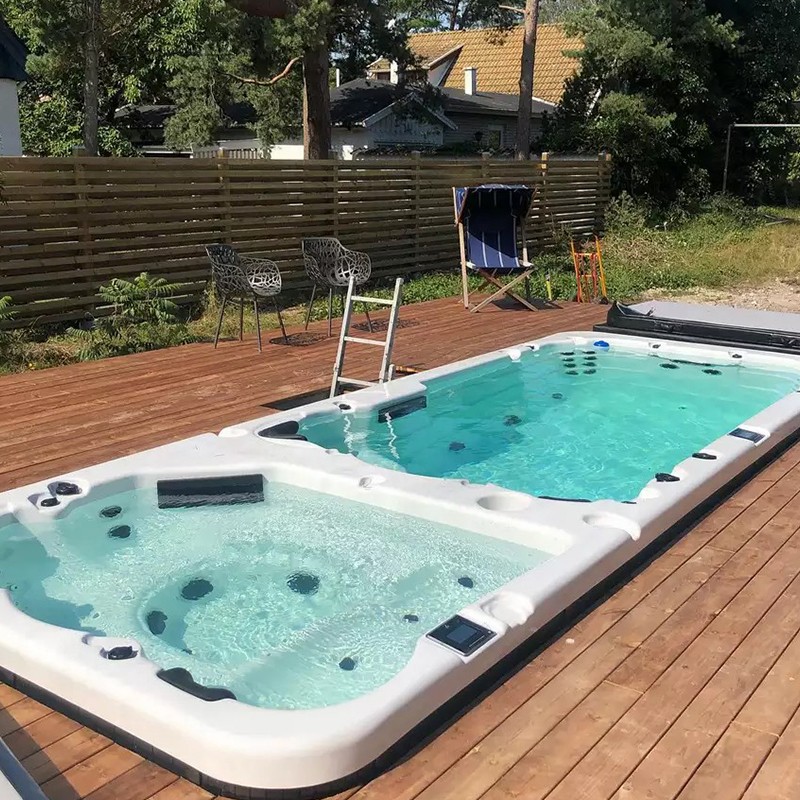
The swim spa tub is not only a place for family exercise and relaxation, but also a relatively closed water environment. In such a small water body, the cleanliness and safety of the water quality are particularly important. Because the swim spa tub is in a warm state for a long time, microorganisms are easy to breed under such temperature conditions. If not controlled, harmful microorganisms such as bacteria, viruses, and fungi may multiply rapidly in swim spa tub water, threatening the health of users.
Chlorine is the most commonly used and effective disinfectant in swim spa tub water quality management. By adding an appropriate amount of chlorine to a swim spa tub, microorganisms in the water can be killed and inhibited, keeping the water clean and safe.
Disinfection effect of chlorine
Chlorine is one of the most commonly used water treatment chemicals in the world, especially in public facilities such as swimming pools and swim spa tubs. The main function of chlorine is to destroy the cell walls of microorganisms in the water through oxidation reactions, thereby killing pathogens. It can effectively eliminate most common bacteria, viruses, and algae, including microorganisms that can cause skin and eye infections and respiratory diseases.
Chlorine usually exists in the form of hypochlorous acid (HClO) in water, which has a strong bactericidal effect. Through this reaction, chlorine can prevent harmful microorganisms from multiplying in the water and protect the health of users.
Special conditions of swim spa tubs
Compared to traditional swimming pools, swim spa tubs usually have smaller water bodies and higher water temperatures. These conditions make the water quality of swim spa tubs more susceptible to microbial contamination. High water temperatures accelerate the growth and reproduction of bacteria and other pathogens, while the small size of the water body means that pollutants accumulate more quickly. Therefore, the water quality maintenance requirements of a swim spa tub are even higher than those of an ordinary swimming pool.
In addition, there are also more organic substances in the swim spa tub, such as human sweat, skin oils, and cosmetic residues, which react with chlorine to produce chloramines. Chloramines not only reduce the bactericidal effect of chlorine, but also produce irritating odors. Therefore, it is crucial to properly control the use of chlorine and keep the water clean.
How to use chlorine correctly in a swim spa tub?
Since chlorine is essential to water quality maintenance, knowing how to use chlorine properly is a skill that every swim spa tub user must master. To ensure that the water quality of a swim spa tub is clean and safe, the following aspects need to be considered:
Choosing the right chlorine product
There are many types of chlorine products available on the market, each with its own characteristics and applicable scenarios. The most common chlorine products include:
· Trichloroisocyanuric acid (Trichlor): This is a slow-release chlorine product that is usually sold in tablet form and can be placed in an automatic chlorinator or floating chlorine tablet basket. It dissolves slowly and is suitable for maintaining chlorine levels in swim spa water over a long period of time.
· Dichloroisocyanuric acid (Dichlor): This product is suitable for quickly increasing the chlorine content in water. It is usually sold in powder or granular form and dissolves quickly, which is suitable for use when rapid disinfection is needed.
· Sodium hypochlorite (liquid chlorine): This is the most widely used chlorine product in swim spas and is usually added in liquid form. It is easy to control the dosage and is suitable for regular maintenance.
Depending on the specific needs and water quality of the swim spa, choosing the right chlorine product can help users better manage water quality. For beginners, it is recommended to consult a professional or refer to the product instructions to select the most appropriate type of disinfectant.
Controlling the concentration of chlorine
In a swim spa, it is crucial to maintain the appropriate chlorine concentration. Generally speaking, the free chlorine content in swimming pools and swim spas should be maintained between 2 and 4 ppm. This concentration range can effectively kill most microorganisms in the water without causing discomfort to the human body.
If the chlorine concentration is too low, it may not provide sufficient disinfection effect; if the concentration is too high, it may irritate the skin, eyes and respiratory tract. Therefore, regularly testing the chlorine content in the swim spa tub water to ensure that it is within a reasonable range is a key step in maintaining the water quality of the swim spa tub.
Regularly testing water quality
While using chlorine, it is essential to regularly test the water quality. In addition to the chlorine content, other indicators such as pH value and alkalinity of the swim spa tub also need to be kept within a reasonable range. The pH value should be maintained between 7.2 and 7.6, which is the optimal range for chlorine to exert its maximum bactericidal effect. If the pH value is too high or too low, the disinfection effect of chlorine will be affected.
There are a variety of water quality testing tools on the market, such as test strips or electronic water quality testers, which can help users regularly test various indicators of the swim spa tub. Ensuring that these indicators are within the normal range can prolong the disinfection effect of chlorine and reduce the accumulation of harmful substances.
Regular shock treatment
In addition to the quantitative chlorination in daily maintenance, it is also very important to shock the swim spa tub regularly. Shock treatment refers to the addition of a large amount of chlorine or other oxidants in a short period of time to remove organic matter, chloramines and other possible contaminants in the water. Through shock treatment, harmful substances in the water can be effectively eliminated and the water can be restored to cleanliness and transparency.
For home use swim spa tubs, it is recommended to shock treatment every 1 to 2 weeks, especially in the case of high-frequency use, the frequency of shock treatment may need to be increased.
What are the common problems of chlorination in swim spa tubs?
In the process of using chlorine, users may encounter some common problems. Understanding these problems and their solutions can help users better maintain the water quality of the swim spa tub.
Chlorine smells too strong
Many people believe that the chlorine smell in the swim spa tub is too strong because the chlorine content is too high. However, the opposite is true. The smell of chlorine mainly comes from chloramine, which is a byproduct generated by the reaction of chlorine with organic matter in the water (such as sweat, urine, etc.). Chloramine not only has a pungent smell, but also reduces the disinfection effect of chlorine.
If you notice a strong chlorine odor in your swim spa tub, it usually means that the water has a high chloramine content, and you need to perform a shock treatment to increase the chlorine content to eliminate the chloramine.
Chlorine consumption too fast
When the temperature is high or in direct sunlight, the chlorine in the swim spa tub will be consumed faster than usual. This is because ultraviolet rays break down chlorine molecules, causing the disinfection effect to quickly weaken. To solve this problem, users can add cyanuric acid, a chlorine stabilizer that helps protect the chlorine from UV damage. In addition, maintaining the appropriate water temperature in the swim spa tub and using a sunscreen can also effectively reduce chlorine consumption.
Turbid water
If the water quality of the swim spa tub begins to become turbid, it usually means that the organic content in the water is too high or the chlorine content is insufficient. At this time, it is recommended to perform a shock treatment and check the chlorine concentration. If there are a lot of suspended solids in the water, regular cleaning of the filtration system is also an important step to keep the water clear.
How to avoid excessive chlorine in the swim spa tub?
Although chlorine is essential for maintaining the water quality of the swim spa tub, excessive use of chlorine can also cause discomfort to users and even damage the swim spa tub. To avoid excessive use of chlorine, users need to follow the following principles:
· Quantitative addition: According to the volume and water quality requirements of the swim spa tub, add chlorine reasonably to avoid excessive use at one time.
· Use automatic chlorinators: Many swim spa tub equipment is equipped with automatic chlorinators, which can automatically adjust the release of chlorine according to the water quality to avoid excessive use caused by human error.
· Regular testing: By regularly testing the chlorine content in the swim spa tub water, the amount of chlorine can be adjusted in time to ensure that it is within a reasonable range.
Established in 1989, Lovia Spa is proud to be one of China's top 5 spa brands. We offer OEM and ODM spa manufacturing services with flexible purchasing terms and bulk order discounts. From hot tubs to outdoor wellness solutions, our products are built to exceed expectations in performance and safety. Explore our product lines and request wholesale quotes directly from our Guangzhou-based factory.
