

During the cold winter months, many swim spa tub owners face a crucial question: can I completely drain the water?
At first glance, this seems like a simple decision, but in reality, it relates to the safety of the spa system, pipe freeze protection, equipment lifespan, and subsequent maintenance costs.
This article will discuss in detail from a professional perspective whether draining the tub in winter is suitable, the potential risks of draining, proper freeze protection methods, and how to scientifically maintain your swim spa tub in cold environments.
Why is draining the swim spa tub important in winter?
Many users believe that draining the water from the swim spa tub will avoid problems as long as it's not in use. However, in low temperatures, it's not that simple.
Winter is a high-risk season for water freezing, material shrinkage, and seal aging. Improper drainage methods can have serious consequences.
1. Structural Features of a Swim Spa Tub
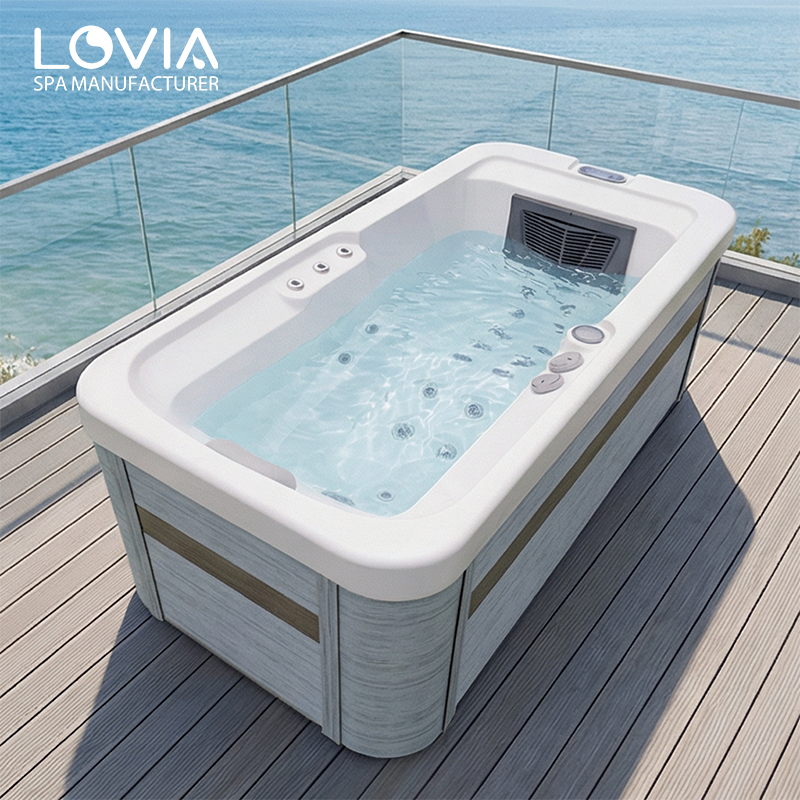
A swim spa tub is a temperature-controlled, circulating system integrating hydrotherapy, fitness, and relaxation. Its internal components include:
• A water pump and nozzle system
• A filter and circulation system
• A heater and temperature control device
• An electrical control system
• A concealed piping network
Many components in this structure come into direct contact with water. Even if you drain the main tub, small amounts of water may remain in the pipes. This residual water will rapidly freeze and expand at low temperatures, potentially damaging the system.
2. Dangers of Winter Temperature Changes
Below zero degrees Celsius, water expands by approximately 9% in volume.
This means that if residual water remains in the pipes, pump chamber, or nozzles, freezing can lead to:
• Pipe bursts or deformation;
• Cracked joint seals;
• Damage to the pump body and heater housing;
• Corrosion of the electrical control system due to moisture.
Therefore, whether or not to drain the water is not just a question of "whether or not to empty the water," but a technical decision concerning system safety and maintenance costs.
What are the advantages and risks of draining a swim spa tub in winter?
To answer the question "Can I drain it in winter?", we must assess both the potential advantages and the possible risks.
✅ Potential Advantages of Draining
• Reduced maintenance burden: No need to maintain water balance or add disinfectants.
• Prevents algae growth caused by prolonged inactivity.
• Energy savings: No more electricity is consumed to maintain temperature after the heating system is turned off.
❌ Major Risks of Draining
• Pipe freezing and rupture: Residual water freezing inside the pipes can cause systemic damage.
• Seal cracking and aging: Rubber seals will lose elasticity if they are dry for a long time.
• Pump and heater getting damp: In high humidity, the drained tub is more prone to moisture and rust.
• Complex restarting: Refilling in the spring requires re-inspection, descaling, disinfection, and water balancing.
In short, draining may save time, but improper operation can lead to higher maintenance costs.
In what situations can you consider draining a swim spa tub in winter?
Draining is not always prohibited.
Under certain conditions, draining is indeed a safer option.
1. Long-term absence or no one using the tub
If you will be away for extended periods during winter (e.g., weeks or months) and cannot regularly check the water quality and temperature of your swim spa tub, keeping it full may actually be riskier. In this case, you can choose to drain the tub, but thorough antifreeze treatment is essential.
2. Outdoor installation without insulation
For swim spa tubs completely exposed outdoors without insulation, if the temperature in your area will remain below freezing, draining is safer than maintaining low-temperature circulation.
3. Unreliable power supply
If the power supply is unstable or there is a possibility of power outages during winter (e.g., in outdoor locations or vacation homes), maintaining water temperature and circulation cannot be guaranteed.
Draining is a reasonable option in this case, but residual water in the pipes must still be thoroughly removed.
What happens if you don't drain the swim spa tub in winter? Is it safe?
Many users prefer to keep the tub full in winter because they worry about the pipes freezing or cracking.
In fact, with proper precautions, keeping the tub full of water in winter is generally safer than draining it.
1. Maintain a Constant Temperature Circulation
Most swim spa tubs are equipped with automatic temperature control systems that automatically activate heating and circulation when the temperature approaches freezing.
Continuously flowing water is less likely to freeze, and the system maintains stable humidity, preventing seals from drying out and cracking.
2. The Power of Energy-Saving Mode
Some units have a "winter mode" or "energy-saving mode" that maintains a minimum temperature (approximately 10–15°C) without consuming excessive power, effectively preventing frost damage.
3. Regular Inspection and Insulation Covering
Under continuous operation, simply:
• Regularly test water quality;
• Add disinfectant as needed;
• Cover the tub with an insulation cover to prevent heat loss;
and you can safely get through the winter.
Therefore, if you have a stable power supply, a reliable temperature control system, and a well-insulated environment—not draining the water is the safest option.
If you must drain the water, how should you do it correctly in winter?
Sometimes it is indeed necessary to drain the swim spa tub in winter, such as during long-term inactivity, relocation, or maintenance. In these cases, proper operating procedures are especially important.
1. Thorough Cleaning and Shock Disinfection
Before draining, the water should be shocked.
• Add a high concentration of oxidant or non-chlorine shock agent;
• Run the circulation system for 20–30 minutes;
• Decompose and remove organic matter and bacteria from inside the pipes.
This prevents residual contaminants from solidifying and decaying in winter.
2. Drain the Master Tank and Filtration System
• Turn off the power;
• Open the drain valve to empty the master tank;
• Remove the filter cartridge and allow it to air dry separately;
• Ensure there is no residual water in the filter tank and pump chamber.
3. Remove Residual Water from the Pipes
This is a critical step.
Even a small amount of water left can cause it to crack after freezing.
Recommended methods:
• Use a water pump or wet vacuum cleaner to remove residual water;
• Use a hairdryer or compressed air to dry the nozzles and tubing.
4. Use antifreeze (optional)
For particularly cold regions, add a small amount of dedicated spa antifreeze to the tubing.
This liquid prevents freezing at its lowest point and is non-corrosive to the equipment.
5. Covering and moisture protection
After draining, cover with a thick, insulated cover or waterproof cover to prevent snowmelt from seeping in.
Ensure the electrical components are dry and well-ventilated to prevent internal condensation.
What are some common drainage mistakes to avoid?
❌ 1. Draining only the main tank, ignoring the tubing
Many people think that opening the drain valve is enough. In reality, water may remain in the hidden tubing and pump chamber, which is highly susceptible to freezing.
❌ 2. Immediately closing the cover after draining without ventilation
If there is still moisture inside and the cover is completely sealed, it can lead to mold growth and rust on metal parts.
❌ 3. Using Automotive Antifreeze
Automotive antifreeze contains ethylene glycol, which is corrosive to rubber seals and harmful to the human body if residue remains. Specialized spa antifreeze must be used.
❌ 4. Failure to Check Power Off
Power must be completely disconnected before draining the tub to prevent accidental triggering of the heating or pump system, causing dry burning.
What should you pay attention to when maintaining a swimming spa tub in winter?
If you decide to continue operating your swimming spa tub in winter, follow these maintenance principles:
1. Insulation is key
Use a high-quality insulation cap or heat shield to reduce heat loss and energy consumption.
2. Maintain a constant temperature and circulation
Set the automatic heating system to ensure the water temperature does not drop below 10°C;
Ensure it runs in circulation mode for at least 2 hours daily.
3. Regularly test water quality
In cold weather, water quality changes more slowly, but it is still necessary to test pH, chlorine content, alkalinity, and other indicators weekly.
4. Avoid Frequent Opening of the Cover
Frequent opening of the cover leads to rapid heat loss, causing the temperature control system to operate frequently and increasing power consumption.
5. Emergency Measures in Case of Blizzards or Extreme Cold
In extreme weather, the temperature can be appropriately increased or the circulation time extended to prevent any part from approaching freezing point.
For most household users, it is not recommended to drain the swim spa tub indiscriminately during winter.
Draining is only feasible in cases of prolonged shutdown or power outage, and when strict antifreeze measures can be implemented.
LOVIA SPA recommends: How to safely keep your swim spa tub through the winter?
• If conditions permit, maintaining water temperature and running the circulation system is the best option.
• If drainage is necessary, ensure all pipes are thoroughly dry and use dedicated antifreeze.
• Regularly check the external protective cover and electrical control box, keeping them dry and moisture-proof.
• Before restarting in the spring, be sure to perform a complete shock sterilization and system test.
By taking the above measures, your swim spa tub can operate safely and stably in any season without worrying about freezing or damage.
What Factory Advantages Does LOVIA SPA Offer Buyers?
As a direct manufacturer, LOVIA SPA offers factory advantages that include transparent pricing, flexible order quantities, and consistent quality control. Buyers can communicate directly with the production source, reducing misunderstandings and additional costs. Our factory setup allows efficient production planning and supports long-term cooperation. This direct factory relationship is ideal for buyers seeking wholesale prices, stable supply, and professional manufacturing support for spa products.
