

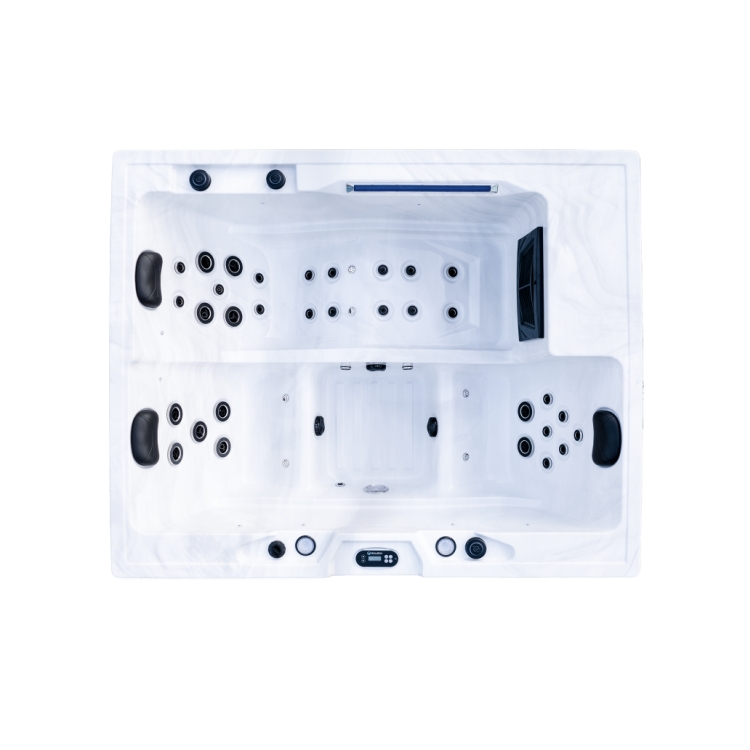
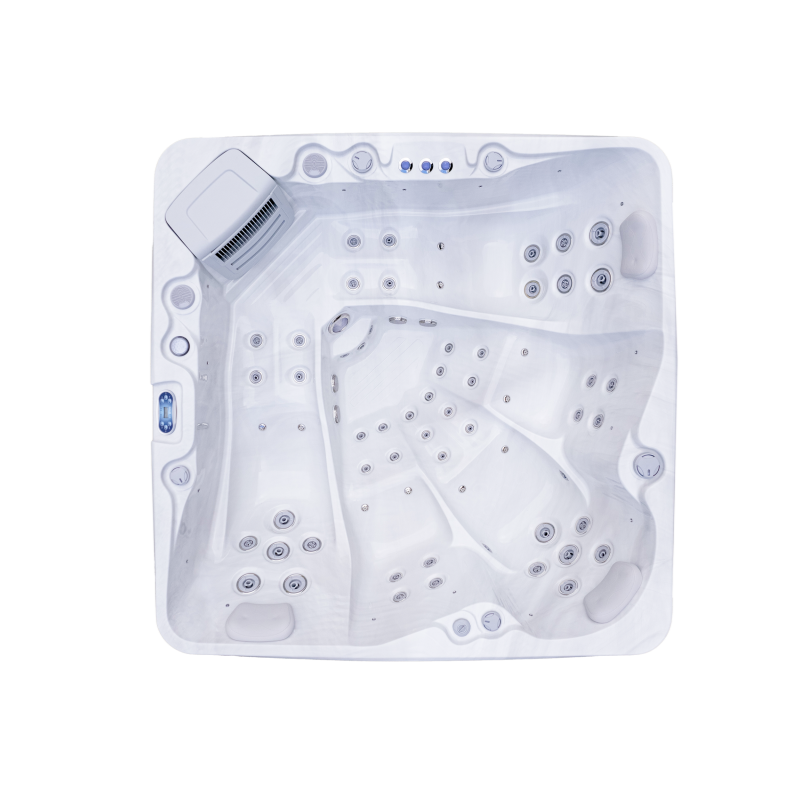
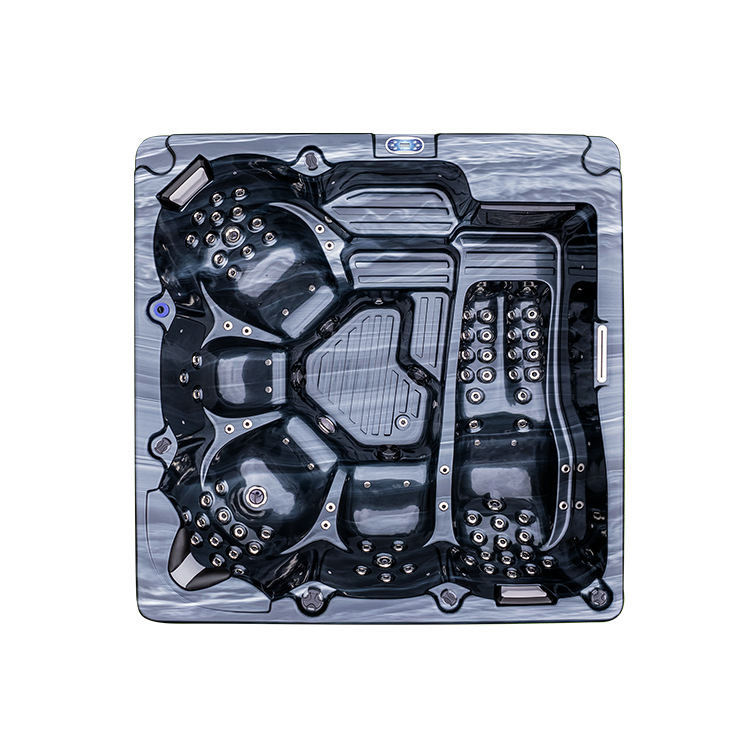
With the continuous upgrading of home bathroom equipment, whirlpool spa hot tubs (also known as "hydrotherapy bathtubs" or "hydraulic massage bathtubs") have gradually become a symbol of comfortable living. They not only provide deep relaxation and promote blood circulation, but also relieve muscle fatigue and improve sleep quality.
However, many users ask a similar question during installation or use:
"Can a spa hot tub be used as a shower at the same time?"
This question seems simple, but it actually involves multiple technical aspects such as structural design, drainage system, waterproofing and safety, electrical isolation, and user experience.
This article will provide a detailed analysis of the answer to this question from a professional perspective and help you determine whether your bathtub is suitable for "dual use."
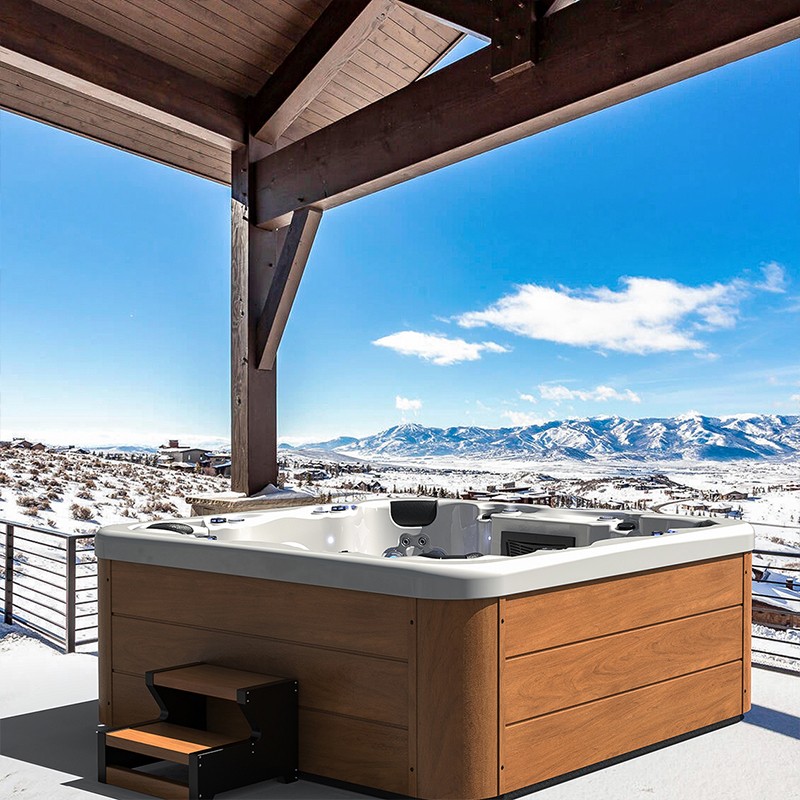
Spa Hot Tub: Construction and Functional Principles
A typical spa hot tub consists of the following core systems:
1. Circulating Water Pump System
Used to draw water from the bathtub and generate high-pressure water flow through nozzles (jet heads) to achieve a massage effect.
2. Nozzle and Piping System
Distributed along the inner wall of the bathtub, these nozzles spray water at different angles to stimulate various parts of the body.
3. Air Mixing System (Optional)
Some high-end models incorporate an air injection function, mixing bubbles with hot water to enhance massage comfort.
4. Heating System
Maintains a constant water temperature, ensuring it doesn't cool down during extended soaking.
5. Electrical Control System
Includes control panel, thermostat, lighting strip, etc.
Unlike traditional bathtubs, spa hot tubs have more complex and powerful systems, but also stricter waterproofing requirements. This means that when used as a shower, electrical safety and structural compatibility must be considered.

Can a spa hot tub's structure support showering?
The answer is: Theoretically, yes, but it depends on the specific model and installation conditions.
1. Compatibility Prerequisites
For a whirlpool spa hot tub to function as a shower, the following structural conditions must be met:
• The bathtub rim height is moderate (easy to stand on);
• The bathtub bottom has a good anti-slip design;
• A fixed or handheld shower head can be installed on the wall or beside the bathtub;
• The drainage system has strong drainage capacity;
• Splash protection is in place to ensure the electrical system is not exposed to moisture.
When all the above conditions are met, a spa hot tub can be used as a device that combines showering and bathing functions.
2. Situations Where Dual Use is Not Recommended
However, if your spa hot tub has the following characteristics, it is not recommended to use it as a shower:
• The bathtub is made of thin acrylic walls, which are not suitable for standing;
• It lacks an anti-slip bottom or safety handles;
• Electrical components are exposed or close to the shower head area;
• No dedicated waterproof screen or glass partition is installed;
• The drain outlet is located at a high point, making it prone to water accumulation.
In other words, not all whirlpool spa hot tubs can safely be used as showers.
Will using a spa hot tub for showering affect its lifespan?
Many users worry that frequent showering will shorten the lifespan of their spa system. This concern is not unfounded.
1. Impact on the Electrical System
In shower mode, the tub's interior and control panel are frequently exposed to moisture and water droplets. Insufficient sealing and prolonged high humidity can lead to:
• Oxidation of control panel contacts;
• Moisture buildup on the motor circuit board;
• LED lights or buttons malfunctioning.
Therefore, if you plan to use your spa hot tub for showering long-term, it is recommended to choose an electrical control system with an IPX5 or higher waterproof rating.
2. Impact on Surface Materials
High-pressure shower water and frequent use of shampoo or shower gel can accelerate the aging of acrylic or fiberglass surfaces to some extent. Regular cleaning and using a dedicated neutral detergent can effectively extend its lifespan.
3. Impact on the Nozzles and Circulation System
If the spa function is not activated during each shower, moisture may remain inside the nozzles, leading to bacterial growth or scale buildup in the pipes over time.
The solution is to activate the massage cycle every few days and rinse the system with hot water to keep the interior clean.
Is it safe to use a spa hot tub as a shower?
Safety is the primary consideration when deciding whether to use it for both purposes.
1. Anti-slip design is key
If the bathtub lacks an anti-slip texture or mat, it's easy to slip while showering. Recommendations:
• Choose a bottom with anti-slip particles;
• Install absorbent anti-slip mats;
• Add handrails for support.
2. Electrical waterproof rating must meet standards
All junction boxes, motors, and control panels must be waterproof.
General recommendations:
• IPX4 or higher for splash protection;
• IPX5 or higher for strong water jet protection;
• IPX6 or higher is suitable for long-term shower/shower use.
3. Shower enclosure or glass door is essential
Installing a glass door or shower curtain not only prevents water splashing but also protects electrical components from direct water jets.
4. Pay attention to grounding and current protection
All spa hot tubs must have:
• Grounding protection;
• Leakage current protection switch (RCD/GFCI);
• Independent power supply line.
The safety principle is: a bathtub can be used for both bathing and showering, but it must meet both electrical and anti-slip standards.
What are the advantages and disadvantages of using a spa hot tub as a shower?
From a functional perspective, the "two-in-one" design has both advantages and limitations.
Advantages:
1. Space saving: Especially suitable for families with small bathrooms, one unit meets both bathing and showering needs.
2. Increased efficiency: Quick showers during the week, and a relaxing massage mode on weekends.
3. Budget saving: No need to purchase separate shower rooms and bathtub systems.
4. Aesthetically pleasing and unified: Integrated design, resulting in a cleaner and more harmonious bathroom style.
Disadvantages:
1. Higher cleaning frequency: Shower residue can leave foam residue, requiring more frequent cleaning of nozzles and pipes.
2. More stringent waterproofing requirements: Increases installation and maintenance difficulty.
3. Some models are not suitable for standing. Especially deep tubs or whirlpool tubs with seats.
4. Improper installation may shorten lifespan.: Humid environments accelerate the aging of electrical components.
Overall, the advantages lie in functional convenience and space utilization, while the disadvantages lie in maintenance and safety.
How to properly install a spa hot tub for showering?
If you wish to enjoy both functions simultaneously, here are installation and usage suggestions:
1. Choose the appropriate model
• Choose a whirlpool spa hot tub with a non-slip base and the option to install a glass door;
• Choose a model with an independent waterproof panel;
• Prioritize products with manufacturer support for "Shower & Spa dual use".
2. Install a fixed or handheld showerhead
• Install a wall-mounted showerhead above the tub;
• Or choose a handheld showerhead with an adjustable bracket;
• The showerhead inlet should be located away from the control panel.
3. Equip a glass shower door or shower curtain
This prevents water splashing and creates a private, enclosed space to maintain temperature.
4. Optimize the Drainage System
Install a high-efficiency floor drain and anti-backflow device to prevent water accumulation from affecting motor operation.
5. Enhance Anti-Slip Measures
Apply anti-slip stickers, mats, or a non-slip coating to the bottom of the bathtub.
6. Ensure Electrical Safety
• Use waterproof sockets and circuit breakers;
• Install a leakage protection system;
• Keep all electrical components away from direct shower head light.
Following these steps will ensure safe and stable showering using your spa hot tub.
What are the key maintenance points for using a spa hot tub?
Maintenance is especially important when using a whirlpool spa hot tub as a dual-function device.
1. Clean the nozzles and pipes regularly
After use, let the water run for 1–2 minutes to remove residual foam and impurities.
2. Keep the Control Panel Dry
Wipe with a dry cloth after showering to prevent moisture buildup around the buttons.
3. Clean the Filter Monthly
Ensure smooth circulation and prevent clogging.
4. Use neutral detergent
Avoid using strong acidic or alkaline cleaning products that could damage acrylic or glass surfaces.
5. Ventilation and dehumidification
Turn on the exhaust fan promptly after showering to reduce humidity buildup.
6. Regularly check electrical safety
Check the leakage protection device and grounding connection every 6–12 months.
Good maintenance ensures the long-term safe operation of the "spa + shower" mode.
Will comfort be affected when the spa hot tub is used as a shower?
From an experience perspective, comfort is mainly affected by the following factors:
1. Space height: The height of your head from the showerhead should be appropriate when standing; it is recommended to leave at least 50 cm of space.
2. Bottom stability: Deep tubs are unstable and prone to slipping; it is recommended to add support points or anti-slip mats.
3. Temperature control system: When the shower and spa are shared, an independent water temperature control valve should be installed to prevent water temperature fluctuations.
4. Visual experience: If a glass door is installed, transparency and light transmission should be maintained to avoid a feeling of oppression. If the above factors are designed properly, the comfort of a whirlpool spa hot tub will not be diminished; on the contrary, it can enhance enjoyment even in limited space.
Are LOVIA SPA’s prices competitive compared with other Chinese manufacturers?
Absolutely. LOVIA SPA combines large-scale production efficiency with long-standing supply chain partnerships to keep prices highly competitive. Unlike trading companies, our direct factory model removes extra middleman costs, offering buyers genuinely low prices while maintaining high quality.
Our quotes are transparent, and we can provide multiple pricing options depending on order size, configuration, and shipping terms.
