

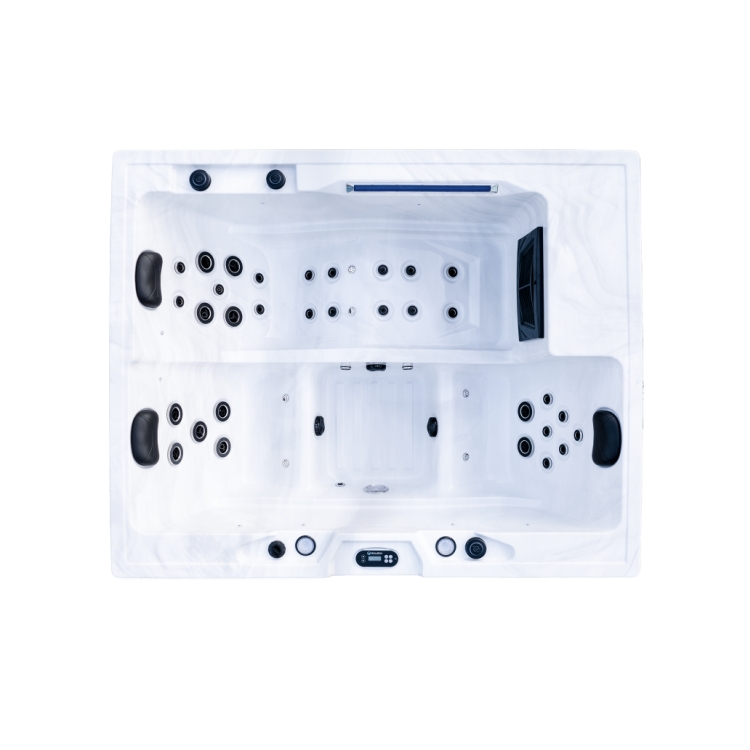
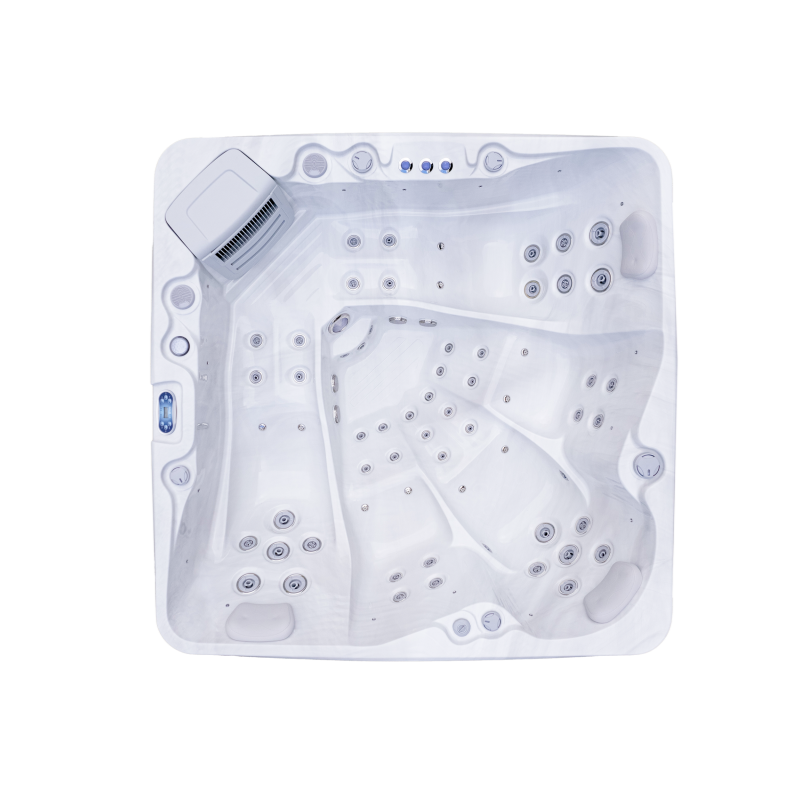
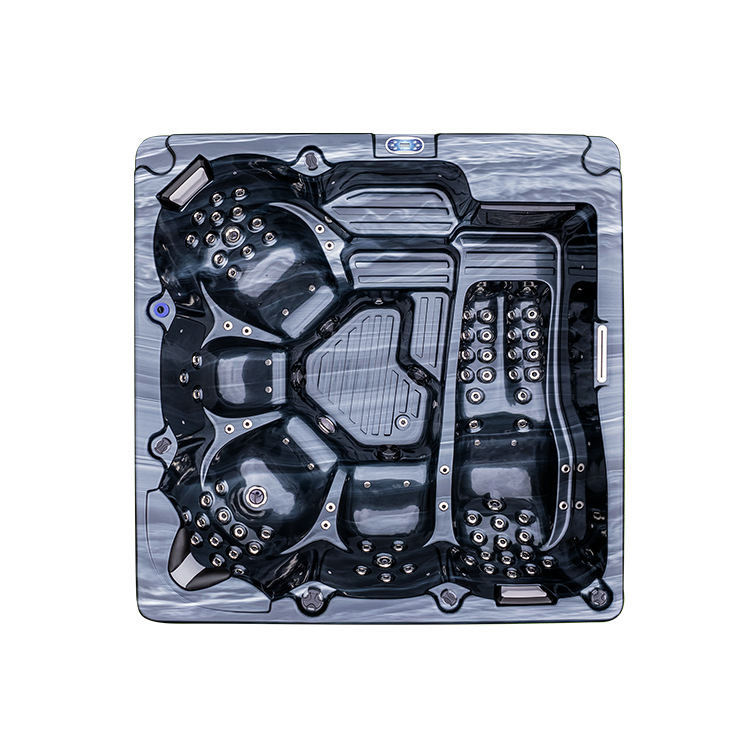
As people's quality of life continues to improve, outdoor whirlpool hot tubs have gradually moved from high-end resorts and hot spring clubs into more and more family courtyards, villas, guesthouses, and holiday camps. Compared to ordinary bathtubs, outdoor whirlpool hot tubs not only provide a constant-temperature bathing experience, but more importantly, through multiple massage jets, water pumps, water flow, and air mixing systems, they bring users a hydrotherapy massage effect close to that of a professional spa. Therefore, "how to adjust the massage intensity of an outdoor hot tub" has become one of the most important questions for many consumers during purchase and use.
However, in actual use, many users have found that although their purchased outdoor whirlpool hot tubs have dozens or even hundreds of massage jets, they experience problems such as insufficient massage intensity, some jets having no water flow, excessively strong massage causing physical discomfort, and significant differences in the massage experience between different seats. These problems are not all due to the product itself; in many cases, they are closely related to the design of the massage system, the adjustment method, and daily maintenance. Meanwhile, some manufacturers in the market, in order to attract consumers, tend to promote the idea that "the more nozzles, the better" and "the more massage functions, the more advanced," but rarely provide detailed information on the core factors affecting the massage effect, such as the circulation system, water pump performance, nozzle layout, air mixing ratio, and control system. For consumers, it is difficult to truly judge whether an outdoor whirlpool hot tub can provide a comfortable and stable massage experience based solely on specifications.
In fact, according to market research data from the international SPA industry, over 70% of household users purchase outdoor whirlpool hot tubs primarily for relieving physical fatigue, relaxing muscles, improving sleep, and family leisure and entertainment, with massage comfort being one of the important indicators affecting user satisfaction. This means that for most users, the massage experience is not "the stronger the better," but rather requires scientific adjustment based on different individuals, different body parts, and different usage scenarios. Only by truly understanding the working principles of the massage system and mastering the correct adjustment methods can the value of an outdoor whirlpool hot tub be fully realized.
For professional manufacturers, an excellent outdoor whirlpool hot tub not only needs a stable constant temperature system but also requires comprehensive optimization in hydraulic system design, nozzle layout, control logic, and ergonomics. For example, LOVIA® has long focused on the research and development and manufacturing of outdoor spa products. In the product design process, they pay more attention to the massage coverage, water flow balance, and nozzle combination design for different sitting postures, making the massage experience more natural and comfortable, rather than simply pursuing a high number of nozzles or a large number of parameters. This design philosophy, which focuses more on the actual user experience, is increasingly recognized by the global market.
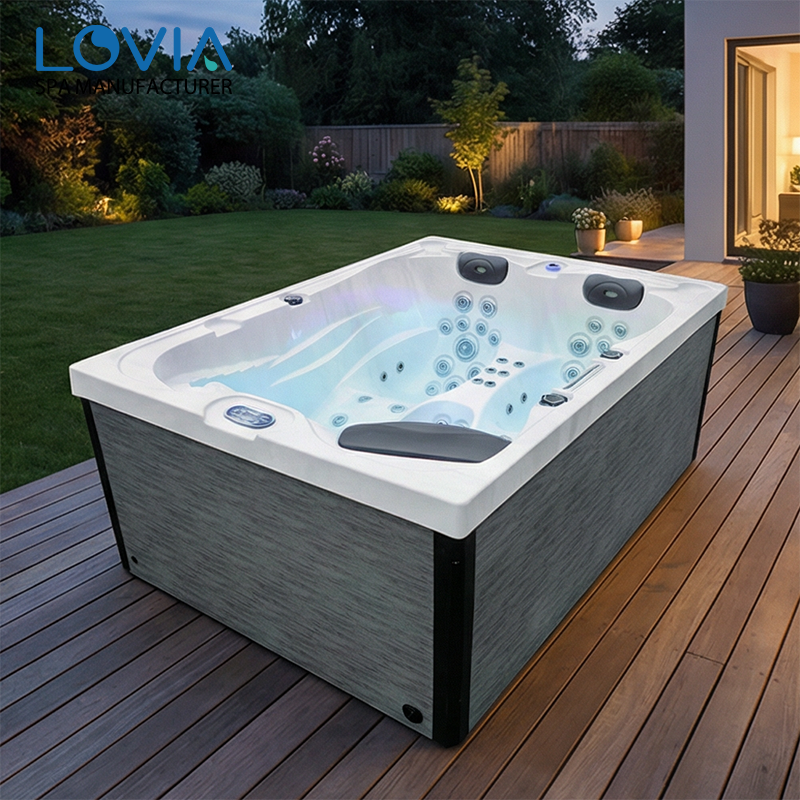
How exactly does an outdoor hot tub massage system work?
Many consumers believe that the massage function of an outdoor whirlpool hot tub is simply water spraying from nozzles, but the underlying spa system is far more complex than imagined.
A complete outdoor whirlpool hot tub massage system typically consists of a circulating water pump, a massage water pump, an air conditioning system, a control panel, a filtration system, a heating system, and massage nozzles of different sizes. When the user activates the massage mode, the high-powered massage water pump starts working, quickly delivering hot water from the tub to each set of nozzles. Simultaneously, air is mixed into the high-speed water flow through the air intake, forming pressurized bubble water that provides a continuous massage effect on different muscle groups.
The overall massage experience in an outdoor hot tub is influenced by several factors, including:
• Pump Flow Rate
• Pump Head Pressure
• Nozzle Orifice Size
• Number of Nozzles
• Nozzle Installation Angle
• Air Mixing Ratio
• Piping Design
• Number of Nozzles Operating Simultaneously
• User Posture
In other words, even if two outdoor spa hot tubs both have 60 massage nozzles, if one uses a dual-pump design while the other uses a single-pump system, the final massage intensity can differ significantly. Therefore, when evaluating the massage performance of an outdoor spa hot tub, one should not simply focus on the number of nozzles, but rather consider the overall configuration of the spa system.
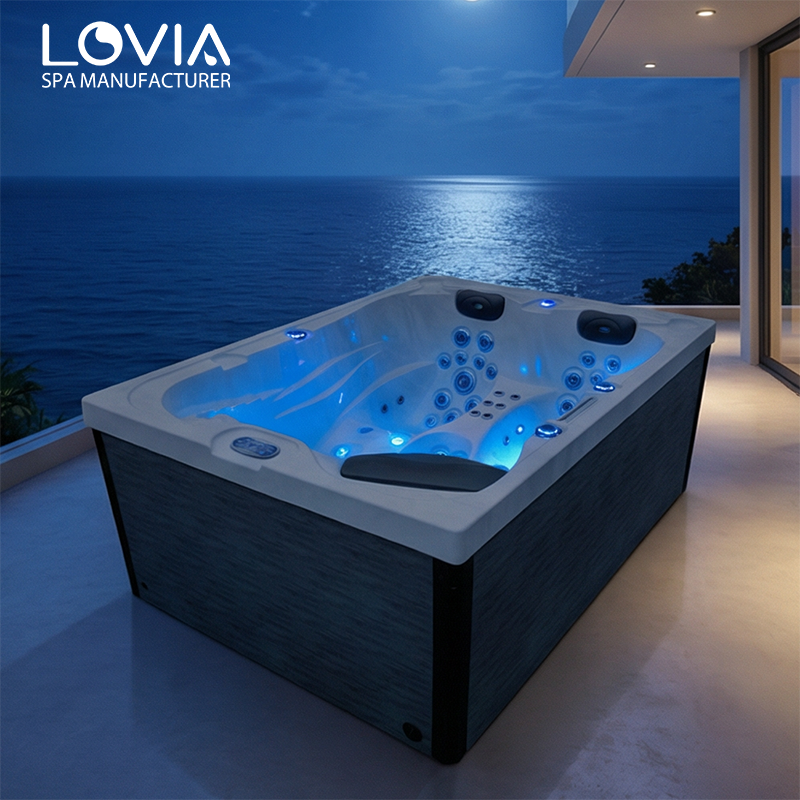
What factors determine the massage intensity of an outdoor hot tub?
Many users find that some seats offer a stronger massage than others when they first experience an outdoor spa hot tub. This is not a quality issue, but rather a result of differentiated design for different parts of the body.
First: The power of the massage pump determines the overall power
The massage pump can be understood as the "heart" of the entire outdoor whirlpool hot tub massage system.
Currently, most products on the market use massage pumps with 2HP, 3HP, or even higher power. Higher power doesn't necessarily mean a more comfortable massage, but rather that it can provide a more stable water flow pressure to more nozzles.
For example:
• Small double outdoor whirlpool hot tubs typically have one massage pump;
• Outdoor whirlpool hot tubs for five to six people typically have two massage pumps;
• Large spas for seven or more people may have three or more massage pumps.
If the massage pump's power is insufficient, but the number of nozzles is large, the water flow allocated to each nozzle will decrease, resulting in a weakened overall massage intensity. Therefore, professional manufacturers usually configure the pump appropriately based on the bathtub's capacity, rather than simply increasing the number of nozzles.
Second: Nozzle type affects the massage experience
Modern outdoor whirlpool hot tubs typically don't use a single nozzle size, but rather different sizes are used for different areas of the body.
For example: Large rotating nozzles are mainly used for the shoulders, neck, back, and waist, creating a strong rotating massage water flow; medium-sized nozzles are mainly for relaxing back and leg muscles; small nozzles are more often used for the arms, calves, and feet, providing a more delicate and gentle massage effect. Some high-end outdoor spa hot tubs also feature rotatable nozzles, allowing users to adjust the spray direction for more precise water targeting of the shoulders, lower back, or leg muscles, thus enhancing the overall spa experience.
Third: The Air Mixing System Determines Massage Comfort
Many people mistakenly believe that stronger massage pressure equates to greater comfort. However, the true determinant of comfort is the air-to-water mixing ratio.
When air enters the nozzle, it forms numerous tiny bubbles. This not only reduces the impact of the water flow but also makes the massage gentler and more natural. If the air control valve is closed, the nozzle sprays almost entirely water, significantly increasing the impact; opening the air valve increases the number of bubbles, resulting in a gentler massage.
Therefore, most outdoor whirlpool hot tubs are equipped with an Air Control knob, allowing users to adjust the air ratio according to their preferences, achieving different experiences from gentle relaxation to deep massage.
How to Correctly Adjust the Massage Intensity of an Outdoor Hot Tub?
Many consumers believe that massage intensity only has two states: "on" and "off." In reality, most mid-to-high-end outdoor whirlpool hot tubs support multiple adjustment modes.
Method 1: Adjusting the Nozzle Opening
Most massage nozzles now support rotary adjustment.
Rotating the nozzle clockwise reduces the water flow from that nozzle; rotating it counter-clockwise increases the water pressure. When some nozzles are closed, the remaining nozzles receive more water, resulting in a significantly stronger massage.
For example, when a user wants to focus on massaging the neck and shoulders, they can partially close the nozzles in the leg area, concentrating more water on the shoulders and back for deeper muscle relaxation.
Method 2: Adjusting the Air Control Valve
The air control knob is an important device affecting massage comfort.
Generally speaking:
• Lower air ratio: More concentrated water flow, stronger massage;
• Medium air ratio: More balanced massage;
• Higher air ratio: Gentler water flow, suitable for longer soaks.
For first-time users of outdoor spa hot tubs, it is recommended to start with a medium air ratio and gradually adjust according to individual comfort levels.
Method 3: Switching Between Massage Modes
More and more smart outdoor spa hot tubs now support multiple massage programs, such as standard mode, energy-saving mode, deep massage mode, and circulation massage mode. Different modes automatically adjust the massage pump's operation, water flow distribution, and nozzle combinations, allowing users to enjoy different spa experiences without complicated operations.
Some products with intelligent control systems also support preset massage programs, allowing different family members to save their own massage preferences and switch between them with a single click for a familiar spa experience.
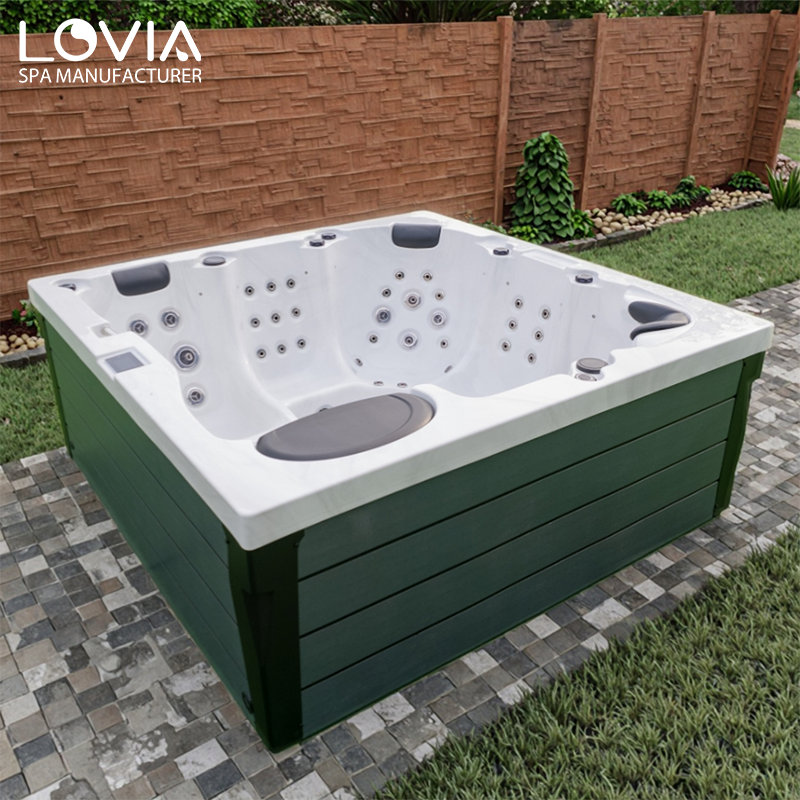
How should the massage intensity of an outdoor hot tub be adjusted for different body parts?
While outdoor whirlpool hot tubs offer full-body hydrotherapy massage, the thickness of muscles, nerve sensitivity, and blood circulation vary significantly across different parts of the body. Therefore, the massage intensity should also differ. Maintaining the same pressure across all nozzles not only fails to achieve the desired relaxation effect but may even lead to localized muscle tension or discomfort.
Neck and Shoulder Area: Primarily medium-to-high intensity massage to relieve fatigue
For those who spend long hours working, driving, or studying, the neck and shoulder area is often the most prone to muscle stiffness and soreness. Neck and shoulder massage nozzles in outdoor whirlpool hot tubs typically employ a rotating or pulsating design, providing deeper stimulation to the trapezius and levator scapulae muscles through continuously changing water flow.
It is recommended to adjust the massage intensity for the neck and shoulder area to 60% to 80% of the overall system's capacity, while appropriately increasing the air mixing ratio to ensure the water flow has a certain impact without causing muscle tension due to excessive pressure. Each shoulder and neck massage should be limited to 10-15 minutes, using constant-temperature hot water (around 38℃) to further promote local blood circulation.
Back and Lower Back: Adjust according to muscle condition
The back is the largest area covered by an outdoor whirlpool hot tub massage system and is also the area most consumers focus on. For those who exercise daily, lift heavy objects, or stand for long periods, the back muscles bear significant pressure; appropriately increasing the massage intensity can help relax deep muscle groups.
The lower back requires different treatment. For mild fatigue, a medium-to-strong massage mode can be chosen; for those with lumbar discomfort, chronic strain, or rehabilitation needs, the water pressure should be appropriately reduced to avoid continuous high pressure directly affecting the lumbar spine. If necessary, adjust the usage method according to the doctor's advice.
Leg Massage: Promoting circulation is more important than pursuing intensity
Many consumers easily overlook the importance of leg massage. In fact, the lower limbs bear most of the body's weight, especially after exercise, when lactic acid easily accumulates in the calf and thigh muscles. Leg massage jets in outdoor spa hot tubs are typically located under the seat and on the sides, using a continuous water flow to promote venous return and muscle relaxation.
It is recommended to use a medium intensity for leg massage; there's no need to go for high pressure. Combined with an appropriate soaking time, this helps relieve post-exercise fatigue.
Foot Massage: Appropriately Enhance Stimulation
The soles of the feet have a rich network of nerve endings, so many high-end outdoor whirlpool hot tubs are equipped with dedicated foot massage jets. Moderately increasing the intensity of the foot massage can enhance the overall relaxation experience and improve blood circulation in the feet.
If it's your first time using it, it's recommended to start with low to medium intensity and gradually increase the pressure as your body adapts to avoid discomfort from excessive stimulation.
What massage intensity is suitable for different groups of people in an outdoor hot tub?
There is no single standard for the massage experience in an outdoor whirlpool hot tub. People of different ages, lifestyles, and physical conditions have different needs for massage intensity.
For younger users, especially those who frequently exercise, run, cycle, or engage in outdoor sports, their muscle tissue is relatively well-developed, and their tolerance for massage pressure is higher. You can appropriately increase the massage pump output and select a stronger water flow mode to relieve muscle fatigue after exercise.
Office workers, due to prolonged sitting, are prone to chronic tension in their shoulders, neck, and lower back. A moderate-intensity, longer-duration massage is more suitable than a short burst of high-intensity impact.
For middle-aged and elderly users, a soothing massage is recommended. With age, muscle elasticity and joint flexibility decrease, and excessively strong water flow may increase the burden on the body. It is generally recommended to control the massage intensity at 40% to 60% of the total output, while maintaining the water temperature between 37℃ and 39℃, which will relax the body and enhance comfort.
For pregnant women, patients with cardiovascular disease, and those undergoing rehabilitation, consult a professional doctor before using an outdoor spa hot tub to reasonably arrange the bathing time and massage intensity according to individual physical conditions.
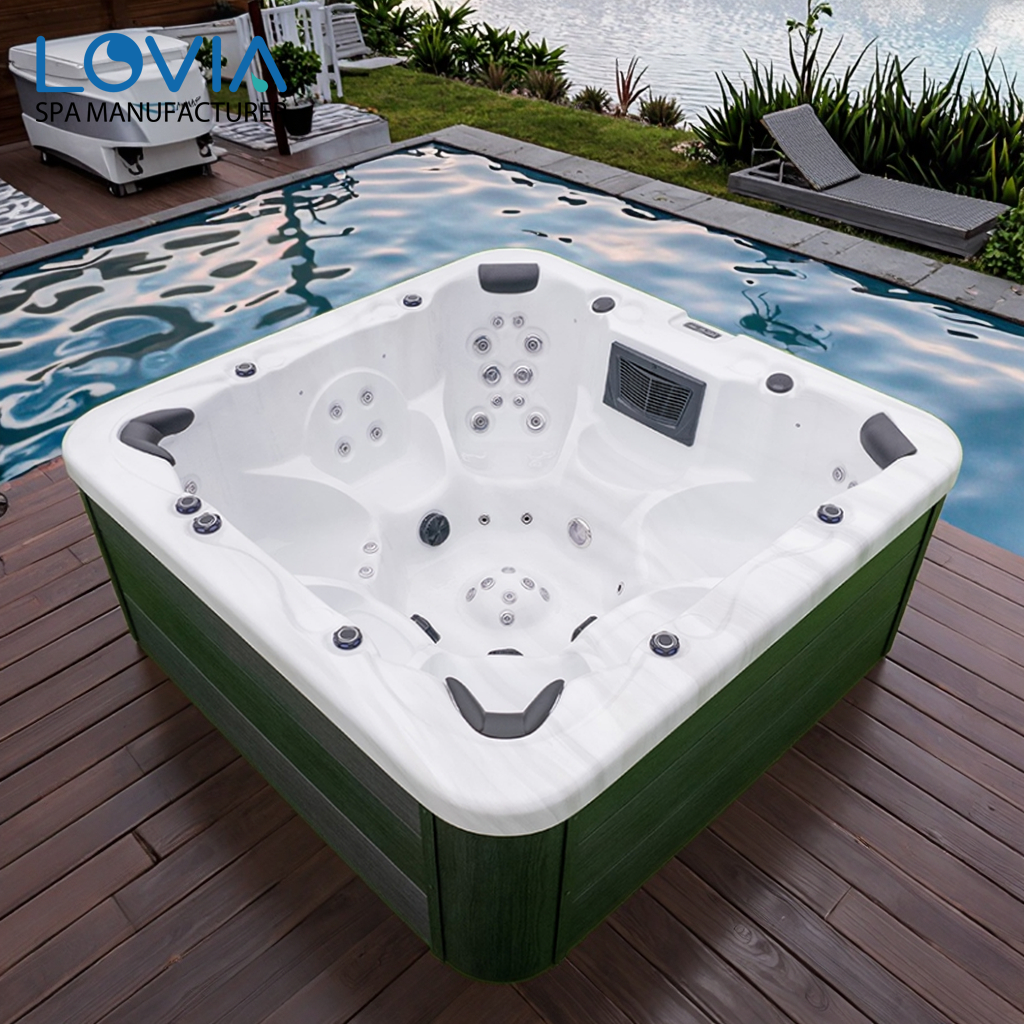
Why does the massage intensity of an outdoor hot tub sometimes weaken over time?
Many users find that the massage effect of a newly purchased outdoor spa hot tub is excellent, but after a period of use, the water flow from the nozzles seems less powerful than before. In fact, in most cases, it is not that the massage pump performance has deteriorated, but rather that inadequate maintenance has led to a decrease in system efficiency.
1. Clogged Filter
The filter is responsible for trapping hair, dust, leaves, and other impurities in the water. When the filter cartridge is not cleaned for a long time, circulation resistance increases, reducing the water flow into the massage system and naturally lowering nozzle pressure.
It is recommended to check the filter every two weeks, thoroughly clean it monthly, and replace the filter cartridge regularly according to actual usage frequency.
2. Scale Buildup in Pipes
Hard water areas are prone to calcium and magnesium deposits, which can accumulate and adhere to the inside of the nozzles and circulation pipes, affecting water flow speed. Regularly using a professional SPA pipe cleaner can effectively reduce scale and biofilm buildup, maintaining stable operation of the massage system.
3. Insufficient Water Level
Many users overlook the impact of water level on the massage effect. If the water level is lower than the suction port, the massage pump may draw in air, causing intermittent nozzle output or significantly reduced pressure. Therefore, ensure the water level is within the recommended range before each use.
4. Aging or Clogged Nozzles
Some nozzles are detachable; after prolonged use, they may become clogged with impurities, affecting the spray effect. It is recommended to disassemble and inspect the product regularly according to the product instructions, and clean any deposits inside the nozzles promptly to ensure consistent massage effects.
How to Choose an Outdoor Hot Tub with Excellent Massage Performance?
Faced with a wide variety of products on the market, simply focusing on the number of nozzles or the appearance design is no longer sufficient to meet consumer needs. Truly excellent outdoor spa hot tubs should prioritize a good match between the massage pump and the number of nozzles. The nozzle layout should also be ergonomic. The ease of use of the control system is equally important.
In terms of manufacturing processes, the international market increasingly emphasizes overall stability and long-term durability. Insulation performance, piping layout, leak-proof design, energy consumption control, and after-sales service systems all affect the long-term value of the product.
LOVIA® has long focused on the research and development and manufacturing of outdoor whirlpool hot tubs and spa products. During product development, we pay more attention to the synergistic design of the entire spa system, rather than just improving individual components. For example, by optimizing the nozzle layout, water flow path, and ergonomic seat design, we ensure a more balanced massage experience for all seats. Simultaneously, we continuously invest in material selection, insulation structure, intelligent control systems, and quality management to provide product solutions that meet the diverse needs of different markets worldwide.
FAQ: Frequently Asked Questions about Massage Intensity in Outdoor Hot tubs
FAQ 1: Is a stronger massage intensity always better in an outdoor whirlpool hot tub?
No. The massage intensity should be adjusted according to individual physical condition and intended use. For exercise recovery, the massage intensity can be appropriately increased; for daily relaxation or elderly users, a medium or gentle mode is recommended. Excessive water pressure may cause muscle tension or localized discomfort.
FAQ 2: Why do some massage nozzles feel like there's no water flow?
This is usually related to nozzle adjustment, water pump diversion, filter blockage, low water level, or pipe maintenance. It is recommended to first check if the nozzles are fully open, and also confirm that the filtration and circulation systems are working properly.
FAQ 3: Can the massage function be used every day in an outdoor whirlpool hot tub?
Generally, yes, but it is recommended to limit each massage to about 15 to 20 minutes, adjusting the frequency according to physical condition. If using continuously for a long time, drink plenty of water to avoid dehydration.
FAQ 4: How should the air conditioning valve be set during a massage?
There is no fixed standard for the air conditioning valve. Users who prefer a deep massage can reduce the air ratio to concentrate the water flow; those seeking a gentle spa experience can increase the air mixing ratio for a more comfortable and natural massage.
FAQ 5: How often should the filter of an outdoor whirlpool hot tub be cleaned?
For home users, it is generally recommended to check the filter every two weeks, perform a deep clean monthly, and replace the filter cartridge regularly based on usage frequency. Keeping the filtration system clean effectively maintains massage intensity and water quality stability.
FAQ 6: Is an outdoor whirlpool hot tub suitable for multiple family members?
Absolutely. Most medium to large outdoor whirlpool hot tubs support 4 to 7 people simultaneously and can be equipped with different types of massage nozzles depending on the seating. By adjusting the nozzles, water flow, and air ratio, different family members can find a massage mode that suits them best.
