

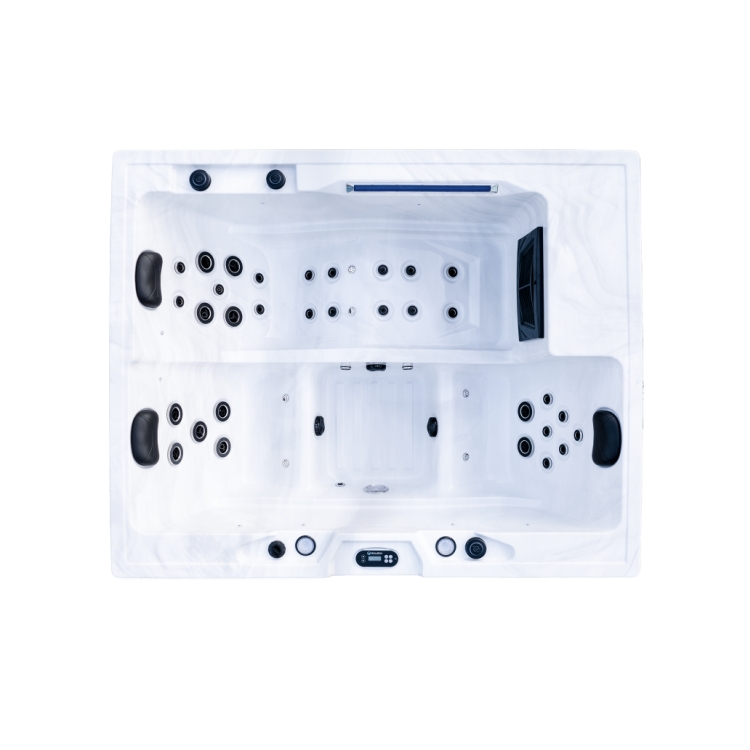
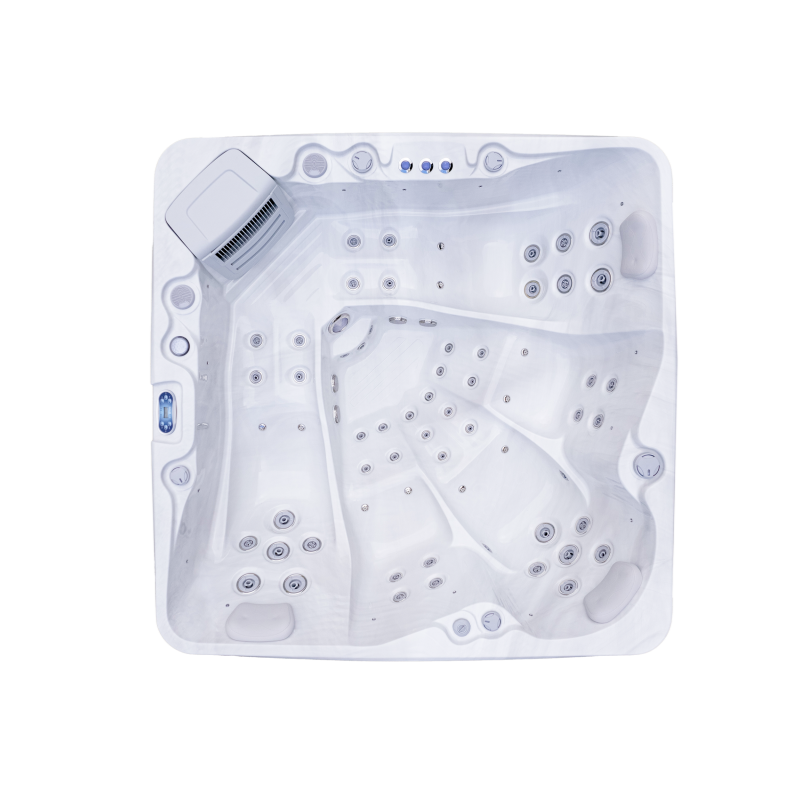
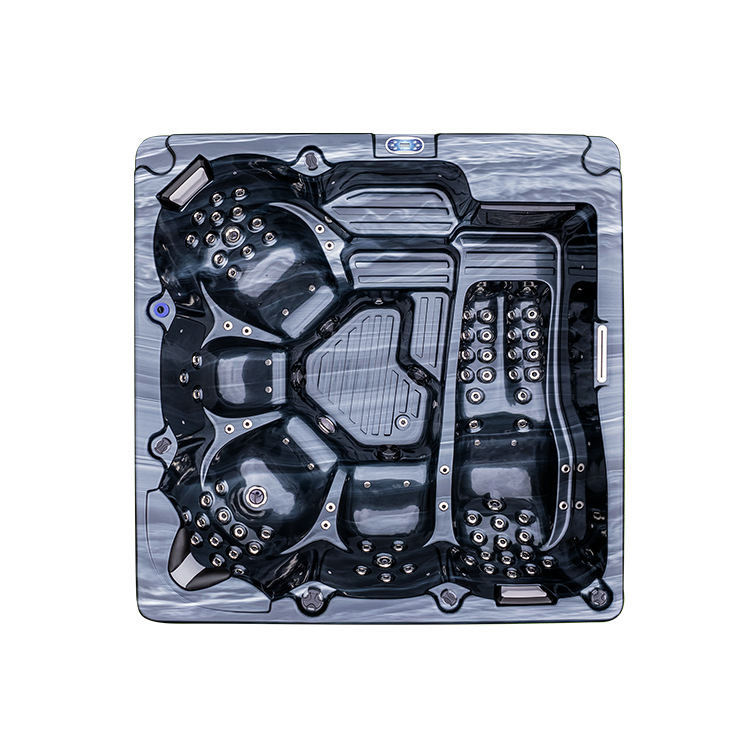
What should I consider when connecting water and electricity to an outdoor whirlpool hot tub? A guide to installation essentials
With the continuous growth of the "backyard economy," home wellness trends, and high-end outdoor lifestyles, outdoor whirlpool hot tubs are becoming a key feature for an increasing number of households, resorts, boutique guesthouses, and luxury residential projects. For consumers, purchasing an outdoor whirlpool hot tub often signifies acquiring a private spa space where they can relax, relieve stress, and foster family interaction. However, many users discover—only when installation actually begins—that a frequently overlooked issue quietly impacts their long-term user experience: the connection of water and electricity.
In fact, across the jacuzzi outdoor spa tub industry, installation-related issues are far more common than many realize. During the purchasing phase, consumers often spend considerable time researching jet counts, massage functions, acrylic materials, insulation systems, and control panels, yet pay little attention to power supply requirements, plumbing layouts, or installation standards. To lower the barrier to entry, some low-cost suppliers often downplay the complexity of installation, creating the impression that the unit is "ready to use" simply by plugging it in and filling it with water.
In reality, a modern outdoor whirlpool hot tub is a sophisticated, integrated system combining heating, circulation, massage, filtration, ozone purification, and smart control systems; its installation requirements far exceed those of standard household appliances.
After-sales data from the European and American spa industries indicates that more than half of early-stage malfunctions stem not from manufacturing defects, but from improper installation. Common issues include control system damage due to incorrect voltage configuration, frequent circuit breaker tripping caused by undersized cables, unstable operation resulting from inadequate grounding, and airlocks in the circulation system caused by incorrect initial filling procedures. These problems not only disrupt normal use but can also increase long-term maintenance costs and even shorten the equipment's lifespan.
For professional manufacturers, producing a high-quality jacuzzi outdoor spa tub is only half the battle; ensuring long-term, stable operation at the user's site is equally critical. In recent years, many professional spa manufacturers—including LOVIA®—have placed increasing emphasis on establishing robust installation guidance systems. The industry has come to recognize that customer satisfaction is determined not merely by the product itself, but by the entire experience, spanning everything from delivery and installation to ongoing use. So, for users preparing to install an outdoor hot tub, what key factors must be considered regarding water and electrical connections? This article provides a comprehensive analysis from a professional perspective.
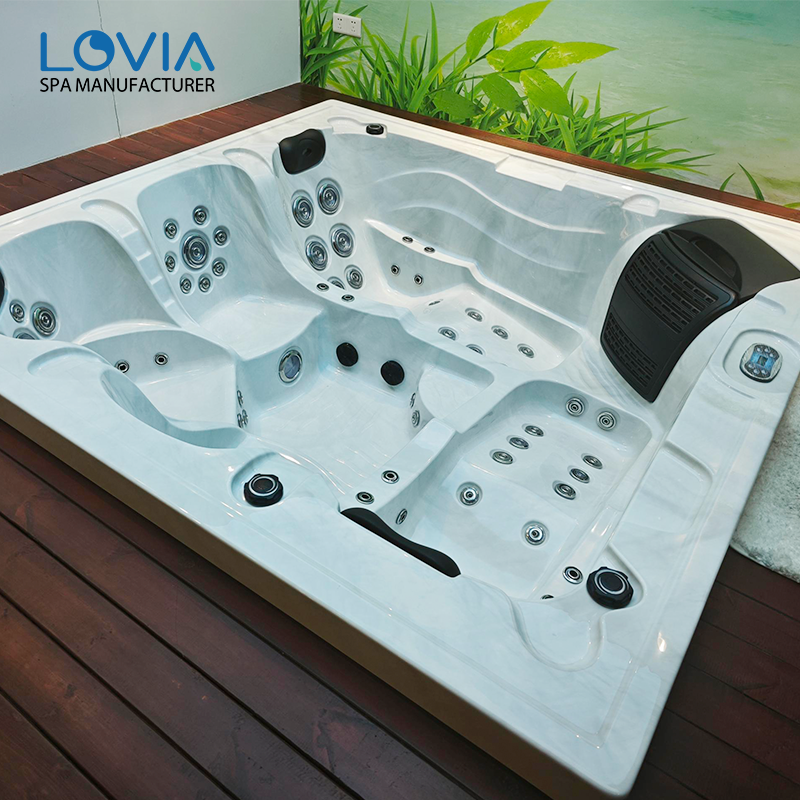
Why are water and electrical connections for outdoor hot tubs more critical than one might imagine?
When encountering an outdoor hot tub for the first time, many users instinctively view it simply as a large bathtub. In reality, however, a modern jacuzzi outdoor spa tub is more akin to a compact spa system. Take a standard 5-to-6-person outdoor whirlpool hot tub, for example: it typically houses a heater, circulation pump, massage pumps, control system, water treatment system, temperature sensors, and multiple jet assemblies. All these components must operate in unison within a high-temperature, high-humidity environment, placing significant demands on the water supply and electrical infrastructure.
In terms of the product lifecycle, most high-quality outdoor whirlpool hot tubs are designed to last over a decade. Throughout this long period of use, any detail overlooked during installation can become a magnified issue. A poorly designed electrical system could force the heater and massage pumps to operate sub-optimally for years; inadequate water supply planning could make routine water changes a major hassle; and a flawed drainage system could have long-term negative impacts on the surrounding garden or patio. Therefore, setting up water and electrical connections is not merely a preliminary step before operation—it is a crucial foundation that determines the quality of the user experience for years to come.
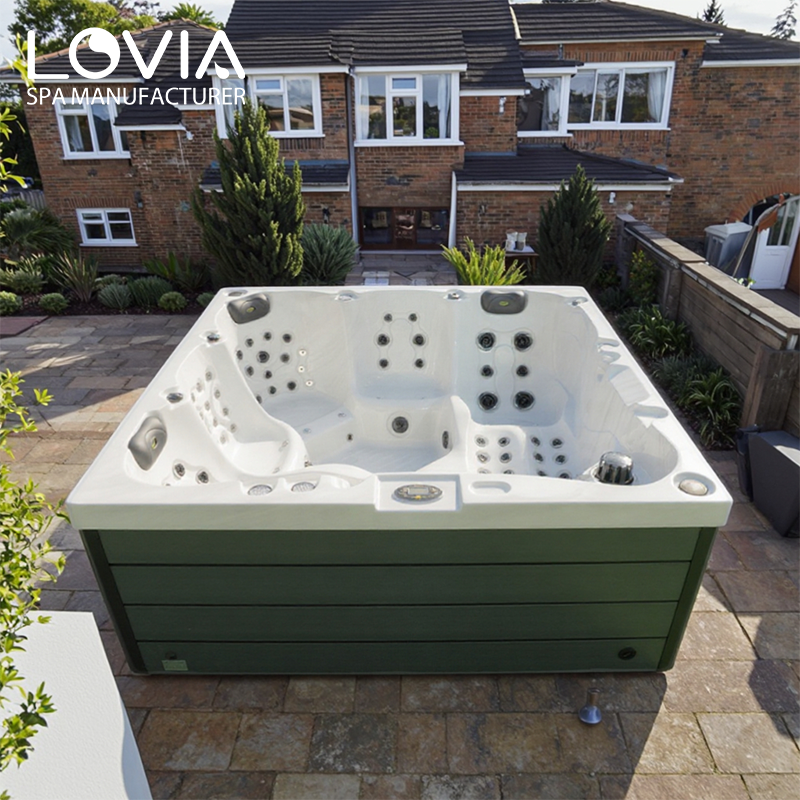
What should be considered when connecting the water supply to an outdoor hot tub?
For a jacuzzi outdoor spa tub, water is not just the medium of use; it is the core element of the entire system's operation. Heating, massage functions, and filtration all rely on a stable water source that meets specific requirements. Consequently, users should plan the water supply arrangements well before the unit arrives on-site.
The first consideration is the convenience of filling the tub. A standard residential jacuzzi outdoor spa tub typically holds between 1,000 and 2,500 liters of water, with some large luxury models exceeding 3,000 liters. Based on a standard household tap flow rate of approximately 15 to 20 liters per minute, filling a 2,000-liter hot tub could take nearly two hours. Thus, the distance between the installation site and the water source directly impacts the convenience of future maintenance. Many experienced users install a dedicated water inlet during the setup phase; this not only facilitates the initial fill but also saves significant time during subsequent refilling and maintenance. If the outdoor whirlpool hot tub is located far from the water source, it is advisable to use a high-quality, food-grade hose to prevent standard hoses from leaching impurities into the water after prolonged exposure to the elements.
Beyond the convenience of the water supply, the method used for the initial fill is also crucial. Many users habitually fill their outdoor whirlpool hot tubs by pouring a large volume of water directly into the top of the tub, but this practice can sometimes cause an "air lock" within the circulation system. An air lock occurs when air becomes trapped in the circulation piping or pump, preventing the water from circulating properly. Once an air lock forms, even if the equipment starts up, issues such as heater failure, insufficient circulation flow, or system error alarms may arise.
Therefore, industry experts generally recommend filling the system through the filter compartment during the initial fill. This allows the circulation system and piping to fill with water first, minimizing trapped air and increasing the likelihood of a successful startup.
Water quality management is also essential
Many consumers assume that tap water is suitable for outdoor whirlpool hot tubs without further treatment. In reality, however, water quality varies significantly by region, and these differences directly impact equipment longevity and long-term maintenance costs.
One of the most common issues is hard water. Hard water contains high concentrations of calcium and magnesium ions; as the water temperature rises, these minerals tend to form scale deposits that adhere to the heater, jets, and inner pipe walls. Studies show that a scale buildup of just 1 millimeter on the heater surface can reduce heat exchange efficiency by over 10% and increase energy consumption. Consequently, if using an outdoor whirlpool hot tub in an area with hard water, it is recommended to install a water softening system or regularly treat the water to manage mineral levels.
pH balance is equally critical. Ideally, the pH level of an outdoor whirlpool hot tub should be maintained between 7.2 and 7.8. If the pH is too high, sanitization effectiveness decreases and scale formation accelerates; if the pH is too low, metal components and sealing materials may corrode. Therefore, regularly testing and adjusting water quality—both after the initial fill and during ongoing use—is crucial for maintaining the long-term, stable operation of an outdoor hot tub.
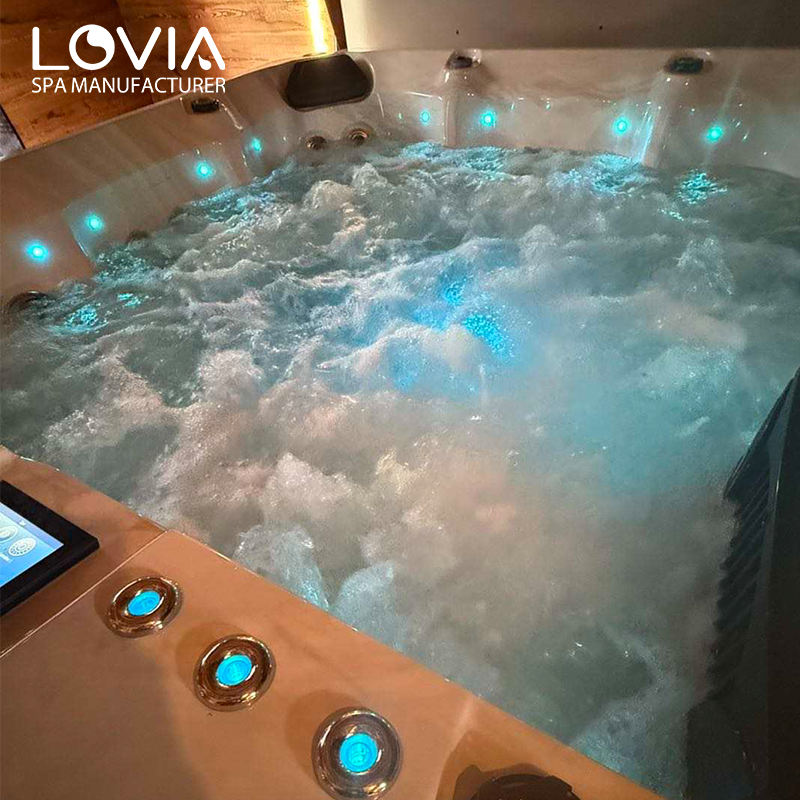
What should be considered when connecting a jacuzzi outdoor spa tub to the power supply?
While water supply affects the user experience, the power supply directly impacts equipment safety and system stability. Across the jacuzzi outdoor spa tub industry, the majority of serious malfunctions stem from improper electrical installation. Consequently, all electrical connections must be performed by qualified professional electricians in compliance with local regulations.
First, it is essential to verify that the equipment's required voltage matches local grid conditions. Voltage standards vary across global markets; for instance, North America typically uses 220V–240V systems, whereas European and Australian markets generally utilize 230V–240V standards. Before purchasing a jacuzzi outdoor spa tub, users must confirm that the equipment's design specifications align with the actual power supply environment; a mismatch could damage the control system, the heater, or even the entire electrical system.
In addition to voltage compatibility, selecting the correct cable specifications is equally important. A standard jacuzzi outdoor spa tub typically has a total power output ranging from 4kW to 12kW, with the heater usually being the component that consumes the most power. If the cable gauge is inadequate for the length of the wiring run, issues such as voltage drop, overheating, and frequent circuit breaker tripping are likely to occur. Therefore, the cable's cross-sectional area must be calculated based on the equipment's power rating and the actual wiring distance, rather than simply relying on standards used for ordinary household appliances.
Earth-leakage protection and grounding systems are central to safety
As outdoor whirlpool hot tubs involve the combination of water and electricity, earth-leakage protection systems are far more critical than those found in standard electrical appliances. Major international markets generally require the installation of a dedicated earth-leakage protection device (such as an RCD or GFCI); these devices rapidly cut off the power supply when abnormal current is detected, thereby reducing the risk of electric shock.
At the same time, the grounding system cannot be overlooked. Many users mistakenly believe that installing an earth-leakage protection device guarantees total safety, but the grounding system is actually a vital component of the overall safety framework. Proper grounding not only dissipates abnormal currents but also enhances operational stability and minimizes the impact of electromagnetic interference on the control system. High-end outdoor whirlpool hot tubs equipped with smart control platforms—such as those from Balboa—often have particularly stringent requirements regarding grounding quality.
Electrical Protection Measures for Outdoor Environments
Since jacuzzi outdoor spa tubs are constantly exposed to rain, moisture, UV radiation, and temperature fluctuations, all electrical connections require robust protection. Professional installations typically employ waterproof junction boxes, outdoor-rated cabling, and protective conduit systems to ensure long-term operational stability and reliability.
Real-world cases show that many early-stage malfunctions stem not from the equipment itself, but from the deterioration of wiring exposed to the elements over time. Therefore, proper electrical protection is not merely a safety requirement but a crucial measure for extending the lifespan of the hot tub.
Why are professional outdoor hot tub brands placing increasing emphasis on installation guidance systems?
As competition in the global spa market intensifies, manufacturers increasingly realize that simply supplying a well-equipped hot tub is no longer sufficient to meet user needs. Modern consumers prioritize the long-term user experience, and installation quality is a pivotal factor in that experience.
Consequently, professional manufacturers—including LOVIA®—are continuously refining their installation support systems. By providing detailed advice on foundation construction, electrical configuration, plumbing layouts, and technical support, they help customers preempt potential issues before the equipment is put into operation. This approach not only enhances equipment stability but also significantly reduces long-term after-sales service costs.
Industry trends indicate that future competition in the outdoor whirlpool hot tub market will shift from the product itself toward comprehensive solutions that integrate "product, installation, and service." For consumers, choosing a brand that offers thorough installation guidance often provides greater value than simply seeking the lowest price.
FAQ
Can I fill the jacuzzi outdoor spa tub directly with standard tap water?
In most cases, yes; however, it is recommended to test parameters such as pH, total alkalinity, and hardness after the initial fill to ensure the water quality meets the equipment's operational requirements.
How long does it take to fill the jacuzzi outdoor spa tub for the first time?
The time required depends on the tub's capacity and the water supply flow rate. Typically, filling an outdoor whirlpool hot tub with a capacity of 1,000 to 2,000 liters takes approximately 1 to 2 hours.
Is a residual current device (RCD) or ground-fault circuit interrupter (GFCI) required for a jacuzzi outdoor spa tub?
Yes, it is mandatory. These devices are essential safety features widely adopted in international markets and are a necessary component for outdoor whirlpool hot tubs.
Does an outdoor hot tub require a dedicated electrical circuit?
For the vast majority of medium-to-large outdoor whirlpool hot tubs, a dedicated power circuit is recommended to ensure stable operation and prevent interference from other appliances.
Does hard water affect jacuzzi outdoor spa tubs?
Yes. Prolonged use of hard water can lead to scale buildup in the heater and piping, reducing equipment efficiency and increasing maintenance costs; therefore, water softening measures are recommended.
Can users install the electrical connection for an outdoor whirlpool hot tub themselves?
This is not recommended. As the process involves high-power equipment and an environment combining water and electricity, all electrical installation work should be performed by a licensed professional electrician in compliance with local regulations.
