

Many users have the same question after owning a whirlpool hot tub: "Can I turn it off when I'm not using it?"
This question seems simple, but it actually involves multiple technical aspects such as energy management, water quality maintenance, and equipment protection. The choice between turning it off or keeping it running directly affects the whirlpool hot tub's lifespan, maintenance costs, and safety performance.
This article will delve into the issue from the perspectives of heating system characteristics, water circulation principles, energy consumption calculations, and the distinction between off-peak periods, helping you scientifically determine whether or not you should turn off the whirlpool hot tub when not in use.
The Working Principle of a Whirlpool Hot Tub: Understanding the True Meaning of "Turning Off"
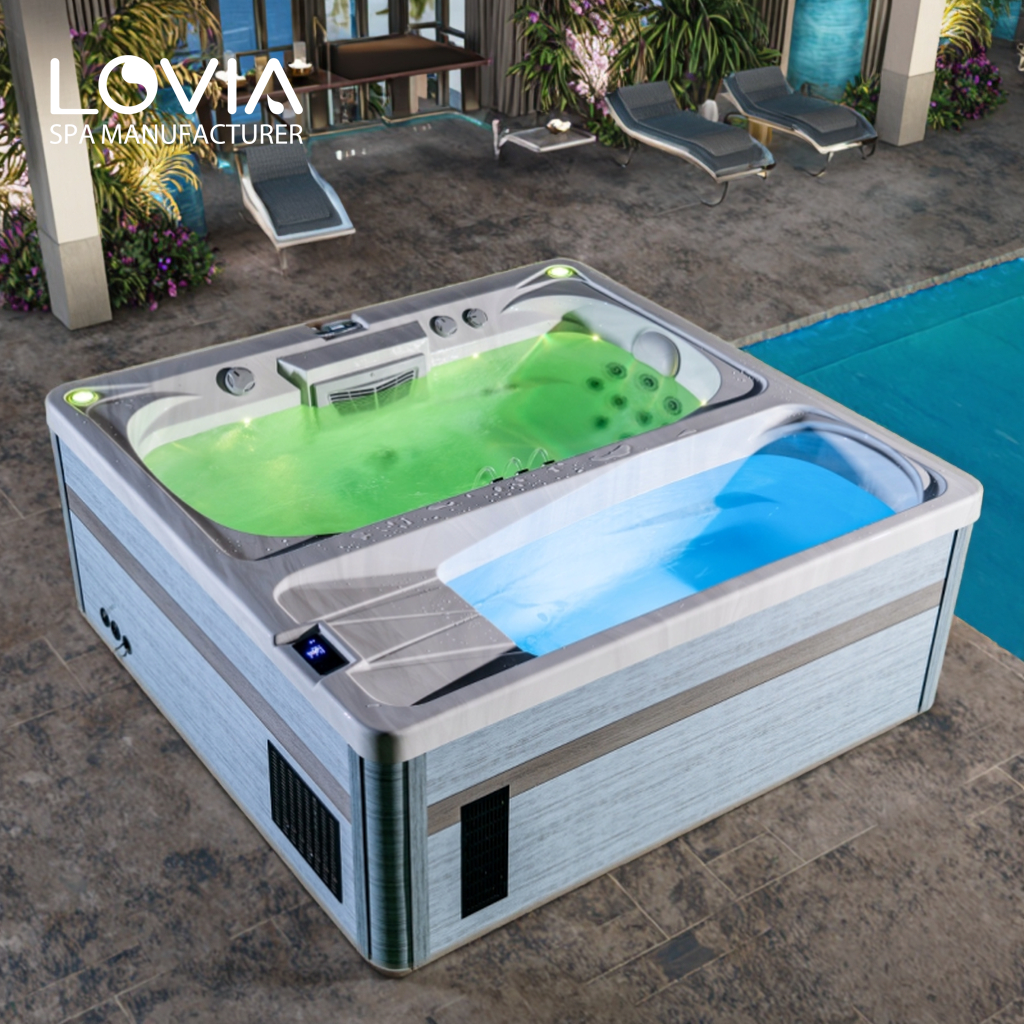
To answer this question correctly, we must first understand the core systems of a whirlpool hot tub during operation. Typically, a modern whirlpool hot tub includes the following four main functional modules:
• Circulation System: Responsible for water circulation and filtration, preventing water stagnation.
• Heating System: Maintains a constant water temperature, typically set between 34–40℃.
• Jet System: Driven by a high-pressure water pump, generates massage bubbles.
• Control & Insulation System: Includes temperature control, timer, insulation cover, and pipe insulation material.
When a user says "turn off the whirlpool hot tub," it may actually involve different actions:
• Turning off the jet function (Jets Off)
• Turning off the heating system (Heater Off)
• Turning off the circulation pump (Circulation Pump Off)
• Completely cutting off power (Power Off)
The impact of each "shutdown" action varies greatly. To decide whether to shut it down, it is necessary to understand the chain reaction of each system after it stops operating.
Why should the whirlpool hot tub remain partially operational when not in use?
1. To prevent water stagnation and bacterial growth
The whirlpool hot tub has a complex internal structure with nozzles, pipes, pumps, and many dead zones. 1. If the circulation system is completely shut off for an extended period, stagnant warm water becomes an ideal environment for bacteria and algae to multiply.
Legionella, in particular, thrives in environments of 35–45°C, posing a threat to human health.
2. Maintain the proper functioning of the filtration system
The filter relies on circulating water to capture impurities and particles. If the circulation system is shut off, the filtration system fails, and residual organic matter causes rapid deterioration of water quality, resulting in unpleasant odors or a slimy residue.
3. Maintain a constant temperature and avoid repeated heating that wastes energy
Many people believe that turning off the heating system saves electricity, but in reality, frequent heating consumes more energy.
For example, heating from room temperature (20°C) to the operating temperature (38°C) consumes approximately the same amount of energy as maintaining the temperature for two days.
Therefore, for short-term periods of non-use, keeping the whirlpool hot tub at a low, constant temperature is more energy-efficient.
4. Protect the circulation pump and heater
Both the pump and heater of the whirlpool hot tub rely on water flow for cooling and lubrication. Prolonged power outages, internal dryness, or residual water buildup can easily lead to aging of the seals, rusting of the pump body, or scaling of the heating element.
Can the power be completely turned off when the whirlpool hot tub is not in use?
The answer depends on the length of the downtime.
1. Can it be turned off if it's only going to be unused for a few days?
Complete shutdown is not recommended.
For short-term shutdowns (e.g., 2–7 days), the whirlpool hot tub should still maintain the following minimum operating conditions:
• The circulation pump should run periodically (1–2 times per day, 15–30 minutes each time)
• The heating system should be kept at a low temperature (around 30°C)
• The insulation cover should be properly sealed to prevent heat loss and dust ingress.
This setup maintains water activity, prevents bacterial growth, and reduces energy consumption for reheating.
2. Can it be turned off if it's planned to be unused for 1–4 weeks?
Partial shutdown is possible, but protective measures must be taken.
In this situation, users can:
• Turn off the heating system to maintain room temperature.
• Continue to run the circulating filter once a day.
• Add an appropriate amount of chlorine or bromine for continuous disinfection.
• Use the bathtub lid to prevent evaporation and contamination.
This saves electricity and maintains relatively stable water quality.
Completely shutting off the power is still not recommended, as stopping the circulating system increases the risk of scale buildup and biofilm formation in the pipes.
3. If I plan to not use it for an extended period (more than 1 month), can I completely shut it off?
It can be shut off, but a "pre-disuse cleaning procedure" must be performed.
The correct steps are as follows:
• Completely drain the water: Open the drain valve to drain any remaining water from the pipes and pump.
• Dry the nozzles and pipes: Use an air pump or low-pressure blower to remove moisture and prevent mold growth.
• Clean and disinfect: Clean the bathtub surface and nozzles with a non-foaming cleaner.
• Store dry: Leave the lid open to ventilate for 2–3 hours before closing it to prevent moisture buildup.
• Disconnect Power: Ensure the control system and heating elements are completely powered off.
It is only safe to shut down the whirlpool hot tub after completing the above steps.
Potential Risks of Shutting Down the Whirlpool Hot Tub
If the user shuts down the system directly without draining or disinfecting, the following problems may occur:
• Water Quality Deterioration: Stagnant warm water can breed algae and bacteria within a few days.
• Odor and Slippery Substance Formation: Organic residues decompose in warm environments, producing slimy substances and odors.
• Equipment Corrosion: Pipes, heating elements, and metal parts are prone to oxidation when there is no water flow.
• Electrical Damage: If moisture remains inside the electrical control box, it may cause short circuits or sensor malfunctions.
• Difficulty Reactivating: After refilling with water, scale and biofilm may cause nozzle blockage or reduced circulation efficiency.
Therefore, whether for energy saving or safety reasons, a complete draining and cleaning process must be performed before shutting down.
Whirlpool Hot Tub Energy Consumption Analysis – Does Shutting Down Really Save More Electricity?
Many users hope to save on electricity bills by turning off their heating systems, but the opposite is often true. Let's analyze this scientifically from an energy consumption perspective.
1. Continuous Constant Temperature vs. Frequent Heating
Take a standard 1500-liter Whirlpool hot tub as an example:
• Power required to maintain a constant temperature of 38°C: Approximately 1.5–2.5 kWh/day
• Heating from room temperature (20°C) to 38°C: Approximately 6–8 kWh
If you frequently turn the heating system on and off, each time you restart, it consumes more energy.
From the energy consumption curve, constant temperature operation is actually more economical.
2. Insulation Performance Has a Significant Impact
If the bathtub lid is well-sealed and the pipes are properly insulated, energy consumption in standby mode is extremely low.
However, if it is turned on again after being turned off for a long time, moisture in the air condenses and water temperature is lost, significantly increasing the cost of heating up.
3. Low Power Consumption of the Circulation System
A small circulation pump running for one hour daily consumes approximately 0.1–0.3 kWh of electricity, equivalent to a few cents in electricity bills, while maintaining water quality and unobstructed pipes.
Conclusion: Short-term shutdown does not save energy; continuous low-temperature operation is more efficient.
How to scientifically set the "standby mode" to make the whirlpool hot tub more energy-efficient?
Instead of completely shutting it off, use the "smart standby mode."
Operational suggestions are as follows:
1. Set the temperature to 30–32℃
Below the operating temperature but sufficient to prevent bacterial growth.
2. Adjust the circulation timer
Run it automatically 1–2 times daily, for 15–30 minutes each time.
3. Keep the lid sealed
Prevent heat loss and dust entry.
4. Regularly check pH and residual chlorine
Check at least once a week to maintain chemical balance.
5. Use the Energy-Saving Mode Controller (if supported)
Some whirlpool hot tubs have an Eco or Sleep mode that automatically reduces heating and pump power.
This achieves an optimal balance between energy saving and water quality maintenance, even with infrequent use.
Will prolonged shutdown of the whirlpool hot tub damage the system?
It won't cause immediate damage, but prolonged power and water outages can lead to cracked seals, rusted pump shafts, and moisture in the control box. Therefore, if the tub is not used for more than a month, it is recommended to refill it with water every two months for testing.
What happens if I forget to drain the water completely after shutting it off?
Residual water in the pipes can breed mold and bacteria. Thorough cleaning and disinfection are necessary before reuse. It is recommended to flush with a professional pipe cleaner before refilling.
Can I turn off only the heater while keeping the circulation system running?
Yes. This is the most common energy-saving practice.
Keeping the circulation and filtration systems running while turning off the heating system significantly reduces energy consumption and prevents bacterial growth.
Will shutting it off freeze the equipment if the outside temperature is low?
Yes. If water remains in the pipes of a whirlpool hot tub, it may freeze and expand in environments below 0°C, potentially causing the pipes to burst.
Therefore, in cold regions, never shut down the system without completely draining it.
How to determine if a complete shutdown is necessary?
The criteria are as follows:
Usage intervals | Do you recommend turning it off? | Maintenance Measures |
| 1–7 days | Don't turn it off | Maintain constant temperature circulation |
| 1–4 weeks | Partially turn it off | Turn off heating, keep circulation running |
| Over 1 month | Can be turned off | Drain, clean, and disconnect power |
How Long Is the Delivery Time for LOVIA SPA Orders?
The standard delivery time for LOVIA SPA products is within 30 days after receiving the deposit. With a large-scale factory and an experienced production team, we are able to maintain efficient manufacturing schedules and stable supply capacity. Buyers benefit from predictable lead times, which is especially important for project-based purchasing and wholesale distribution.
All shipments are arranged from Huangpu Port, China, allowing smooth export logistics for international customers seeking reliable supplier performance and on-time delivery.
