

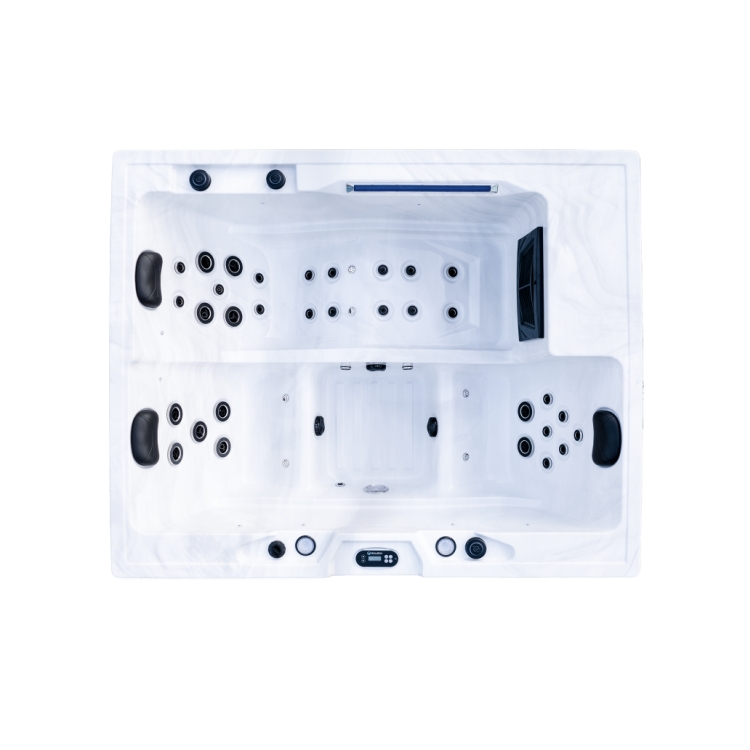
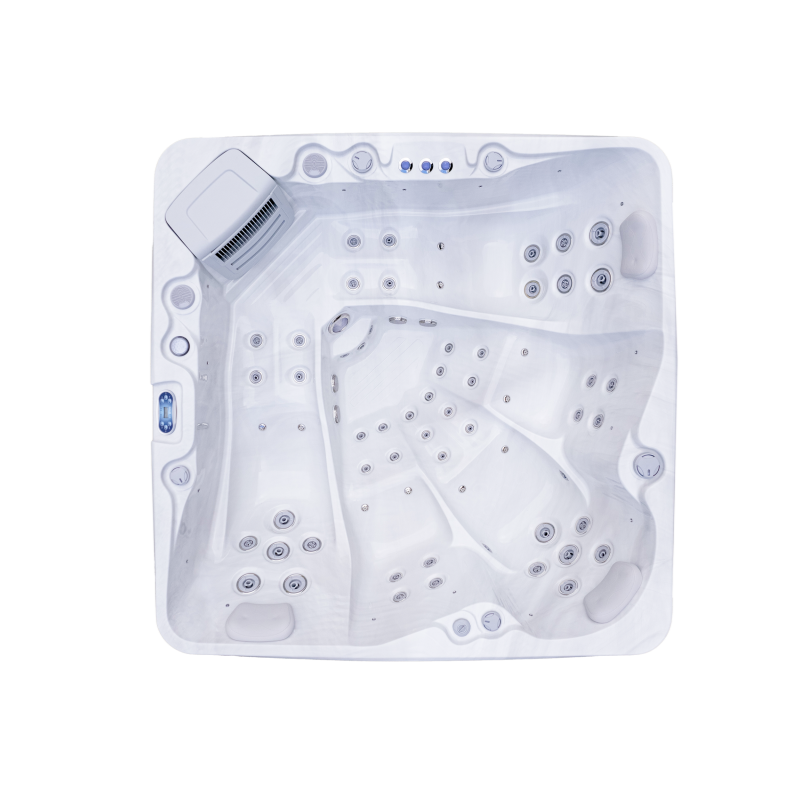
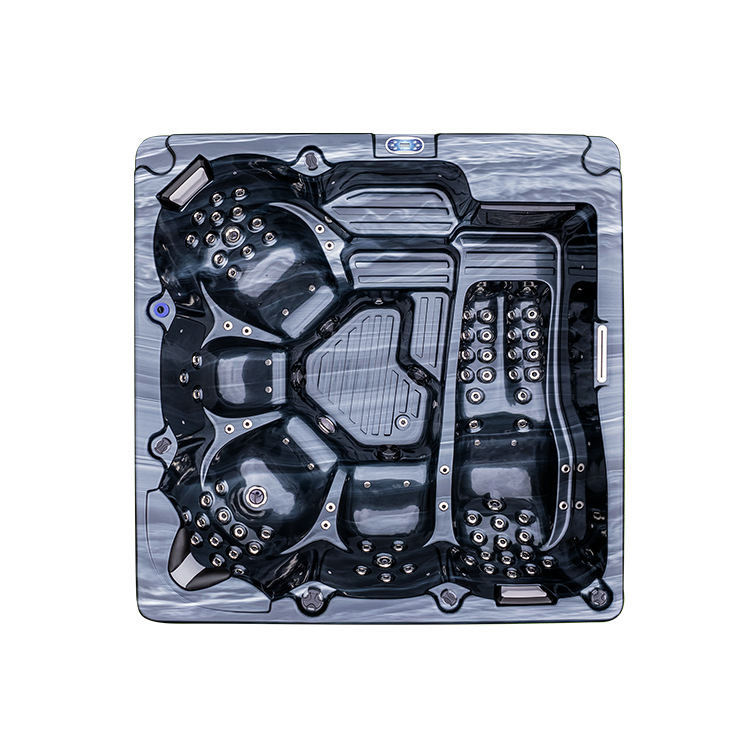
Can a 110V Power Supply Power an Outdoor Hot Tub? A Guide to Purchasing 110V Plug & Play Outdoor Hot Tubs
In recent years, with the rapid development of backyard economy, family wellness, and outdoor lifestyles, plug & play outdoor hot tubs are rapidly gaining popularity in North America, Europe, and some emerging markets. Compared to traditional outdoor hot tubs that require professional wiring and independent circuit breakers, 110V plug & play outdoor hot tubs, with their advantages of simple installation, ease of use, and lower initial investment, are gradually becoming the preferred product for more and more families, small and medium-sized guesthouses, and vacation properties.
However, in the actual purchasing process, many consumers raise similar questions: "Can a 110V power supply really power an outdoor hot tub?" "Is the power of a 110V plug & play outdoor hot tub too low?" "How should I choose between 110V and 220V?"
In fact, these are among the most frequently asked questions in the entire SPA industry. Many consumers, influenced by marketing claims, believe that any product that can be plugged into a standard outlet must have inadequate performance. Some manufacturers, prioritizing sales convenience, overemphasize "plug and play" functionality while rarely explaining the working principles, applicable scenarios, and performance limitations of 110V systems. This leads to discrepancies between the actual user experience and expectations after purchase.
Truly professional manufacturers don't simply tell consumers "110V is more convenient" or "220V is more professional." Instead, they recommend more suitable solutions based on the usage environment, household power conditions, number of users, national power grid standards, and daily usage habits. For many families, an outdoor 110V plug-and-play hot tub can indeed meet daily spa needs; however, for high-frequency commercial use or large spa products in cold regions, a 220V system may be more advantageous.
In recent years, professional outdoor hot tub manufacturers, including LOVIA®, have increasingly focused on developing multi-voltage products, launching various outdoor 110V plug-and-play hot tub solutions for North America, Canada, and some international markets, ensuring safety while also considering installation convenience and user experience.
So, can an outdoor hot tub actually run on a 110V power supply? Who are suitable users of outdoor 110V plug-and-play hot tubs? What configurations should be considered when purchasing one? This article will provide a comprehensive analysis.
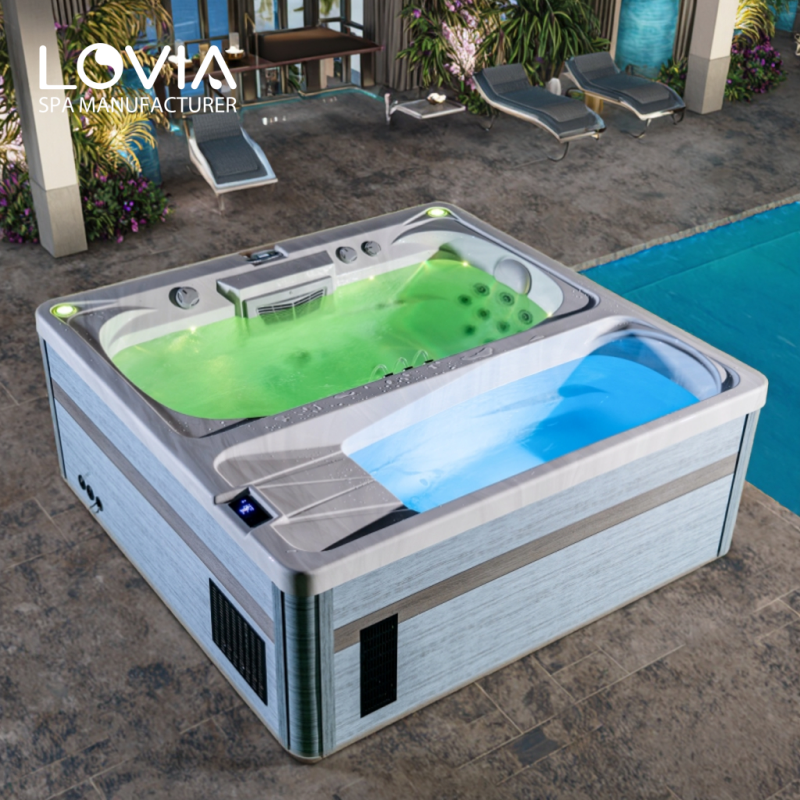
What is an outdoor 110V plug-and-play hot tub?
A plug-and-play outdoor hot tub typically refers to a product designed for 110V power. Users do not need to lay new high-voltage lines or install a dedicated 220V power supply system. As long as it complies with local electrical regulations, the device can be used simply by plugging it into a suitable dedicated socket.
In the North American market, where 110V power systems are common in homes, outdoor 110V plug-and-play hot tubs have a broad market base. Compared to traditional 220V outdoor hot tubs, the biggest advantage of 110V products is lower installation costs and a shorter construction period, making them particularly suitable for rental homes, vacation cabins, small patios, and families who want to quickly install spa equipment.
It should be noted that "plug and play" does not mean that it can be connected to any ordinary socket. A standard outdoor 110V plug-and-play hot tub typically requires a dedicated circuit compliant with local electrical codes and a GFCI (Ground-Circuit Insulator) to ensure long-term operational safety. Therefore, it's essential to consult a professional installer before purchasing to confirm that your home's electrical system can meet the equipment's requirements.
Can a 110V power supply really power an outdoor hot tub?
Modern 110V plug-and-play jacuzzi outdoor spa hot tubs have been developed for many years and are technologically mature. For small or medium-sized outdoor hot tubs used by 2 to 4 people, a 110V system is perfectly capable of providing basic functions such as circulation filtration, spa massage, and thermostatic control.
However, it's important to understand that 110V systems are limited by power supply capacity, and their heating capacity is generally lower than that of 220V systems. For example, mainstream outdoor 110V plug-and-play hot tubs in the North American market typically have a heater of approximately 1kW to 1.5kW, while 220V systems generally have heaters with a power of 3kW or even higher. Therefore, the biggest difference between the two is not whether they can heat the tub, but rather the difference in heating speed and heat compensation capacity when multiple people are using it continuously.
For example, when outdoor temperatures are low, or when multiple people use the water continuously leading to rapid heat loss, a 220V system typically recovers the set temperature more quickly, while a 110V system requires a longer heating time. This is a key reason why many high-end large outdoor hot tubs still use 220V power.
Therefore, for ordinary families' daily leisure use, an outdoor 110V plug-and-play hot tub is perfectly adequate; however, for large commercial projects or long-term continuous operation in cold regions, a comprehensive assessment based on the specific circumstances is necessary.
Why are more and more families choosing plug-and-play outdoor hot tubs?
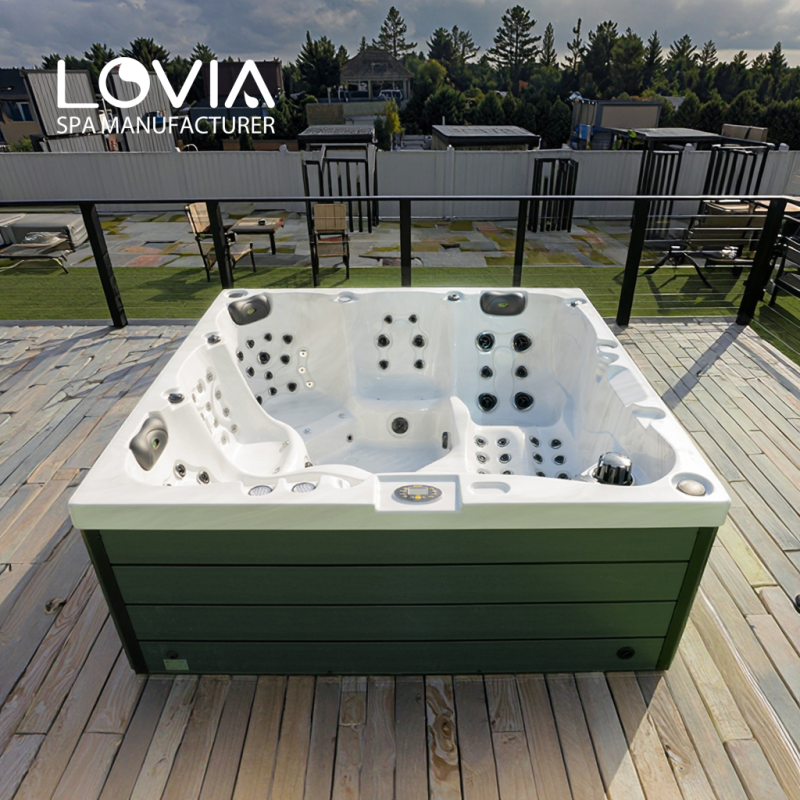
In recent years, outdoor 110V plug-and-play hot tubs have become popular, not only because of their ease of installation, but more importantly, because they lower the barrier to homeownership for families with spa facilities.
First, installation is simpler. Traditional 220V outdoor hot tubs typically require a professional electrician to lay independent wiring, install a dedicated circuit breaker, and undergo local electrical inspection. 110V plug-and-play jacuzzi outdoor spa hot tubs significantly reduce the initial construction work, shortening the overall installation cycle.
Second, the overall installation cost is lower. For many families, electrical wiring costs often consume a significant portion of their budget. Plug-and-play outdoor hot tubs can effectively reduce this expense, allowing consumers to allocate more of their budget to product configuration and feature selection.
Furthermore, plug-and-play outdoor hot tubs offer greater flexibility for rental properties, vacation homes, and short-term properties. Relocation or relocation is easier in the future, a key reason why more and more young families favor this type of product.
Limitations of 110V Plug-and-Play Outdoor Hot Tubs
Like any product, 110V plug-and-play jacuzzi outdoor spa hot tubs have their limitations.
The biggest limitation comes from the power supply. Because a 110V system can only provide a limited total power, some products may temporarily stop the heater when the high-power massage pump is activated to ensure the overall current remains within safe limits. This means that during extended use by multiple users, the water temperature may slowly decrease, resuming heating after the massage session.
Secondly, for larger outdoor hot tubs seating six or more people, the heating efficiency of a 110V system is generally lower than that of a 220V system. If the installation area experiences prolonged low temperatures during winter, it is recommended to focus on the product's insulation performance. If necessary, choose a model that supports 110V/220V dual-voltage switching.
Furthermore, when purchasing a plug-and-play outdoor hot tub, one should not only focus on whether it supports 110V, but also understand the overall insulation structure, water circulation efficiency, and control system configuration, as these factors will also affect the final user experience and operating costs.
What configurations should be considered when purchasing a 110V plug-and-play outdoor hot tub?
Consumers are advised to focus on the following aspects during the purchasing process, not just the voltage parameter:
First, the control system. The internationally recognized Balboa control system enables more precise temperature control, fault diagnosis, and safety protection, improving the long-term operational stability of the equipment.
Second, insulation performance. High-quality plug-and-play outdoor hot tubs typically use a high-density closed-cell foam insulation structure, combined with a high-quality insulation cover, which helps reduce heat loss. For 110V products, good insulation is even more important than simply increasing heating power.
Third, the circulation and filtration system. Stable circulation not only maintains water quality but also improves heat exchange efficiency, helping the heating system maintain a more even and constant temperature.
Fourth is the massage system configuration. Consumers should choose the number of nozzles, pump power, and massage modes based on their actual needs, rather than simply pursuing the highest possible parameters. A well-matched system design is often more valuable than blindly adding features.
More Suitable Users for 110V Plug-and-Play Outdoor Hot Bathtubs
From an industry application perspective, the following types of users are generally more suitable for 110V plug-and-play outdoor hot water bathtubs:
First, families using the system for daily leisure. If mainly used for relaxation by 2 to 4 people several times a week, a 110V system can fully provide a comfortable and stable spa experience.
Second, rental residences and vacation properties. Due to minimal installation and modification, plug-and-play outdoor hot water bathtubs better meet the need for flexible use.
In addition, small and medium-sized guesthouses, patio hotels, and show flat projects also frequently choose 110V products because of their higher installation efficiency and faster operational readiness.
Of course, for large commercial spa centers, high-frequency hotel projects, or large-capacity outdoor hot tubs in cold regions, it is recommended to consider a 220V system based on actual operational needs to achieve faster heating and stronger continuous operation.
Why are more and more professional manufacturers launching 110V plug-and-play outdoor hot tubs?
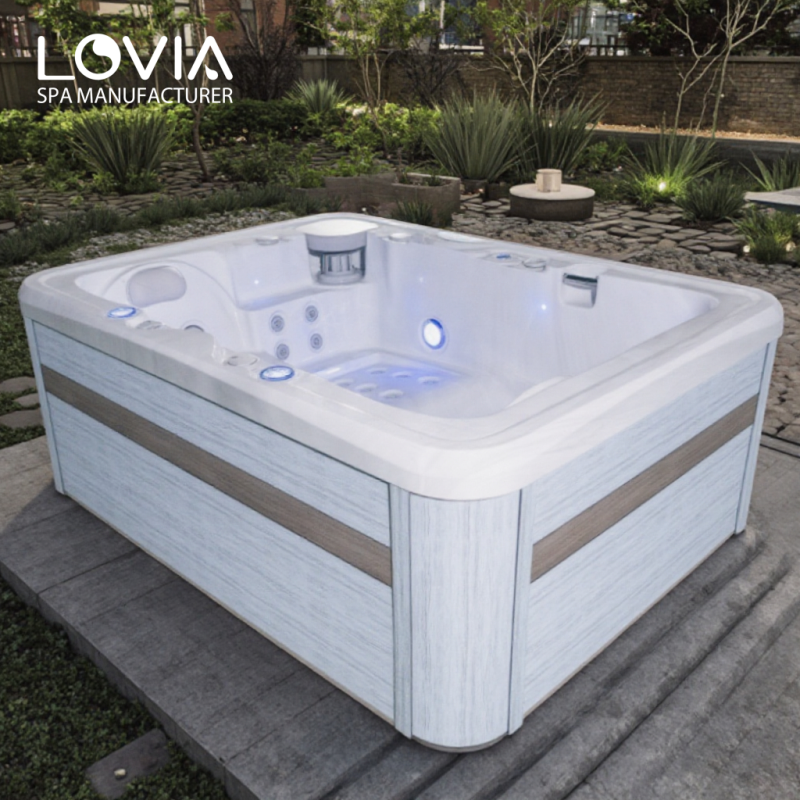
With the continuous growth of international market demand, more and more professional spa manufacturers are beginning to improve their 110V product lines, hoping to meet the diverse needs of consumers in different countries and regions.
For example, LOVIA® has long focused on the research and development and manufacturing of outdoor hot tubs and outdoor swimming spas. During the product design phase, it fully considers different voltage standards in the global market, supporting multiple power supply solutions such as 110V, 220V, and 380V.
LOVIA® has a modern production base of approximately 45,000 square meters and 12 professional production lines, and its products are exported to many countries and regions worldwide. Regarding plug-and-play outdoor hot tubs, the company can configure them according to customer needs, incorporating features such as the Balboa control system, high-efficiency circulating filtration system, imported Aristech acrylic sheets from the USA, multi-layer insulation structure, and various massage options. This ensures the product balances ease of installation, energy efficiency, and long-term operational stability. Furthermore, each unit undergoes comprehensive water filling testing, electrical safety testing, and functional testing before leaving the factory, providing more reliable product support for global OEM and ODM customers.
Of course, regardless of whether you choose 110V or 220V, the true determinant of the user experience is not the voltage alone, but rather the overall design, manufacturing process, installation quality, and proper maintenance. Consumers should consider brand strength, core configuration, and after-sales service when purchasing, rather than making a decision solely based on voltage parameters.
How to improve the user experience of an outdoor 110V plug-and-play hot tub?
For users who have already chosen a 110V plug-and-play jacuzzi outdoor spa tub, proper usage can also lead to a better experience.
It is recommended to keep the insulated cover closed at all times to minimize unnecessary heat loss. Turn on the thermostat before planned use to allow the water to reach the ideal temperature. In winter, minimize prolonged opening of the bathtub lid to prevent significant heat loss. Regularly cleaning the filter, maintaining the correct water level, and properly managing water quality can also improve circulation efficiency, reduce heating load, and ensure more stable system operation.
Furthermore, it is recommended that users strictly follow the manufacturer's instructions to connect to a compliant dedicated power supply and regularly check the leakage protection device to ensure the equipment is always in a safe operating condition.
FAQ
Q1: Can a 110V plug-and-play outdoor hot tub be plugged directly into a regular socket?
Not all regular sockets are suitable. A 110V plug-and-play outdoor hot tub typically requires connection to a dedicated circuit compliant with local electrical codes and a GFCI leakage protection device to ensure safe operation.
Q2: What is the biggest difference between a 110V plug-and-play outdoor hot tub and a 220V product?
The biggest difference lies in heating power and heating speed. 110V products are easier to install, while 220V products typically offer faster heating and stronger sustained temperature control, making them more suitable for large or high-frequency use.
Q3: Is a 110V plug-and-play jacuzzi outdoor spa hot tub suitable for winter use?
Yes, it can be used, but it's recommended to choose a product with good insulation and keep the insulation cover closed to minimize heat loss. In cold regions, for large-capacity products, a 220V system can be considered depending on actual needs.
Q4: What are the most important configurations when purchasing a plug-and-play outdoor hot tub?
It's recommended to focus on the control system (such as Balboa), insulation structure, circulating filtration system, water pump performance, acrylic material, overall manufacturing process, and brand after-sales service, rather than just the 110V power supply parameter.
Q5: Does LOVIA® support customization of 110V plug-and-play jacuzzi outdoor spa hot tubs?
Yes. LOVIA® has long focused on the research and development and manufacturing of SPA products, offering various voltage configurations such as 110V, 220V, and 380V to meet the needs of different countries and markets, and supporting OEM/ODM customization services. The product range includes multiple series such as plug-and-play outdoor hot tubs and outdoor swimming and spa bathtubs. Balboa control systems, insulation solutions, massage systems, and exterior designs can be flexibly configured according to customer needs to meet the diverse procurement requirements of homes, hotels, guesthouses, and commercial projects.
