

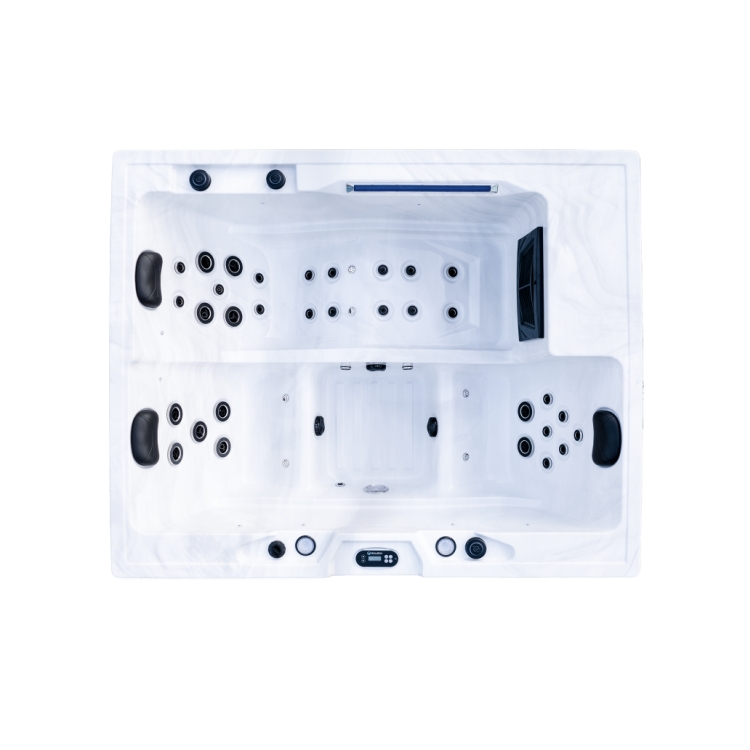
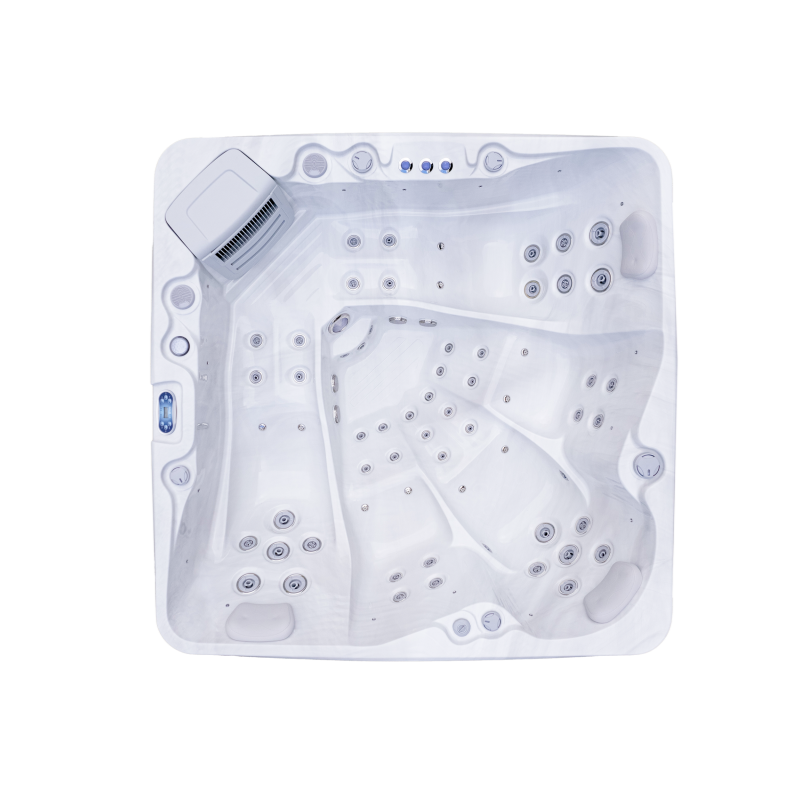
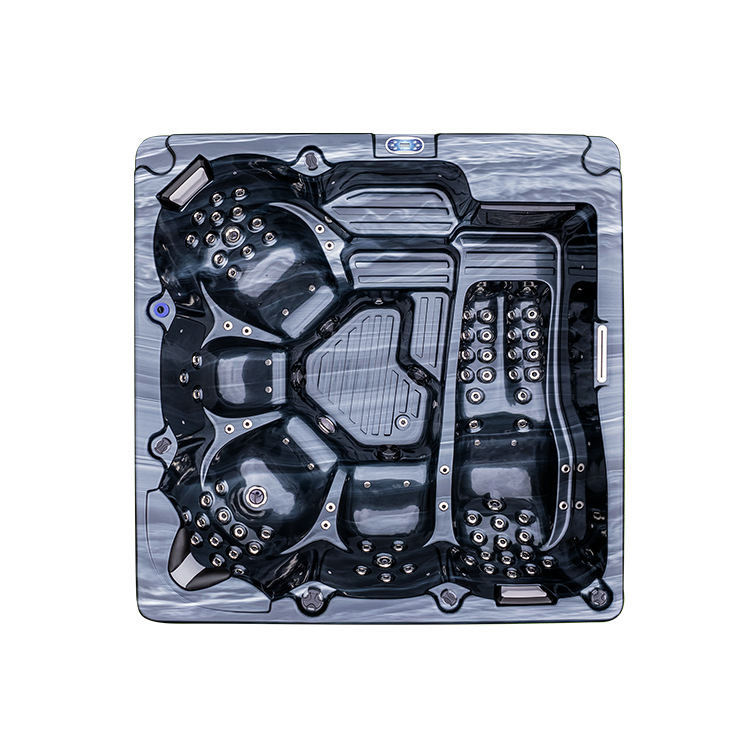
How to Choose an Outdoor Hot Tub Based on Family Size? LOVIA®, a Chinese Outdoor Spa Manufacturer
In mature markets such as North America, Europe, and Australia, outdoor spa hot tubs are no longer exclusive to high-end resorts and luxury villas; they have increasingly become a key element for ordinary households looking to enhance their quality of life.
However, the growth in market demand has also exposed a common industry issue: many consumers lack a comprehensive understanding when purchasing outdoor spa hot tubs. Some brands overemphasize features like jet counts, lighting effects, or aesthetics while failing to analyze actual household usage scenarios. Meanwhile, to drive sales, some suppliers simply categorize products as "2-person," "4-person," or "6-person" models, leading consumers to mistakenly believe that the number of seats is the only factor that matters.
Consequently, many users discover post-installation that they face problems such as wasted space, insufficient capacity, excessive energy consumption, or high maintenance costs.
In reality, selecting an outdoor jacuzzi hot tub for the home is far more complex than simply matching the number of seats to the number of family members. A whirlpool jacuzzi tub truly suitable for long-term home use requires a holistic assessment of various factors, including family composition, usage frequency, installation environment, energy efficiency, thermal insulation performance, massage needs, and potential future requirements.
For consumers, choosing the right home jacuzzi tub for their specific household has become the most critical aspect of the purchasing decision.
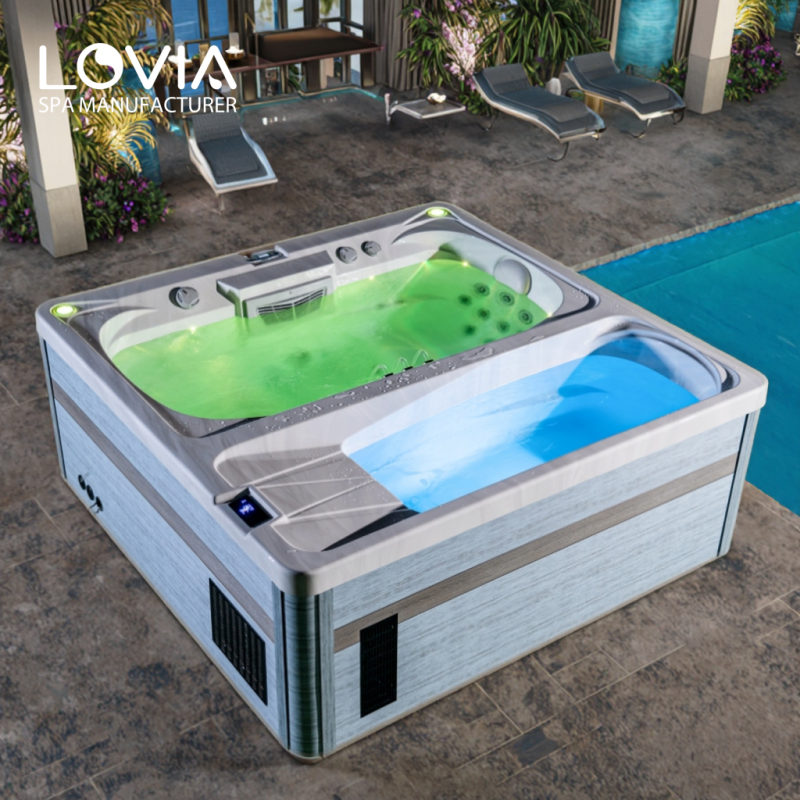
Why are more and more families installing outdoor hot tubs?
Public data from the International Spa Association (ISPA) and the North American spa industry indicates that the global market for residential outdoor jacuzzi tubs has maintained steady growth in recent years. The proportion of residential users continues to rise, exceeding 70% in some mature markets.
The growth in outdoor hot tub sales is driven by several key factors:
First, there is a growing awareness of family health and wellness.
Modern lifestyles often involve chronic work stress, sedentary office work, and declining sleep quality. Research shows that soaking in warm water (38°C to 40°C) helps relax muscles, promotes blood circulation, and can improve sleep quality to some extent. Consequently, more families view outdoor jacuzzi tubs as equipment for daily wellness rather than merely for entertainment.
Second, there is an increasing need for family socializing.
Compared to traditional swimming pools, outdoor jacuzzi spa hot tubs have a smaller footprint, require less maintenance, and can be used year-round. Whether for family gatherings, dinners with friends, or weekend relaxation, the hot tub serves as a perfect setting for social interaction.
Third, it enhances property value.
In Western markets, homes featuring high-quality outdoor spa hot tubs often appeal more strongly to buyers. Data from real estate agencies indicates that properties equipped with comprehensive outdoor leisure facilities typically command higher resale values than standard homes in the same area.
Consequently, the jacuzzi spa hot tub is evolving from a "discretionary luxury item" into an essential component of "home wellness infrastructure."
Should the choice of an outdoor jacuzzi tub really be based solely on household size?
While household size is a factor, it should certainly not be the only consideration—a common pitfall for many consumers.
For instance, a family of three might theoretically find a three-to-four-person whirlpool jacuzzi tub sufficient. However, if they frequently host gatherings or plan to have a second child, a four-person model could quickly feel cramped.
Conversely, if a couple purchases an eight-person hot tub, they gain plenty of space but face several downsides:
•Higher initial purchase cost;
•Increased energy consumption due to the larger volume of water;
•Longer heating times;
•Higher ongoing maintenance costs;
•Greater consumption of yard space.
Therefore, household size serves only as a baseline reference.
A more logical approach to selecting a multi-person outdoor jacuzzi tub is: Number of permanent household members × Usage scenario factor × Future expansion needs.
For example:
•Family of three who frequently host friends: 3 people × 1.5 = Recommended 5–6 person hot tub
•Family of four focused on daily relaxation: 4 people × 1.2 = Recommended 5-person hot tub
•Large family of six: 6 people × 1.2 = Recommended 7–8 person spa hot tub
This calculation method is far more practical than simply basing the purchase on the number of household members.
What specifications suit different household sizes?
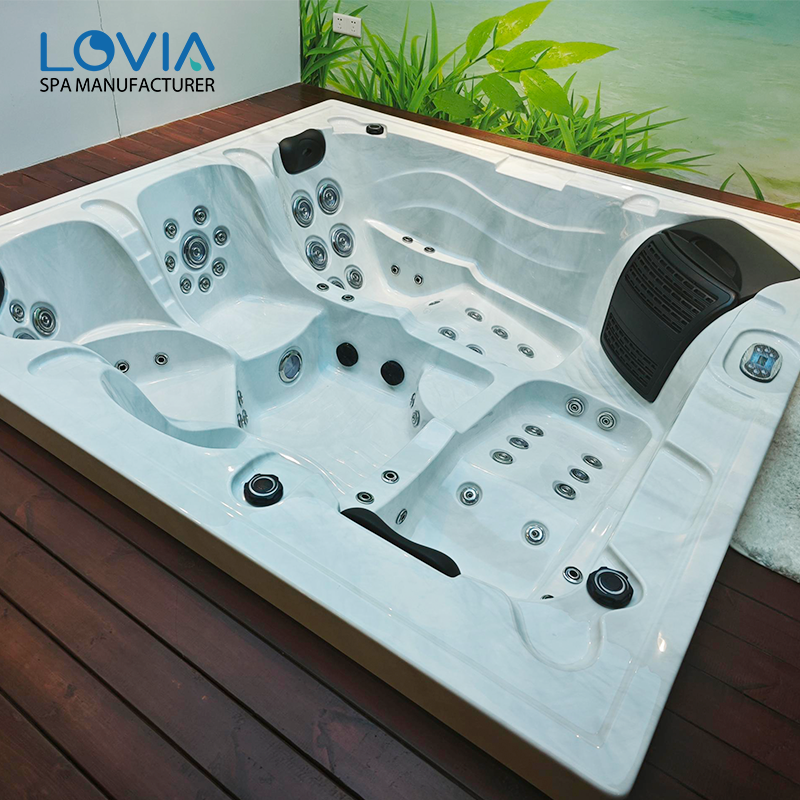
1. Outdoor hot tubs suitable for a two-person household
For couples, a 2–3 person outdoor hot tub is the ideal choice.
Typical dimensions include:
•1800 × 1800 mm
•1900 × 1900 mm
Water capacity generally ranges from 700 to 1,000 liters.
This type of jacuzzi spa hot tub offers the following advantages:
•Compact footprint;
•Rapid heating;
•Low operating costs;
•Simple maintenance.
Yet, it still delivers a complete hydrotherapy massage experience.
If you plan to expand your family in the future, you can also opt for a 4-person outdoor spa hot tub as an upgrade.
2. Outdoor jacuzzi tubs suitable for families of 3–4
This represents the largest consumer segment in the global outdoor jacuzzi tub market.
Recommended options:
•4-person home jacuzzi tub
•5-person home jacuzzi tub
Typical dimensions include:
•2000×2000mm
•2100×2100mm
•2200×2200mm
These models meet both daily family needs and the requirements for holiday gatherings. Global sales data shows that 5–6 person whirlpool jacuzzi tubs consistently dominate the residential market.
3. Outdoor hot tubs suitable for families of 5–6
For multi-generational households, a 6–8 person outdoor hot tub is recommended.
These models typically feature:
•60–90 massage jets;
•Dual-circulation filtration systems;
•High-power massage pumps;
•Multi-zone independent massage designs.
Family members can enjoy a comfortable hydrotherapy experience simultaneously without feeling cramped.
Five factors more important than capacity when choosing an outdoor jacuzzi tub
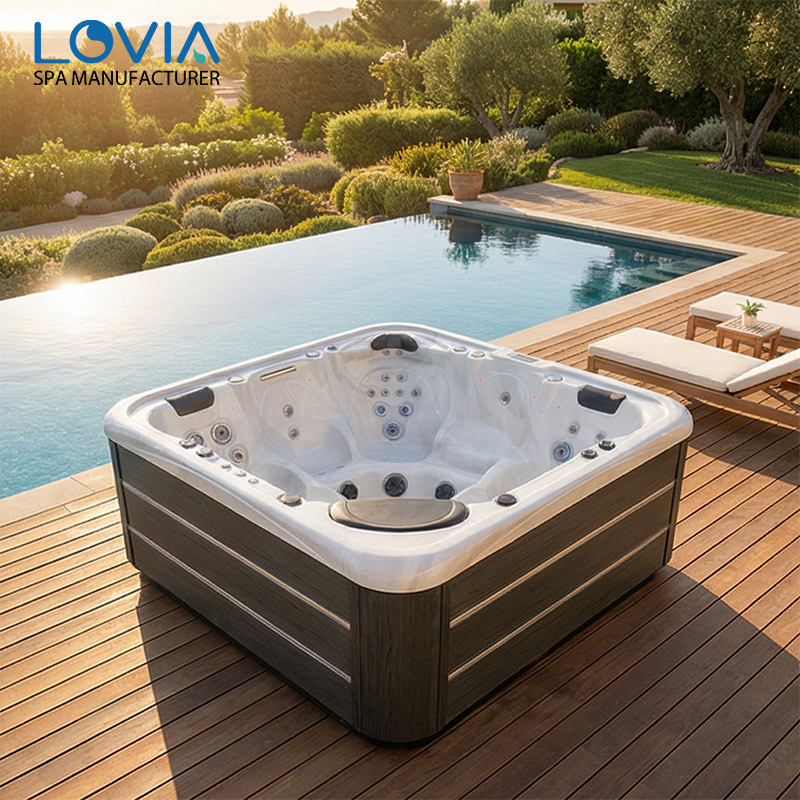
First: Suitability of the yard space
Once installed, an outdoor spa hot tub requires space not only for the unit itself but also for:
•Maintenance access;
•Entry and exit paths;
•Cover opening clearance;
•Drainage areas.
Industry standards generally recommend leaving at least 60–90 cm of clearance around the whirlpool jacuzzi tub for maintenance. Therefore, it is essential to measure the actual installation site before purchasing.
Second: Effectiveness of jet layout
Many consumers mistakenly believe that more jets equate to a better experience. In reality, the number of jets does not determine the quality of the massage.
The true determinants of the experience are:
•Jet angles;
•Water pressure;
•Ergonomic seating design;
•Pump configuration. High-quality outdoor home jacuzzi tubs typically feature targeted massage designs for specific areas such as the shoulders, neck, back, lower back, and calves.
Third: Thermal Insulation Performance
For outdoor spa hot tubs, the largest expense over the long term is not the initial purchase price, but energy consumption. Data shows that heating accounts for over 60% of the annual operating costs for residential hot tubs in North America. Therefore, the insulation system is crucial.
Premium home jacuzzi tubs typically utilize:
•High-density closed-cell foam insulation;
•Multi-layer thermal insulation structures;
•High-performance thermal covers;
•Insulated plumbing designs.
These features significantly reduce long-term operating costs.
Fourth: Filtration System
Residential whirlpool jacuzzi tubs operate using a water circulation system.
Filtration performance directly determines:
•Water quality safety;
•User comfort;
•Frequency of maintenance.
An excellent filtration system can extend the interval between water maintenance cycles by 30% to over 50%.
Fifth: Control System
Modern outdoor jacuzzi spa hot tubs have entered the era of smart technology.
High-end products commonly support:
•Digital control panels;
•Wi-Fi remote control;
•Scheduled heating;
•Automatic circulation management;
•Fault diagnosis alerts.
While these features may not directly impact the massage experience, they greatly enhance convenience during long-term use.
Why are more international buyers focusing on LOVIA® hot tubs?
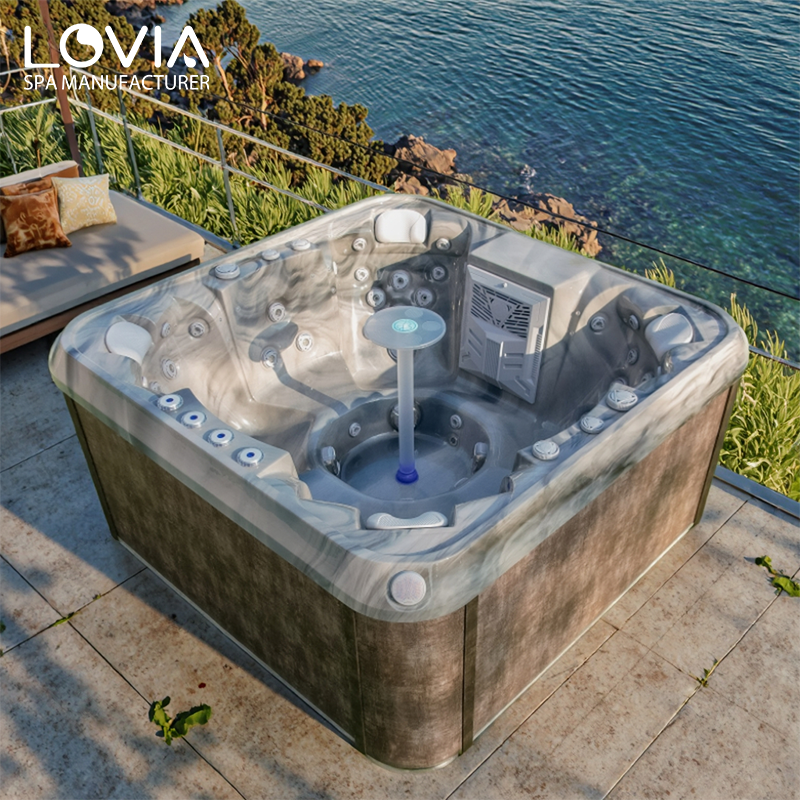
Within the global outdoor jacuzzi tub supply chain, consumers and buyers are increasingly prioritizing manufacturing capabilities over mere brand packaging. As a manufacturer deeply rooted in the spa equipment industry, LOVIA® has accumulated extensive experience in the residential jacuzzi spa hot tub sector. Established in 1989, we specialize in the R&D and manufacturing of outdoor spa products.
Unlike some suppliers in the market that focus primarily on trading and assembly, LOVIA® emphasizes the development of robust manufacturing systems and quality control processes. We have established a comprehensive quality management system covering everything from raw material procurement and in-process inspections to final factory testing. For instance, every product undergoes 100% functional testing before leaving the factory, covering critical aspects such as jet pressure, heating precision, and electrical safety.
Regarding core components, LOVIA® outdoor home jacuzzi tubs widely utilize industry-leading control systems (Balboa) and combine them with high-performance insulation structures, premium acrylic materials (US Aristech Acrylic), and ergonomic seating designs to meet the diverse needs of households.
For more product information, please visit: LOVIA® Spa Hot Tub Product Center
For those planning to purchase a home hot tub, a manufacturer's R&D capabilities, product quality consistency, and long-term service reliability are often more important factors to consider than price alone.
FAQ
FAQ 1: Does the water in an outdoor home jacuzzi tub need to be changed daily?
No. Under normal conditions, a home jacuzzi tub equipped with a comprehensive filtration system and water treatment regimen only requires a water change every 2 to 4 months. The exact frequency depends on usage, water quality management, and filtration efficiency.
FAQ 2: Do home hot tubs consume a lot of electricity?
Modern, energy-efficient home jacuzzi tubs utilize high-performance insulation systems, resulting in actual operating costs that are far lower than most consumers expect. Energy consumption is primarily influenced by ambient temperature, frequency of use, and the quality of the insulation structure.
FAQ 3: Can outdoor jacuzzi hot tubs be used in winter?
Absolutely. In fact, winter is often one of the best seasons to enjoy a jacuzzi hot tub. High-quality hot tubs are capable of maintaining the set water temperature consistently, even in cold weather.
FAQ 4: What is the typical lifespan of a spa hot tub?
High-quality spa hot tubs are designed to last 10 to 15 years or more. With proper maintenance, some products can even remain functional for over 20 years.
FAQ 5: What types of spa products does LOVIA® offer?
LOVIA® specializes in the R&D and manufacturing of wellness equipment, including whirlpool jacuzzi tubs and swim spas. Our products are exported to markets across Europe, the Americas, Oceania, the Middle East, and Southeast Asia.
FAQ 6: How do I choose the right LOVIA® whirlpool jacuzzi tub model?
We recommend evaluating your options based on five key factors: household size, available yard space, budget, massage preferences, and future needs. You should make your choice based on specific product specifications rather than relying solely on the number of seats. Please feel free to contact us for a recommendation.
