

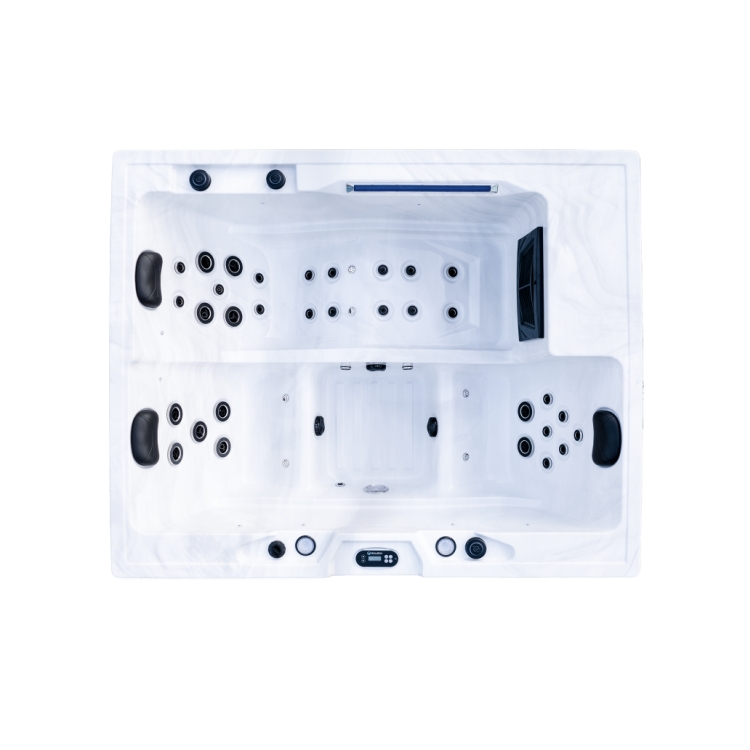
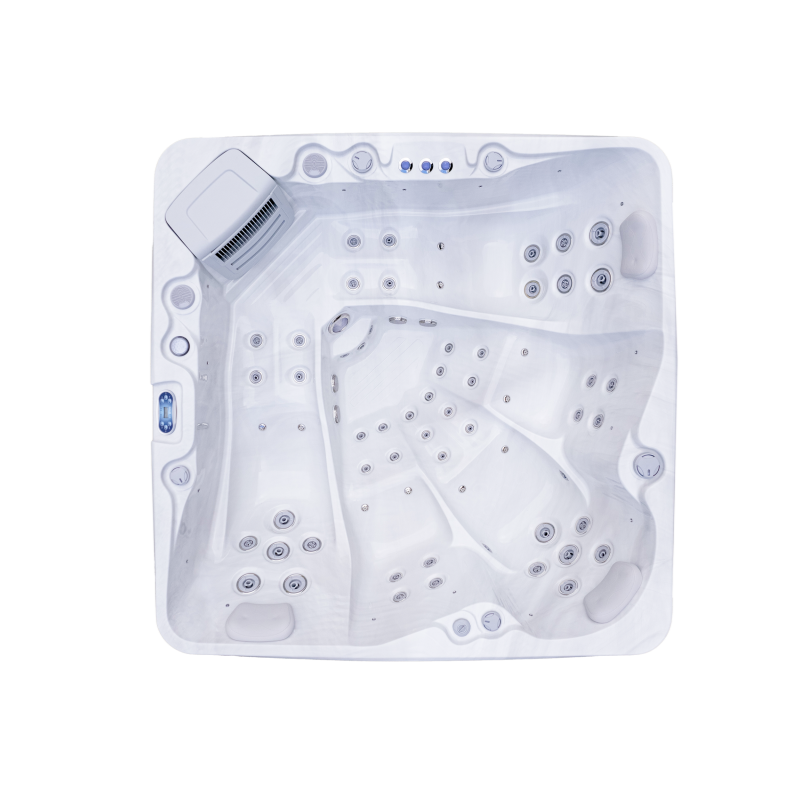
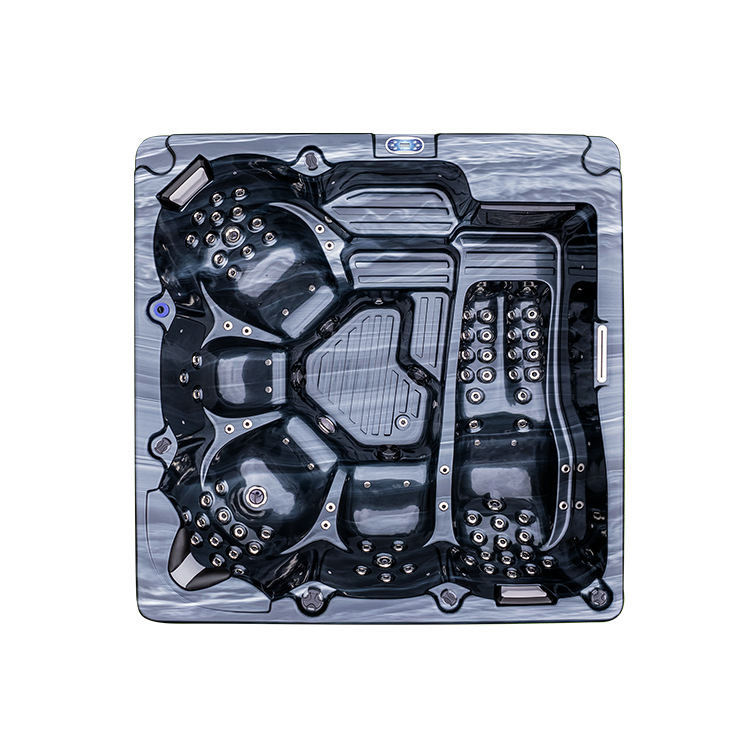
For many users, purchasing an outdoor spa hot tub is merely the first step; the key factors determining the user experience and the equipment's lifespan lie in maintaining stable operation over the long term amidst complex climatic conditions. The rainy season, in particular, presents the most concentrated set of challenges for jacuzzi outdoor spa tubs.
When shopping for an outdoor spa hot tub, consumers often prioritize features such as the number of massage jets, heating efficiency, aesthetic design, and smart controls, while overlooking the long-term impact of rainy season conditions on the equipment.
Some low-end products or brands lacking robust manufacturing systems emphasize features during the sales process but rarely provide systematic guidance on rainy season maintenance. Consequently, users may face issues such as electrical faults, water quality deterioration, reduced insulation performance, and accelerated structural aging after prolonged rainfall—sometimes resulting in repair costs that far exceed expectations.
According to statistics from the Pool & Hot Tub Alliance (PHTA), over 30% of after-sales repair cases for outdoor spa equipment are linked to environmental factors, with high humidity and persistent rainfall being primary culprits. In regions with subtropical monsoon climates, coastal areas with high humidity, or zones with long rainy seasons, the aging rate of critical components in poorly maintained outdoor spa hot tubs can be 20% to 40% faster than in standard environments.
Therefore, protection during the rainy season is not simply a matter of putting on the cover; it is a comprehensive undertaking encompassing structural integrity, waterproofing systems, electrical safety, water quality management, thermal insulation, and long-term maintenance. For high-quality manufacturers, this capability is often integrated into the product right from the design stage.
For instance, LOVIA® has specialized in the R&D and manufacturing of outdoor spa products—including hot tubs and swim spas—since 1989. We have established robust systems for structural design, moisture and corrosion resistance, insulation, and quality control. With products exported to diverse markets across Europe, the Americas, Oceania, and the Middle East, we have accumulated extensive experience in ensuring the long-term, stable operation of jacuzzi outdoor spa tubs in challenging rainy-season environments.
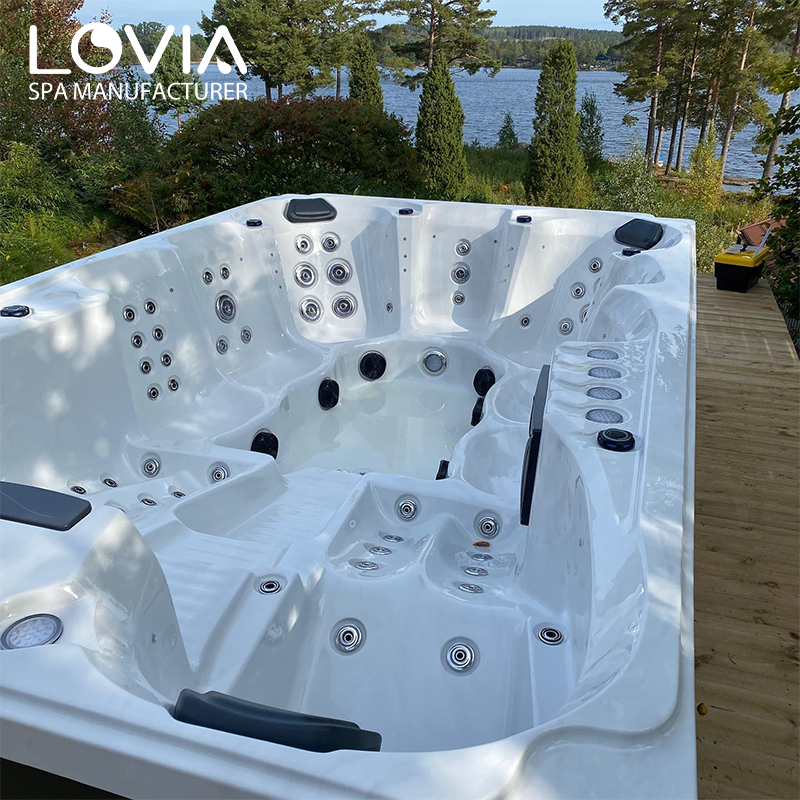
Why does the rainy season have such a significant impact on outdoor hot tubs?
Many users assume that because jacuzzi outdoor spa tubs are designed for outdoor use, rainfall will not have a significant impact. In fact, occasional rainfall is a completely different matter from a prolonged rainy season.
In a rainy season environment, outdoor spa hot tubs face several long-term challenges:
First is sustained high humidity.
Even if rainwater does not directly enter the spa hot tub's internal components, prolonged exposure to humidity levels exceeding 80% can cause condensation to form on electronic components, circuit boards, terminals, and control systems. This condensation can lead to changes in electrical resistance, metal oxidation, and circuit corrosion.
Second is rainwater infiltration.
Rainwater can slowly seep in through seams, access panels, and plumbing connections. For spa hot tubs with inadequate waterproofing, this accumulation over time can damage the insulation layer and the electrical compartment.
Third is the disruption of water chemistry balance.
Large amounts of rainwater entering the tub dilute sanitizer concentrations and alter pH, total alkalinity, and calcium hardness levels. A previously stable water chemistry system can quickly become unbalanced after just a few heavy downpours.
Fourth is increased heat loss.
Lower temperatures, higher wind speeds, and increased humidity during the rainy season accelerate the rate of heat exchange. Data shows that during periods of continuous overcast and rainy weather, the energy consumption of an outdoor jacuzzi hot tub without additional insulation measures can rise by 15%–25%.
Fifth is accelerated structural aging.
Prolonged exposure to moisture can cause the exterior skirting to warp, metal parts to rust, and sealants to degrade, thereby shortening the overall lifespan of the jacuzzi hot tub.
These issues often do not manifest immediately; instead, they gradually emerge over months or even years. Therefore, proactive prevention is far more important than reactive repair.
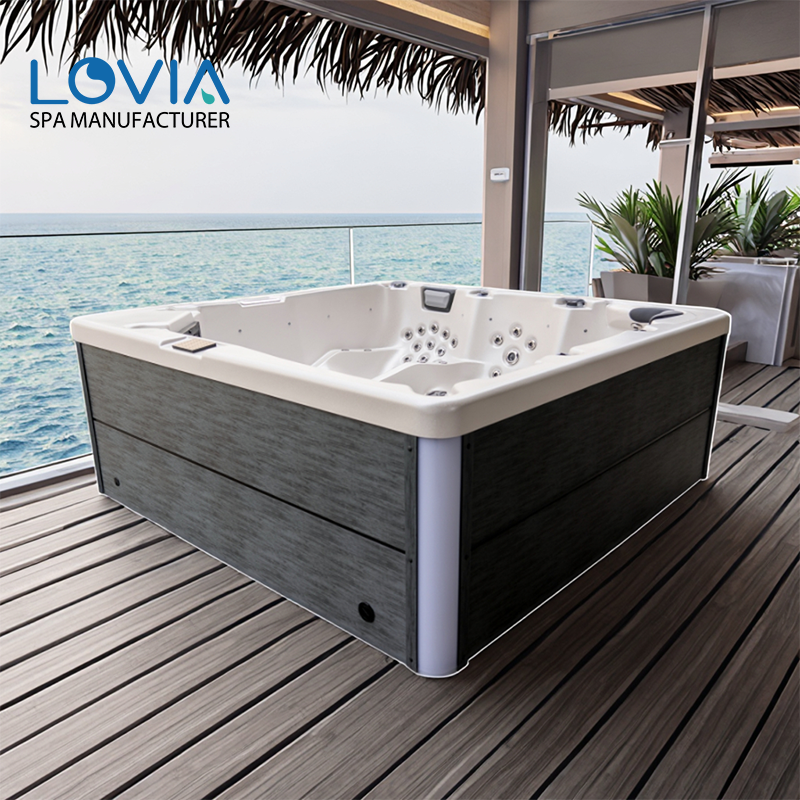
Essential Pre-Rainy Season Inspections for Jacuzzi Outdoor Spa Tubs
The best time to maintain an outdoor spa hot tub is not during the rainy season itself, but rather before it begins.
A comprehensive inspection is recommended before entering the season of heavy rainfall.
Start by inspecting the spa hot tub cover.
The cover serves as the crucial first line of defense for an outdoor spa hot tub. A high-quality cover should offer excellent waterproofing and thermal insulation. If you notice surface cracks, loose stitching, increased weight due to water absorption, or significant warping, the cover should be replaced promptly.
Industry experience indicates that a waterlogged cover can lose more than 40% of its insulation efficiency.
Next, inspect the sealing strips.
Pay special attention to:
•Access panel edges
•Areas around the control panel
•Nozzle connection points
•Light fixture interfaces
•Drainage areas
If you notice signs of aging, hardening, or cracking, reseal them promptly.
Then, inspect the outdoor jacuzzi hot tub's electrical system.
This includes:
•GFCI (Ground Fault Circuit Interrupter)
•Power wiring
•Control box
•Heater connections
•Pump connectors
Ensure there are no loose connections, rust, or signs of water ingress.
Finally, inspect the outdoor jacuzzi hot tub's drainage system.
Ensure proper drainage around the unit to prevent the formation of standing water.
Experience shows that over 50% of electrical failures during the rainy season stem not from the equipment itself, but from indirect damage caused by prolonged exposure to standing water.
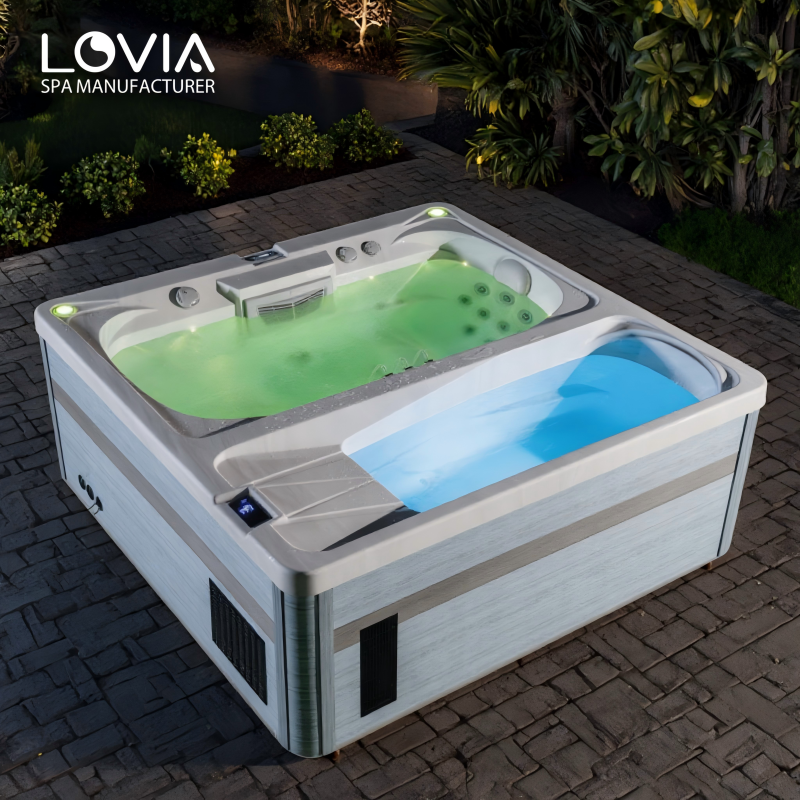
How can you prevent rainwater from entering the outdoor hot tub?
While most outdoor spa hot tubs offer some degree of rain resistance, prolonged exposure to heavy rain requires additional measures.
The most effective solution is to construct a rain shelter.
Common options include:
•Gazebos
•Aluminum canopies
•Retractable awnings
•Sunrooms
•Wooden pavilions
These structures not only reduce rainwater entry but also minimize UV damage and contamination from falling leaves. If a permanent shelter cannot be built, use a high-quality spa cover.
A high-quality spa cover should feature:
•A UV-resistant layer
•A waterproof vinyl outer layer
•A high-density insulating core
•A sloped design for drainage
Additionally, regularly clear debris from the cover's surface.
Excessive water accumulation during heavy rain can deform the cover, compromising its sealing effectiveness.
How can you maintain stable water quality in your outdoor hot tub during the rainy season?
Water quality management is a crucial aspect of rainy-season maintenance.
Rainwater is soft water and typically has a low pH level. When large amounts of rainwater enter the spa hot tub, it can cause the following issues:
•Decreased sanitizer concentration
•pH fluctuations
•Reduced alkalinity
•Cloudy water
•Increased risk of bacterial growth
Therefore, it is recommended to increase the frequency of water testing during the rainy season.
Under normal conditions, testing once a week is sufficient.
During the rainy season, the following is recommended:
•Test pH levels every 2–3 days.
•Test residual chlorine or bromine levels every 2–3 days.
•Test total alkalinity weekly.
•Test calcium hardness monthly.
Ideal parameters are generally:
•pH: 7.2–7.8
•Total alkalinity: 80–120 ppm
•Residual chlorine: 3–5 ppm
•Calcium hardness: 150–250 ppm
Perform a "shock treatment" immediately after heavy rainfall. Rapidly increasing oxidation capacity helps promptly eliminate organic contaminants introduced by the rain.
This step is particularly important for commercial jacuzzi outdoor spa tubs.
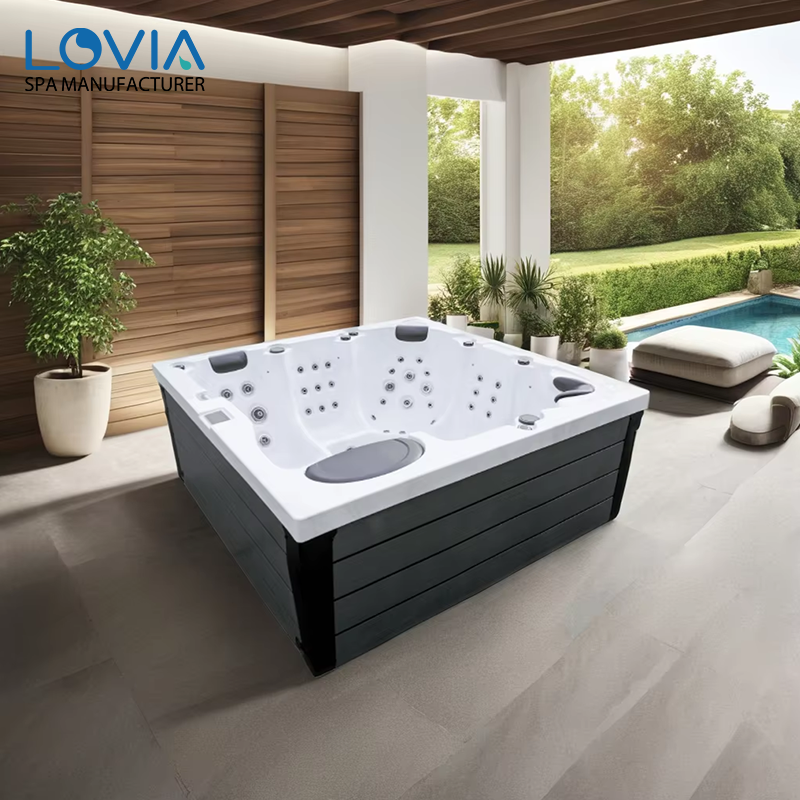
The Importance of Maintaining Outdoor Hot Tub Filtration Systems During the Rainy Season
The filtration system acts as the "lungs" of a jacuzzi outdoor spa tub.
Continuous rainfall leads to an increase in:
•Dust
•Leaves
•Pollen
•Organic matter
This significantly increases the load on the filter.
Under normal conditions, cleaning the filter cartridge every two weeks is sufficient.
Rainy season recommendation:
Clean the filter weekly.
Steps include:
1.Turn off the power supply;
2.Remove the filter cartridge;
3.Rinse with a high-pressure water sprayer;
4.Soak using a professional filter cleaner;
5.Allow to air dry before reinstallation.
Consider replacing the filter cartridge if it has been in use for more than 12 months. Studies show that a filter with more than 30% blockage reduces circulation efficiency by approximately 25%.
This not only affects water quality but also increases the load on the water pump.
Professional Measures to Protect Outdoor Hot Tub Electrical Systems from Moisture
Electrical safety is always a priority in outdoor spa hot tub management, especially during the rainy season.
Focus on the following areas:
First, ensure the control box seal is intact.
Second, regularly inspect the grounding system.
Third, ensure the residual current device (RCD/GFCI) is functioning correctly.
Fourth, avoid using extension cords for power supply.
Fifth, keep the control compartment ventilated.
For high-quality spa equipment manufacturers, moisture-proof design is typically integrated into the product structure. Take LOVIA® as an example: our outdoor spa hot tubs utilize proven control systems and undergo rigorous quality management processes—including IQC, IPQC, and OQC—that encompass pressure testing, functional testing, and electrical safety checks. These measures minimize the risk of malfunctions caused by humid environments right from the source.
However, regular maintenance by the user remains essential; even the finest jacuzzi outdoor spa tub cannot eliminate the need for routine care.
How can energy consumption be reduced during the rainy season?
Many users notice a significant increase in electricity costs for their outdoor spa hot tubs during the rainy season.
Key reasons include:
•Drop in ambient temperature
•Increased wind speed
•Increased evaporation
•Reduced insulation efficiency
Data shows that a 10°C drop in ambient temperature can increase the heating system's energy consumption by 20%–30%.
Therefore, the following measures are recommended:
First, maintain a constant temperature.
Frequent powering on and off often consumes more energy than maintaining a steady temperature.
Second, enhance insulation.
This includes:
•Using a high-density thermal cover
•Adding insulation to the skirt panels
•Checking the condition of the insulation material
Third, set the temperature appropriately.
Home users can maintain the temperature between 37°C and 39°C.
The temperature can be lowered by 2–3°C during periods of prolonged non-use.
Finally, choose products with high-efficiency insulation structures.
For example, spa hot tubs featuring closed-cell foam insulation typically experience less heat loss than those with traditional structures. LOVIA® outdoor spas widely utilize 25–50mm closed-cell foam insulation solutions to improve thermal efficiency.
Should the jacuzzi hot tub be drained during the rainy season?
Generally, no. If the spa hot tub is operating normally, it is recommended to keep it filled with water.
Reasons include:
First, structural stability.
The water provides uniform support for the shell.
Second, preventing seals from drying out and cracking.
Third, reducing reheating costs.
Fourth, minimizing the risk of dust and pest intrusion.
Draining is recommended only in the following situations:
•Long-term disuse exceeding 30 days;
•Need for deep maintenance;
•Risk of flooding;
•Equipment repair or upgrades.
Otherwise, there is no need to drain a normally operating spa hot tub simply because of the rainy season.
How can water accumulation around the hot tub be prevented?
Many equipment malfunctions actually stem from the installation environment rather than the jacuzzi hot tub itself; therefore, site design is crucial.
The installation area should feature:
A drainage slope of at least 2%–3%.
Recommended base options include:
•Concrete platforms
•Treated wood decking
•Stone bases
Avoid placing the unit directly on bare soil.
Additional perimeter features can include:
•Drainage channels
•Permeable pavers
•Rainwater collection systems
For commercial projects, professional drainage design can significantly lower long-term maintenance costs. Statistics show that proper drainage can reduce moisture-related malfunctions by approximately 35%.
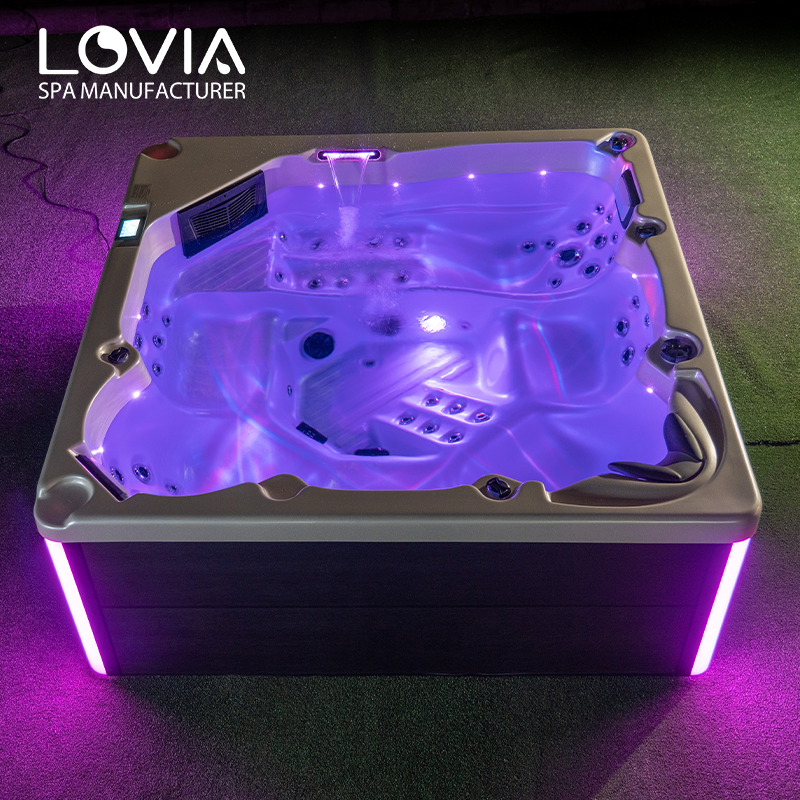
What are the advantages of high-quality outdoor hot tubs during the rainy season?
Many buyers focus on price while overlooking how manufacturing quality affects long-term costs. In reality, the rainy season is a critical time to test a jacuzzi outdoor spa tub's quality.
High-quality jacuzzi outdoor spa tubs typically feature:
•Sturdier shell structures;
•Superior insulation systems;
•More stable control systems;
•Higher-grade waterproofing;
•Stricter quality control standards.
Take LOVIA® as an example: established in 1989, the company specializes in spa equipment manufacturing, operating a production base exceeding 45,000 square meters with 12 production lines and serving over 500 clients globally. Their products utilize Aristech acrylics imported from the USA and hold certifications such as CE, CB, EMC, ETL, LVD, and RoHS. For users in high-humidity or high-rainfall areas, such proven manufacturing standards ensure a more stable, long-term user experience.
FAQ
FAQ 1: Can outdoor spa hot tubs be used normally during the rainy season?
Yes. As long as the electrical system, waterproofing, and water quality management are in good order, jacuzzi outdoor spa tubs can be used normally during the rainy season. However, it is recommended to avoid use during thunderstorms to ensure personal safety.
FAQ 2: Is it necessary to change the water in the outdoor jacuzzi hot tub immediately after a heavy rainstorm?
Generally, no. If only a small amount of rainwater has entered, simply check the pH level and sanitizer concentration, then make appropriate adjustments. If the water becomes noticeably cloudy or contaminated, a partial or complete water change is recommended.
FAQ 3: How often should the outdoor spa hot tub filter be cleaned during the rainy season?
It is generally recommended to clean the filter cartridge once a week. However, if there are many trees nearby or the tub is used frequently, you may want to increase the cleaning frequency.
FAQ 4: Why does the power consumption of an outdoor spa hot tub increase during the rainy season?
The main reasons are lower ambient temperatures, accelerated heat loss, and longer heater run times. Using a high-quality thermal cover and an efficient insulation structure can effectively reduce energy consumption.
FAQ 5: How can I determine if a jacuzzi outdoor spa tub is suitable for areas with heavy rainfall?
Focus on the following aspects of the spa hot tub: shell material, waterproofing rating, insulation structure, electrical safety design, quality certifications, and the manufacturer's production experience. Brands with robust quality control systems and international certifications are generally better suited to the demands of long-term use in challenging climates.
