

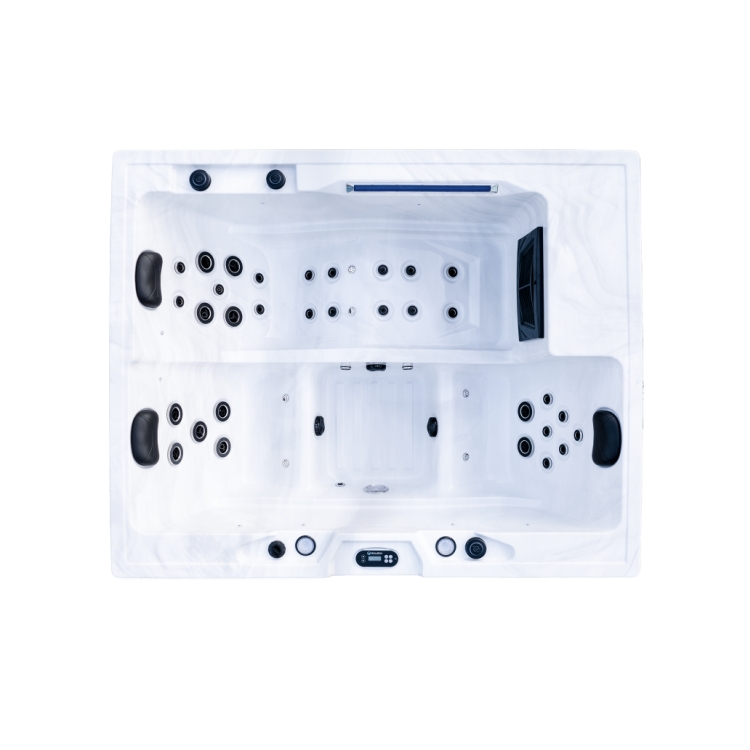
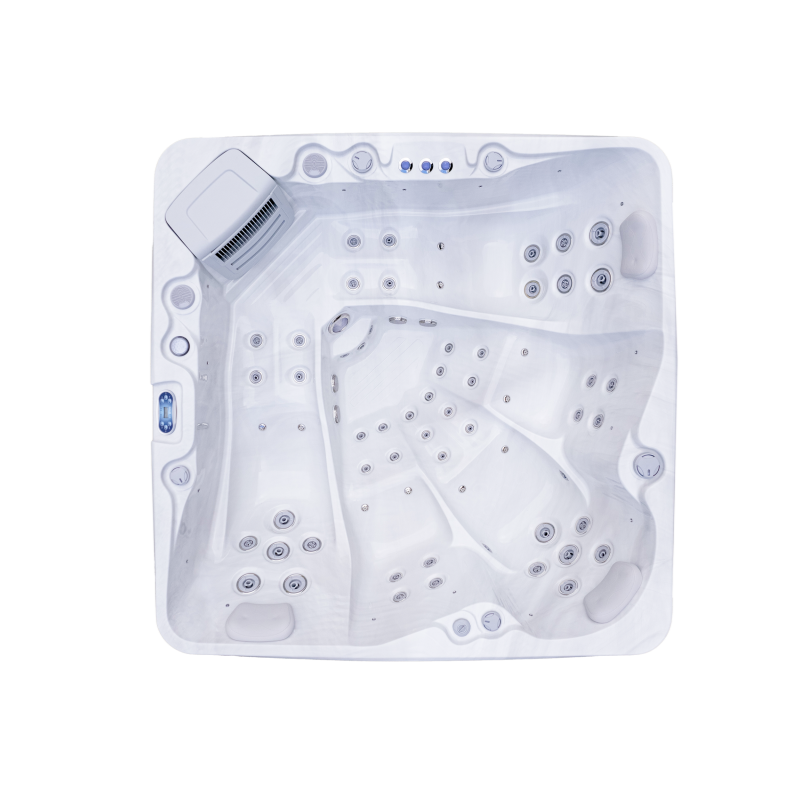
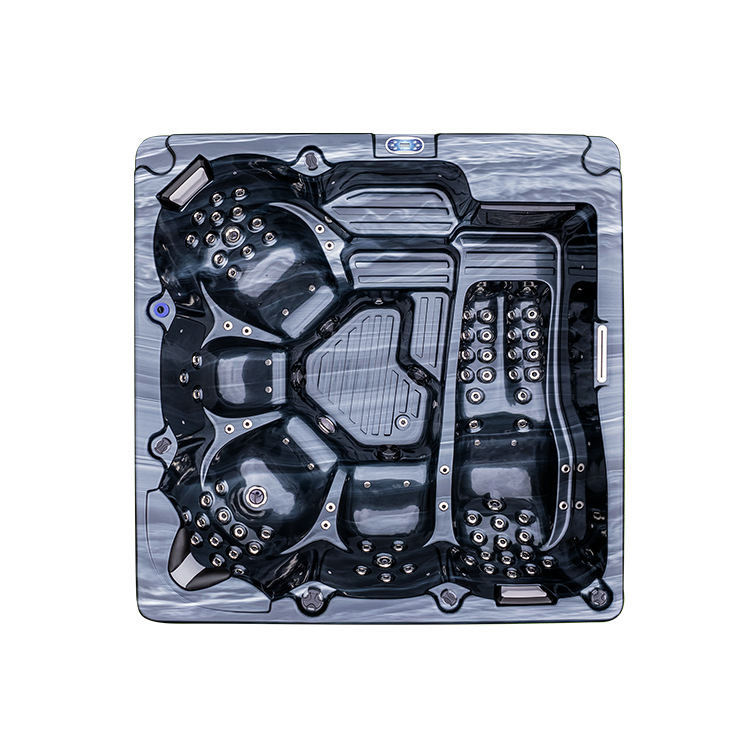
For many users who currently own or are planning to purchase an outdoor spa hot tub, a very practical—yet often overlooked—question arises: exactly how long can water remain in the hot tub before it needs to be replaced?
Some believe that as long as chlorine is continuously added and the filtration system is kept running, the water can be used indefinitely. Others worry that, given the complexities of the outdoor environment, the water will quickly become dirty and deteriorate after just a few days. So, from a professional standpoint, what actually determines the "lifespan" of water in a spa hot tub? Is there a reasonable timeframe to follow?
This article addresses the core question—"How long can water remain in an outdoor spa hot tub?"—by systematically analyzing various factors, including water chemistry and usage frequency, to help you establish clear criteria for making informed decisions.
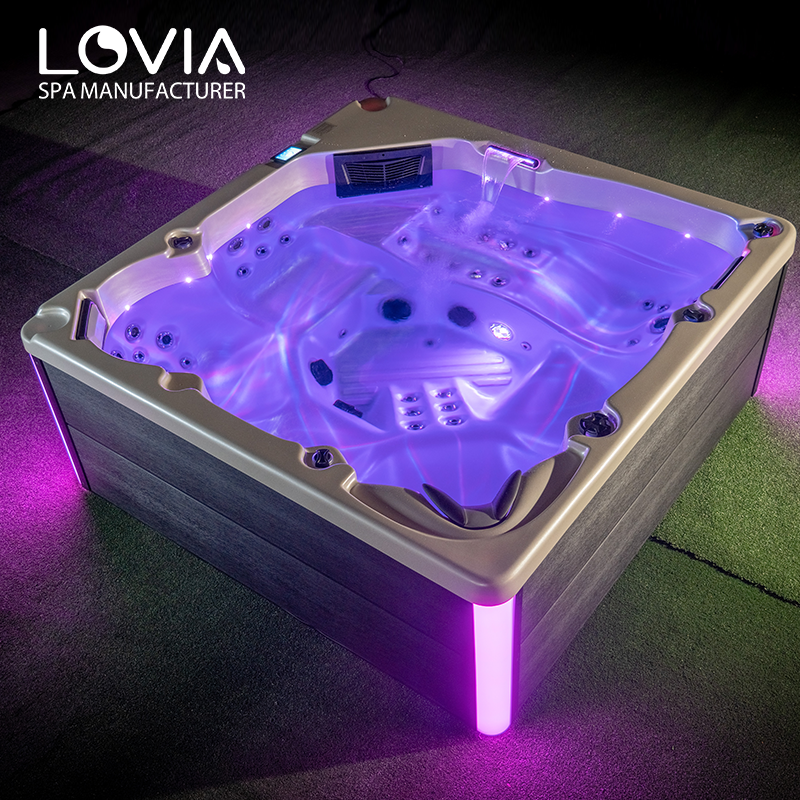
Can the Water in a Spa Hot Tub Really Go Unchanged for Long Periods?
Theoretically speaking, as long as sanitizers are continuously replenished and the filtration cycle is maintained, the water in a whirlpool spa hot tub might seem capable of being used "indefinitely." However, in a real-world usage environment, the answer is quite clear:
The water in a spa hot tub is not suitable for remaining in the tub indefinitely—even if it still appears crystal clear to the naked eye.
The reason is that the "usability" of the water depends not only on its visible clarity but also on a series of invisible yet continuously accumulating chemical and physical changes.
Under Normal Circumstances, How Long Can Water Remain in an Outdoor Spa Hot Tub?
Under typical residential usage conditions, the generally accepted industry guideline is:
•The water should be replaced approximately once every 2 to 4 months.
This empirical guideline is based on the assumption that the following prerequisites are met:
•The whirlpool spa hot tub is used with moderate frequency.
•Water quality parameters (chlorine levels, pH, and alkalinity) are consistently monitored and maintained.
•The filtration system is functioning correctly.
•The filters are cleaned regularly.
•There have been no incidents of abnormal contamination.
If these conditions cannot all be met simultaneously, the length of time the water can remain in the whirlpool spa hot tub will often need to be significantly shortened.
Why Can't Spa Hot Tub Water Be Used for as Long as Swimming Pool Water?
Many people tend to compare spa hot tubs with swimming pools; however, these two systems differ fundamentally in their nature.
1. Vast Difference in Water Volume
A spa hot tub typically holds only a few hundred to just over a thousand liters of water, whereas a swimming pool often contains tens of thousands of liters. The lower the water volume, the more rapidly the concentration of contaminants rises.
2. Higher Water Temperatures
Spa hot tubs are maintained continuously at high temperatures—typically between 35°C and 40°C.
This environment:
•Accelerates the depletion of sanitizers
•Promotes chemical reactions
•Increases the rate at which organic matter decomposes
3. A Higher Proportion of Human-Introduced Contaminants
In a spa hot tub, contaminants introduced by the human body—such as sweat, body oils, and skin flakes—constitute a far larger proportion of the water's total impurity load compared to a standard swimming pool.
Precisely because of these structural differences, the water in a whirlpool spa hot tub is not suitable for indefinite, long-term recirculation.
What factors shorten the usable lifespan of water in a spa hot tub?
The duration for which water remains usable in an outdoor spa hot tub is not a fixed figure; rather, it is influenced by a variety of factors.
Does frequent usage shorten the water's lifespan?
The answer is: Yes—and quite significantly.
Higher usage frequency implies:
•A greater influx of sweat and skin flakes into the water
•An increased volume of organic matter requiring oxidation
•A faster rate of sanitizer depletion
If a spa hot tub is used nearly every day, the water replacement cycle typically needs to be shortened to:
•Approximately 1.5 to 2 months
Does the number of users affect the usable lifespan of the water in a spa hot tub?
This is a critical factor that is often overlooked.
Even if the frequency of use remains constant:
•Usage by a single individual
•Usage by multiple people simultaneously
The impact on water quality differs completely.
Each additional user means:
•A multiplicative increase in sweat, body oils, and skin flakes
•A rapid rise in the organic load within the water
•A significant increase in the volume of contaminants that the sanitizer must process
Consequently, the greater the number of users, the shorter the duration for which the water in the whirlpool spa hot tub remains usable.
Does the outdoor environment cause the water in the tub to "get dirty" faster?
Compared to indoor settings, the water in an outdoor spa hot tub indeed faces a greater number of challenges.
Common environmental influences in outdoor settings include:
•The entry of dust and sand particles into the water
•The falling of leaves, pollen, and insects into the tub
•The introduction of airborne pollutants carried by the wind
•More frequent fluctuations in temperature
All of these factors contribute to an increase in the water's Total Dissolved Solids (TDS) and suspended particles, thereby shortening the water's usable lifespan. Even with a cover in place, the outdoor environment continues to exert a constant influence on the water quality within a whirlpool spa hot tub.
Can the water in the tub remain unchanged indefinitely simply by continuously adding chlorine?
This is a very common misconception.
Why can't adding chlorine extend the lifespan of the water indefinitely?
While chlorine in a spa hot tub can:
•Kill bacteria
•Oxidize organic matter
It cannot remove the following substances:
•Dissolved inorganic salts
•Disinfection byproducts
•Total Dissolved Solids (TDS)
•Stubborn organic residues
Over time, these substances accumulate continuously; even if the water appears crystal clear, its chemical composition has already undergone significant changes.
Eventually, the following issues will arise:
•The water quality becomes "difficult to control"
•Chlorine is consumed at an abnormally rapid rate
•The overall stability of the water declines
At this point, draining and refilling the water is the only effective solution.
How can you tell when the water in your spa hot tub "needs changing"?
In addition to using time-based guidelines, you can identify this need by observing the following signals:
1. The water is consistently difficult to keep clear
Even after:
•Adding sanitizers
•Cleaning the filters
If the water still tends to become cloudy easily, it indicates that the water body has "aged."
2. Chlorine or bromine levels drop abnormally fast
If sanitizer levels plummet shortly after being added, it usually signifies the presence of a large volume of contaminants in the water that cannot be easily neutralized.
3. The water develops an unpleasant odor or causes skin irritation
Even if chemical test readings appear normal, an off-putting smell may be the result of accumulated disinfection byproducts.
4. Bathing comfort has diminished
Sensations of dry or itchy skin while soaking may also be linked to the aging of the water.
These are all signs indicating that the water has remained in the whirlpool spa hot tub for a period that is approaching—or has already exceeded—its reasonable lifespan.
Can effective filtration and circulation systems extend the usable life of the water in the tub?
They can extend it, but not indefinitely.
Robust filtration and circulation systems can:
•Remove suspended particles
•Slow down the rate at which the water becomes cloudy
•Reduce the burden on chemical sanitizers
However, they cannot resolve:
•The accumulation of dissolved contaminants
•The gradual deterioration of the water's chemical balance
Therefore, the role of the filtration system is to delay the need for a water change, not to eliminate it entirely.
Can the water remain in the spa hot tub for a longer period during the winter or when the tub is used infrequently?
This is a question that concerns many spa owners. If:
•Usage frequency has decreased significantly;
•The spa hot tub remains in continuous operation; and
•Water quality continues to be properly maintained;
the useful lifespan of the water may be extended slightly beyond the norm.
However, please note:
•Low outdoor temperatures do not prevent the accumulation of contaminants;
•Disinfection byproducts continue to form; and
•Biofilms may still develop within the plumbing lines.
Therefore, even if the spa is used infrequently, it is not recommended to retain the water for a period exceeding the standard safe usage cycle.
Why might water that "looks clean" actually be unsuitable for continued use?
Understanding this point is key to grasping the concept of water longevity in a whirlpool spa hot tub.
Water "aging" is primarily manifested through:
•Changes in chemical composition;
•A decline in stability; and
•Increased difficulty in treatment and maintenance;
rather than merely through changes in color or clarity.
In other words:
The decision to change the water in a whirlpool spa hot tub should not be based solely on whether it "looks clear," but rather on how "manageable" it remains.
When the water becomes increasingly difficult to maintain, it indicates that it is nearing the end of its useful lifespan.
How should one scientifically assess the retention time of water in a spa hot tub?
From a professional perspective, the following key points are worth remembering:
•Spa hot tub water is not a single-use disposable item, but neither is it permanently usable;
•Time serves merely as a reference; the actual state of the water quality is of far greater importance;
•Disinfection, filtration, and circulation can only delay—they cannot replace—the need for a complete water change;
•Outdoor environments tend to accelerate the aging of water quality; and
•Usage frequency and the number of users are the decisive factors.
