

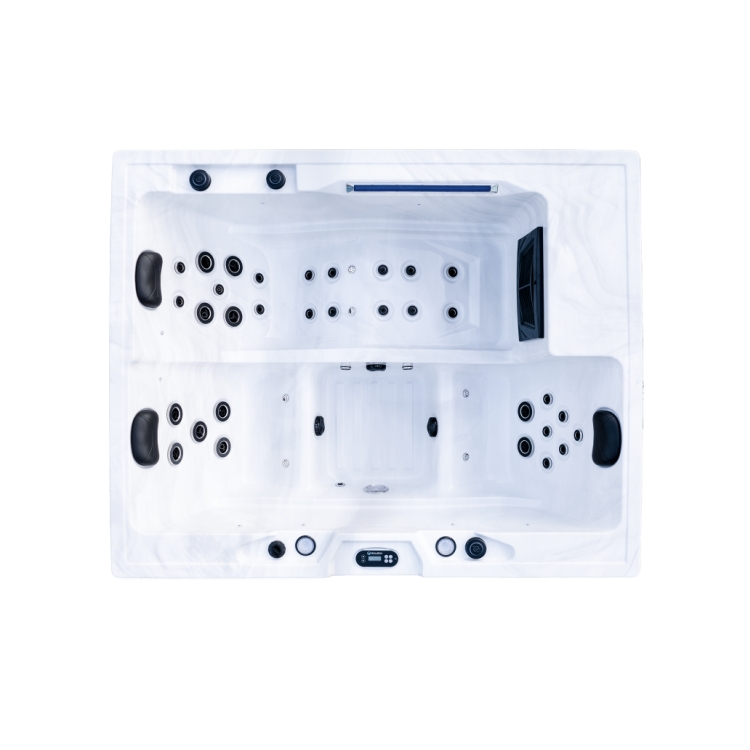
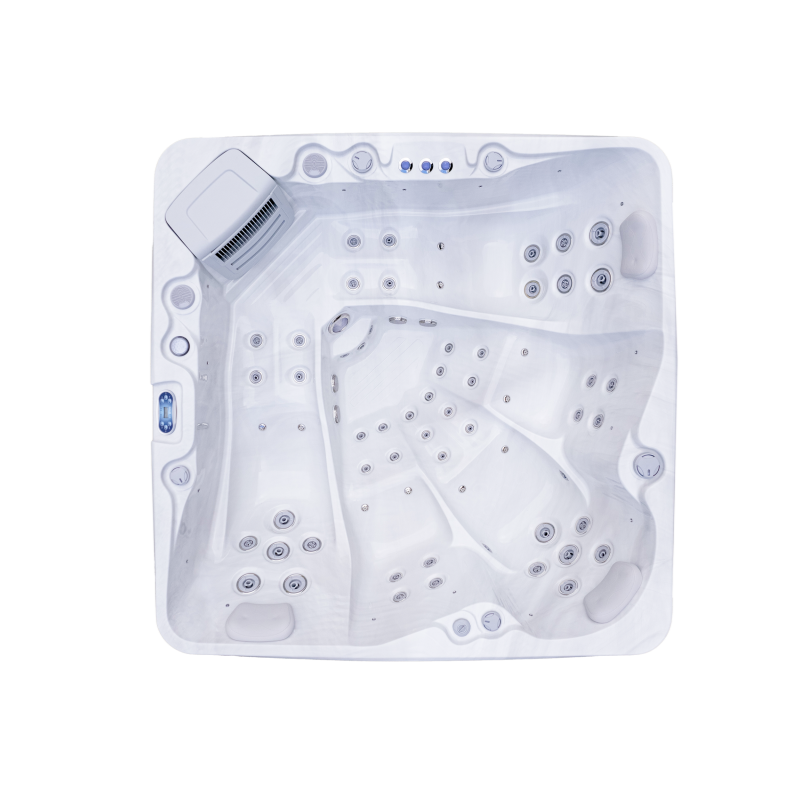
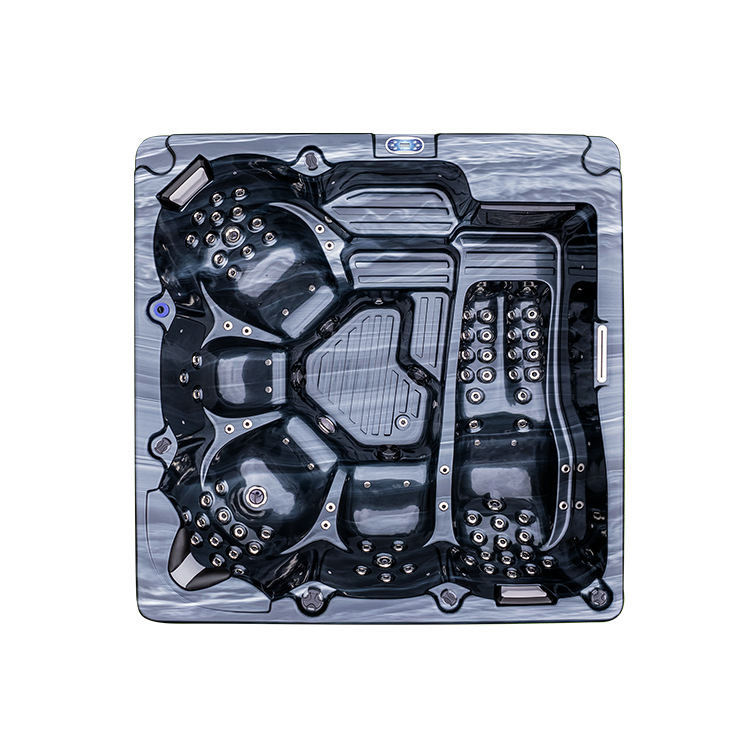
In recent years, outdoor whirlpool jacuzzi tubs have evolved from exclusive amenities found in high-end hotels and vacation villas into lifestyle products gracing residential backyards and patios, offering a blend of relaxation, therapeutic benefits, and social enjoyment. However, amidst this rapid market expansion, a long-underestimated issue—the instability of water quality management and filtration systems—has become increasingly problematic for both users and the industry.
When first encountering outdoor whirlpool spa tubs, consumers often focus on aesthetics, heating speed, or the massage jet experience. It is only after using them for a while that they discover issues like cloudy water, unpleasant odors, bacterial growth, and the need for frequent maintenance are almost inevitable. The root cause of these problems almost always points to one core component: the filtration system.
Unfortunately, the filtration system designs of many outdoor whirlpool jacuzzi tubs on the market remain rudimentary, often suffering from obvious engineering compromises. Common issues include insufficient filtration surface area, poorly designed circulation paths, circulation pump power that is mismatched to the water volume, and the absence or inefficiency of sanitization systems.
Even worse, some low-end products cut costs by reducing water circulation frequency; while the system *appears* to be filtering, the actual water turnover rate falls far below safety standards. This forces users to frequently change the water, add chemicals, or even dismantle and clean the system—not only increasing operating costs but also severely undermining the comfort and enjoyment an outdoor whirlpool spa tub is meant to provide.
In contrast, a truly sophisticated filtration system is not merely a component of the equipment; it is the central hub of the entire outdoor whirlpool jacuzzi tub experience. Put simply, a hot tub without an efficient filtration system is essentially nothing more than a static pool with a heater, rather than a genuine wellness hydrotherapy device.
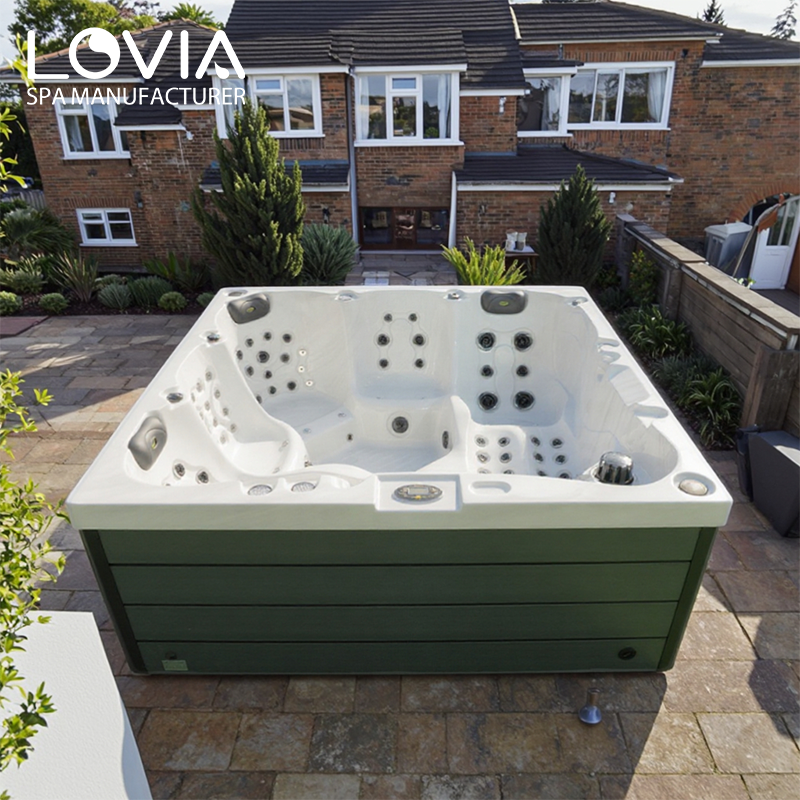
Why Is the Filtration System So Critical for Outdoor Spa Hot Tubs? Three Major Pain Points Often Overlooked by the Industry
To understand the importance of the filtration system, one must first consider the environment in which outdoor whirlpool hot tubs are used. Unlike standard swimming pools or bathing facilities, outdoor whirlpool spa tubs typically exhibit the following characteristics:
First, high operating temperatures (usually maintained between 36°C and 40°C), a range highly conducive to microbial proliferation;
Second, frequent contact with organic contaminants such as human skin, sweat, and skincare product residues;
Third, small water volume (typically 800L–2000L), leading to a rapid rise in contaminant concentration;
Fourth, exposure to the outdoor environment, resulting in contamination from external sources like dust, leaves, and insects.
Under these conditions, if the filtration system is poorly designed, the water quality in an outdoor whirlpool jacuzzi tub deteriorates far more rapidly than in a standard pool. Industry statistics show that in products with weak filtration systems, the total bacterial count can increase more than tenfold within 48 hours of use; meanwhile, without effective circulation and filtration, turbidity (NTU levels) can rise within three days to a point where the water is unsuitable for skin contact.
However, the reality is that many manufacturers prioritize aesthetic design and massage functionality while neglecting fundamental water treatment capabilities. This directly leads to three core pain points for users:
1) High water maintenance costs
Users are forced to frequently change the water or use large quantities of chemical disinfectants, resulting in long-term costs that may even exceed the price of the unit itself.
2) Inconsistent user experience
Even with the same outdoor spa hot tub, water quality varies significantly over time, resulting in a lack of consistency in the user experience.
3) Potential health risks
Inadequate filtration allows bacteria, fungi, and even biofilms to thrive within the piping system, creating risks of skin allergies or infections with long-term use.
These issues are not merely a matter of insufficient cleaning frequency; they are structural problems rooted in system design.
Analysis of the Operating Principles of Outdoor Spa Hot Tub Filtration Systems
A standard outdoor whirlpool hot tub filtration system is essentially a closed-loop water circulation and purification system. Its primary objective is to complete a highly efficient purification cycle for the entire volume of water in the shortest possible time. Industry standards generally dictate that a high-quality system should complete a full water turnover (Turnover Rate) within 15 to 30 minutes.
Outdoor whirlpool hot tub filtration systems typically comprise the following core components:
1. Circulation Pump System
The circulation pump serves as the "heart" of the entire filtration system, driving the continuous flow of water through the piping network. For standard outdoor whirlpool spa tubs with capacities ranging from 800L to 1,500L, pump power typically falls between 0.25 HP and 1.0 HP.
Key specifications for circulation pumps include:
•Flow rate: Typically 150 L/min to 450 L/min.
•Head (lift): Determines the pump's ability to drive water effectively through the filtration system.
•Energy consumption: High-quality systems often utilize a low-power, continuous circulation mode (24-hour micro-circulation).
If the circulation pump is poorly designed, effective water turnover cannot be achieved, regardless of how advanced the filtration media may be.
2. Filtration Media System
There are currently three mainstream filtration methods used in outdoor whirlpool jacuzzi tubs:
(1) Cartridge Filter
This is the most common type; it utilizes a pleated structure to increase surface area, typically offering a filtration precision of 10–20 microns. While cost-effective and easy to replace, these filters are prone to clogging and require frequent cleaning.
(2) Sand Filter System
This method relies on physical entrapment using quartz sand or glass filter media. It offers a filtration precision of approximately 20–40 microns but provides superior stability, making it better suited for large-capacity outdoor whirlpool hot tub systems.
(3) Advanced Composite Media
Adopted by high-end products in recent years, this solution improves filtration precision to 5–10 microns. It often incorporates antimicrobial coatings or nanostructured designs to significantly reduce the likelihood of biofilm formation.
In practical operation, finer filtration media is not necessarily better; the media must be dynamically matched with the circulation speed, pump power, and water volume.
3. Multi-stage Filtration Structure
Modern high-end outdoor whirlpool spa tub filtration systems typically employ a three- or even four-stage purification structure:
•Stage 1: Physical interception (hair, leaves, particulate matter)
•Stage 2: Fine filtration (micro-particles, sebum residue)
•Stage 3: Chemical or oxidative treatment (chlorine/bromine/ozone)
•Stage 4: Bacterial growth control (UV or silver ion systems)
The core purpose of this multi-stage structure is to reduce the burden on any single system component and enhance overall stability.
4. Disinfection and Water Quality Control Systems
Filtration alone cannot resolve microbial issues; therefore, modern outdoor whirlpool jacuzzi tubs often incorporate supplementary disinfection systems:
•Ozone systems: Destroy bacterial structures through strong oxidation
•UV systems: Disrupt DNA structures to inhibit reproduction
•Chlorine/bromine dosing systems: Maintain baseline sanitization capabilities
Data shows that incorporating an ozone system can reduce the total bacterial count in the water by approximately 70%–90% while simultaneously cutting chemical usage by over 30%.
How does a high-efficiency filtration system truly improve the outdoor spa hot tub experience?
From a user experience perspective, the quality of the filtration system directly impacts three key dimensions:
1. Water Clarity and Tactile Feel
A high-efficiency filtration system can stabilize water turbidity between 0.5 NTU and 1.0 NTU, keeping the water visually clear over the long term while reducing the sticky sensation on the skin.
2. Extended Usage Cycles
While standard systems may require water changes every 2–3 days, optimized systems can extend this interval to 7–14 days, significantly lowering maintenance costs.
3. Energy Efficiency Optimization
Optimizing the circulation system can reduce pump operating time by 15%–30%, indirectly lowering overall energy consumption.
Industry Status and Technological Gaps: Why is the experience with many outdoor spa hot tubs inconsistent?
The biggest issue in the current market is not a lack of filtration systems, but rather the outdated design philosophy behind them. Many products remain stuck at the "filtration equals problem-solving" stage, overlooking three higher-level issues:
•Dynamic fluctuations in water load (varying pollution intensity based on the number of users)
•Dead zones in piping and biofilm formation
•The interplay between circulation efficiency and the thermal system
Especially in entry-level products, outdoor whirlpool spa tubs often suffer from excessively long circulation paths and too many elbows, resulting in flow losses exceeding 30%; this creates a significant discrepancy between rated filtration capacity and actual performance.
LOVIA®’s Design Approach to Outdoor Whirlpool Hot Tub Filtration Systems
In this sector, LOVIA® prioritizes systems engineering thinking over the mere stacking of isolated technologies. Its core philosophy is that "water circulation efficiency takes precedence over raw filtration precision." By redesigning the internal plumbing of the whirlpool jacuzzi tub, the filtration system shifts from passive treatment to active circulation optimization.
Key optimization strategies include:
•Shortening circulation paths by approximately 20%–35% to minimize flow loss
•Utilizing a tiered filtration structure for the graded treatment of different contaminants
•Implementing a continuous micro-circulation mode instead of intermittent, high-power circulation
•Optimizing the coordinated control logic between the hot water circulation and filtration systems
The core value of this design is that the whirlpool jacuzzi tub maintains stable water quality even with frequent use, rather than relying on constant maintenance to preserve a superficial user experience.
FAQ: Common Questions About Outdoor Spa Hot Tub Filtration Systems
Q1: How often does the water in an outdoor whirlpool jacuzzi tub need to be changed?
With standard filtration systems, it is typically every 2–5 days; with high-efficiency circulation and multi-stage filtration systems, this can be extended to 7–14 days, depending on usage frequency and environmental pollution levels.
Q2: Does a more powerful filtration system guarantee cleaner water?
Not necessarily. Filtration effectiveness depends on the balance of circulation speed, filtration precision, and system architecture, rather than any single parameter.
Q3: Is it necessary to use chemical disinfectants in outdoor whirlpool jacuzzi tubs?
Most outdoor whirlpool spa tubs still require basic disinfection, but the use of chemical agents can be significantly reduced when supported by ozone and UV systems.
Q4: Does the filtration system affect the heating speed?
A well-designed system will not significantly compromise heating efficiency; in fact, it can even enhance overall energy efficiency through optimized thermal circulation.
Q5: How do you determine if an outdoor whirlpool spa tub filtration system is excellent?
The key lies in three factors: whether the water circulation time is sufficiently short, whether the filtration process is multi-stage, and whether the system supports continuous micro-circulation—rather than simply focusing on the type of filter cartridge.
