

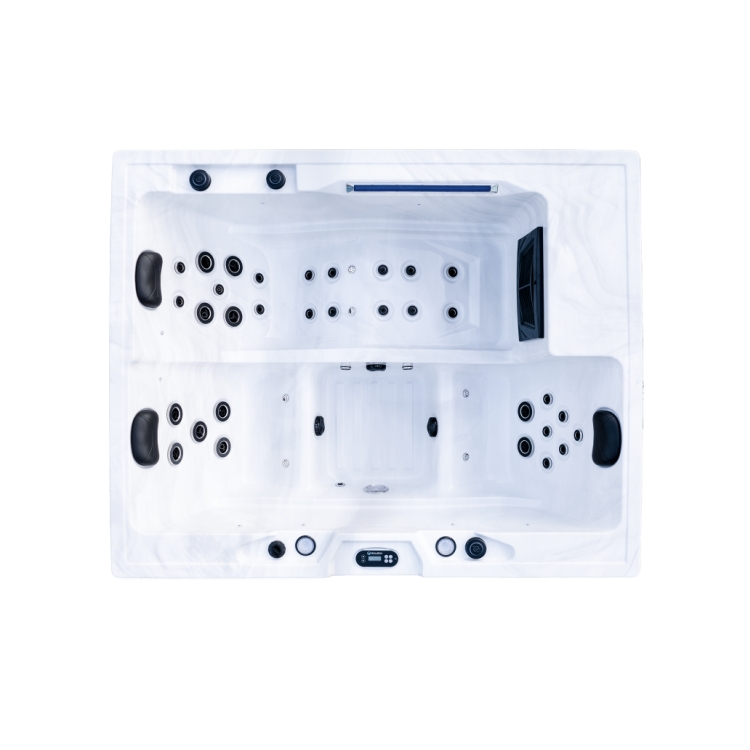
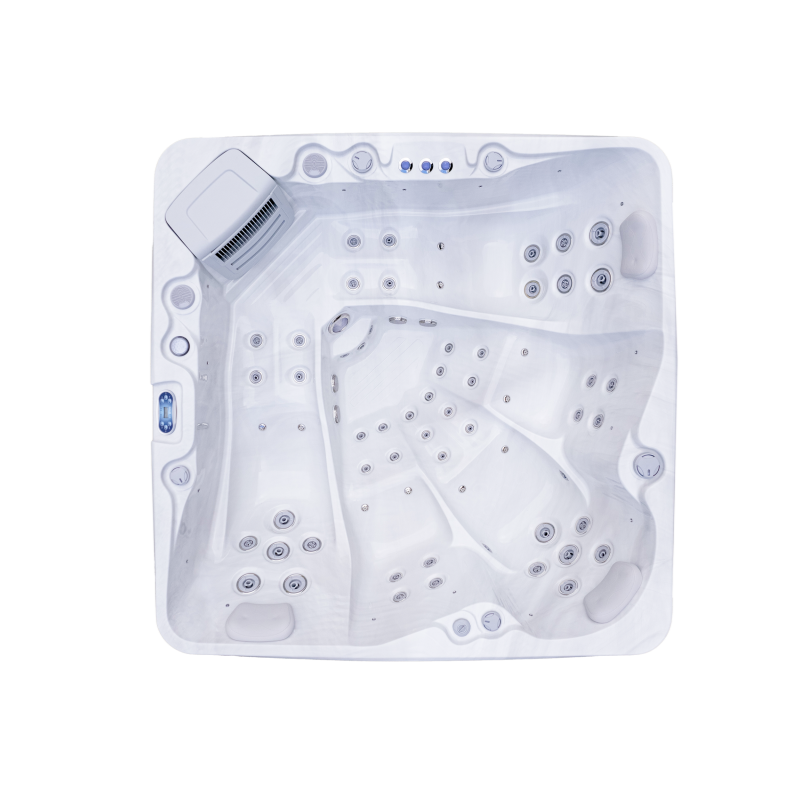
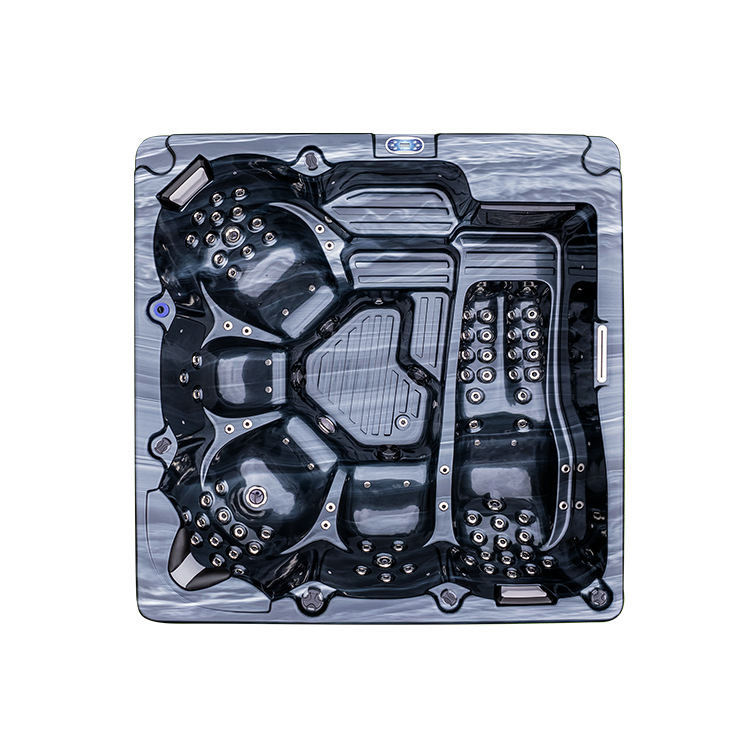
When purchasing an outdoor spa hot tub, many buyers focus on features like the number of massage jets, heating systems, filtration setups, insulation performance, and aesthetics. However, they often overlook a seemingly simple yet crucial issue: how should the water level be set?
Water level management is one of the most overlooked factors throughout the lifespan of an outdoor spa hot tub, yet it is also a primary cause of equipment malfunctions and a diminished user experience. Statistics from the North American spa industry indicate that over 30% of after-sales issues stem from incorrect filling methods, abnormal water levels, or air intake problems in the circulation system.
In the marketplace, many brands and salespeople prioritize sales over educating users on the principles of proper water level management. Consequently, many households continue to fill their tubs based merely on guesswork or past experience after installation.
Some users overfill their tubs, fearing that insufficient water will compromise the massage performance; others keep the water level too low to conserve water; and some believe that as long as the jets are submerged, the tub will function correctly. In reality, however, water levels that are either too high or too low can directly impact the circulation system, heating efficiency, filtration performance, and the overall lifespan of the equipment.
For professional spa hot tub manufacturers, water level management is not merely a matter of adding water; it is a complex technical issue involving fluid dynamics, circulation and filtration systems, thermal management, and user comfort.
Therefore, understanding how to set the correct water level not only enhances the daily user experience but also extends the equipment's lifespan and reduces long-term maintenance costs.
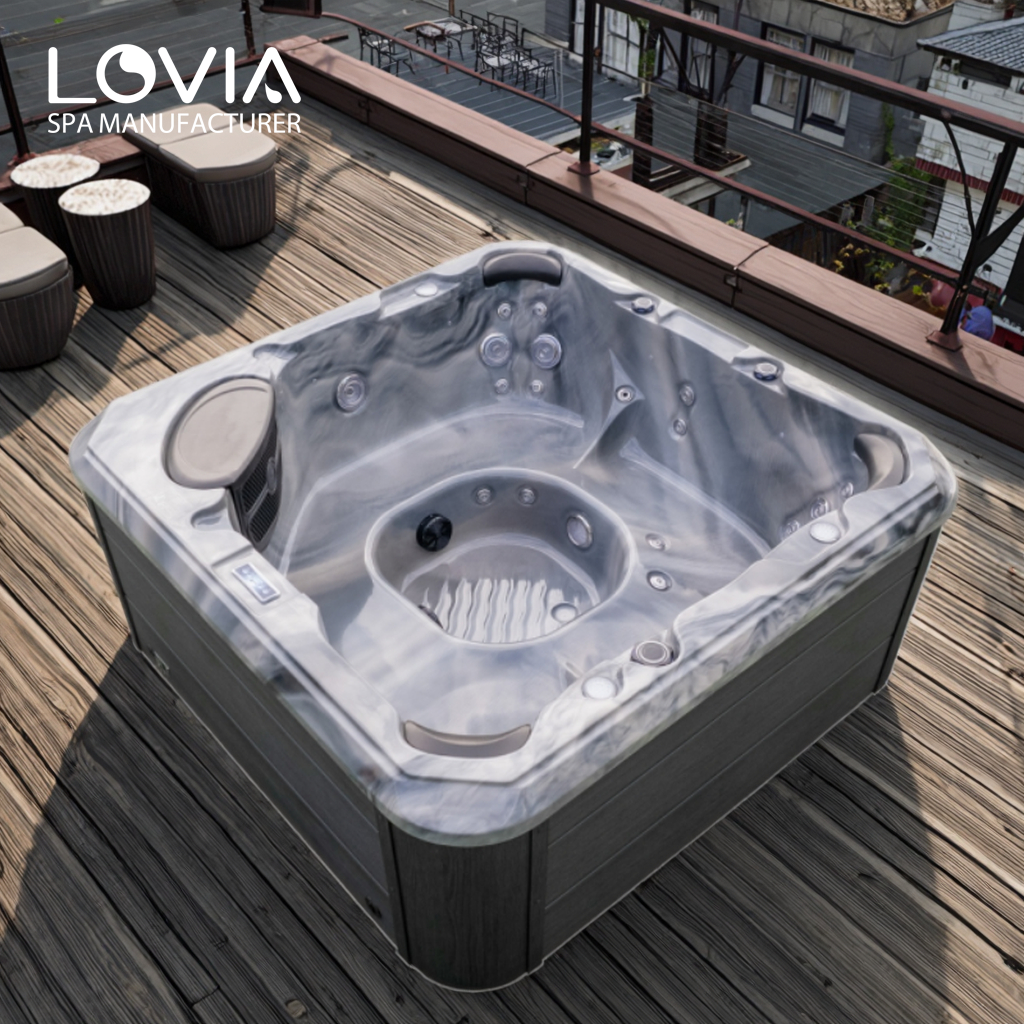
Why Is the Water Level So Important for Jacuzzi Outdoor Spa Tubs?
Many consumers assume that an outdoor spa hot tub will function properly as long as there is enough water in it. In reality, however, the water level is the fundamental prerequisite for the entire system to operate correctly.
A standard outdoor jacuzzi hot tub typically consists of the following core systems:
•Water circulation system
•Filtration system
•Heating system
•Massage jet system
•Ozone or UV disinfection system
•Automatic monitoring system
Almost all of these systems rely on a stable water level to function effectively. If an outdoor spa hot tub were compared to the human body, the water would be the blood, and the circulation pump would be the heart.
When the water level is too low, the circulation pump may draw in air, creating an "air lock." This not only impairs circulation efficiency but can also trigger the heater's safety protection mechanism due to a lack of water.
Conversely, if the water level is too high, it leads to a different set of issues, such as:
•Water overflowing when people enter the tub
•Increased risk of moisture affecting electrical components
•Imbalanced concentration of water treatment chemicals
•Accelerated heat loss
Therefore, properly managing the water level is essentially about ensuring the entire system operates at peak performance.
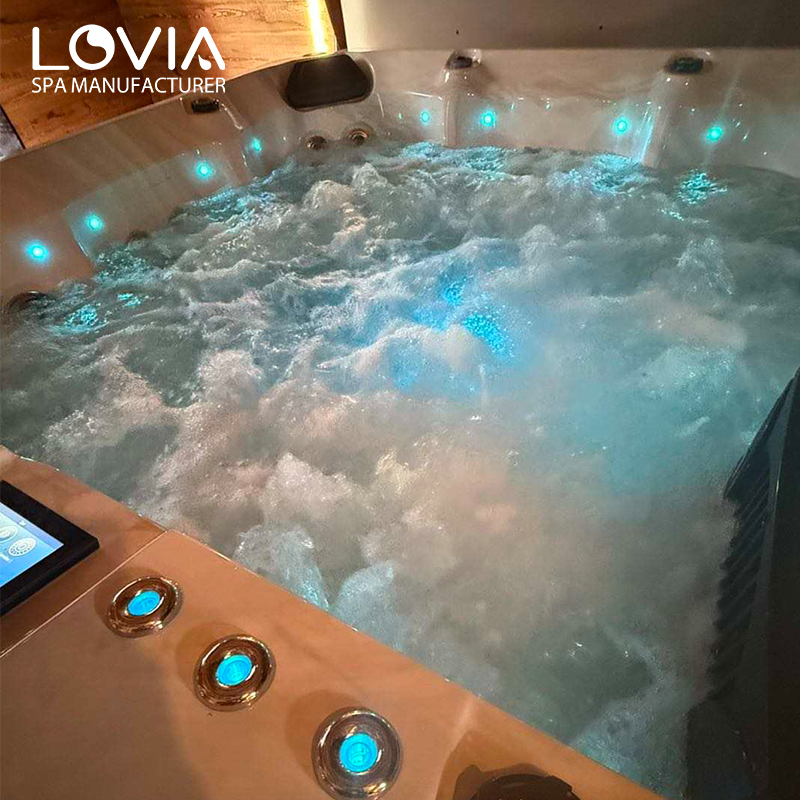
What is the standard water level for a jacuzzi outdoor spa tub?
In terms of industry standards, there is no single, universal water level line for all outdoor jacuzzi hot tubs, as specifications vary by brand, model, and structural design.
However, according to mainstream international design guidelines, most spa products recommend maintaining the water level within the following range:
•Approximately 5 to 10 centimeters above the highest jet.
•Or reaching a point about two-thirds of the way up the filter opening.
This is the reference standard adopted by the vast majority of professional outdoor spa hot tub manufacturers worldwide.
The reason is quite simple.
When the water level reaches this height:
•The circulation system can draw water steadily;
•The jet system maintains consistent pressure;
•The heating system remains fully submerged during operation;
•Water does not immediately overflow when users enter the tub.
For residential outdoor jacuzzi hot tubs with a capacity of approximately 1,000 to 2,000 liters, this typically means the effective water level accounts for about 85%–90% of the total volume.
What problems arise if the water level is too low?
Many users do not realize that outdoor spa hot tubs continuously lose water during operation.
Causes include:
•Evaporation
•Water carried out by users entering and exiting
•Draining for cleaning
•Filter backwashing
Data shows that in hot summer weather, an outdoor jacuzzi hot tub may lose 5–10 millimeters of water depth per week due to evaporation. If water is not replenished regularly, the level can easily drop too low.
Problems caused by low water levels in outdoor jacuzzi hot tubs:
1. Impaired circulation system operation
Circulation pumps are designed to continuously draw in a steady flow of water.
•When the water level drops below the intake:
•Air enters the plumbing lines;
•Water flow decreases;
•The pump runs dry (cavitation/air-locking).
•Prolonged dry running significantly shortens the pump's lifespan.
2. Heater shutdown for protection
Modern outdoor jacuzzi hot tubs are typically equipped with flow sensors. The system automatically stops heating when flow is insufficient to prevent damage to the heating element caused by "dry firing" (heating without water contact).
Many users mistakenly believe the heater has malfunctioned, when in fact it is simply a protective shutdown triggered by low water levels.
3. Reduced massage performance
When the water level is too low:
•Jet pressure drops;
•Air bubble output becomes unstable;
•Massage intensity is noticeably weakened.
Ultimately, this compromises the overall spa experience.
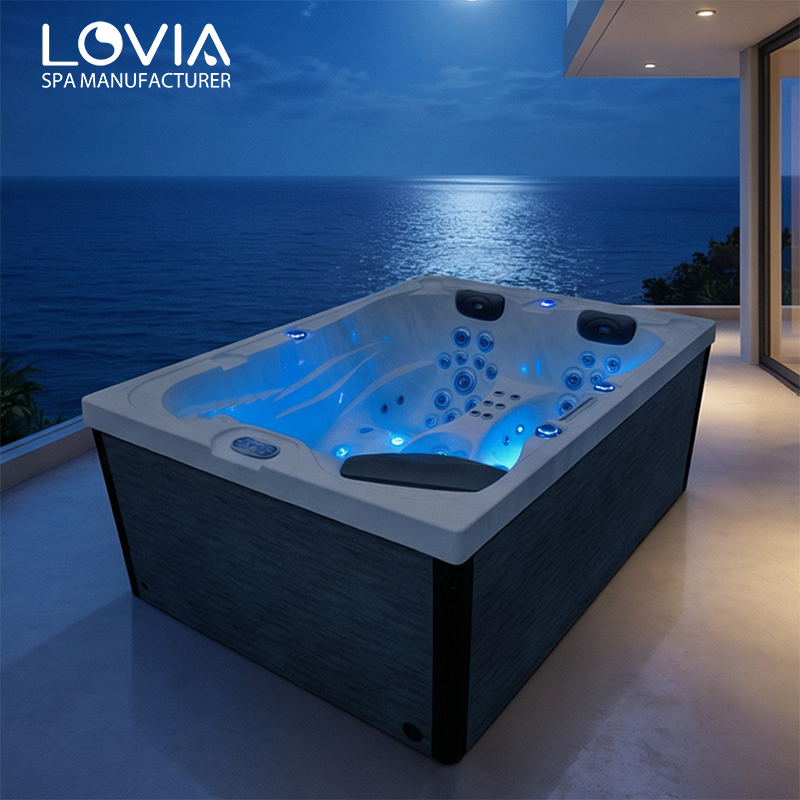
Excessively high water levels in outdoor spa hot tubs also pose risks:
Compared to low water levels, issues associated with high water levels are often less obvious, as the equipment may appear to be functioning normally while risks gradually accumulate.
1. Risk of overflow
An adult entering an outdoor jacuzzi hot tub typically displaces 50–80 liters of water; if a family of four enters simultaneously, the displaced volume can reach around 300 liters. If the initial water level is too high, this displaced water will spill over the sides of the tub.
Frequent overflow not only wastes water but can also damage the surrounding ground and the equipment's foundation.
2. Imbalance in water treatment chemical concentrations
Many users habitually add fixed dosages of:
•Chlorine tablets;
•Bromine agents;
•pH adjusters.
When the actual volume of water increases, the concentration of these chemicals is diluted, resulting in reduced disinfection efficiency.
3. Reduced heat retention efficiency
A higher water level means:
•A larger surface area exposed to the air;
•Faster heat exchange;
•Higher energy consumption.
According to industry test data:
If the water level in an outdoor spa hot tub exceeds the recommended line by 10 centimeters, heat loss during winter can increase by approximately 8%–15%.
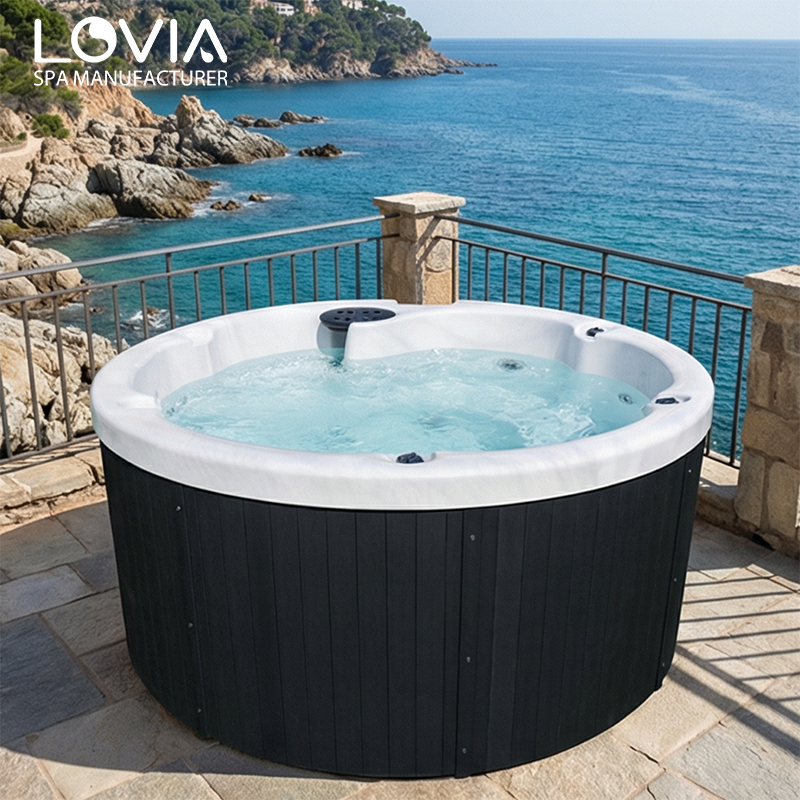
How do you accurately determine the optimal water level for a jacuzzi outdoor spa tub?
For the average household user, the following three-step method can be used.
Step 1: Check the filter location
Most outdoor jacuzzi hot tubs are designed with a dedicated filter compartment. Ideally, the water level should cover the filter intake while maintaining a safe margin above it.
This is the simplest and most effective way to gauge the level.
Step 2: Observe the highest jet
The water surface should be slightly above the highest jet—typically maintaining a coverage depth of 5–10 cm. This ensures the jet system operates stably.
Step 3: Simulate actual use
After the initial fill, have family members get into the jacuzzi hot tub.
Observe whether:
•Water overflows
•The water level drops below the jets
Then, make fine adjustments to reach the optimal level.
This is the testing method that most closely mimics real-world usage.
Why do professional jacuzzi outdoor spa tub brands prioritize water level design?
In recent years, the global outdoor spa hot tub industry has shifted from competing solely on equipment features to competing on the overall system experience. Professional manufacturers focus not just on the equipment itself, but on long-term operational stability for the user.
For instance, during product development, LOVIA® optimizes configurations for different models by:
•Refining the filter compartment structure;
•Scientifically designing the intake height;
•Balancing jet system pressure;
•Increasing the circulation system's tolerance for operational variances.
This design philosophy helps users easily maintain the proper water level range and reduces system malfunctions caused by improper operation.
With over thirty years of experience in outdoor jacuzzi hot tub manufacturing and a long-standing presence in mature global markets, LOVIA® has accumulated extensive expertise in residential hot tubs and swim spas. For home users, a well-engineered water circulation system often delivers more value than simply increasing the number of jets.
FAQ
FAQ 1: How often do I need to top up the water in my outdoor spa hot tub?
Under normal conditions, a weekly check is sufficient. During hot summer weather or periods of frequent use, it is recommended to check the water level every 3 to 5 days.
FAQ 2: Do I need to drain the hot tub after it rains?
If heavy rain causes the water level to exceed the recommended range, you should drain some water to prevent overflow and chemical concentration imbalances.
FAQ 3: Can I still use the jacuzzi outdoor spa tub if the water level is below the jets?
It may run for a short time, but long-term use could cause the circulation system to draw in air, increasing the risk of equipment damage.
FAQ 4: Why does my outdoor jacuzzi hot tub constantly run low on water?
Common causes include natural evaporation, frequent use, and minor leaks in the plumbing or seals; regular system inspections are recommended.
FAQ 5: What is the optimal operating temperature for an outdoor spa hot tub?
Most residential users prefer a temperature between 37°C and 39°C, as this range offers a good balance between comfort and energy efficiency.
