

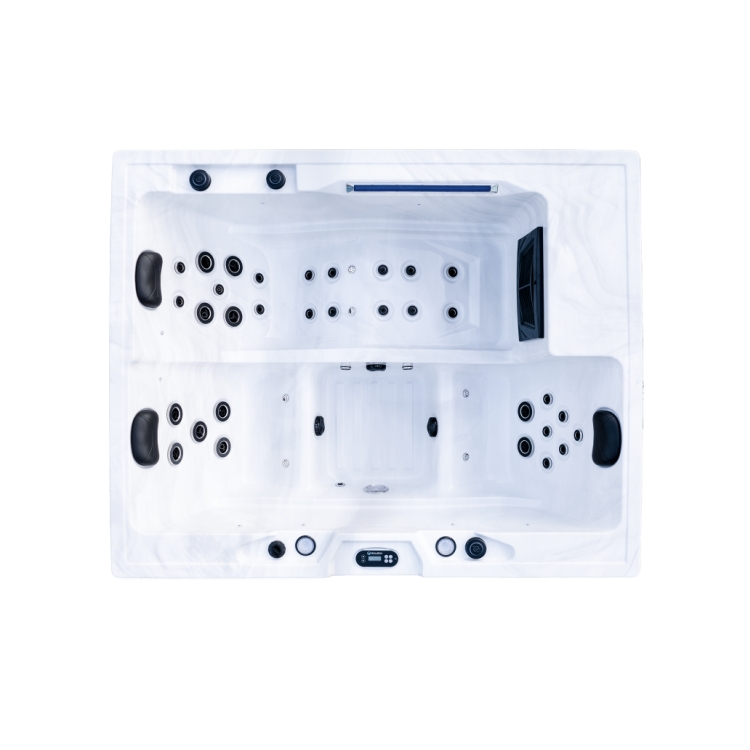
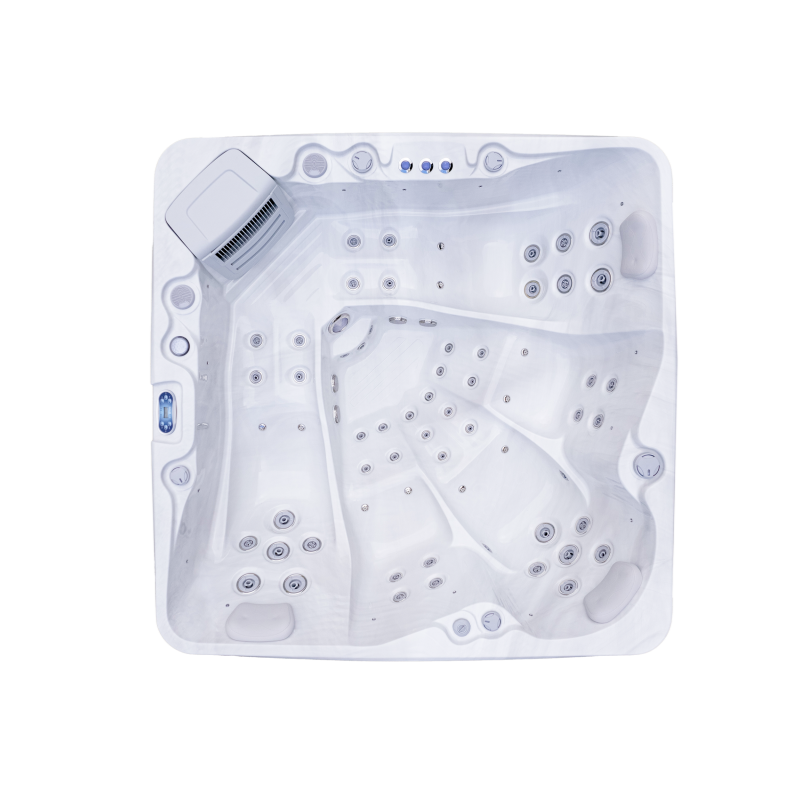
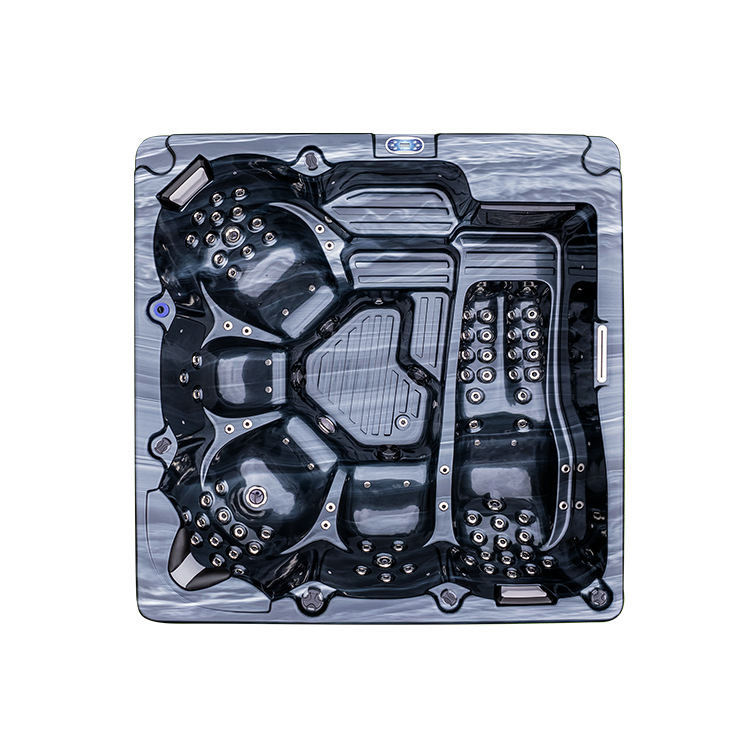
As consumer priorities shift toward holistic wellness, "weight loss" is no longer a topic confined to treadmills, gyms, and low-carb diets. Consumers are increasingly focusing on factors previously overlooked—such as recovery, sleep, stress management, and metabolic efficiency. This shift has brought a product once viewed merely as a "luxury leisure item"—the outdoor whirlpool jacuzzi tub—back into the public eye. Particularly in Western markets, outdoor spa hot tubs are evolving from backyard entertainment fixtures into components of home health management systems. Amidst this trend, a common question arises: Does using an outdoor whirlpool jacuzzi tub actually burn calories? Can it aid in weight loss?
Unfortunately, market responses to this question have long been polarized. Some brands, eager to drive sales, market spa hot tubs as "miracle tools for slimming down while lying still," implying that daily soaking alone leads to sustained fat loss. Others take an overly conservative stance, dismissing spa hot tubs as mere relaxation devices and completely denying their potential impact on metabolism and energy expenditure. Neither perspective is scientifically rigorous.
The former exaggerates benefits, potentially misleading consumers; the latter ignores significant recent findings in thermotherapy, exercise recovery science, and metabolic research. A more practical issue is that many low-end products fail to provide a stable thermal environment—suffering from temperature fluctuations, poor heat retention, weak jet pressure, and inefficient water circulation. These flaws undermine the therapeutic effects, leading consumers to mistakenly believe that the idea of "burning calories in a whirlpool spa tub" is nothing more than a marketing gimmick.
In reality, the question isn't whether outdoor spa hot tubs are effective, but rather: given proper usage and high-performance equipment, to what extent can they influence human metabolism?
The answer is affirmative—they do help the body burn extra calories. However, their value lies not in replacing exercise, but in indirectly optimizing the conditions for fat loss by influencing blood circulation, thermoregulation, stress hormones, and recovery efficiency.
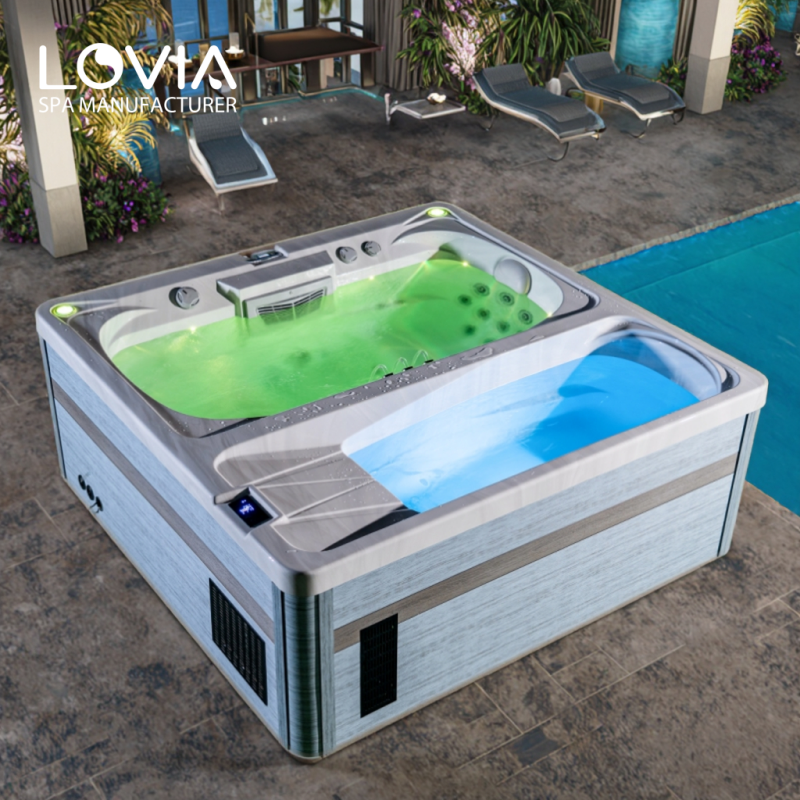
Why do outdoor whirlpool spa tubs cause the body to burn more calories?
The calories the human body burns daily come primarily from basal metabolism, physical activity, and the digestion of food. Basal metabolism typically accounts for 60% to 75% of total energy expenditure; in other words, even when you are completely inactive, your body consumes a significant amount of energy just to maintain functions such as breathing, heartbeat, body temperature regulation, and organ operation.
Many people believe that only active exercise increases calorie burning, but in reality, changes in ambient temperature also affect metabolic rates. When the body is exposed to an environment significantly warmer than its core temperature, it must activate complex thermoregulatory mechanisms to prevent the core temperature from rising too high. This regulatory process itself consumes energy.
When you step into an outdoor spa hot tub with a temperature of approximately 38°C to 40°C, temperature receptors on your skin rapidly transmit heat signals to the central nervous system. This triggers a series of physiological responses: peripheral blood vessels dilate, heart rate rises, blood flow accelerates, and sweating increases, while the balance between the sympathetic and parasympathetic nervous systems shifts. While these changes might simply feel like "getting hot," each process actually requires additional energy.
A notable study conducted by Loughborough University in the UK illustrates this well. Researchers divided participants into two groups: one group engaged in one hour of moderate-intensity cycling, while the other spent one hour soaking in 40°C hot water. The results showed that the cycling group burned an average of approximately 630 kcal, whereas the hot-soaking group burned an average of about 140 kcal. Although 140 kcal is far less than the energy expended during exercise, it remains a significant figure. In terms of daily activity, this is roughly equivalent to the energy burned during a brisk walk of 25 to 30 minutes.
This means that even when you are sitting still in an outdoor whirlpool jacuzzi tub, your body is not truly "at rest." Your circulatory system, thermoregulatory system, and certain metabolic processes continue to function, resulting in ongoing calorie burning.
Why do outdoor hot tubs offer superior heat therapy effects compared to standard bathtubs?
Many consumers ask: if soaking in hot water burns calories, isn't a standard bathtub just as effective? Theoretically, yes; however, in practice, the results often differ significantly.
The key lies in the fact that truly effective heat therapy requires more than just hot water; it demands a sustained, stable thermal environment, uniform temperature distribution, and sufficient immersion depth. The main drawback of standard indoor bathtubs is that the water temperature drops too quickly. Many household bathtubs experience a noticeable drop in water temperature within 15 to 20 minutes of being filled with hot water—a process that accelerates during winter. Once the temperature falls from 40°C to around 36°C, the thermal stimulus acting on the body diminishes significantly; the heart rate elevation tapers off, vasodilation effects weaken, and the metabolic boost naturally subsides.
High-quality outdoor spa hot tubs, however, operate quite differently. Professional-grade models typically feature precision thermostatic control systems, multi-layered insulation, and integrated circulation, filtration, and heating modules. These components allow the tub to consistently maintain an optimal therapeutic temperature range of 38°C to 40°C over extended periods. This stability is crucial because the body's metabolic response to thermal stimulation is not instantaneous; it requires sustained exposure to be fully activated.
Furthermore, premium outdoor spa hot tubs incorporate hydrotherapy jet systems. Many people underestimate the impact of water massage on metabolism. The directional flow from high-pressure jets offers not only comfort but also deep stimulation for muscles and soft tissues. Under the pressure of the water, local blood circulation intensifies, tissue oxygenation improves, and the elimination of metabolic waste products accelerates. This synergistic combination of heat therapy and hydrotherapy is difficult to achieve with standard bathtubs.
This is why manufacturers specializing in high-end spa systems, such as LOVIA®, invest heavily in R&D regarding temperature precision, jet placement, and fluid dynamics. For users truly focused on recovery efficiency and health management, these technical details determine far more than just comfort; they dictate whether the outdoor spa hot tub can effectively deliver the benefits of heat therapy.
What exactly happens to the body when using an outdoor spa hot tub?
From a physiological perspective, the effects of an outdoor spa hot tub are far more complex than most people realize.
First, there are changes in heart rate. While a resting adult heart rate typically ranges from 60 to 80 beats per minute, immersion in hot water often raises it to between 90 and 110 beats per minute. This range approaches the level of light aerobic activity, such as a leisurely walk or low-intensity cycling. Although you are not performing overt physical movements, your cardiovascular system is under an increased workload.
Second, there are changes in blood circulation. Exposure to hot water causes blood vessels to dilate, directing more blood flow to the limbs and the surface of the skin. This boost in circulation has several effects: on one hand, oxygen and nutrients are delivered more efficiently to tissue cells; on the other, metabolic waste products—such as lactic acid and inflammatory markers—are flushed out more quickly. This is why many fitness enthusiasts enjoy using an outdoor jacuzzi hot tub after a workout; it significantly enhances the recovery process.
Beyond that, there is an often-overlooked factor: hormonal regulation.
Many people struggle to lose weight not because they lack knowledge about the "eat less, move more" principle, but because they are under chronic stress. Chronic stress in modern life leads to persistently high cortisol levels. Elevated cortisol is often accompanied by increased appetite, enhanced fat storage, and poorer sleep quality—factors that specifically promote the accumulation of abdominal fat. Research indicates that regular heat therapy can lower sympathetic nervous system activity and help the parasympathetic nervous system become dominant, thereby alleviating stress.
In other words, the value of an outdoor spa hot tub lies not merely in "directly burning calories," but in its ability to optimize the body's overall metabolic environment. For many who struggle with fat loss, this indirect benefit is arguably more significant than the calorie burn itself.
Can an outdoor jacuzzi hot tub directly help with weight loss?
If the question is: "Can I lose weight solely by soaking in an outdoor spa hot tub, without exercising or controlling my diet?"
The answer is: It is very difficult.
This is a fact that must be acknowledged.
Let’s look at the numbers. Suppose a 30-to-45-minute soak in an outdoor jacuzzi hot tub burns an average of 140 extra kilocalories. If you use it five times a week—roughly 20 times a month—the total energy expenditure is about 2,800 kilocalories. Since one kilogram of fat represents approximately 7,700 kilocalories of energy, soaking alone would theoretically contribute to the loss of only about 0.36 kilograms of fat per month.
This figure is not particularly impressive; therefore, it is unrealistic to view an outdoor spa hot tub as the primary tool for weight loss or to expect significant weight reduction from it alone.
However, the picture changes completely if you look at it from a different perspective.
Imagine the whirlpool spa tub helps improve your sleep, increasing the duration of deep sleep; helps relieve stress, reducing the urge to binge eat; and aids in faster recovery, enabling you to complete one or two extra workouts each week. Consequently, the total value of fat loss generated is not merely the simple 140 kcal figure; rather, it is amplified through the compounding effects of multiple physiological processes.
Truly successful fat loss is never achieved through a single, isolated measure but is instead built upon systemic optimization.
Who is best suited to use an outdoor spa hot tub to aid in fat loss?
Practical experience suggests that three groups of people benefit the most.
The first group consists of fitness enthusiasts. For those who train frequently, the greatest enemy is not a lack of training, but inadequate recovery. Muscle soreness, fascial tightness, and poor sleep quality can all disrupt training consistency. An outdoor jacuzzi hot tub improves local circulation, relieves muscle tension, and accelerates recovery, thereby enabling more consistent training.
The second group comprises sedentary office workers. Prolonged sitting often leads to poor circulation, fluid retention, a sluggish metabolism, and lower back discomfort. For these individuals, the issue is not simply a lack of exercise, but a body kept in a state of prolonged physical inactivity. Regular use of an outdoor whirlpool spa tub can improve microcirculation and boost the body's vitality.
The third group includes middle-aged and older adults. Many in this demographic cannot engage in high-impact exercise due to joint strain or chronic pain. Compared to running or high-intensity workouts, an outdoor jacuzzi hot tub offers a low-impact, low-risk method to support metabolism; it enhances comfort while also facilitating some degree of caloric expenditure.
How can one properly use an outdoor whirlpool jacuzzi tub to aid in fat loss?
Scientific usage is more important than frequency.
The optimal water temperature is between 38°C and 40°C. Temperatures below 37°C provide insufficient thermal stimulation, while those exceeding 41°C may place undue strain on the cardiovascular system. A single soak should last between 20 and 40 minutes to ensure effective heat therapy while minimizing the risk of dehydration.
In terms of timing, the ideal moments for use are after a workout or one to two hours before bedtime. Post-workout use accelerates recovery, whereas use before sleep helps improve sleep quality.
Naturally, the quality of the equipment also influences the results. Common issues with low-quality outdoor whirlpool spa tubs include unstable temperature control, poor heating efficiency, inadequate heat retention, and insufficient jet pressure—all of which diminish the benefits of heat therapy. Professional brands like LOVIA® prioritize system design features such as precise temperature maintenance, comprehensive water flow coverage, and energy efficiency. This ensures a more stable and effective heat therapy experience while reducing long-term operating costs. Outdoor Hot Tubs Are Becoming Home Wellness Hubs
In the past, consumers often purchased outdoor spa hot tubs primarily for socializing and entertainment. Today, however, purchasing motivations are shifting significantly. There is growing interest in sleep optimization, pain management, recovery efficiency, and long-term health maintenance.
This signifies an industry evolution for outdoor spa hot tubs; they are no longer merely leisure amenities for the backyard but have become integral parts of the home wellness ecosystem. This shift is particularly evident in the post-pandemic era, as people increasingly prioritize at-home recovery and proactive health management—further highlighting the value of high-quality outdoor hot tubs.
FAQ
How many calories can be burned during a 30-minute soak in an outdoor whirlpool spa tub?
Typically between 70 and 150 kcal, depending on body weight, water temperature, and individual metabolic rate.
Can I use an outdoor spa hot tub every day?
Most healthy adults can use one daily, though sessions should ideally be limited to 20–40 minutes, and it is important to stay hydrated.
Which is better for fat loss: an outdoor jacuzzi hot tub or a sauna?
Both increase calorie expenditure, but outdoor jacuzzi hot tubs offer the added benefits of hydrotherapy massage and muscle recovery.
When is the best time to use an outdoor whirlpool jacuzzi tub?
It is generally recommended to use one after a workout or one to two hours before bedtime to maximize recovery benefits and improve sleep quality.
