

Chlorine, as one of the most common and effective disinfection methods in spa hot tubs, plays a crucial role in maintaining water cleanliness and ensuring safe soaking. However, many users have questions in practice: "Can I add chlorine to my spa hot tub every day?"
To avoid water quality deterioration, bacterial growth, or corrosion of fittings, it is essential to correctly understand the frequency, dosage, and effects of chlorine use.
This article will help you accurately determine whether adding chlorine daily is suitable for your whirlpool spa hot tub and establish scientific and sustainable water quality maintenance habits.
Is it necessary to add chlorine to your spa hot tub every day?
Many users believe that adding chlorine daily keeps the water clean, but in fact, there is no single standard for whether to "add chlorine daily"; it depends on several factors.
1. The core of water quality maintenance is not "daily chlorination," but maintaining the correct residual chlorine level.
The safe and effective free chlorine concentration for a spa hot tub is:
• 1–3 ppm (parts per million) – Ideal range for daily soaking
• 3–5 ppm – Slightly high but still safe; it is recommended to wait for it to dissipate naturally
• >5 ppm – Too high a concentration; may irritate the skin and respiratory tract.
Therefore, even if you use a whirlpool spa hot tub daily, it does not mean you must add chlorine every day.
Maintaining the correct concentration is more important than frequency.
2. Whether daily chlorination is needed depends on usage frequency.
The following usage habits affect the rate of chlorine consumption:
Frequent users (daily soaks):
• Sweat
• Oils
• Skin microorganisms
• Bath product residue
These all rapidly deplete chlorine, therefore daily replenishment may be necessary.
For users who use spas less frequently (1-3 times per week):
• Chlorine replenishment every 2-3 days is usually sufficient.
• Some users who don't open the tub for extended periods may need to replenish chlorine once a week.
3. Environmental factors also affect whether daily chlorination is necessary.
Environmental conditions affecting chlorine consumption include:
• Whether the hot tub temperature is between 37-40°C
• Whether the jet circulation is turned on daily (accelerating chlorine evaporation)
• Whether the tub is placed outdoors in sunlight (UV rays decompose chlorine)
• The cleanliness of the water
These factors determine the rate of chlorine decay.
Therefore, "whether daily chlorination is possible" is not the key question; the key is whether the residual chlorine level in the whirlpool spa hot tub remains stable within the ideal range.
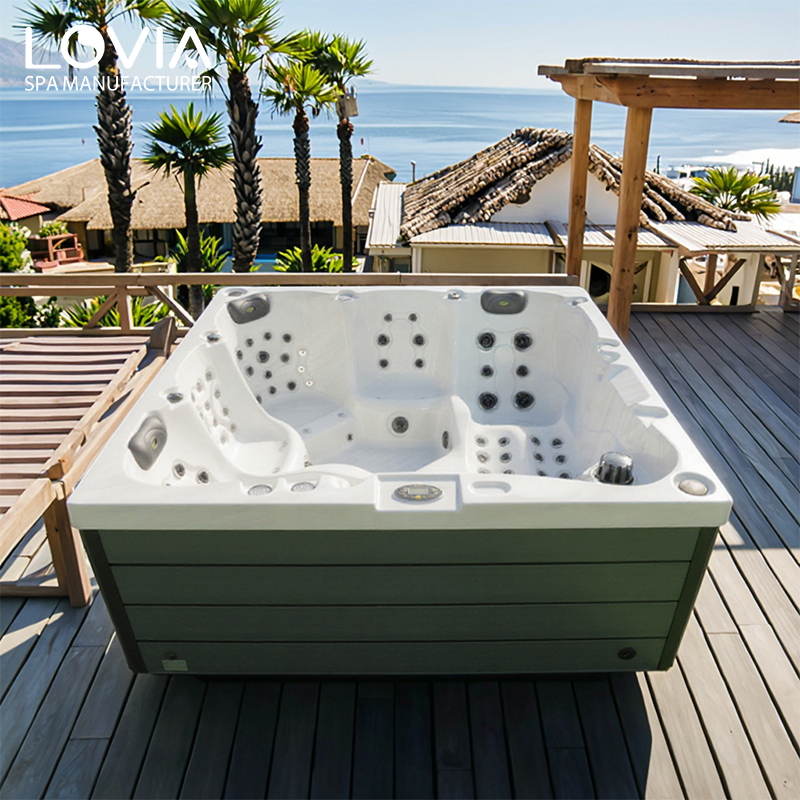
What problems might arise from adding chlorine to the spa hot tub daily?
While daily chlorination may seem to keep the water clean, frequent additions can pose some potential risks and should be handled with caution.
1. Causes persistently high chlorine concentrations
If chlorine is added daily without testing, the following may occur:
• Chlorine buildup
• Pungent odor
• Dry skin
• Mucous membrane irritation
Users mistakenly believe that a stronger chlorine smell indicates better cleanliness, but excessively high concentrations are actually detrimental to health.
2. Accelerates aging of whirlpool spa hot tub components
Excessive chlorine can corrode:
• Spray nozzles
• Pump components
• Seals
• Piping
• Heat exchanger
This will affect the lifespan of the hot tub and increase maintenance costs.
3. Exacerbates water imbalance
Frequent chlorine additions disrupt the chemical balance of water, for example:
• Decreased pH
• Fluctuations in total alkalinity
• Turbid water
• Chloramine buildup increasing the pungent odor
This can actually cause water quality problems.
4. Waste of Chemicals and Resources
If the water is already within safe limits, blindly adding chlorine daily is a waste:
• Chlorine disinfectant
• Conditioners
• Cleaning agents
• Maintenance time
Costs will increase significantly.
Therefore, adding chlorine daily without testing is not a scientific practice.
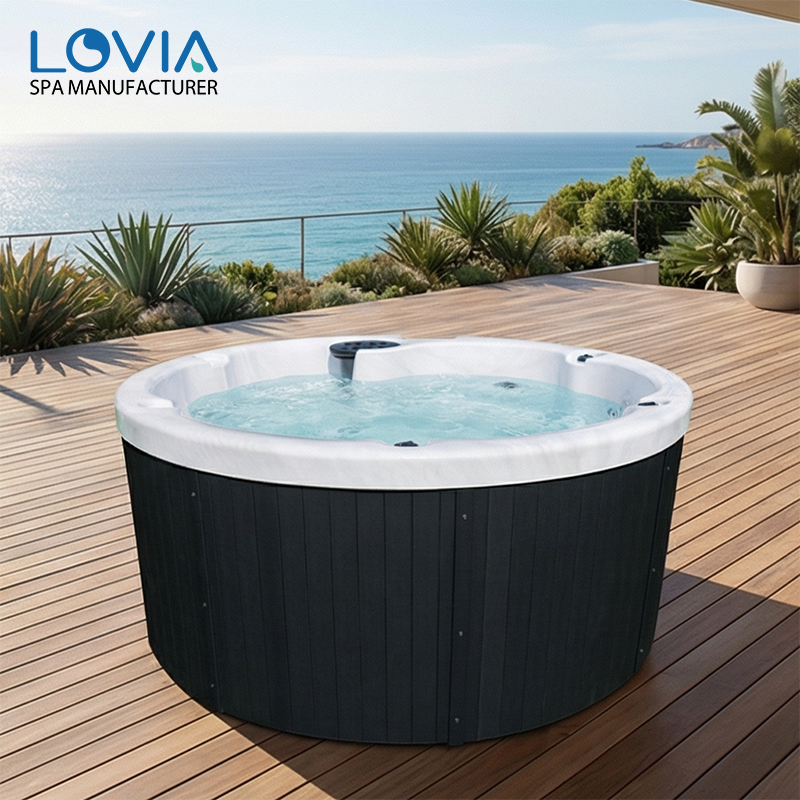
When is it reasonable to add chlorine to a spa hot tub daily?
While frequent additions may pose risks, in some situations, daily chlorine replenishment is necessary.
1. Spa hot tub used by multiple people daily
More people using it means more:
• Sweat
• Oils
• Skin microorganisms
• Body lotion
• Sunscreen residue
This quickly depletes chlorine and leads to increased chloramine levels.
Appropriate daily chlorine replenishment ensures the water remains within safe limits.
2. Water temperature maintained around 40°C for extended periods
The higher the temperature, the faster the chlorine evaporates.
If the whirlpool spa hot tub is kept at a high temperature, chlorine will naturally be lost even when no one is using it.
In this environment, it is necessary to test chlorine levels daily and replenish as needed.
3. Outdoor hot tubs exposed to strong sunlight
Ultraviolet rays rapidly decompose chlorine.
If your whirlpool spa hot tub is uncovered, daily chlorine consumption will be much higher than indoors.
4. Jet circulation systems running for several hours daily
Agitation accelerates chlorine evaporation, thus requiring more frequent chlorine replenishment to maintain balance.
If you add chlorine daily, what is the correct and safe approach?
The correct maintenance strategy is not blindly adding chlorine daily, but rather testing and replenishing scientifically.
The following steps ensure safety and effectiveness:
1. Test residual chlorine daily before deciding whether to add chlorine
Suitable range:
1–3 ppm free chlorine
If the test results show:
• ≥3 ppm: Do not add chlorine
• <1 ppm: Chlorine needs to be added
• 0 ppm: Chlorine must be added immediately, and the water quality should be investigated for any sources of contamination.
This is a crucial procedure for ensuring the safety of your whirlpool spa hot tub.
2. Add small amounts each time, don't fill it up blindly
Common recommendations for household spa hot tubs:
• Add 1–2 grams (or the dosage on the instructions) each time to increase chlorine by 1–2 ppm. Less is more!
Chlorine should be added gradually, not in large quantities at once.
3. The lid must be kept open for 20–30 minutes to release chlorine vapor
This prevents chlorine buildup, which can lead to:
• A pungent odor
• Irritation of eyes, nose, and throat
• Corrosion of internal components
Having the spray nozzle open and the lid open is a safer way to release chlorine.
4. Do not perform a daily shock chlorination treatment
Shock chlorination is a high-concentration disinfection method. Frequent operation can:
• Damage the equipment
• Cause excessively high chlorine concentrations
• Disrupt the water's chemical balance
It is recommended to use it intermittently, such as once a week or according to guidelines.
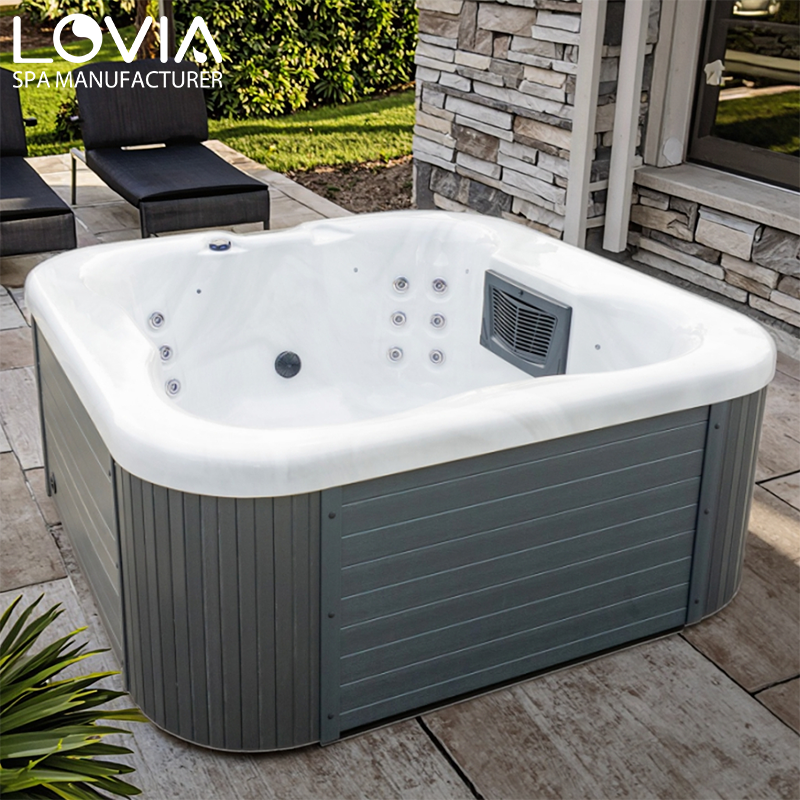
What happens if you don't add chlorine to the spa hot tub every day?
Many users worry excessively about chlorine deficiency.
In fact, as long as the residual chlorine level is maintained at 1–3 ppm, there is absolutely no need to add chlorine daily.
Not adding chlorine daily may result in the following:
1. If the water quality is stable, it will not become dirty even without chlorine.
As long as the chlorine concentration does not drop to 0 ppm, the water remains safe.
2. If used frequently, the water may quickly become unbalanced.
Multiple soakings will accelerate chlorine consumption, potentially leading to:
• Cloudy water
• Increased chloramine odor
• Increased risk of bacterial growth
• Increased load on the filtration system
Therefore, whether or not daily chlorination is necessary depends entirely on the water quality.
How to establish the most scientific chlorine management schedule for your spa hot tub?
To maintain optimal water quality, the following schedule is recommended:
✔ Daily: Test chlorine & pH (essential)
Regardless of whether chlorine is added, you should:
• Test free chlorine
• Test pH (ideally 7.2–7.8)
This is a fundamental step in whirlpool spa hot tub maintenance.
✔ Every 1–3 days: Replenish chlorine as needed
Replenish not daily, but based on test results.
✔ Weekly: Check the filter & perform a non-chlorine flush
Filter maintenance improves water cleanliness, and a non-chlorine flush reduces chloramine buildup.
✔ Every 1–3 months: Complete water change (depending on usage)
Water changes are key to maintaining long-term water quality stability.
What materials are commonly used in Lovia Spa products?
Lovia Spa uses carefully selected materials to ensure high quality and durability in every spa jacuzzi tub and swim spa tub. As a professional manufacturer, we prioritize materials that enhance strength, comfort, and long-term performance. This commitment to material quality allows our company to deliver reliable products that meet the expectations of global buyers and support successful wholesale sales.
